Lateral thinking explained


Share Lateral thinking explained
Explore more from
Design basics
Create, collaborate, and ship in Figma
All your design work, in one place.


Ever hit a creative roadblock and found yourself stuck in the same old patterns of thinking? You’re not alone. We’ve all been there—trying to solve a design challenge with the same step-by-step logic, only to end up circling back to the same old ideas.
But what if the breakthrough you’re looking for is just a different thought process away? That’s where lateral thinking comes in. It’s the secret sauce behind the innovative success of brands like Uber, Netflix, and Apple. By breaking free from conventional thinking, lateral thinking helps teams build great products that captivate customers and boost the bottom line.
Read on to learn:
- What lateral thinking is and why it’s an important skill for designers
- Techniques for exercising lateral thinking
- Tips for lateral thinkers
What is lateral thinking?
Lateral thinking is a creative approach to problem-solving to unlock breakthrough solutions. Think of it as a creative detour—stepping off the beaten path to uncover those out-of-the-box ideas just beyond the reach of conventional thinking.
First introduced by Edward de Bono in 1967 in his book The Use of Lateral Thinking, lateral thinking turns traditional problem-solving upside down. While most business decisions follow a strict, linear path, lateral thinking encourages breaking free from standard thought patterns and cognitive biases. It’s about challenging assumptions and embracing fresh perspectives to unlock creative solutions that wow customers and drive innovative results.
Lateral thinking methods
According to de Bono, the concept of lateral thinking centers around these six core principles:
- Focus encourages a shift in attention to uncover breakthrough ideas and new opportunities.
- Challenge questions traditional ways of thinking to dig deeper into alternative solutions.
- Alternatives offer a way to explore different approaches and possibilities.
- Random entry focuses on introducing unrelated elements to spark creative thinking.
- Provocation challenges assumptions to provoke new thoughts and ideas.
- Harvesting and treatment focus on generating and identifying valuable ideas without judgment and refining them into practical solutions.
Apple is a great example of a company that nails lateral thinking. Instead of simply improving existing products, Apple continuously seeks out unconventional approaches, shifting its focus to new market segments.
This approach has led to innovative products, like the Apple Watch, which challenged conventional technology and redefined the concept of a wristwatch. Apple has also used the random entry technique by pairing unrelated words with existing challenges to spark fresh ideas and concepts.
For example, starting with the problem statement “video editing is hard and should be more fun” and pulling the random word “bicycle,” the team came up with an idea to make a map animation of popular bike routes.
Lateral thinking vs. vertical thinking
Lateral thinking values free-wheeling ideation for big, bold ideas. Vertical thinking relies on tried-and-true concepts. Both approaches to problem-solving have distinct differences.
- Lateral thinking is a non-linear approach that uses different brainstorming techniques to look at ideas from various angles and perspectives. These techniques help you think outside the box to generate creative solutions.
- Vertical thinking uses a logical, step-by-step approach to dig deeper into a problem. With its rigorous top-down logic, vertical thinking can be useful for refining new ideas and assessing their feasibility.
How to exercise lateral thinking: Seven techniques
Lateral thinking unlocks hidden potential, paving the way for more engaging user experiences. Here are seven techniques to put lateral thinking to work for your team.
1. Brainstorming sessions

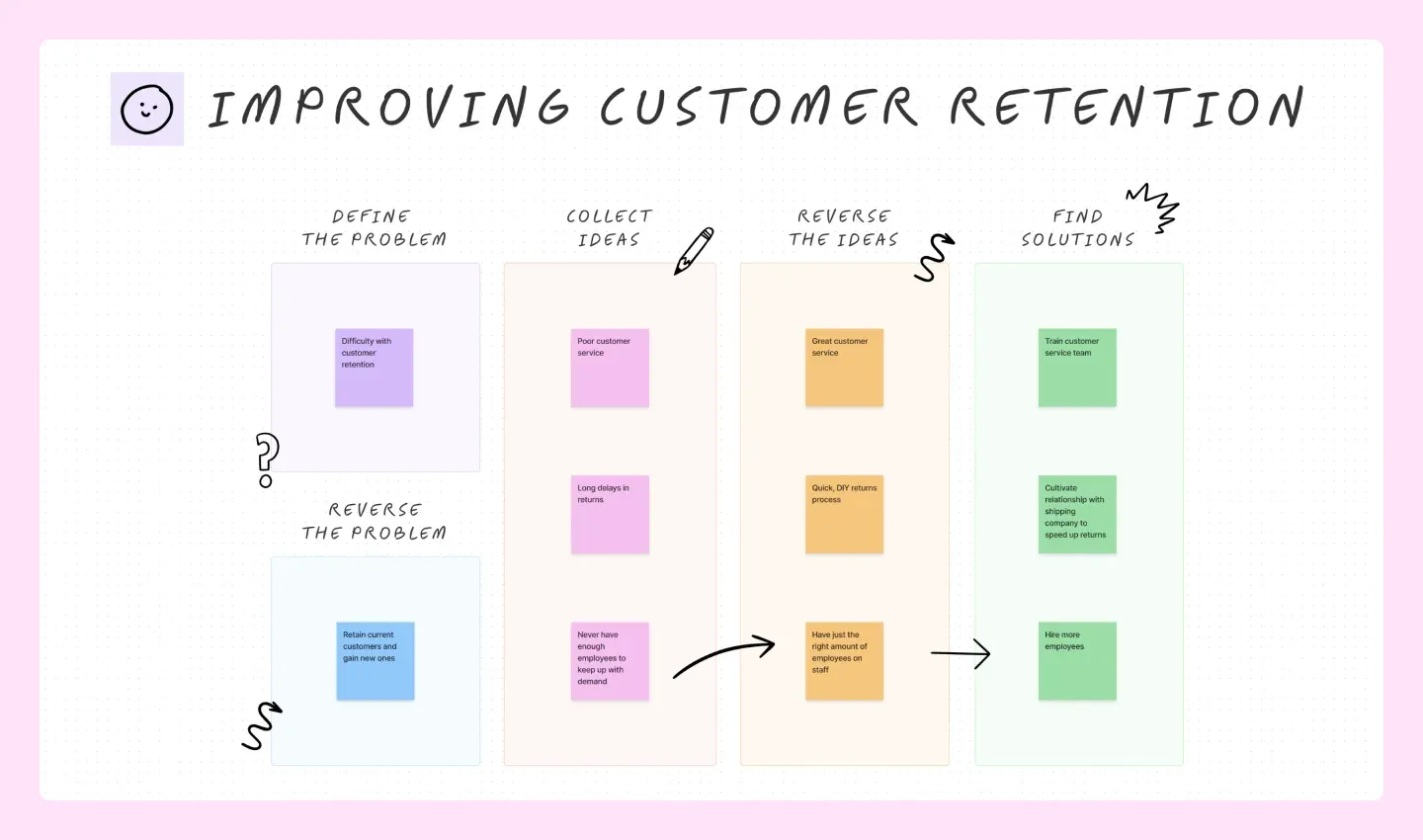
Best for: Groups looking to quickly generate a large amount of ideas
Creative brainstorms spark fresh ideas to improve products and services. Not only can brainstorming unlock hidden potential—it can also promote a collaborative environment to share and contribute ideas freely. You can use many brainstorming techniques to break away from traditional thought patterns and get ideas flowing.
For example, reverse brainstorming is a creative way to promote lateral thinking by having your team brainstorm potential failures instead of solutions, disrupting the conventional way of generating ideas. Essentially, you focus on understanding everything that can go wrong to help ideate strategies to prevent these problems from arising.
2. Mind mapping

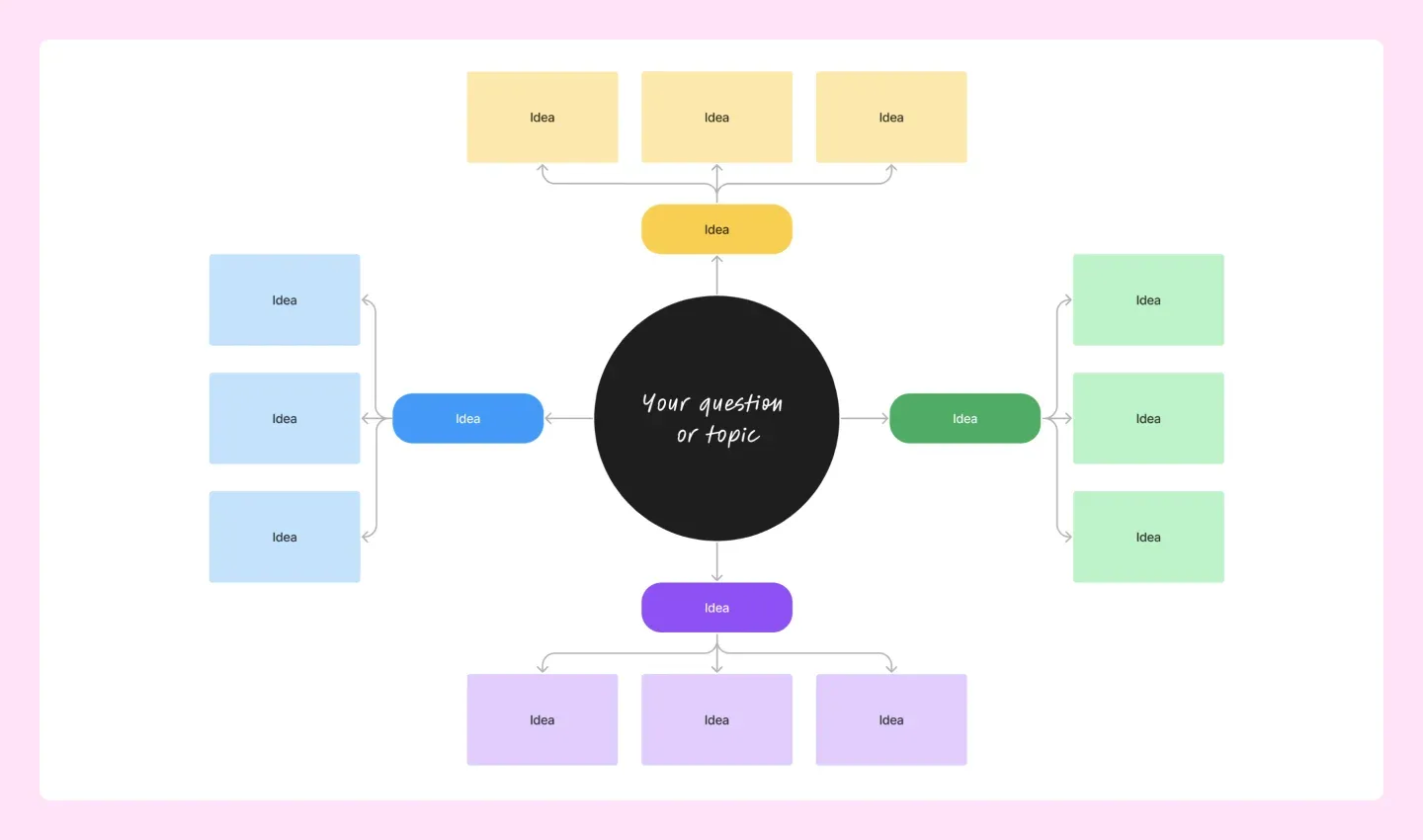
Best for: Small or large groups looking to generate and organize ideas for complex projects
Visual mind maps start with a central idea or question and reveal connections between related ideas. By mapping out topics, you can explore different patterns and unexpected connections to exercise lateral thinking skills that lead to innovative concepts. This helps break through linear thinking, visualize problems, and reach creative solutions faster.
3. Six thinking hats

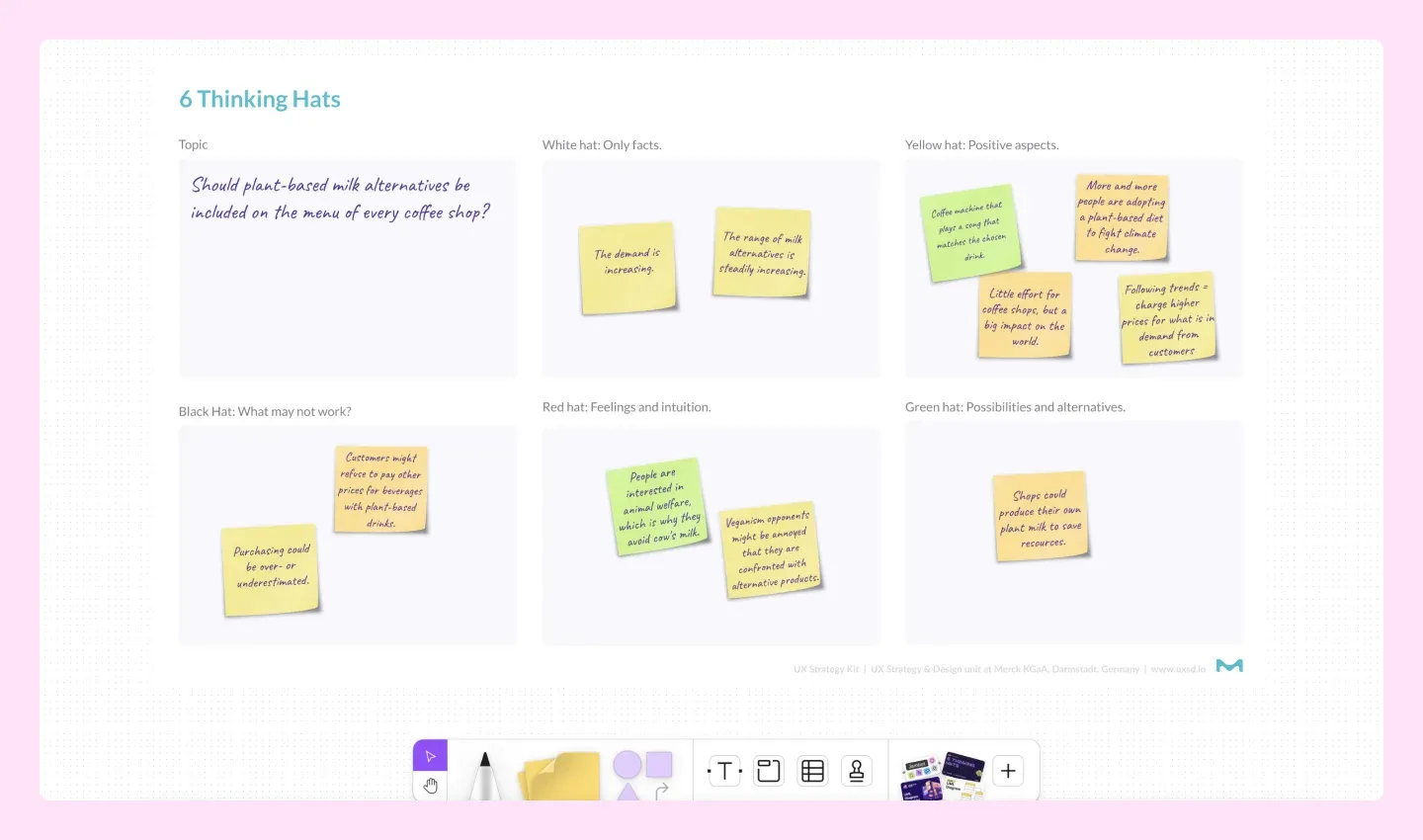
Best for: Small or large groups looking to analyze ideas or solutions from multiple perspectives
This technique invites participants to examine problems from six distinct perspectives. Each “thinking hat” represents a different perspective, allowing teams to explore ideas from multiple angles.
- The white hat focuses on facts by gathering known or needed information.
- The yellow hat is about optimism and positivity, exploring values and benefits.
- The black hat symbolizes caution and helps identify risks to uncover how to overcome them.
- The red hat signifies feelings, allowing you to express emotions and intuition without needing explanation.
- The green hat represents creativity and emphasizes exploring alternative ideas and fresh concepts.
- The blue hat is the control hat used to manage the thinking process and ensure everyone follows guidelines.
For example, you might try on the red hat to explore a problem with feelings and gut instinct, then switch to the black hat to assess concepts according to possible risks.
4. Puzzle solving

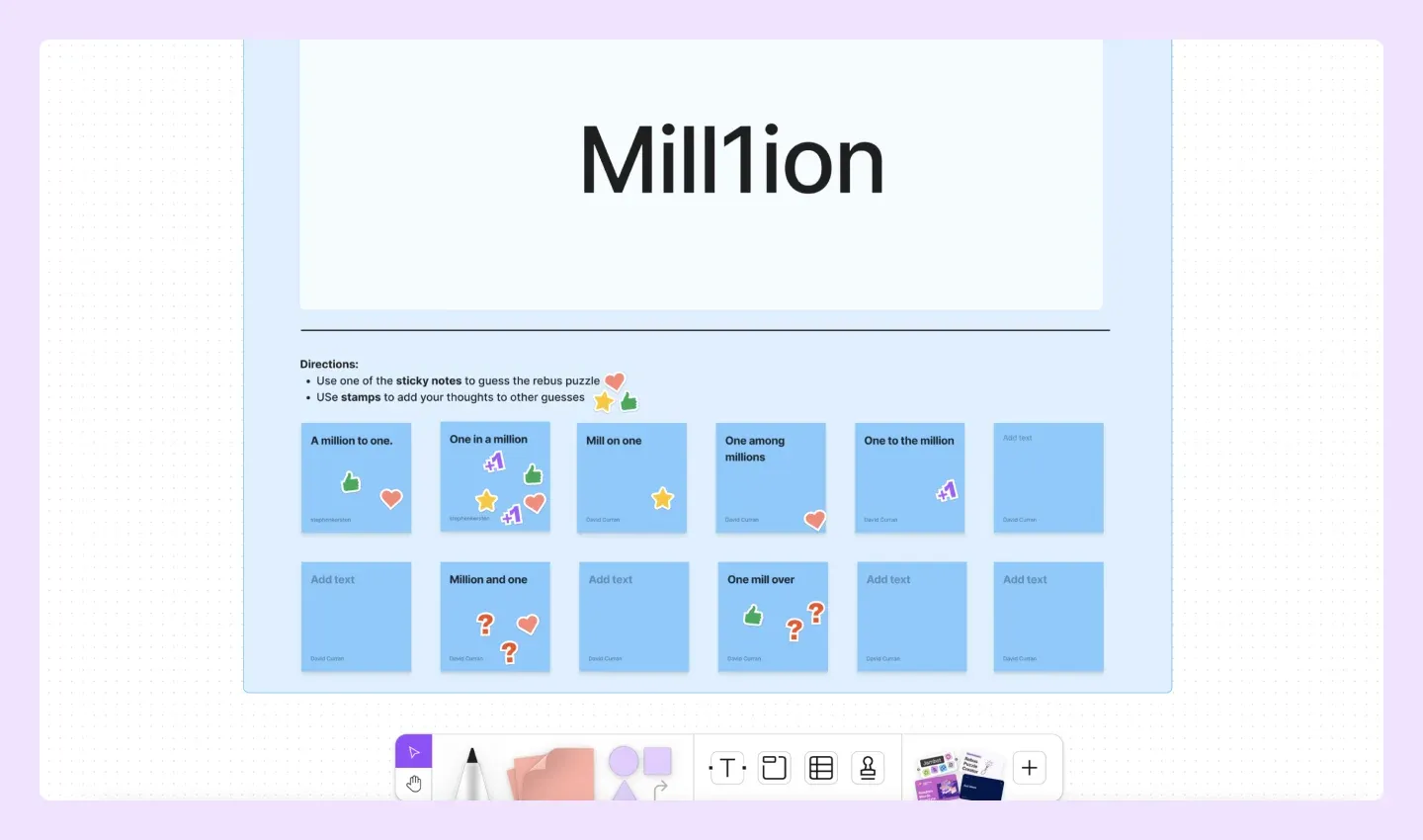
Best for: Individuals or small groups looking to overcome mental blocks and encourage creative thinking
Lateral-thinking puzzles, brain teasers, and riddles help disrupt typical thought patterns and exercise creative thinking. Teams can use them as icebreakers or thought-starters to find unexpected solutions that meet user needs.
For example, rebus puzzles are visual word puzzles that use pictures, symbols, or letters to create a word or phrase. It’s a great way to practice lateral thinking skills and uncover the hidden meaning behind the image.
5. Bad ideas

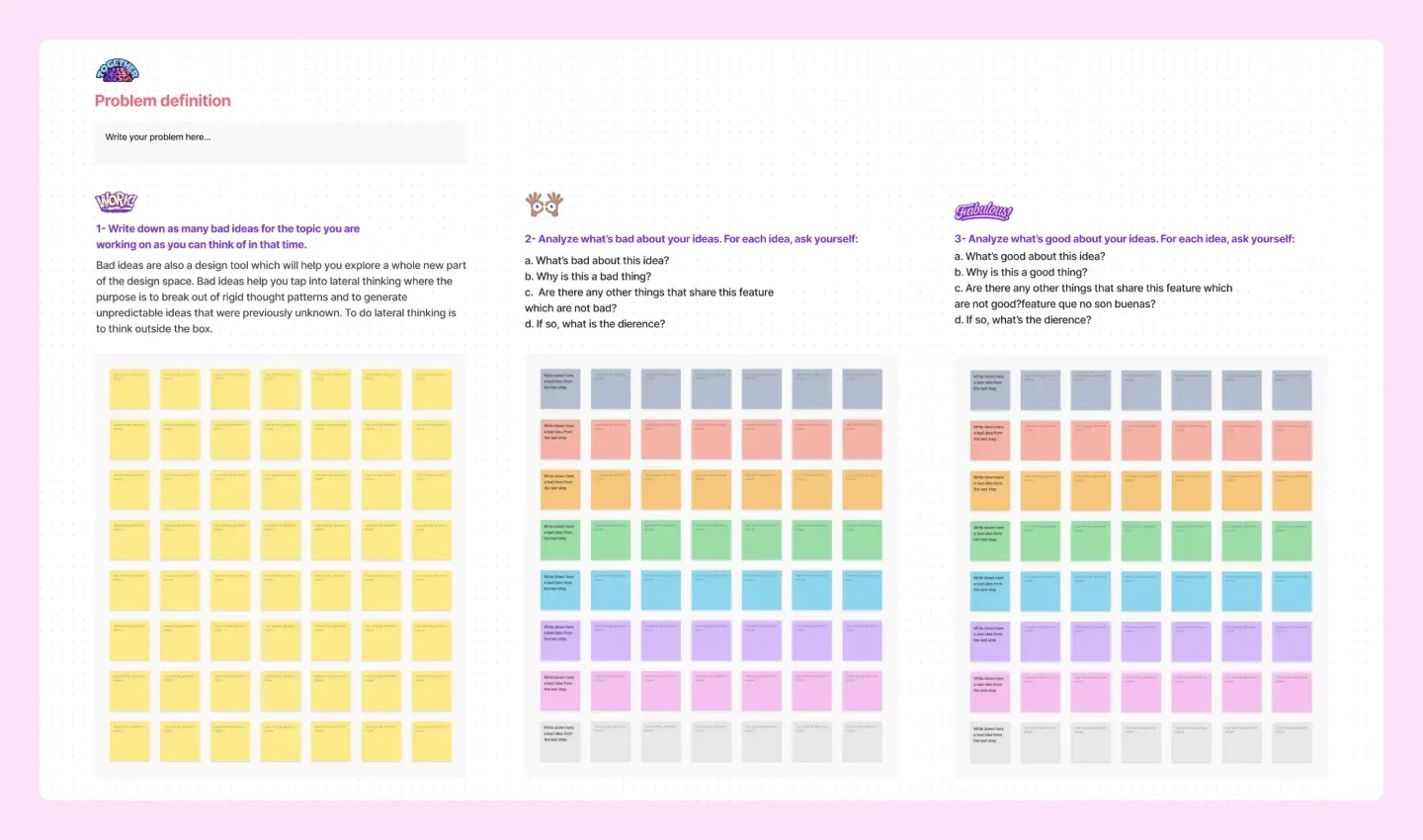
Best for: Small or large groups looking for a fun and unique way to generate unconventional ideas
Similar to reverse brainstorming, bad ideas is an ideation strategy that encourages free thinking, challenging you to intentionally generate as many bad ideas about your problem or concept as possible. From there, you can evaluate what’s bad about the idea, what’s good about it, and how to improve it.
6. SCAMPER method

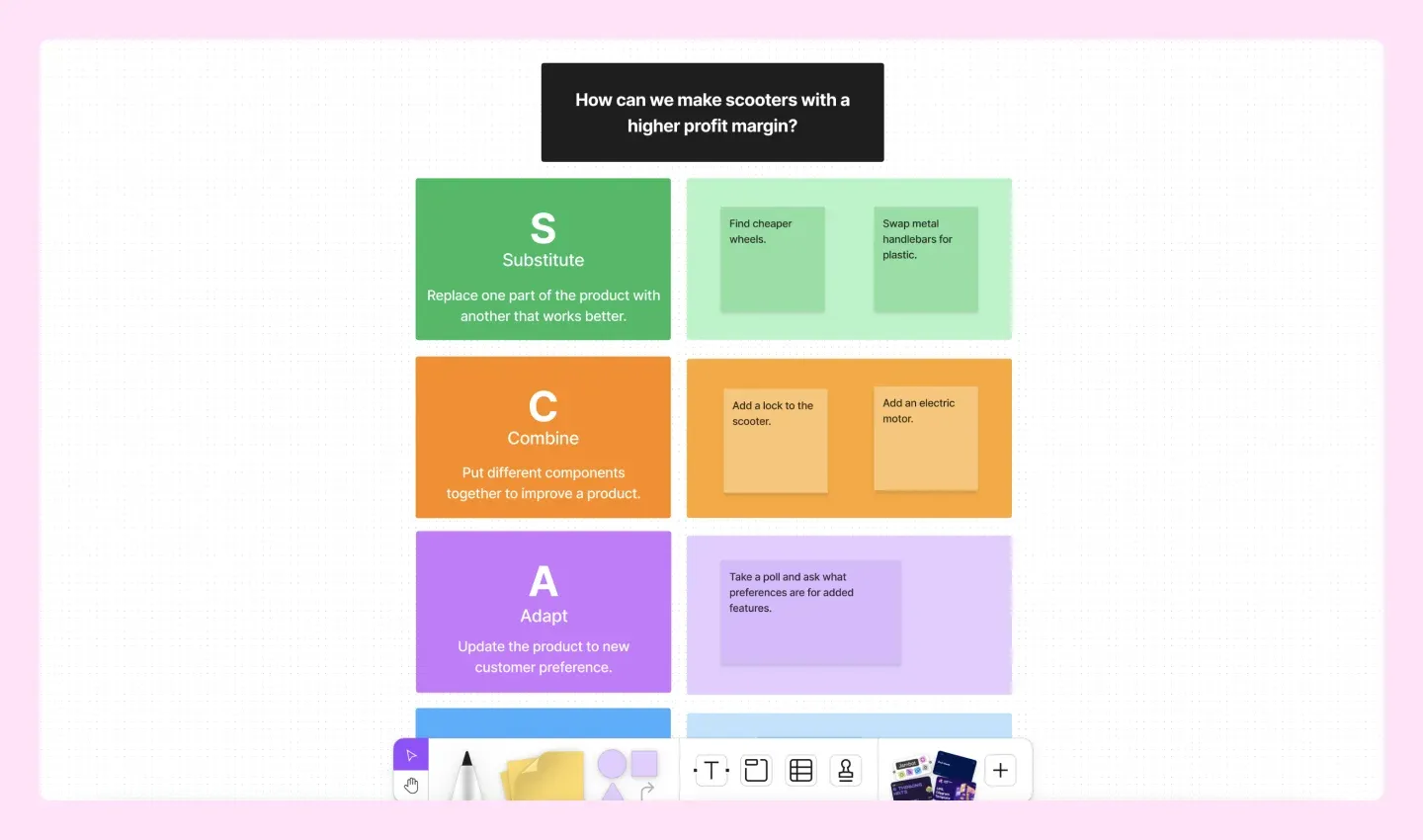
Best for: Individuals or small groups looking to generate new ideas based on existing products
The SCAMPER method is another brainstorming technique that uses seven prompts to generate improvements for existing products or expand on new ideas. The SCAMPER acronym stands for:
- Substitute: What can you replace or change about your idea or product?
- Combine: Can you bring multiple ideas together to achieve a better solution?
- Adapt: How can you adjust your idea to serve a different audience or purpose?
- Modify: Can you change the look and feel of your product?
- Put to another use: Can you find a new way to use your product or idea?
- Eliminate: What can you remove to simplify your idea but achieve the same result?
- Reverse: What would happen if you reordered or reversed the process?
Let’s say a vacation rental app applied the “put to another use” prompt to expand its offerings beyond property rentals. To enhance the customer experience, it might introduce a new feature allowing customers to use its app in a new way and book unique experiences, like guided tours and cooking classes.
7. Random words

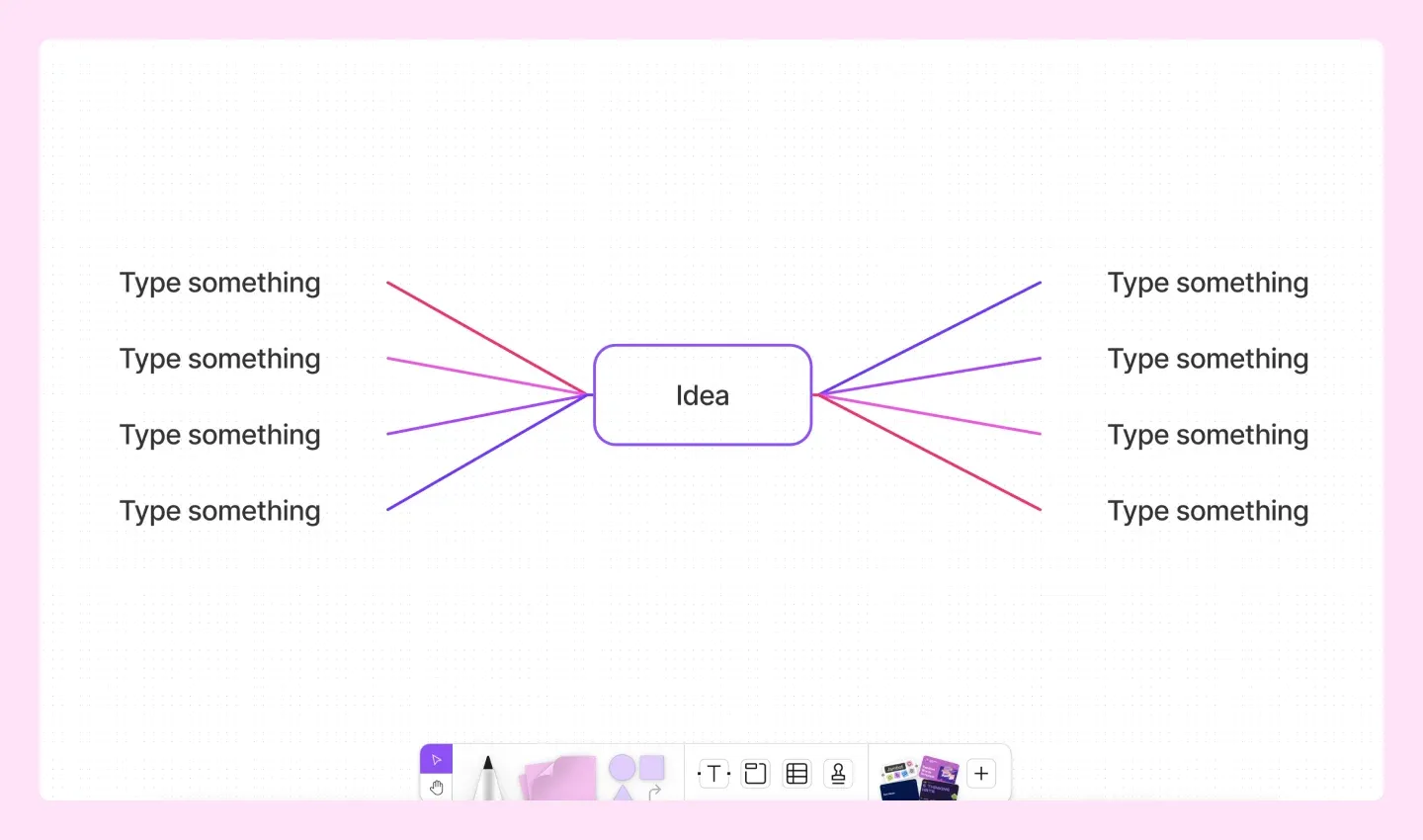
Best for: Individuals or small groups looking for a quick way to make unexpected connections and spark creativity
Random word brainstorming is a great lateral thinking exercise because it forces you to think outside the box,making unexpected connections that lead to fresh ideas and concepts. Begin with a central idea, then introduce random, unrelated words to uncover surprising and innovative solutions. Using de Bono’s random entry technique, you can also try a randomizer to test designs and unique iterations.
Why is lateral thinking important for designers?
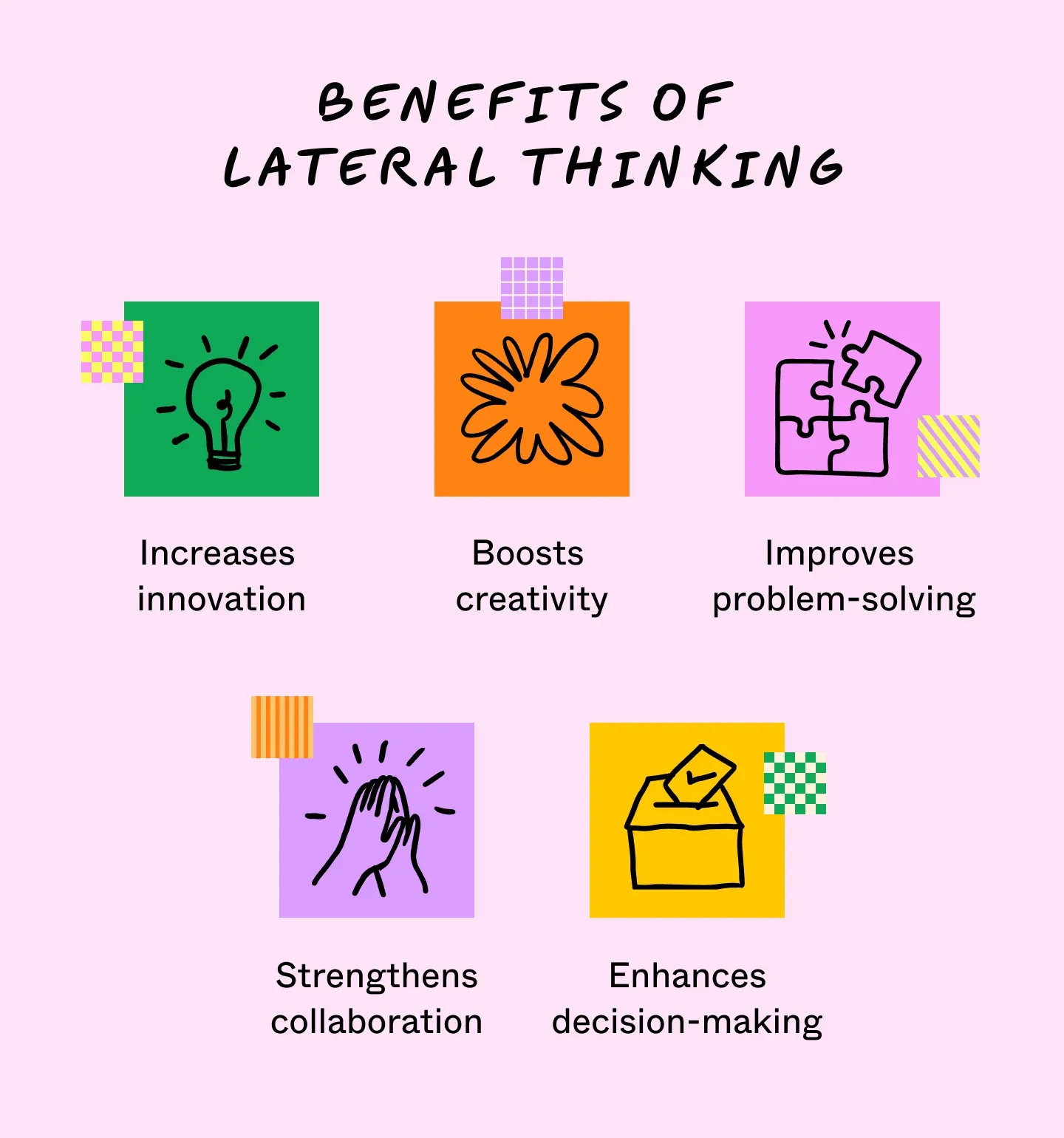
Conventional critical thinking isn’t enough to succeed in today’s crowded marketplace. With lateral thinking, businesses foster new thinking patterns and problem-solving skills to find creative solutions. Key benefits of lateral thinking techniques include:
- Increased innovation. Companies can explore uncharted waters by practicing lateral thinking to create game-changing products, services, and processes. Innovative thinking to create game-changing products, services, and processes. Innovative examples of lateral thinking include the Dyson vacuum cleaner (no more vacuum bags), the Nintendo Game Boy (games on the go), and the Uber rideshare app (real-time ride tracking).
- Boosted creativity. Lateral thinking builds a culture that questions assumptions and welcomes diverse viewpoints, encouraging teams to think big and share ideas freely.
- Better problem-solving. Lateral thinking helps teams break through mental blocks, approach persistent problems from new starting points, and arrive at novel solutions.
- Enhanced collaboration. Generating creative ideas through lateral thinking is a joint effort that fosters a collaborative environment, improves communication, and encourages team building.
- Improved decision-making. While many use a logical approach when making decisions, lateral thinking encourages you to consider multiple perspectives and challenge the norm, leading to new ideas and solutions.

Four tips for lateral thinkers
Try these tips to boost lateral thinking skills and unlock your creative potential.
- Challenge assumptions. One of the most critical aspects of lateral thinking is the ability to question the status quo. Allow yourself to break away from conventional beliefs and consider all perspectives to help spark creativity and generate original ideas.
- Diversify stimuli. Breaking away from your routine and introducing random stimulation can help fuel creative thinking. Invite external stimuli, like a new podcast, book, or even a walk in a new environment, to get out of your comfort zone and keep your creative juices flowing.
- Collaborate often. Engaging in lateral thinking exercises eliminates judgment and communication barriers that may hinder team creativity. Encourage a collaborative environment that fosters open communication and sharing of ideas to ensure you’re always looking at ideas from multiple perspectives.
- Embrace failure. Learning from mistakes is a great way to explore and experiment with alternative solutions. Welcome feedback on good and bad ideas to gather new insights and open new ways of thinking.
Dive into lateral thinking with Figma
Lateral thinking challenges traditional approaches, encouraging you to view problems from fresh perspectives to lead to groundbreaking ideas. If you’re ready to use your lateral thinking skills to us, Figma can help. Here’s how:
- Kick off lateral thinking with brainstorming sessions on FigJam’s online collaborative whiteboard. Flesh out ideas and react in real time to workshop creative solutions to problems.
- Find different methods that exercise lateral thinking with FigJam’s extensive library of brainstorming templates.
- Start bringing your ideas to life with Figma’s wireframe tool to outline and visualize early concepts.
Ready to use lateral thinking to brainstorm creative solutions?
Keep reading


What is UI design
What is UI design today, and what role does it play in the design thinking process?
Learn more


What is visual hierarchy
If everything looks the same, then you see nothing. Visual hierarchy can change that.
Learn more


UI vs UX
Read on to find out what it takes to design engaging UI, and create a memorable UX.
Learn more