24 mind map examples for brainstorming and planning


Share 24 mind map examples for brainstorming and planning
Explore more from
Team productivity


Imagine your next brainstorming session. Instead of a chaotic flurry of sticky notes and overlapping voices, there’s a clean visual canvas where every idea finds its place. Now picture managing a complex project where dependencies and timelines are instantly clear to the whole team. That clarity comes from a mind map.
Whether you’re designing a product, setting a strategy, or mapping project goals, mind maps help turn thoughts into visuals everyone understands. They transform scattered ideas into a clear journey you can all follow together.
Read on to learn:
- What a mind map is and what it’s used for
- 24 mind map ideas and examples
- How to use free mind map templates
- Five key features of mind maps
What is a mind map?
A mind map is a visual diagram that starts with a central idea and branches out into related topics. It’s a flexible way to organize thoughts, spot patterns, and explore directions, all without needing to think in a straight line.
Create custom mind map designs using FigJam
Collaborate with team members and share across your organization
Example 1: Simple mind map

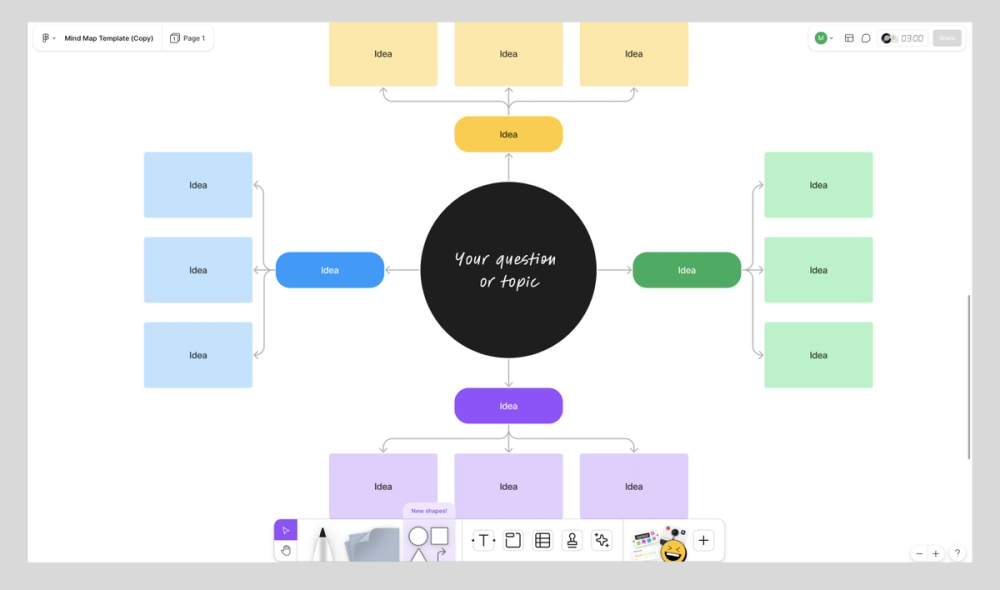
Best for: first-time mind mappers and ideas that need developing
The simple mind map template starts with one main topic, goal, or problem, then branches into subtopics. It’s a shared visual space, whether on paper or a shared online whiteboard, for getting ideas down quickly. Adapt this mind map template for just about anything. For example, a project manager might use it to:
- Brainstorm project requirements. You can use a mind map to break a big project into smaller pieces or individual steps.
- Present ideas to stakeholders. Presenting complex ideas in a simple format makes it easy for big-picture thinkers to understand the project.
Design tip: Kick things off with a central theme, then build out new ideas with your team during a brainstorming session.
Example 2: Bubble map example

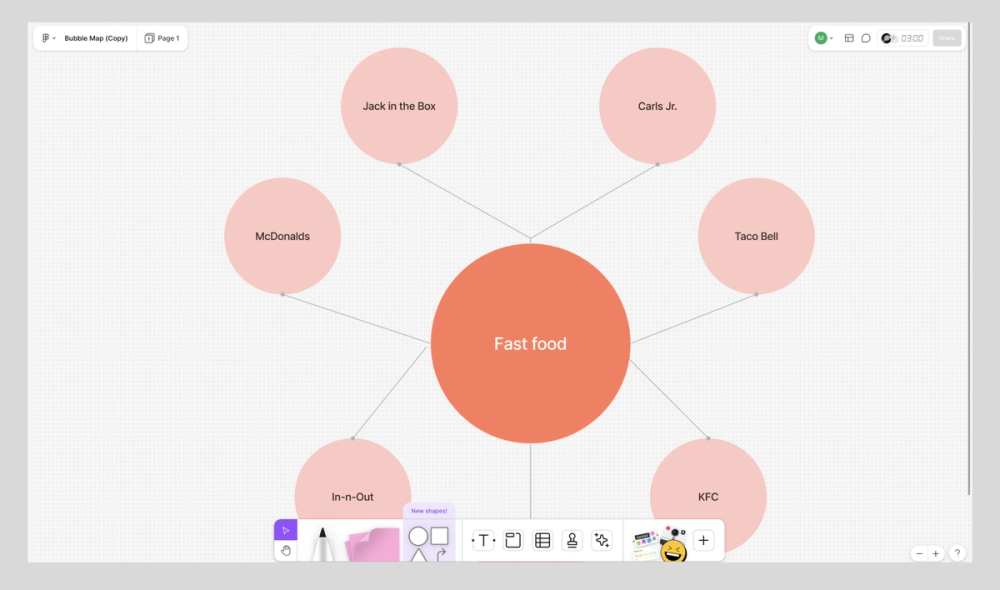
Best for: early-stage planning and collaborative brainstorming
Bubble maps are great for early-stage brainstorming. Instead of branching into subcategories, they keep things simple, just bubbles for each core idea. Once everyone contributes their suggestions, you can assign roles or turn the ideas into a project plan.
Design tip: Try color-coding each bubble by category or by contributor to keep things organized.
Example 3: Flow chart mind map

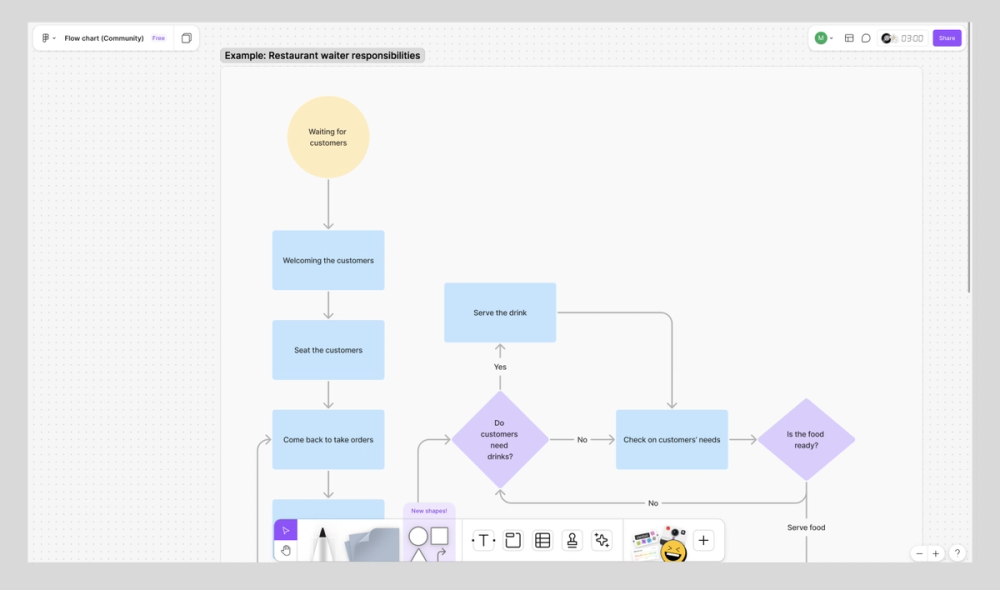
Best for: proficient mind mappers tackling more complex projects
Flow charts map out steps in a process, from start to finish. Their branching structure can also map different routes to the same solution or workflows that teams will follow in parallel.
On product teams, flow charts help clarify how something will get built or how people will use it. The sequence of steps also helps you spot gaps or bottlenecks in your process.
Design tip: Use arrows to denote the flow of information or the order in a process.
Example 4: Problem-solving mind map

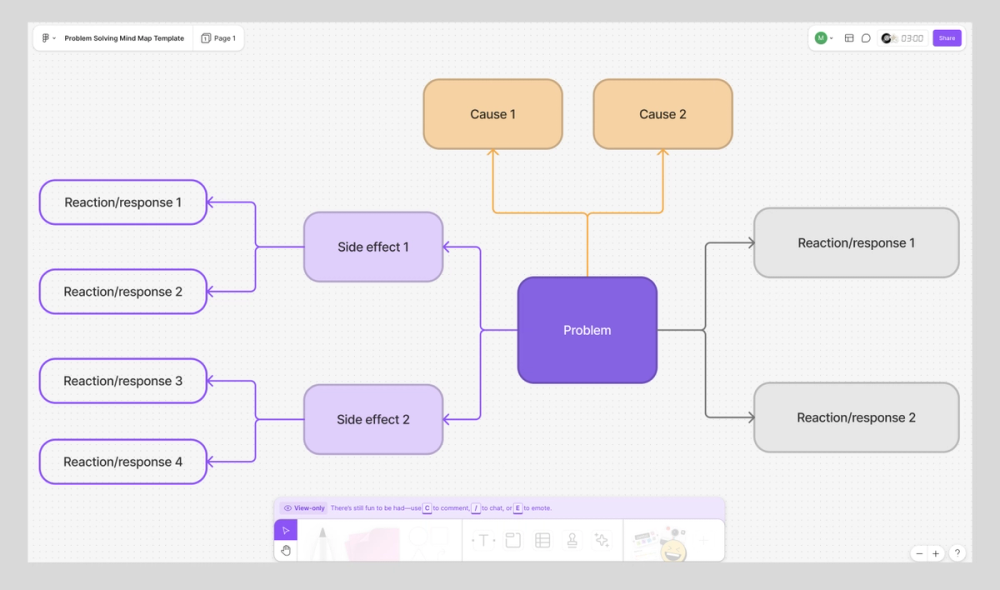
Best for: individuals or teams solving an issue
A problem-solving mind map breaks down a central issue, its causes, and solutions. It helps frame a challenge from all angles, connecting causes, effects, and any unintended consequences.
Use this map when:
- Tackling a complicated business problem
- Organizing a response to an issue
- Outlining the causes of a challenge you’re facing
- Weighing solutions to find one that’s the quickest or most cost-effective
Design tip: Color-code responses based on who’s responsible for each aspect of a problem.
Example 5: Opportunity solution mind map

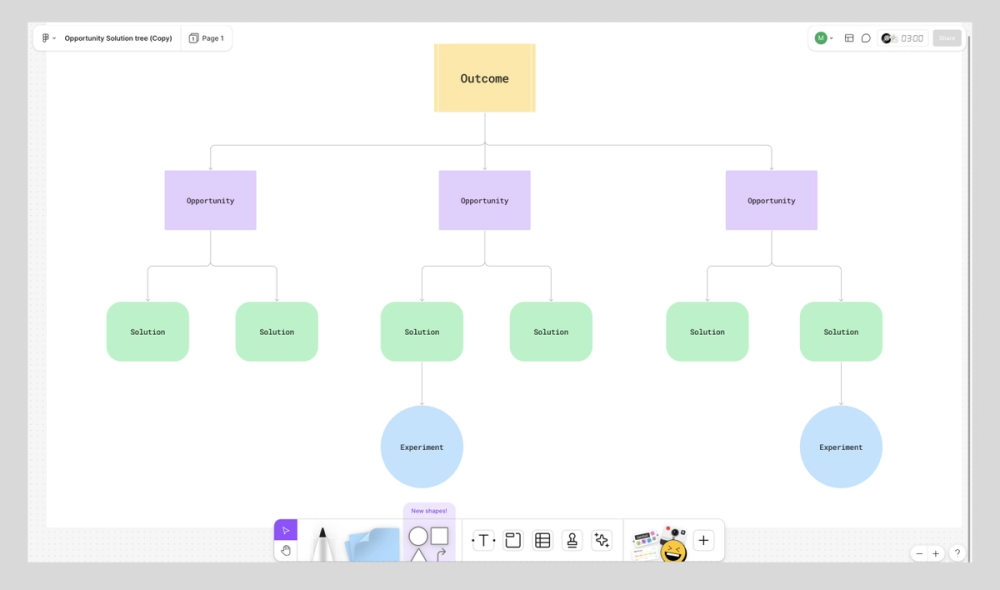
Best for: managers and teams working toward a specific outcome
This mind map design helps teams brainstorm solutions with a specific end goal in mind. Unlike problem-solving templates, this map focuses on an outcome rather than obstacles. It breaks a comprehensive goal into manageable stages and highlights the resources needed at each step.
For a better collaboration, review the mind map with your team for input and revisions. Once the project is underway, teams can use it to stay aligned.
Design tip: Color-code boxes or lines for business objectives to note which teams handle which solutions.
Example 6: Project management mind map

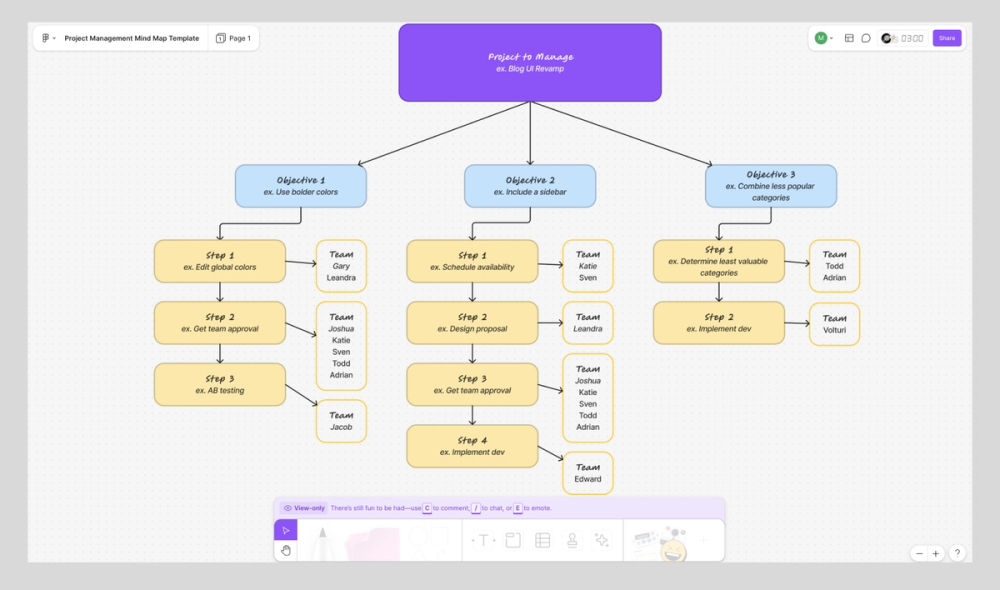
Best for: project managers looking to visualize complex projects
This mind map helps project managers zoom in on task-level details without losing sight of the big picture. It’s especially useful for coordinating work across departments, identifying dependencies, and improving workflows. You can also use this mind map to:
- Facilitate project meetings
- Assign tasks across teams
- Define team goals and priorities
- Onboard new tools or systems
- Document problems and potential solutions
- Map out steps toward key milestones
Design tip: If your mind map gets too dense, consider breaking off secondary processes into a new mind map.
Example 7: Time management mind map

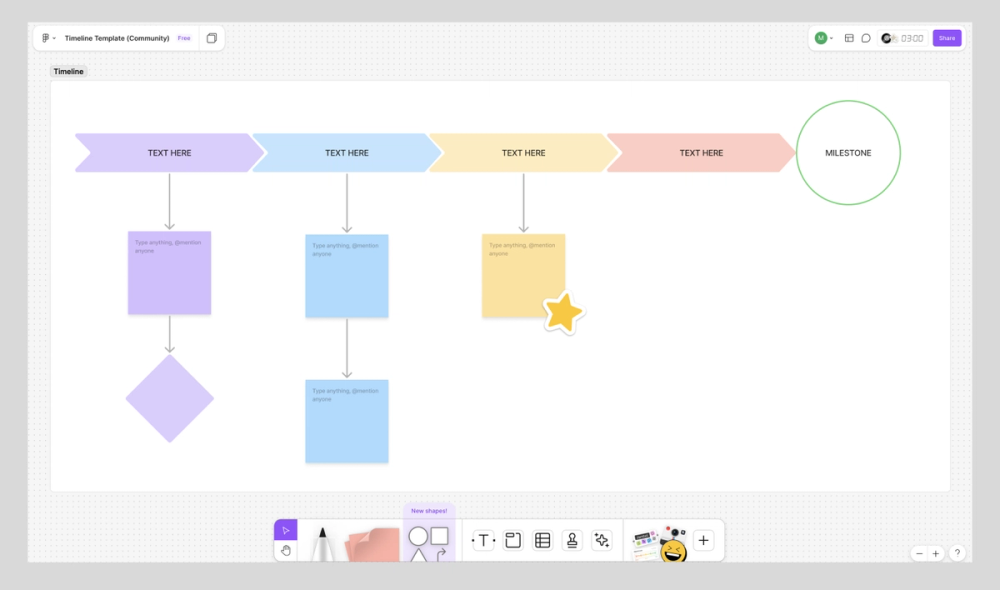
Best for: project managers assigning and prioritizing tasks
This time management template organizes tasks across a project timeline. You can consider the project the central topic for this chart. Each arrow or node represents a milestone and its associated tasks, requirements, or tools.
Time management mind maps help teams and stakeholders track progress. If certain steps run under or over time, you can make changes to the timeline.
Example 8: Product development mind map

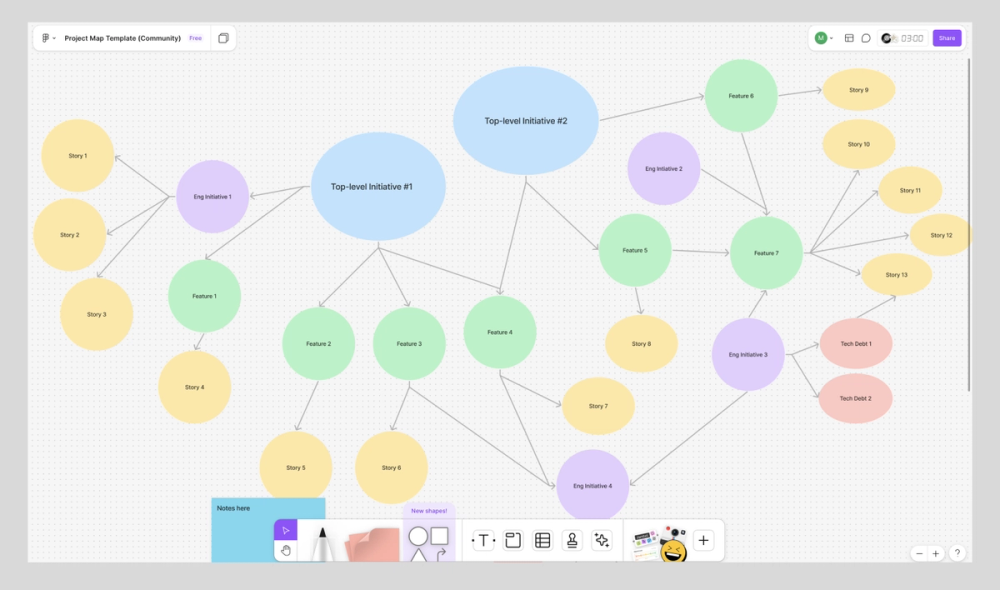
Best for: product managers, designers, and developers
This product map template breaks new initiatives into features, story points, and debts. Agile teams can use it to clearly visualize sprints and dependencies across their workflow. The nonlinear structure shows how teams collaborate across parallel tracks. It also encourages collaboration with a suggestion box in the corner.
Mapping developers’ progress on a shared map makes tracking each team’s dev work easy. You can also use the map to check which devs have tackled a particular feature or story point throughout the product development process. This mind map organizes fast-paced development into an easy-to-read format.
Example 9: Business planning mind map

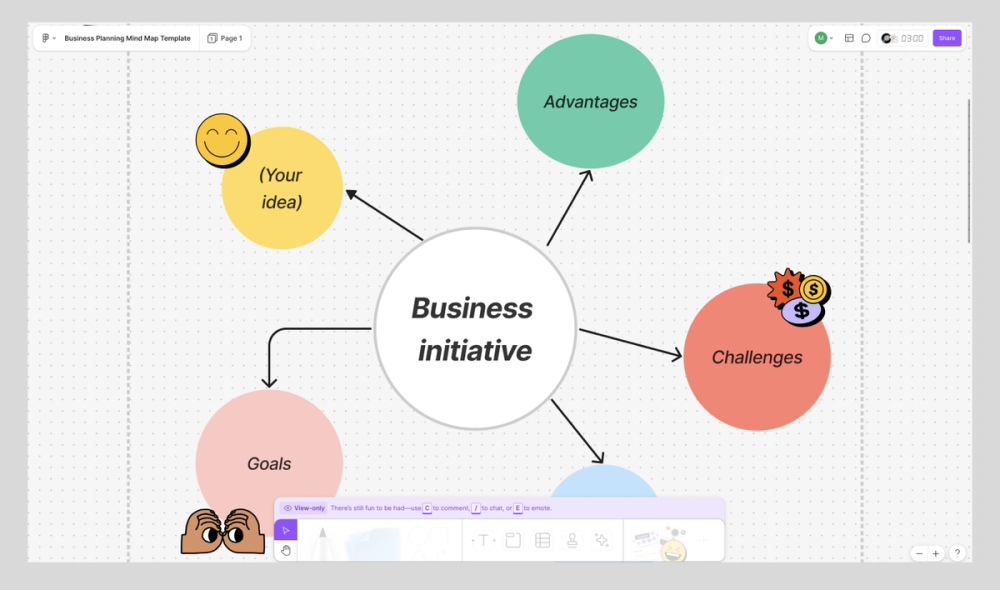
Best for: founders, investors, and business leaders who want to visualize their strategies
This mind map gives a visual overview of your strategic planning. It connects key elements, like goals, offerings, and processes, so you can make smarter decisions about where to focus resources.
Include a few key elements:
- A high-level description of your company
- Products or services you offer
- Competitive marketing strategies
- Key financial information
- Management/team structure
- Operational workflows
Design tip: Place core business info at the center. Use surrounding nodes to build out each area.
Example 10: Organization structure mind map

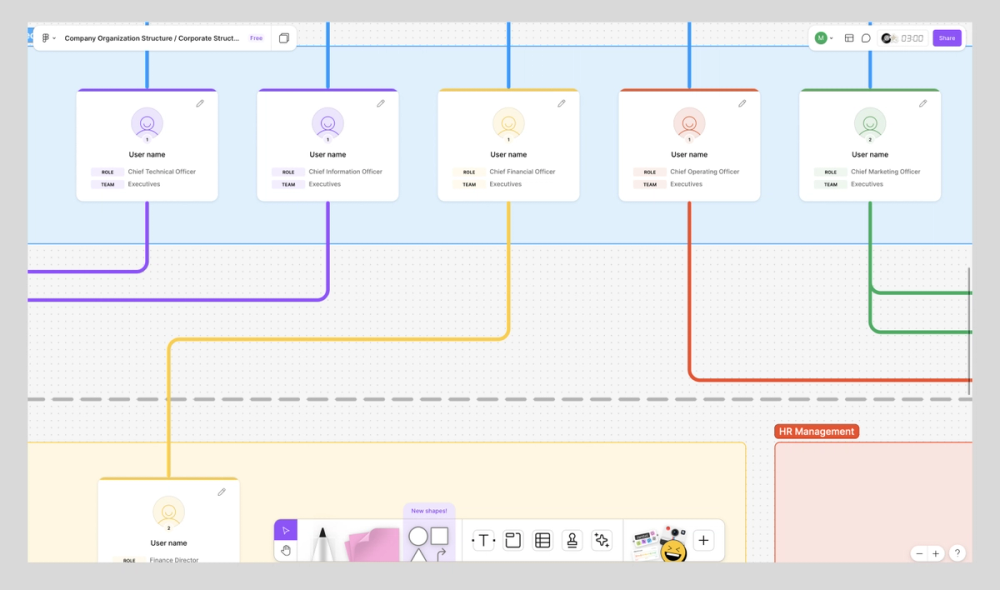
Best for: HR and management teams
An organization structure mind map outlines departments, roles, and reporting lines within a company.
Use it to identify decision makers, clarify responsibilities, or help new hires understand and learn the structure. Icons or profiles on an org chart can show roles and other helpful information, like the time zone they work in, which is especially helpful for hybrid or distributed teams.
Start your next mind map with a free template
Discover purpose-built mind map styles to inspire your next big idea.
Example 11: Logistics flow mind map

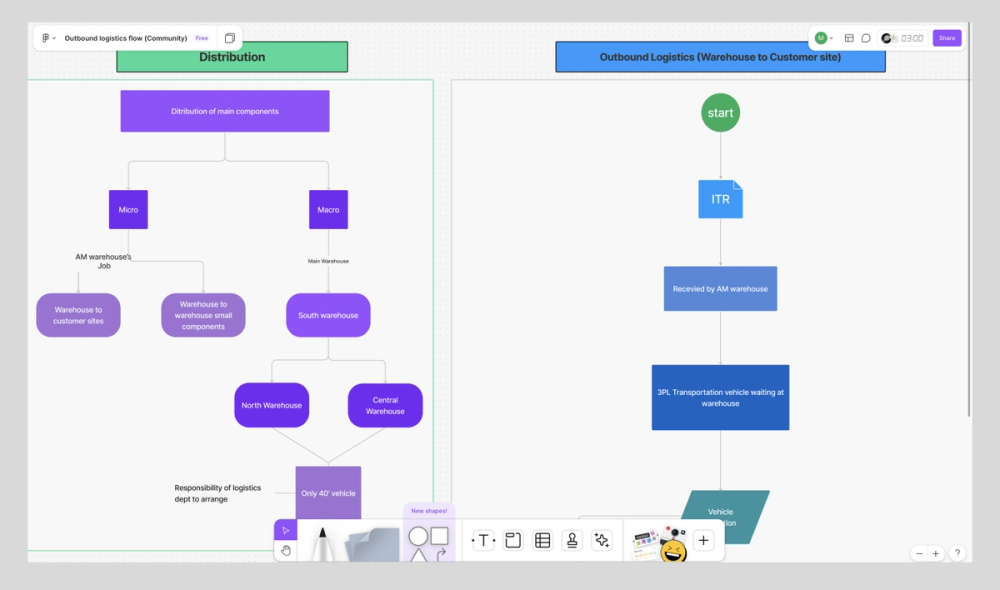
Best for: distributors and order fulfillment teams
A logistics flow mind map visualizes how you fulfill customer orders. The chart notes internal distribution to warehouses and customer deliveries, outlining next steps at every distribution stage.
Well-defined processes are key when delivering items at a large scale. This mind map charts a consistent process you can use for order fulfillment. It also visualizes the ramifications of changing your approach, reminding you how changes affect downstream steps.
Example 12: Financial planning mind map

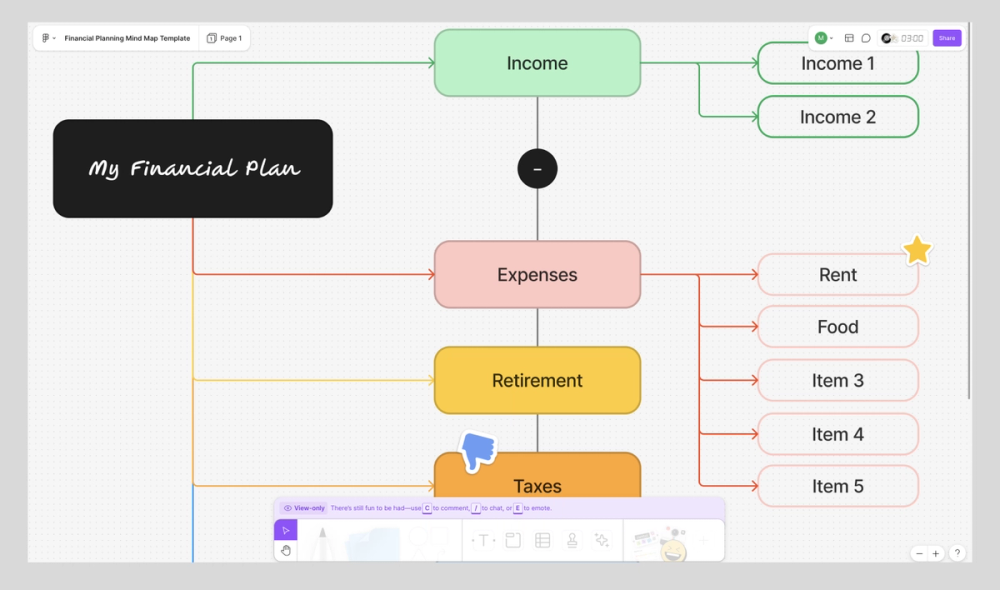
Best for: individuals setting a budget
A financial planning mind map tallies income, expenses, and financial goals. The map tracks short-term and long-term expenses, income sources, and financial goals.
This template paints a full picture of your cash flow, so you can balance immediate needs with future planning, like retirement savings or major purchases. In short, it can help you set attainable goals and avoid overspending.
Example 13: Sales funnel mind map

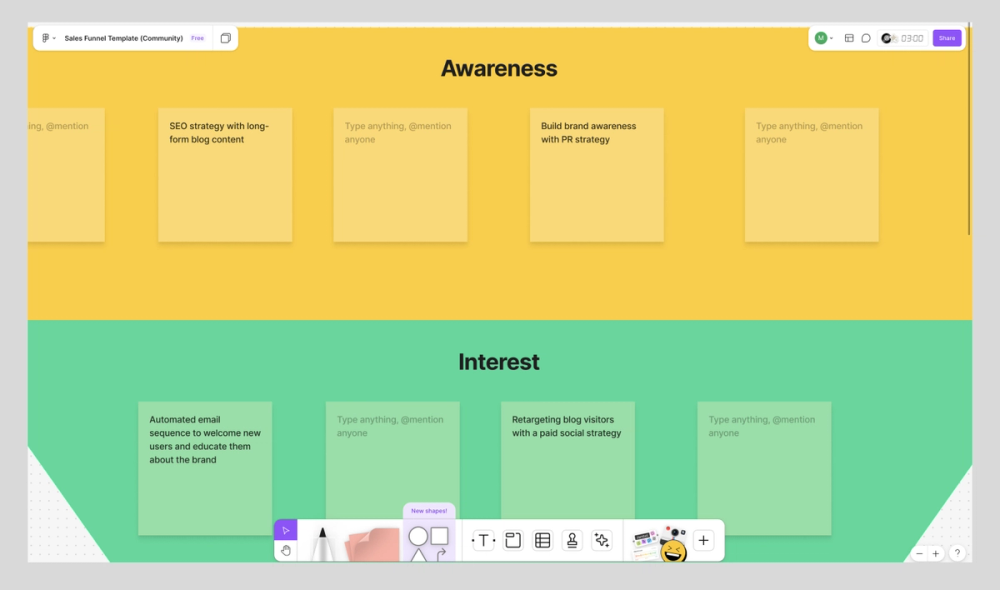
Best for: sales managers and their teams
This sales funnel template maps the process of moving leads down the sales funnel. The subpoints related to each topic sit inside the funnel instead of in nodes. Under each topic, you can note problems, methods, and considerations for moving customers along.
Sales methods tend to change over time—documenting your approach can help improve your process or switch tactics if one strategy doesn’t interest leads. Specifically, you might use this map when deciding how to approach a lead or collaborating on new sales strategies.
Example 14: Human resources onboarding mind map

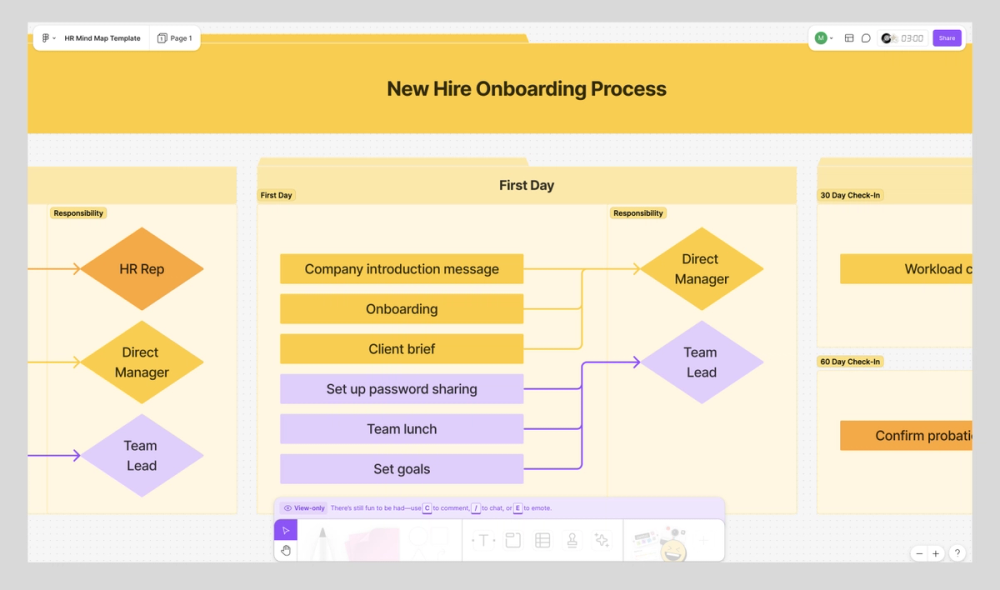
Best for: HR employees
This mind map lists your HR department’s tasks when onboarding a new hire. It breaks up priorities based on time, so the tasks due before, during, and after the new hire’s first day appear in their own category.
This chart keeps HR teams organized during onboarding. HR leaders can also give it to new hires for reference or share it with managers to refine their processes as business needs change.
Design tip: Include a picture of the employee and some basic information to personalize the chart.
Example 15: Job hiring mind map

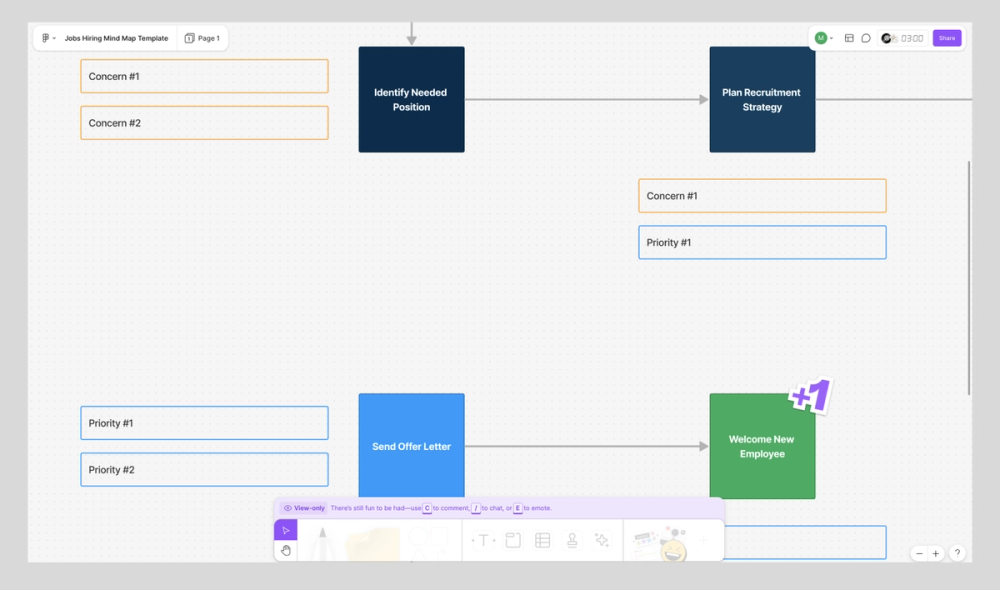
Best for: managers and HR teams
This mind map charts the process of filling a job opening on your team. Unlike the onboarding template, this map follows a more high-level approach. It breaks the main hiring steps into subcategories and allows you to fill in company-specific information for your hiring strategy.
Job hiring templates help managers and HR teams design a hiring process where they can cooperate on strategic decisions and priorities. Listing job criteria and hiring best practices on this mind map also keeps them accessible.
Example 16: Web design mind map

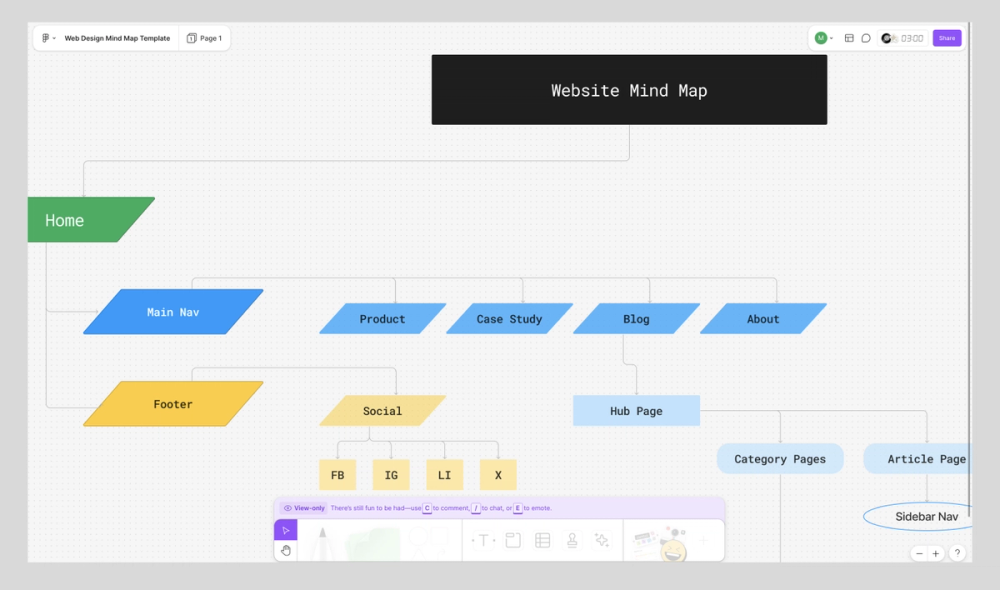
Best for: domain owners and Web designers
UX/UI designers need an intuitive method for mapping out information architecture or user flows. Fortunately, this Web design template gives a high-level overview of what will go onto your Web pages. This map paints a picture of your website’s UX by including high-priority links in the header and footer, search functions, and images.
While you can organize pages for blogs and features, that doesn’t come at the cost of mapping your core page structure.
You might use this template when:
- Working in the early stages of Web design
- Picking your website’s core functions
- Designing your website’s interface
Example 17: Site map example

Best for: Web designers and developers
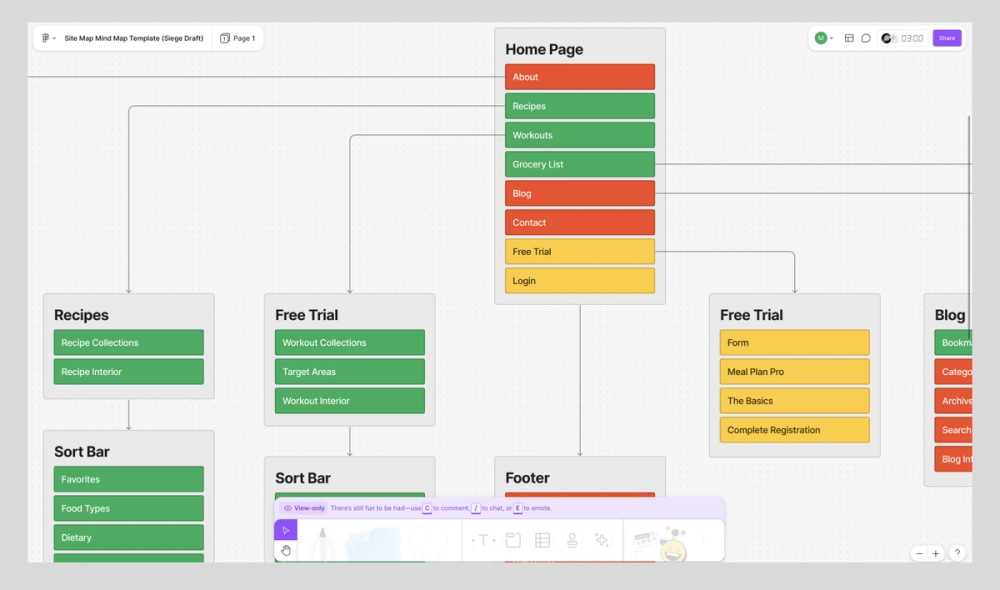
This site map template allows you to map out how pages connect on your website. While the Web design template focuses on UX, this chart focuses more on subdomains and links connecting pages. Illustrating your site architecture helps optimize it and ensure pages link together intuitively. Managers and Web designers can also share suggestions and feedback on the map.
Example 18: Blog structure mind map

Best for: content marketers and Web developers
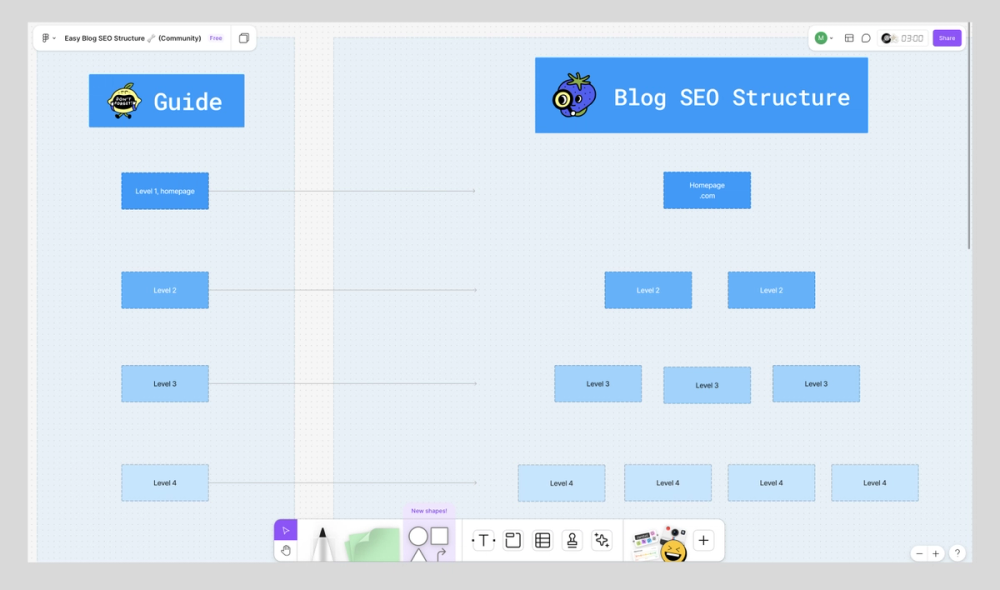
Blog mind maps visualize the structure of an SEO-optimized blog page. They list the categories covering topics related to your business and the number of articles within them.
Developers can use this template to understand the full scope of a blog they’ll build. It also allows marketers to hone in on keywords that capture the most traffic. Since blogging is an important marketing element, building an optimized blog can draw in new customers and help define your user personas.
Design tip: Include topic ideas underneath the lowest boxes to brainstorm the kinds of articles you want to write.
Example 19: Meeting agenda mind map

Best for: meeting leaders or team members who want to contribute to an agenda
Whether you want to plan the perfect project kickoff meeting or level up your weekly check-ins, mind maps can help.
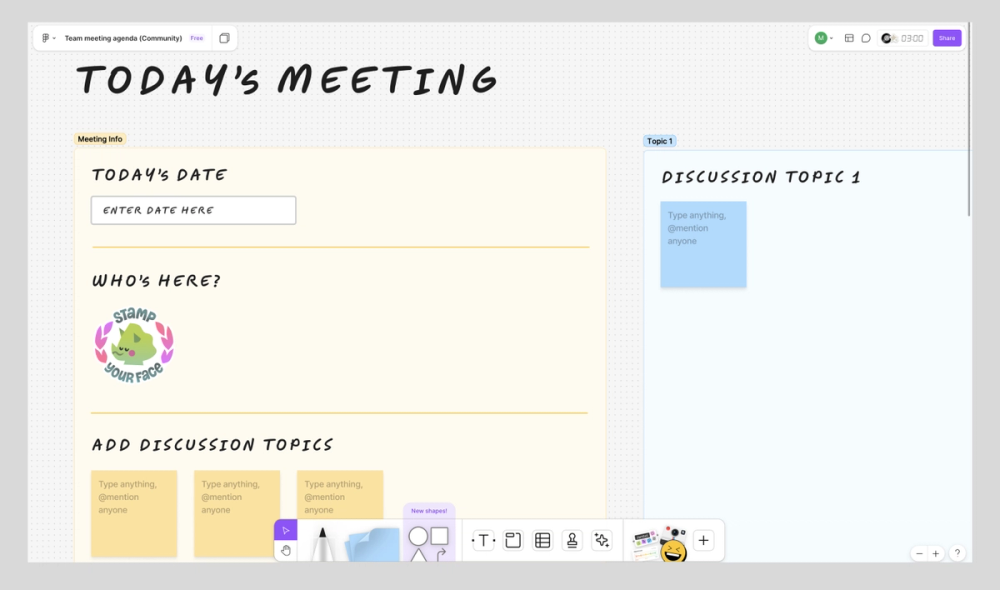
This meeting agenda template blurs the line between a mind map and an agenda. Like a mind map, it’s built around a central topic—in this case, the meeting—and team members can add discussion points or additional notes.
Example 20: Transportation mind map

Best for: individuals and businesses planning transportation
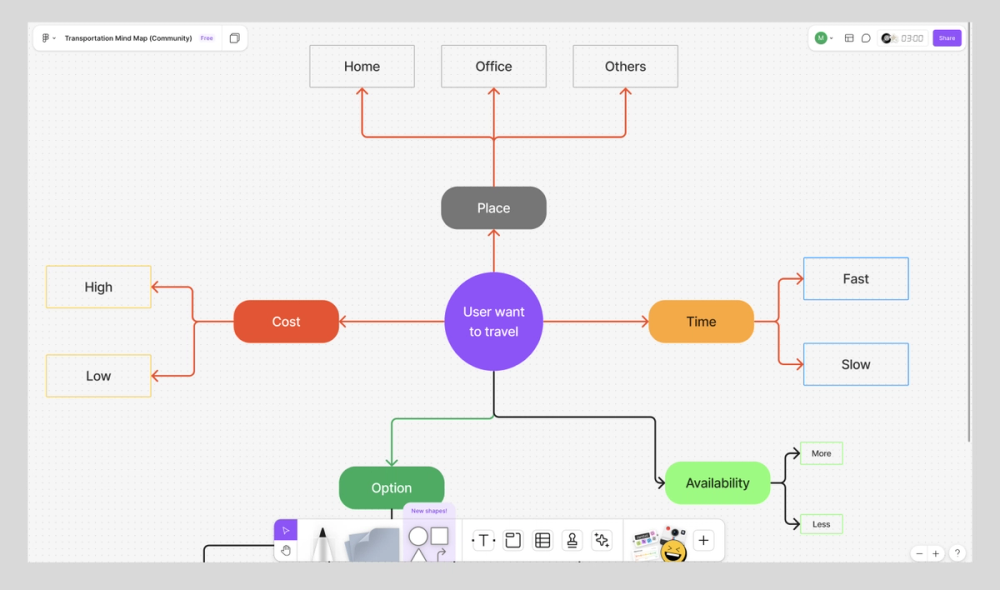
Transportation mind maps outline the logistics of planning transport. They account for the cost, time, and resources that go into getting from point A to point B. You can also adjust these variables based on where you’re going and when. This chart lets you organize transportation options in a central place your team can refer to at any time.
Example 21: Event planning mind map

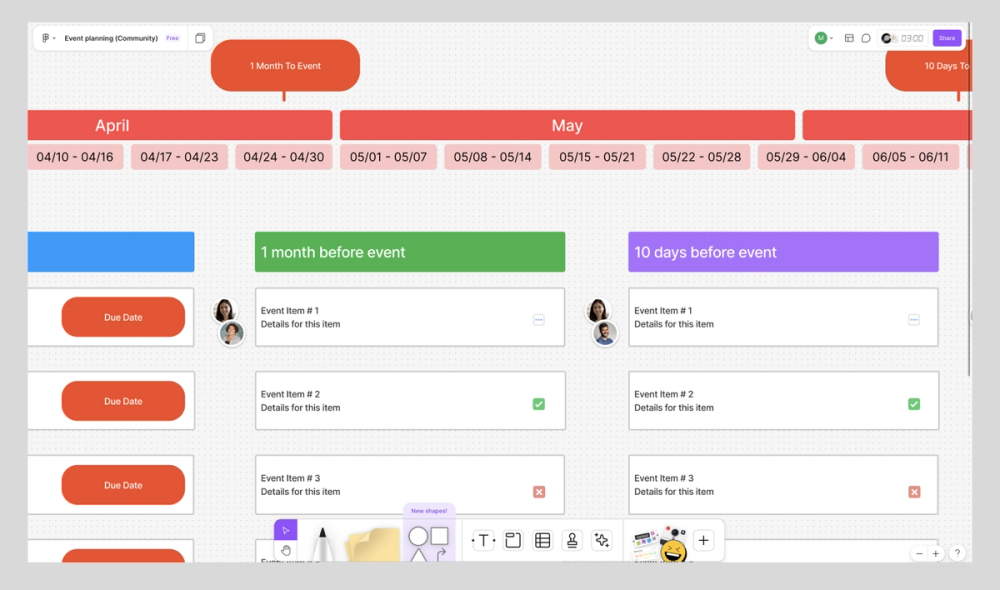
Best for: event organizers
An event planning mind map outlines the tasks needed to prepare for a special occasion. Instead of branching into nodes around a central topic, categories revolve around tasks due at different intervals. You can also enter event details and ideas into an overview section. This template helps event planners stay organized and share their schedules with vendors and other stakeholders.
Example 22: Note-taking mind map

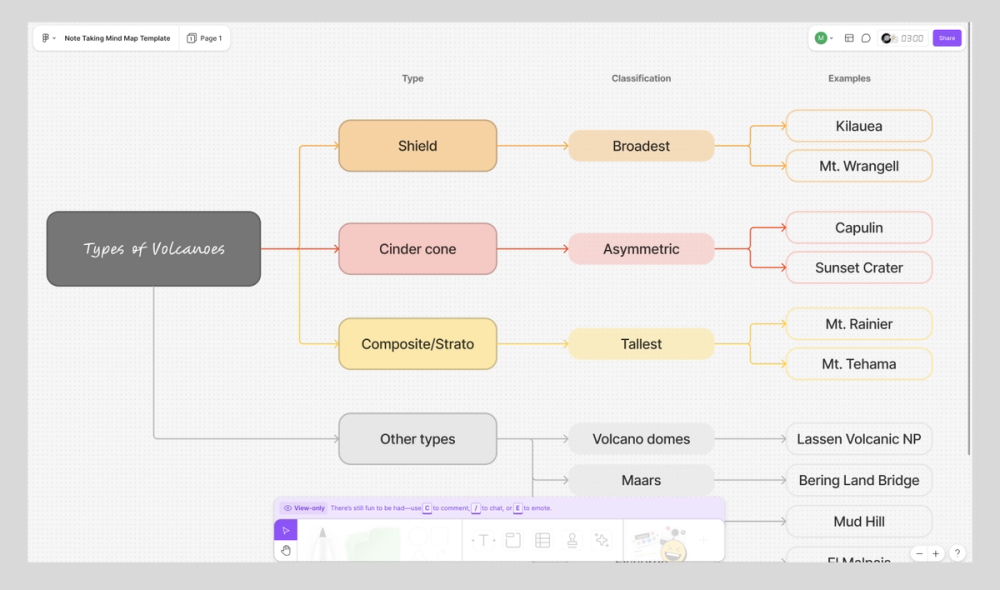
Best for: those taking meeting or class notes
Note-taking templates provide a visual alternative to writing bulleted notes on a page. With this template, you can note how broad concepts break off into smaller ideas and explain their differences.
This template shows visual learners how ideas connect and conveys information more quickly than reading down lists of facts on a page, making it one of the best mind map examples for students. Use it for:
- Listing crucial ideas during a lecture
- Sharing information with someone who couldn’t attend a meeting
- Summarizing the main points in a lesson
If you’re looking for a more straightforward note-taking template, consider these:
Example 23: Creative writing mind map

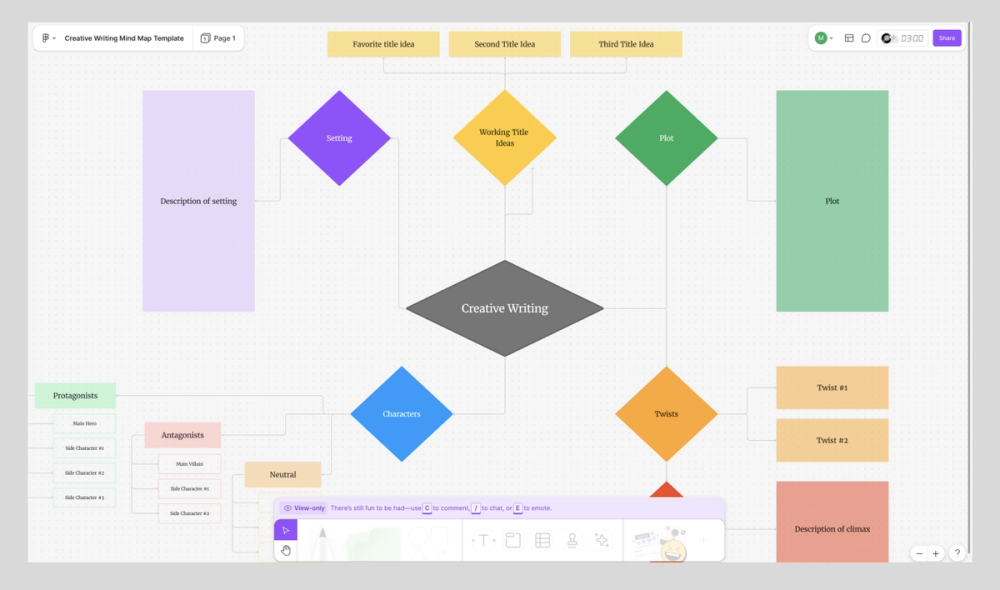
Best for: writers and editors who create story overviews
Creative writing mind maps visualize the most critical elements of a story—your plot, characters, themes, and setting all relate when writing a narrative. With this map, you can create a visual relationship between specific themes, chapters, and characters.
Mapping a story lets you hone in on its most essential qualities. Whether that means charting a central theme or the story’s climax, you can highlight the story’s main message. You can also use this template in a pitch meeting to present your story to agents and publishers. It also works as a great mind map example for essay writing.
Example 24: Brace map example

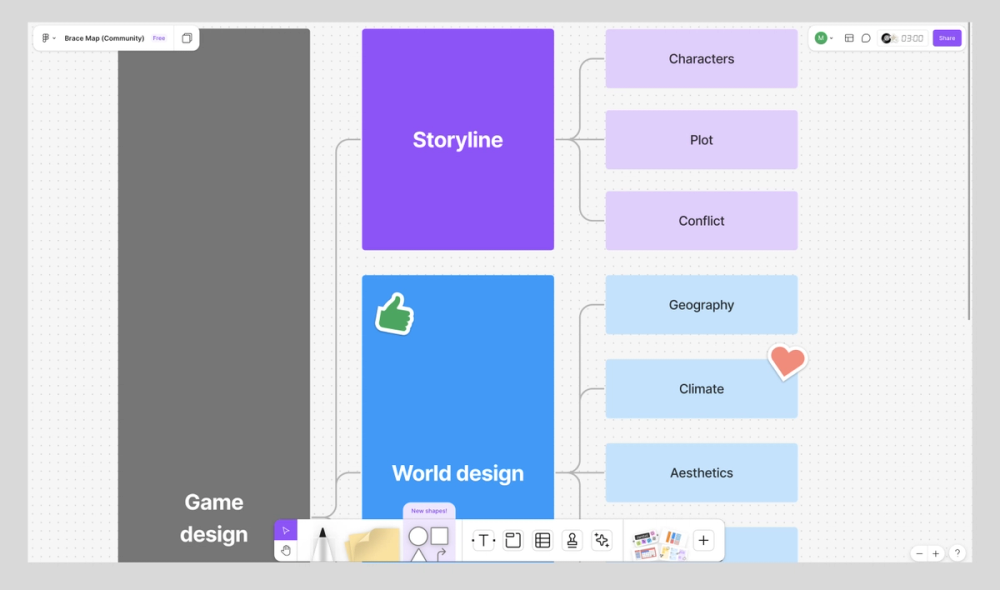
Best for: product designers, engineers, and systems thinkers
Use a brace map template to break a big idea down into individual parts. Brace maps are perfect for visualizing the structure of complex systems or physical objects because, unlike other mind maps that branch out around abstract ideas, brace maps start with a single item (like a product, machine, or design) and deconstruct it into its core components.
This type of mind map is especially useful for teams working on product development, engineering, or UX design. Whether you’re outlining the internal parts of a new device or mapping out the features of a software interface, brace maps help you see how each puzzle piece fits into the whole.
Five key characteristics of mind maps
If you’re new to diagramming, you might not recognize mind maps on sight. Plenty of diagrams help with brainstorming, but mind maps play a key role in early-stage ideation and planning. Typically, a mind map has five elements:
- The chart revolves around a central image or idea.
- Themes branch out from the main idea.
- These branches include a keyword or image labeled on their lines.
- Less important topics typically only appear as “twigs” on these branches.
- The branches form a unified structure made up of individual nodes.
Mind mapping FAQ
Uncover the answers to common questions about mind maps below.
What is the best type of mind map?
The best mind map depends on the specific task you’re planning for. When you need to manage a project, design a website, or make financial plans, there’s a mind map for it. If you’re in the early planning stages, a general template will likely suit you better. For that, try a simple mind map, bubble map, or flow chart.
What mind-mapping best practices should I keep in mind?
On top of choosing the right template, here are a few tips to make the most of your mind map:
- Color-code related ideas to visually associate them.
- Use arrows and icons to show how ideas connect.
- Make sure your mind map branches out from one central topic or idea.
- Keep the text short and clear to let the visuals convey information.
Do I need mind map software?
You don’t need a dedicated service to make or customize mind maps. However, platforms like FigJam offer the chance to collaborate on mind maps remotely via an online whiteboard tool. You can also browse a library of over 300 templates to help kickstart your creativity.
Improve team collaboration with FigJam
No matter the industry, cross-functional teams often face challenges in effectively communicating complex concepts and fostering shared understanding. But mind maps aren’t just places to list ideas. As you can see from the mind map examples above, these diagrams give you the space to think through solutions and explore ideas collaboratively.
The good news is, you don’t have to create a mind map from scratch. FigJam can help. Here’s how:
- Get started with the FigJam mind map maker.
- Kickstart your creativity by exploring the mind map template library to find the perfect fit for your project’s needs.
- Use FigJam’s collaborative features like timers, stamps, and audio to get real-time input from your team as your mind map evolves.
Ready to make your own mind maps?
Design your next mind map using FigJam
Keep reading


How to mind map
How can you remember the important stuff and forget the rest? Learn how to mind map, and you’ll learn how to think more clearly.


What is an empathy map?
Learn how to visually represent a user’s attitudes and behaviors.


How to create a user journey map
Learn how to pinpoint where the customer experience can be improved.