7 real-world concept testing examples + how to validate your own ideas
Share 7 real-world concept testing examples + how to validate your own ideas
Explore more from
Team productivity


Great products look obvious in hindsight, but they rarely start that way. When you’re deep in the exploration phase, you need a way to separate a true breakthrough from a distraction. Concept testing gives you room to experiment before you commit to the sprint.
We’ve rounded up seven real-world concept testing examples and a step-by-step framework to help you validate your direction before you ship a single pixel.
Read on to learn:
- The critical benefits of testing early
- 7 examples from Tesla, Airbnb, Spotify, and more
- The metrics and methods behind each test
- How to run your first test in five steps
Why concept testing matters for product success
Spending months building a product that misses the mark is a painful (and expensive) lesson. Concept testing gives you a reality check before you commit to code.
Here’s why it matters:
- Save time and budget. It’s faster and cheaper to iterate on a prototype than to rewrite a codebase. Testing catches fundamental flaws while the stakes are low.
- Back up design decisions. Instead of relying on opinions to make decisions, you get concrete feedback to refine your features and messaging.
- Prioritize the product roadmap. You likely have a backlog bigger than your team can handle. Testing reveals which features are in demand, so you can focus on high-impact wins. Using a variety of MVP testing methods early in the process helps you gather this signal before you commit to a full build.
- Ship with confidence. Validated ideas cut down on second-guessing and help you get from first draft to final product with less friction.
Turn concepts into prototypes instantly
Figma Make helps you spin up working apps in minutes, validating ideas without spending valuable dev time.
7 real-world concept testing examples
You don’t need a fully polished product to get the answers you need. Some of the most successful brands started with little more than a slide deck or a landing page. These examples show how leading companies used concept testing to validate their direction early, before scaling.
Example 1: Tesla Model 3 pre-order campaign

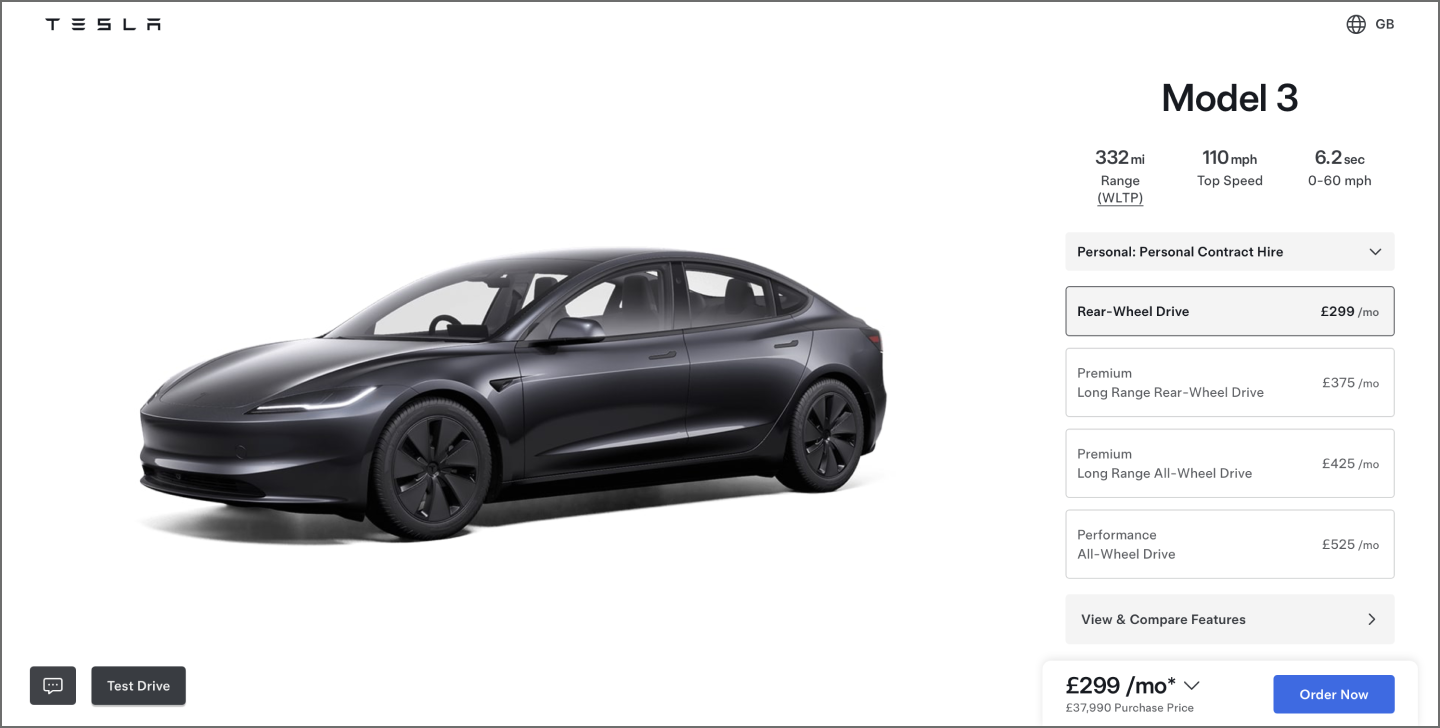
Tesla placed a big bet in 2016: the world was finally ready for a mass-market electric vehicle. But building a new manufacturing line is a huge financial risk. To demonstrate demand, they launched a pre-order campaign that required a refundable $1,000 deposit.
The deposit filtered out casual window shoppers and created social proof. Seeing lines wrapping around city blocks made the car feel exclusive, even though it was designed for a broad market. That visible demand created a feedback loop—the more people joined the waitlist, the more desirable the car became.
By the end of the week, Tesla secured hundreds of thousands of reservations. That gave them an interest-free loan and the confidence to ramp up production.
Experiment snapshot
- Test type: Smoke test (collecting payment for a product that doesn’t exist yet to validate purchase intent)
- Hypothesis: Consumers are ready to buy a mass-market electric vehicle and are willing to pay upfront for it
- Key metrics: 325,000 pre-orders in the first week (generating roughly $14 billion in implied future revenue)
Example 2: Airbnb professional photography pilot

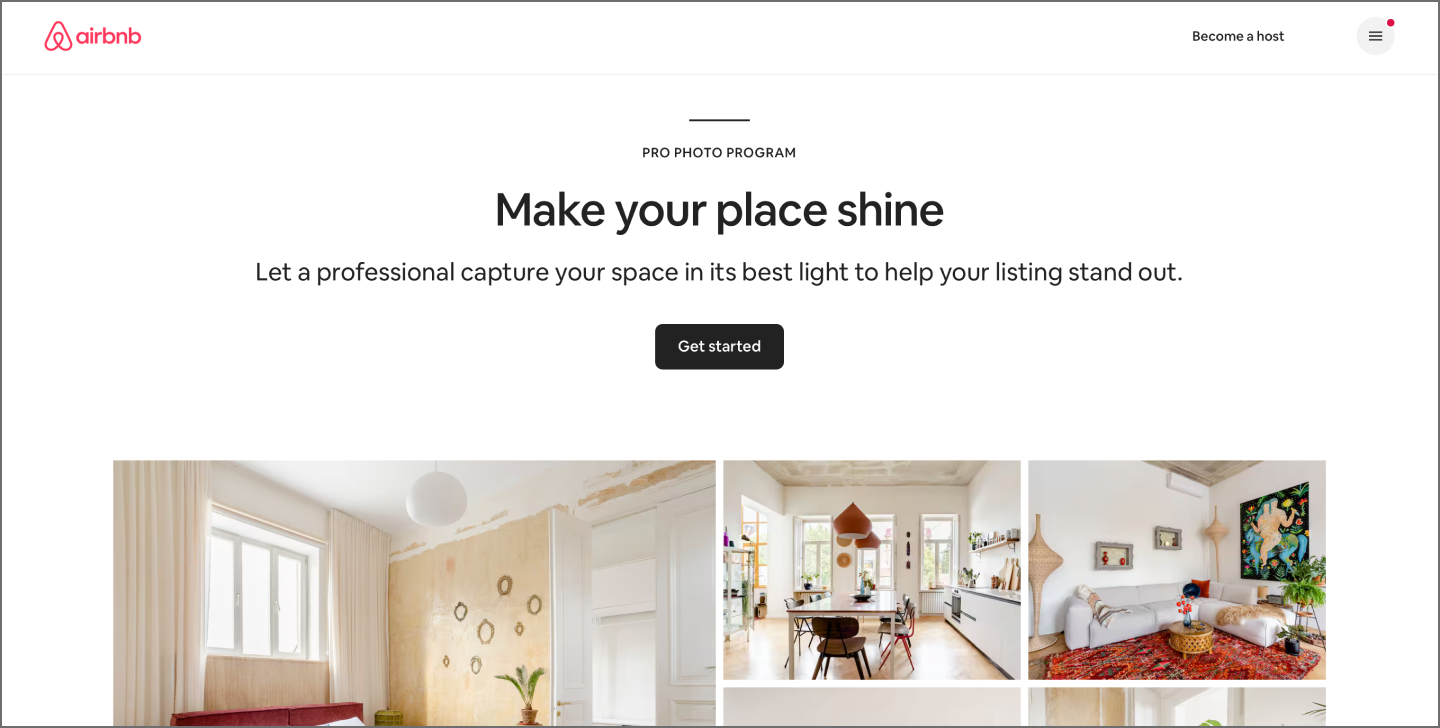
Airbnb was barely scraping by in 2009. The founders realized the issue wasn’t the platform, but the presentation. Hosts were uploading grainy smartphone photos that made the apartments look unappealing and untrustworthy.
They hypothesized that high-quality photography was the key to building trust. To test this, the team flew to New York, rented a camera, and went door to door, taking high-resolution photos.
The results were instant. Listings with professional photos saw their revenue double within a week. This small, manual experiment justified the investment in a global network of freelance photographers, a program that fueled Airbnb’s growth for years.
Experiment snapshot
- Methodology: Concierge test (manually performing a service to validate the value before automating the process)
- Hypothesis: High-quality photos increase user trust and booking rates
- Key metrics: Weekly revenue doubled from $200 to $400 immediately following the photo updates
Example 3: Dropbox explainer video

In 2007, syncing files between computers was a technical nightmare. Dropbox founder Drew Houston had an idea for a tool that would solve this, but he didn’t want to waste years coding something that nobody would use. He needed to prove that people understood the problem enough to want the solution.
Houston skipped the complex build and recorded a basic four-minute video. He shared a simple screen recording of the product in action, showing him dragging and dropping files that updated instantly across devices. He directed traffic to a landing page with only the video and a waiting list form.
The video took off with early adopters, proving that the pain point was real. Overnight, the beta waiting list surged, giving Houston the validation he needed to secure funding and build the complex infrastructure behind the tool.
Experiment snapshot
- Methodology: Explainer video MVP (visualizing a product’s functionality to gauge interest before building the complex backend)
- Hypothesis: Users will sign up for a file-syncing tool if they can see how simple it is to use
- Key metrics: The beta waiting list jumped from 5,000 to 75,000 people overnight
Example 4: LEGO Ideas crowdsourcing platform

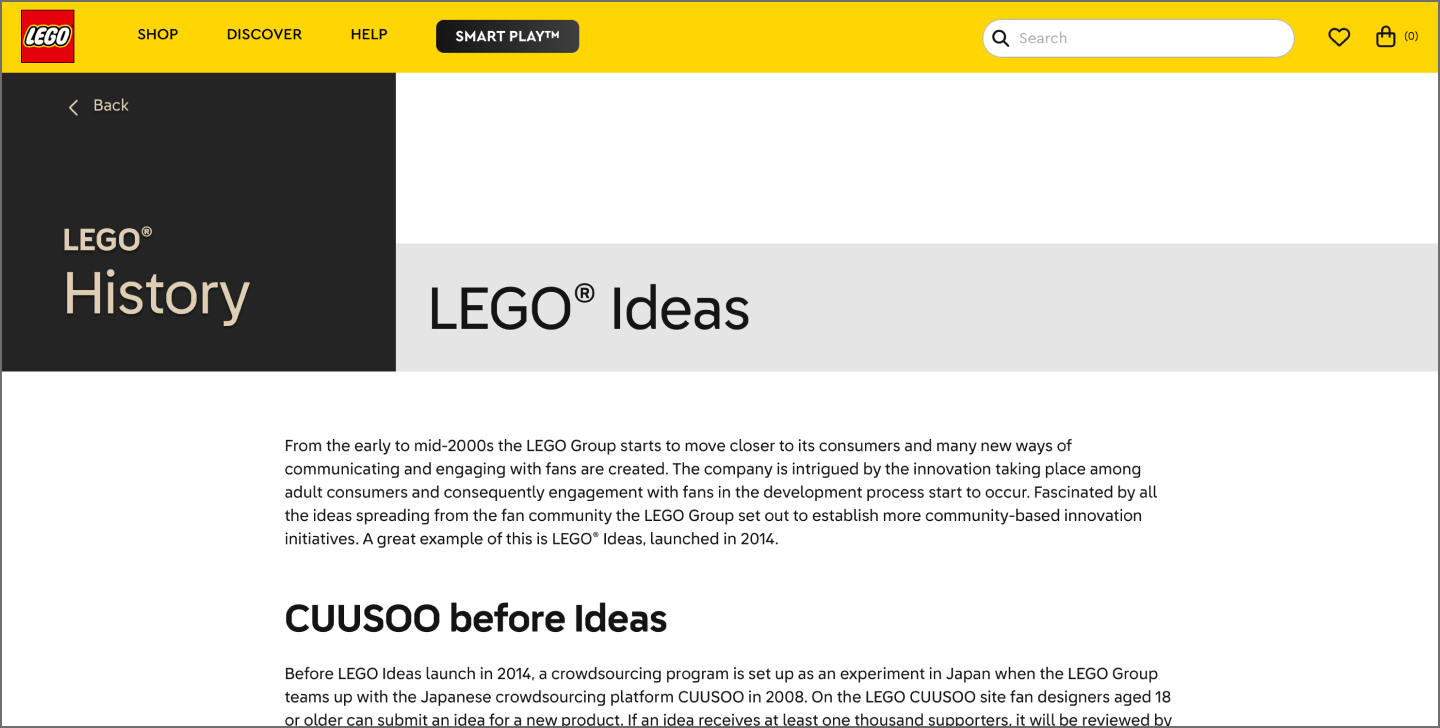
LEGO knew its community was full of brilliant designers, but turning a fan concept into a real product is a big logistical hurdle. Molds cost thousands of dollars, and inventory takes up warehouse space. If they guessed wrong on a new product line, the financial hit would be significant.
In 2011, they launched a crowdsourcing platform (now called LEGO Ideas) with one rule: anyone could submit a design, but the company wouldn’t touch it until 10,000 people voted for it. This required the community to demonstrate demand before LEGO spent a dime on manufacturing.
The system proved its worth almost immediately. A user-submitted Minecraft concept hit the 10,000-vote mark in just 48 hours. This data proved that demand was real. LEGO fast-tracked the set, and it sold out almost instantly.
Experiment snapshot
- Methodology: Crowdsourced validation (using community voting to validate demand before manufacturing)
- Hypothesis: High vote counts from the community are a reliable predictor of actual sales success
- Key metrics: The Minecraft project hit 10,000 supporters in 48 hours, validating the demand for a product line that became a global best-seller
Example 5: Buffer landing page validation

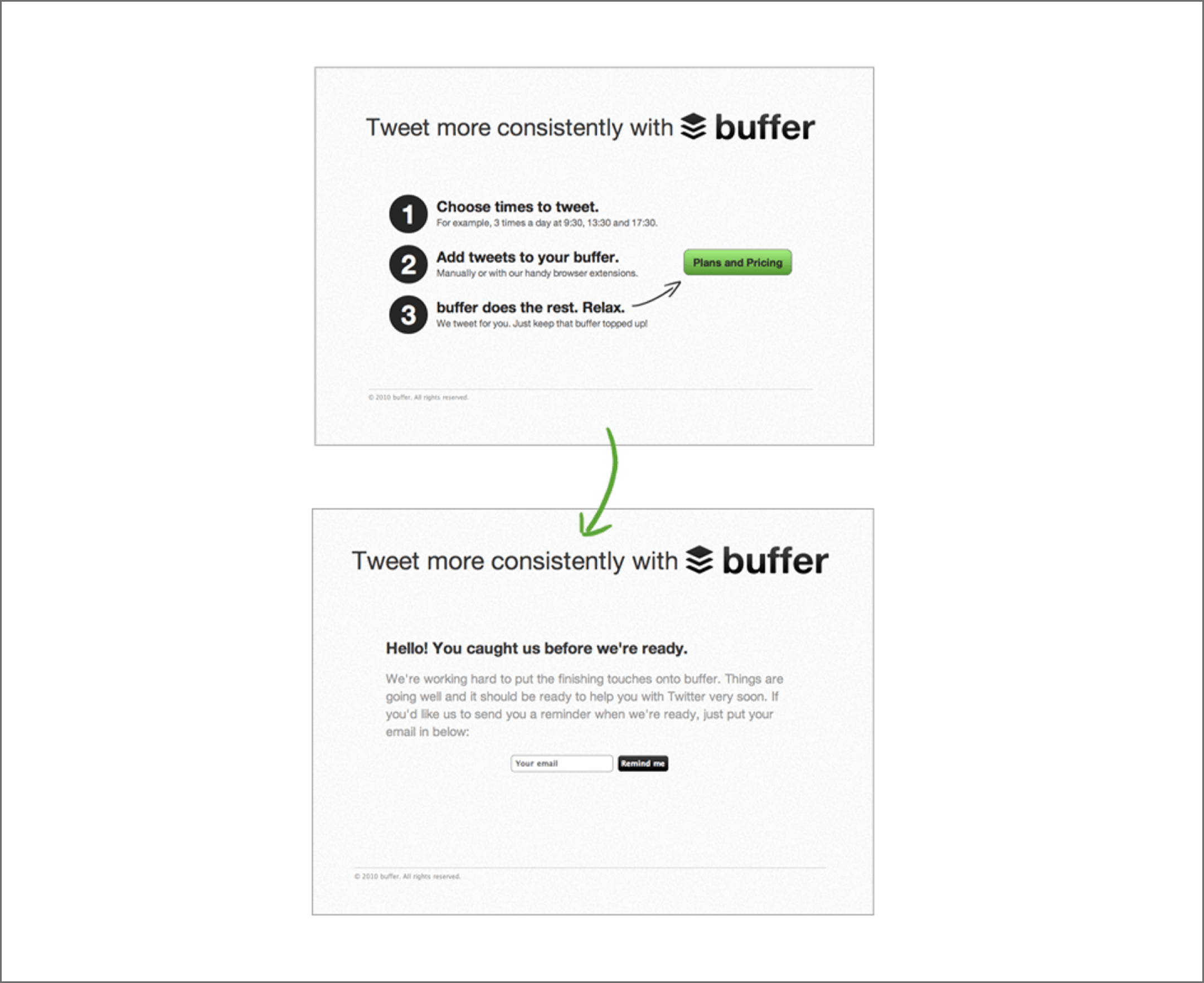
Joel Gascoigne wanted to solve a personal frustration in 2011: scheduling tweets without spamming his followers. Before building the full app, he started with a minimum viable product (MVP) of a two-page website.
The homepage described what Buffer did. If a visitor clicked the “Plans and Pricing” button, they saw a short note that read, “Hello! You caught us before we’re ready,” along with a field to enter their email.
Once those signups proved interest, Gascoigne ran a second test to validate revenue. He updated the site with a pricing table offering a free plan, a $5 plan, and a $20 plan. When visitors started clicking the paid options, he had concrete proof that the business model was viable.
Experiment snapshot
- Methodology: Landing page smoke test (measuring signup intent for a product that hasn’t been built yet)
- Hypothesis: People are willing to pay for a tool that schedules tweets
- Key metrics: Gascoigne secured his first paying customer just four days after launch, with around 4% of free users upgrading to paid plans
Example 6: Zappos concierge MVP

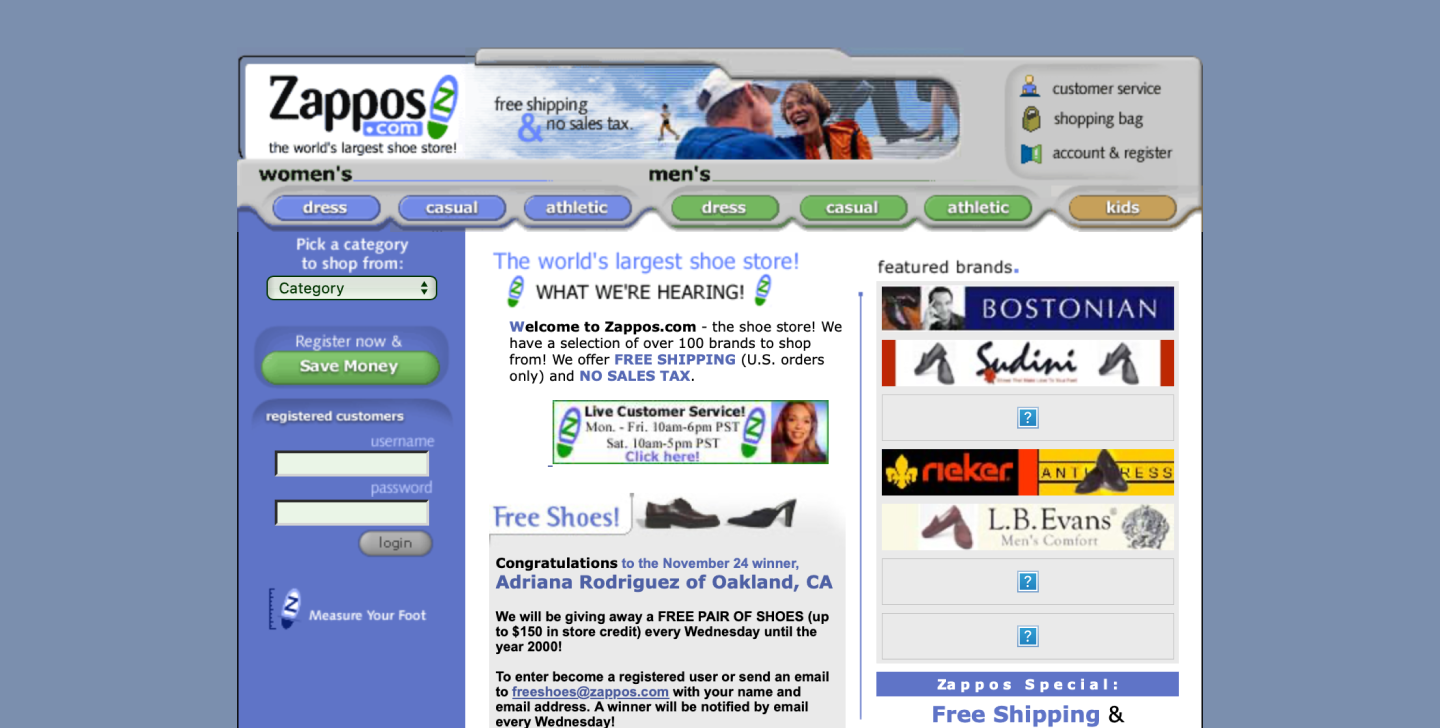
When Nick Swinmurn couldn’t find a pair of brown Airwalks at his local mall in 1999, he had an idea. He knew the internet could fix the problem, but experts insisted that buying shoes without trying them on was a non-starter.
To test his theory, Swinmurn visited nearby retailers, snapped photos of their stock, and uploaded the images to a website called Shoesite.com. When someone bought a pair, he’d run to the store, buy it at full price, and ship it himself.
Although the operation lost money, it generated the evidence needed to prove the model—that customers were willing to buy shoes sight unseen if returns were easy. This scrappy test kickstarted a company that did $1.6 million in sales just one year later.
Experiment snapshot
- Methodology: Concierge MVP (manually delivering a product to prove demand before automating or scaling)
- Hypothesis: Customers are willing to buy shoes online without trying them on first
- Key metrics: The manual test validated the core buying behavior, resulting in $1.6 million in sales during the company's first full year of operation
Example 7: Spotify’s Discovery Weekly

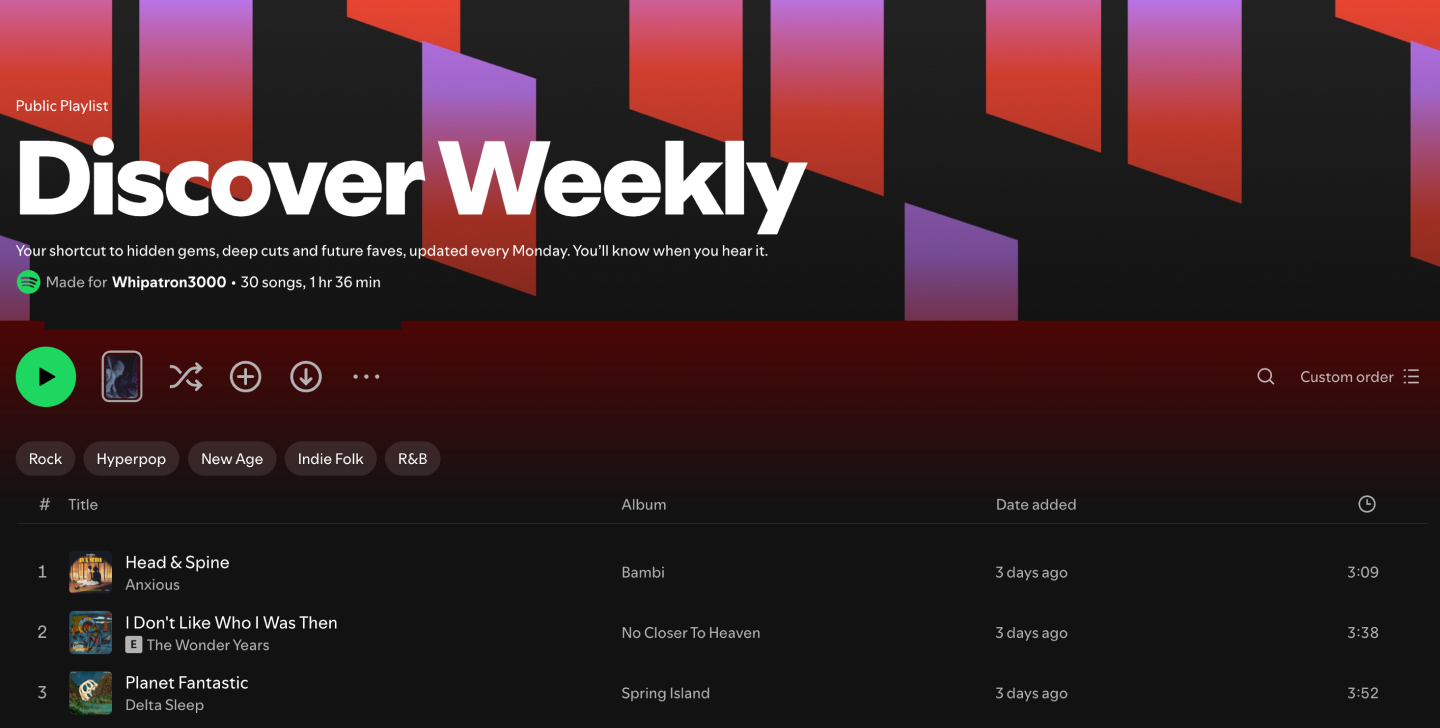
Discover Weekly is now a Monday morning ritual for millions, but it wasn’t always part of Spotify’s master plan. By 2015, Spotify had solved the access problem but created a new one: Users were overwhelmed by the sheer volume of music.
During the company’s annual Hack Week, engineers Matthew Ogle and Edward Newett built a solution using the data they already had. They analyzed the billions of playlists users had created, reasoning that if thousands of people added two different songs to the same playlist, those songs likely belong together.
They released a rough prototype to Spotify employees first. The internal reaction was immediate. Employees stopped using their own libraries and started waiting for their weekly update. That response proved the algorithm felt personal enough to work, giving the team the confidence to launch it globally.
- Test type: Internal prototype testing (releasing a rough version to employees to validate the experience)
- Hypothesis: Users will engage with a personalized, algorithmic playlist if it’s delivered on a regular schedule
- Key metrics: The feature hit one billion streams in its first 10 weeks.
Common methods for concept testing
How you test your concept depends on what you’re trying to learn and how much time you have to learn it. Some methods offer deep conversational feedback, while others gather broad validation. Here are five popular approaches for product concept testing:
- Focus groups. Bring a small group together to openly discuss your concept. Hearing how users describe the product to each other often reveals value props and group dynamics you hadn’t considered.
- 1:1 interviews. Sit down with users individually to go even deeper. Real conversations let you find friction points that a multiple-choice question might miss.
- Surveys. Gathering data quickly? Surveys can be a quick way to rank features or check pricing with a large audience.
- Landing page A/B tests. Publish a one-page site to measure real-world interest. Tracking clicks separates buyer intent from polite opinions.
- Prototyping. Tools like Figma Make let you build realistic, interactive experiences. High-fidelity prototyping is quickly becoming the new standard for validating complex workflows without writing code.
How to run a concept test in five steps
Testing acts as a compass for your product development process, but only if you follow a clear structure. Use this repeatable five-step framework to turn your hunches into a validated plan.
Step 1: Define your hypothesis
Every test starts with a specific question. Pinpoint the single most critical assumption that needs to be true for your idea to succeed.
Are you trying to prove:
- Value (do people actually want this?)
- Usability (can they figure out how to use it?)
- Viability (will they pay for it?)
Pick one variable and build your test around that.
Step 2: Choose your testing method
Your hypothesis dictates your toolkit. If you need to understand why users struggle with a specific workflow or what drives their motivation, you need the depth of 1:1 interviews or focus groups.
If you need to prove a market exists, you need hard numbers. Lean on surveys or landing page tests to gather statistical proof from a larger group.
Step 3: Create your stimuli
Now you need something to put in front of users. Use Figma Design to build whatever the test demands, whether that’s a wireframe or a high-fidelity, interactive prototype.
Low-fidelity prototypes work when you need to test the broad strokes, but go for high fidelity when you can. The closer your prototype gets to reality, the less room there is for misinterpretation.
Step 4: Recruit your target audience
Don’t overthink the headcount. For qualitative tests like 1:1 interviews, you need five to 10 people. By the fifth conversation, you’ll usually spot the patterns and hear the same feedback repeating itself.
Surveys are a different game. Since you’re looking for proof rather than insights, you need a much larger group to ensure the numbers are statistically significant.
Step 5: Analyze results and iterate
Compare your findings against the hypothesis you set in Step 1. If the feedback confirms your hypothesis, you have the signal you need to move into development.
If the results are negative or mixed, that’s valuable, too—it means you saved the team from building the wrong thing. Take those insights back into Figma Design, refine the design to address the feedback, and test again.
Start testing with Figma
Great ideas often get lost in translation without supporting data. As these concept testing examples show, the best way to remove ambiguity is to let user feedback speak for itself. Figma connects that evidence directly to your design work, bringing the entire process into a single shared space so you can validate, iterate, and align without breaking your flow.
Here’s how to use Figma to power your testing:
- Use FigJam to get the whole team on the same whiteboard and define your concept testing questions before you build
- Grab a wireframe kit to spin up a testable concept in minutes
- Use Figma Design to turn those wireframes into interactive, high-fidelity prototypes that behave like the final product
- Once the results are in, use Figma Slides to present your data and next steps to stakeholders directly from your design file
Ready to test your idea?
Use Figma Make to build clickable prototypes instantly, so you can validate flows and learn faster.
Keep reading

What is brainstorming? Tips, methods, and templates
Brainstorming is a creative process to unlock ideas. Discover more about the purpose of brainstorming and creative approaches with Figma.

How to create a product requirements document + template
A product requirements document (PRD) is a list of design guidelines and functions that project managers write to ensure key features make it into the release.