How to write a creative brief: five steps for designers


Share How to write a creative brief: five steps for designers
Explore more from
Team productivity


Ever tried assembling furniture without reading the instructions? It might work eventually, but the process is chaotic and frustrating, the result doesn’t quite match the picture on the box, and your heart sinks once you realize you left out more than a few screws.
Creative projects can fall apart the same way. Great design starts with a great brief, and writing a creative brief is like giving your team the instruction manual they need to build something extraordinary.
A good creative brief sets the foundation for your project’s success, bridging the gap between what stakeholders want and what your team delivers. It also establishes a reporting hierarchy and defines limits and guardrails so everyone stays on track. Whether you’re redesigning a website, shooting a video, or launching a fresh marketing campaign, a well-crafted brief keeps everyone aligned, motivated, and ready to produce their best work.
Read on to learn:
- What a creative brief is
- What to include in a creative brief
- How to write a creative brief in five simple steps
- The benefits of using a creative brief
- Creative brief examples and templates
What is a creative brief?
Creative briefs emerged from advertising in the 1960s when Stanley Pollitt came up with the idea for them while working in an agency. Today, they’re an essential tool in modern design workflows. Think of them as a living document that serves as your project’s source of truth.
At its core, a creative brief is a concise document (typically one or two pages) that aligns teams around a shared vision before work begins. It defines your target audience, core message, and project parameters, creating a framework that helps teams deliver purposeful work that meets expectations.
For design teams, the creative brief functions like a high-level style guide. It bridges the gap between business stakeholders and creative teams, establishing clear goals while leaving room for exploration. Project managers typically own the brief, gathering input from stakeholders and synthesizing it into actionable objectives for the team.
The most effective creative briefs strike a delicate balance between structure and flexibility. They provide enough guidance to keep work focused while still giving creative teams the space to play, innovate, and problem-solve.
When should you use a creative brief?
While they are essential for marketing and design projects, creative briefs are valuable for any initiative that requires clear creative direction, including:
- Event planning
- Video production
- Product launches
- Cross-functional team projects
- Website design and development
- Brand identity development or rebranding
- Marketing campaigns (email marketing, social media, etc.)
- Content creation (blog posts, podcasts, short-form videos, etc.)
Creative briefs are also used in various industries. For example, filmmakers and production teams use creative briefs to align directors, cinematographers, and writers on the visual tone they want for the story. Meanwhile, tech companies like Apple use creative briefs to guide product launches, ensuring their marketing materials match what consumers have come to expect from the innovative brand.
What is the difference between a design brief and a creative brief?
A creative brief sets the strategic foundation for your project. Think of it as the high-level requirements that guide all creative decisions. It aligns cross-functional teams around the big picture, addressing aspects like:
- Project purpose and key message
- Target audience
- Deliverables
- Key milestones and deadlines
A design brief, on the other hand, builds on this foundation with specific technical and visual requirements. It translates strategic goals into concrete design parameters for graphic designers, UX/UI designers, and other visual artists working on the project deliverables.
A design brief might include:
- Brand guidelines like color palettes, fonts, and logos
- Additional visual direction and mood boards
- Packaging designs
- Examples and mood boards
- Specific dimensions and file formats
- Other technical specifications and requirements
While creative briefs guide the overall project vision, writing a design brief gives designers the detailed specifications they need to execute that vision effectively. In many design workflows, the creative brief informs the design brief, ensuring visual decisions support broader project goals.

What to include in a creative brief
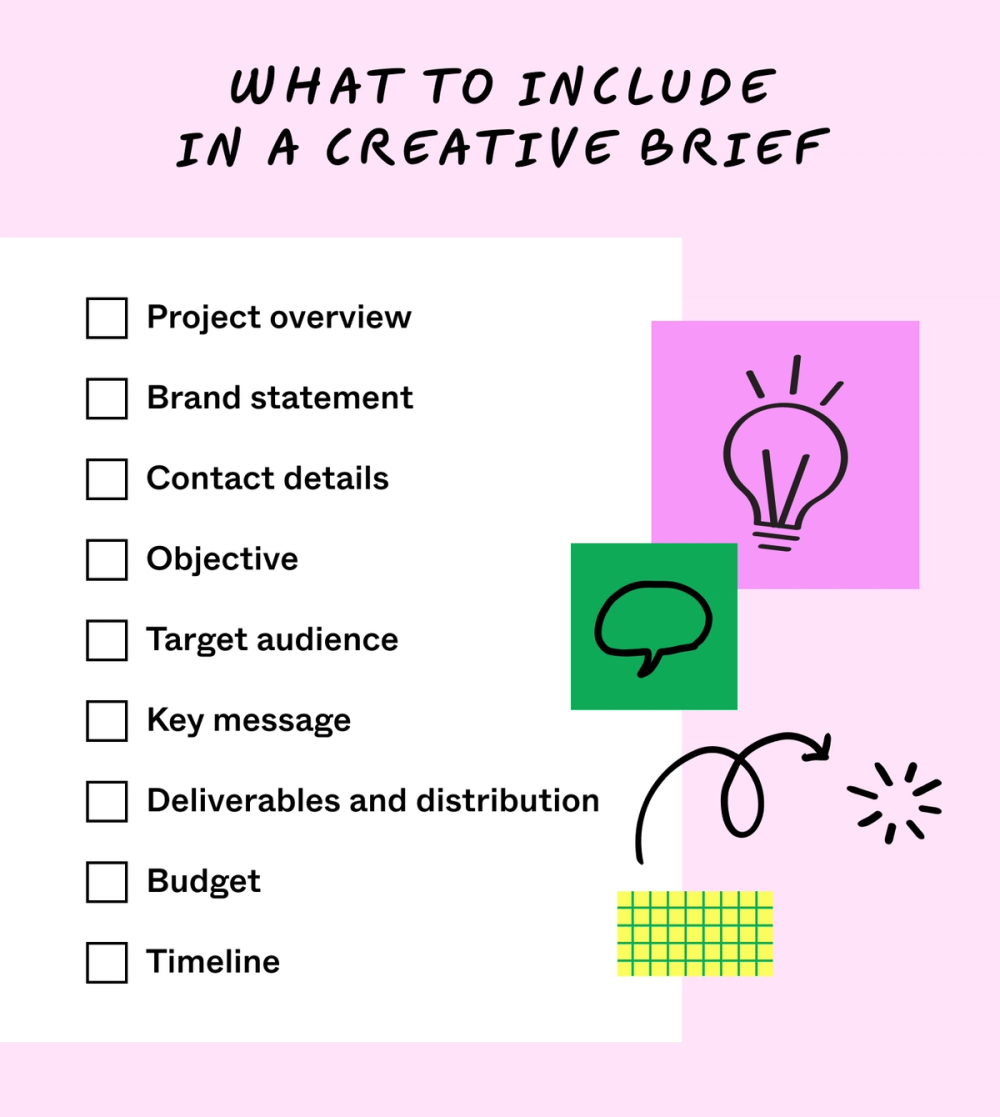
A creative brief should be clear, concise, and easily scannable. Here are the key components to include:
Project overview
Start by naming your project and specifying what brand or company it’s for. Next, clearly define the project—is it a new billboard, product launch, social media marketing campaign, TV commercial, or something else? What kind of market research informed the creation of this project, if any?
Brand statement
Briefly summarize the brand’s mission, vision, and values. Is the brand voice tone formal, humorous, friendly, or something else? How does the brand differentiate itself from competitors?
Point of contact
Who is the point of contact for this project? Include details like their name, email, and phone number. If this is an internal project, you can write the project manager or team leads responsible.
Objective
Set a clear objective for the project. Do you want to increase brand awareness, drive traffic to a new web page, generate leads, or all of the above? Try to make it a SMART goal: specific, measurable, achievable, relevant, and time-bound. For example, instead of something vague like “Go viral,” you can say “Gain 40,000 followers.”
Specify key performance indicators (KPIs) you can measure, like website traffic, social media engagement, or conversion rates. What is the call to action? What are viewers prompted to do next?
Target audience
Who is your demographic? What are their pain points and desires? Consider their age, gender, location, income, hobbies, and other characteristics that could influence the messaging of your project. If you already have existing user personas, this is where to share them.
Key message
What is the main message you want to communicate? Create a core narrative that connects with your audience and outlines your key selling points. This message should inform all creative decisions throughout the project.
Deliverables and distribution methods
This section is similar to the project background, but here, you’ll break it down into a specific number of final products—for example, 12 new photos or social media posts. Once those deliverables are completed, what are the preferred channels for their distribution (social media, email, print, video, etc.)?
Budget and timeline
State the project’s budget, timeline, and specific deadlines. Depending on what kind of project you’re tackling, it may help to break these down into different phases. This transparency helps your team stay on track as they create deliverables.
How to write a creative brief in five steps
Ready to apply the above information to your own project? Here’s how to write an effective brief in five steps:
Step 1: Name the project and state an objective
Start with a descriptive project name, like “Spring Social Media Campaign” or “Website Redesign.” This helps with organization and clarity, especially if you’re managing multiple projects at once.
Next, set a clear objective. What is the call to action? Will the project solve a problem or reach a quantifiable goal? Remember to use SMART goals:
- Specific. Clearly define what you want to accomplish. “Increase website traffic” is too vague, but “Increase website traffic from social media by 15%” is specific.
- Measurable. Use metrics to track progress and success (e.g., website traffic, sales, social media engagement)
- Achievable. Set realistic goals while knowing the limits of your resources and capabilities.
- Relevant. Ensure the objective aligns with your overall business goals and marketing strategy.
- Time-bound. Set a timeframe for achieving the objective—for example, “Increase website traffic from social media by 15% in the next quarter.”
Step 2: Define the target audience
Who are you trying to persuade? Who will be reading or watching your final product? Go beyond basic demographics like age and gender and consider their interests, values, lifestyle, purchasing patterns, and media consumption. Consult user personas if you’ve already developed them.
Next, think about how your audience will benefit from the information you're sharing. What are their unique needs and pain points? What problems does your audience face and how can your product or service solve them? If you have a particularly diverse audience, consider audience segmentation to effectively custom-tailor your messaging.
Step 3: Set a deadline and budget
Break down the project into clear phases and tasks to establish a realistic timeline. Consider potential delays and build in buffer time. Next, create a detailed budget. Start with a clear understanding of the project’s scope and objectives, then list all potential costs, including materials, tools, software, talent, and any external services like freelancers or agencies.
Next, break these down into fixed costs (like subscriptions or equipment) and variable costs (like hourly rates or travel expenses). Remember to factor in contingency funds (typically 10 to 15% of the budget) to cover unexpected expenses.
The importance of aligning everyone on these points cannot be overstated. Make sure project managers and their superiors approve the budget and timeline before moving forward and assigning roles.
Step 4: Define the brand message, voice, and tone
First, articulate your core message. What essential truth must your audience understand? This message should align with your project objectives while supporting your broader brand story.
Next, establish how this message should be communicated. Is your brand voice formal or conversational? Authoritative or friendly? Technical or accessible? The tone you choose should resonate with your audience while supporting your message and desired impact.
Finally, consider the emotional impact. What should your audience feel when engaging with your project? Whether you want them to feel informed, inspired, or motivated to act, these emotional goals will guide creative decisions throughout the project.
Step 5: Outline deliverables and methods of distribution
List out final deliverables in detail. Document exactly what needs to be created and how it will reach your audience. Include things like:
- Clear list of required deliverables with specifications
- Team member responsibilities and approval workflows
- Distribution channels and timeline
- Success metrics for each deliverable
Then map these deliverables to your timeline to ensure alignment with project milestones and resources.
Benefits of using a creative brief
A creative brief brings these benefits to your project:
- Aligns stakeholders. A creative brief gets everyone moving in the same direction from day one, ensuring stakeholders and creative teams share a unified vision for the project.
- Enhances collaboration. With a central source of truth, departments can collaborate while maintaining consistent messaging and direction.
- Improves consistency. A creative brief provides a unified framework for brand messaging, tone, and visual aesthetics across all project deliverables.
- Builds client confidence and trust. Clear organization and thorough planning demonstrate professionalism and give clients confidence their project is in good hands.
- Saves time. By providing clear direction upfront, a creative brief prevents misunderstandings down the line that could delay project completion.
- Reduces scope creep. By establishing clear boundaries (a budget, deadlines, etc.) and deliverables upfront, a creative brief helps teams focus on creative solutions without getting derailed by scope creep.
- Measures success. A creative brief establishes criteria for evaluating the effectiveness of the final output, making it easier to judge whether or not the project met its objectives. By including concrete success metrics and KPIs, you can measure impact and demonstrate project value.
Creative brief examples and templates
Need more inspo? Check out three creative brief examples made using FigJam’s handy creative brief template.
Social media campaign creative brief example

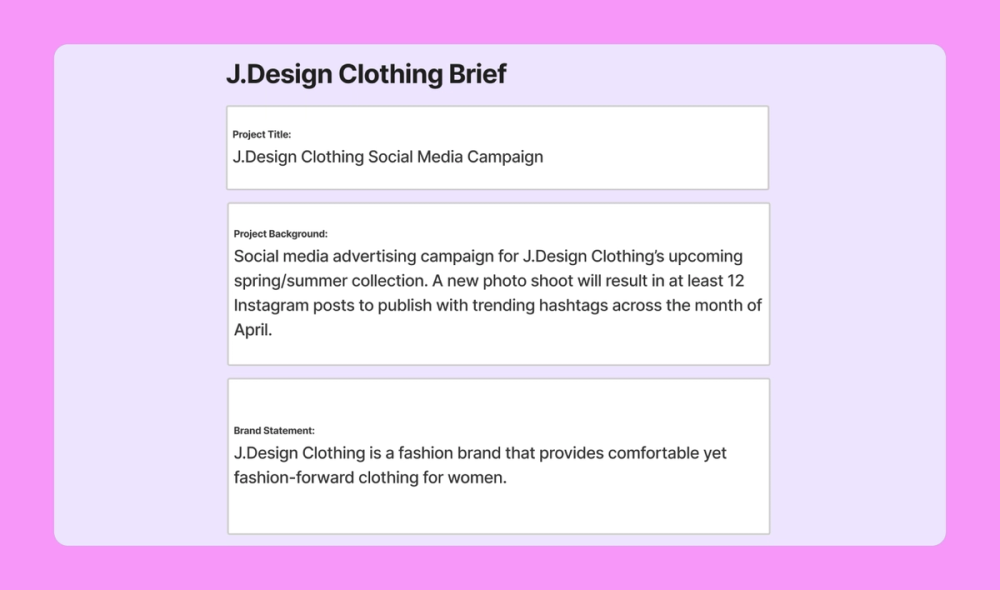
Here’s a creative brief for a set of Instagram posts to promote a clothing brand’s newest collection. The budget will cover the cost of hiring models, photographers, and editors, as well as setting up paid Instagram ads.
In addition, the brief describes the target audience (who will want to purchase the clothes) and the key message (where they can wear the clothes and how they will feel in them). It also details resource requirements and outlines quantifiable goals like “Gain 5,000 Instagram followers” and “Increase online sales by 15%.”
Blog post creative brief example

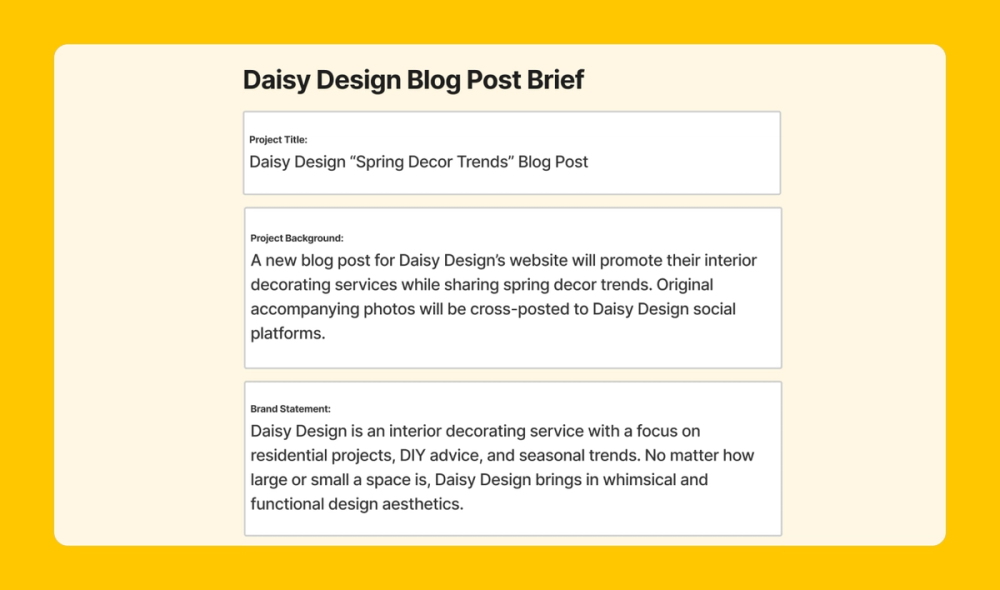
This brief is for a new blog post about spring decor trends for the Daisy Design interior decorating website. Once again, the goals are clear and quantifiable: communicate important info to readers, sign five new clients, and get 10 organic backlinks before July.
The brief also breaks down the deliverables (a 1,500-word blog post and 13 new photos). It even goes into further detail regarding roles and responsibilities by assigning five team members (a writer, two editors, and two photographers) to complete those deliverables.
Marketing campaign creative brief example

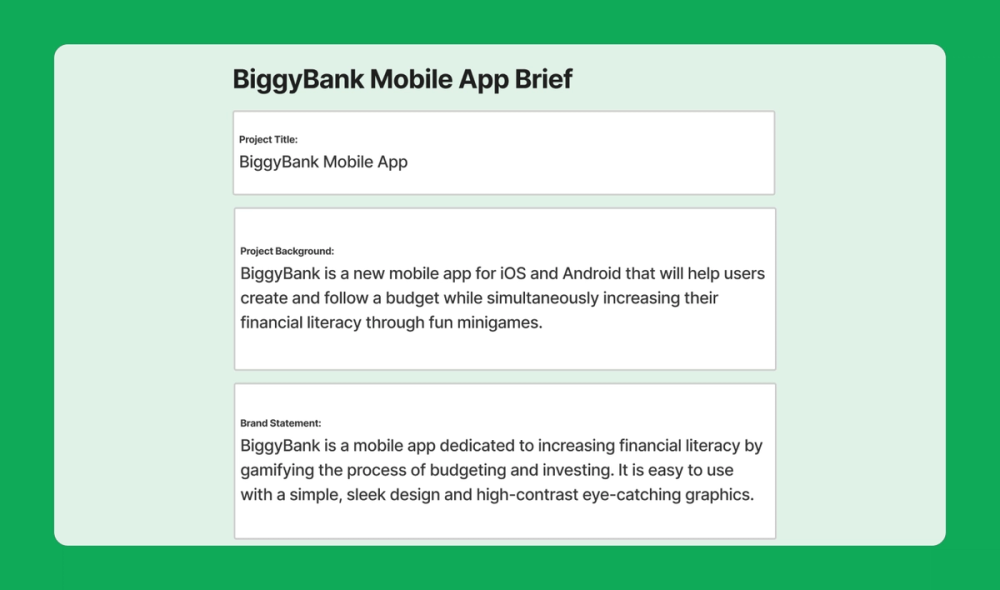
The last creative brief example is for a marketing campaign for a new financial literacy and budgeting app called BiggyBank. It sets a goal of accruing 7,000 downloads one month after the campaign’s launch. It also includes mobile apps that inspired the creators.
A complex project like this has many deliverables and a large team of designers and developers. Of course, this also translates to a longer timeline and a bigger budget.
Creative brief best practices
Transform your creative briefs from good to great by applying these best practices:
- Collaborate early with all stakeholders. Involve key stakeholders early to align on goals and prevent misaligned expectations down the line.
- Keep the document concise and focused. Link to supporting documents rather than including every detail. A scannable brief helps teams grasp key points quickly.
- Update the brief as the project evolves. Treat the brief as a living document, keeping everyone informed of any changes.
- Learn and refine. Review what worked and what didn't after each project to strengthen your briefing process over time.
Craft a creative brief for your next project with FigJam
Once you know how to write a creative brief, your team and external collaborators are empowered to deliver the best work possible.
Ready to start? Check out FigJam’s creative brief template and explore more tools and templates to support every step of the creative process:
- Use a RACI matrix to clarify everyone’s roles in bringing the vision to life.
- Illustrate timelines and keep your projects on track with FigJam’s Gantt chart maker.
- Prioritize tasks and refine your workflow with FigJam’s Kanban template, featuring a built-in voting tool.
Ready to craft a creative brief?
Keep reading


How to create a persona
Understanding key personas for your product or business can help you better understand your design process.


What is a Gantt chart?
Learn how to create a clear timeline and structure for your project teams.


How to write a project charter
Learn how to outline key objectives, stakeholders, and logistics early in a project.