What is a team charter—and how to create your own


Share What is a team charter—and how to create your own
Explore more from
Team productivity
Plan, align, and collaborate in FigJam
Org charts, Kanban boards, meeting notes—everything your team needs to stay on track, all in one place.

Have you ever found yourself on a team project with unclear goals and roles? When people don’t know who’s doing what, even high-performing team members feel lost. A team charter can help define team's purpose and engage all stakeholders from the start.
Read on to find out:
- What a team charter is, plus a real-world team charter example
- Key benefits of a team charter
- How to create your own team charter in five steps with FigJam
What is a team charter?
A team charter outlines a team’s objectives, operating principles, roles and responsibilities. Aligning on a charter makes it easier for teams to collaborate with each other, measure progress on goals, and work with cross-functional stakeholders.
Imagine launching a new mobile app. Without a project charter, there could be misunderstandings about who does what to create the app. One team member may think they're responsible for feature design deliverables, while another thinks they're handling the same task. A team charter eliminates confusion by showing day-to-day team roles and individual responsibilities.
Team charter example
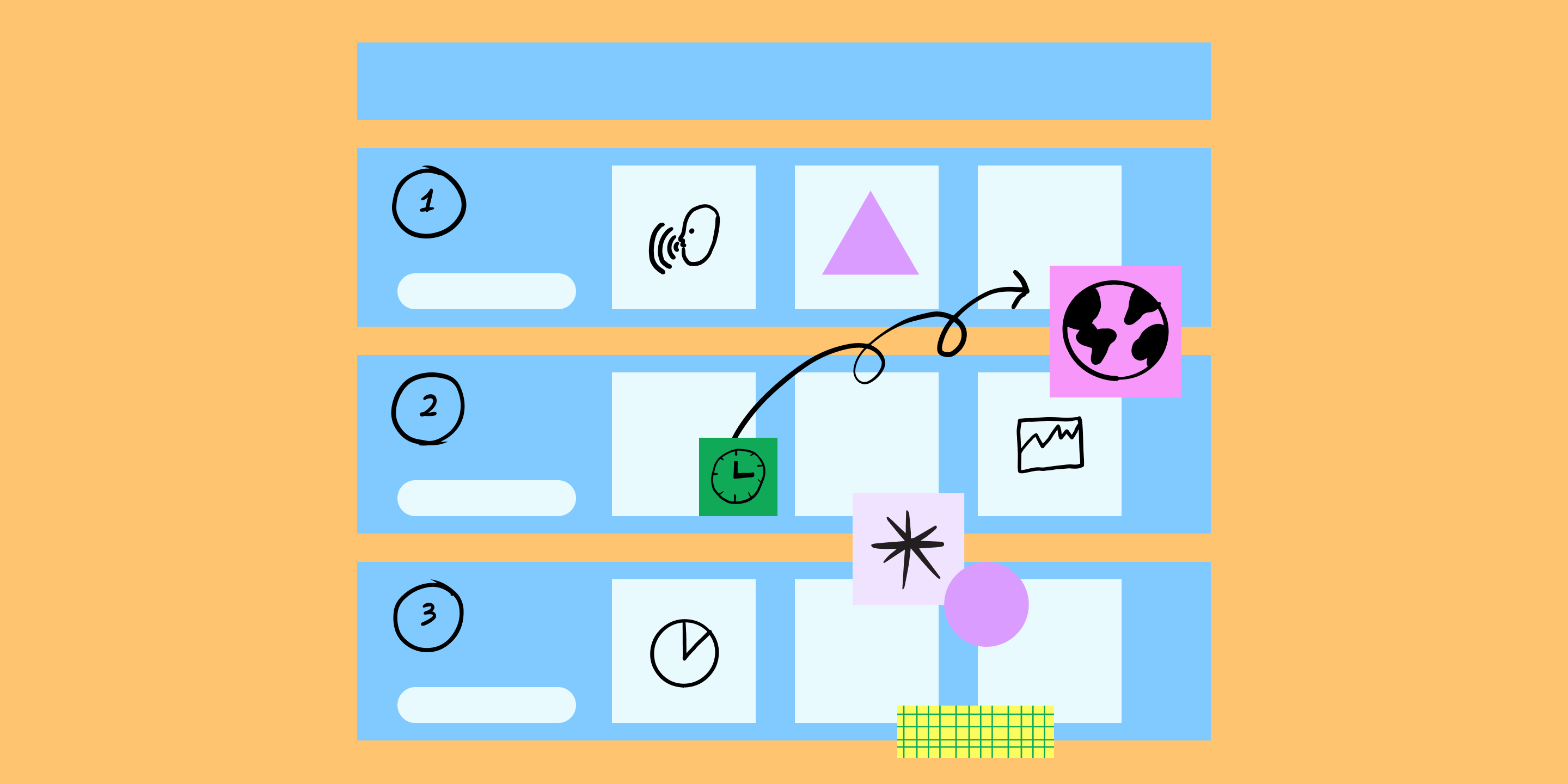
Consider this team charter template from the Figma community. This template jumpstarts your charter by prompting you to collect input from key stakeholders and team members. This collaborative effort helps the team spot potential areas of confusion, and align on a shared approach together.
3 key benefits of team charters
A team charter brings clarity and cohesion to teamwork. By taking the time to draft a team charter, the app team can see what success looks like, including:
- Shared goals. With a team mission statement at the top of their team charter, everyone knows the team's purpose and buys into team values.
- Clear roles. An effective team charter is a handy reference for the project manager to coordinate team efforts. This might mean a UX designer focuses on experience mapping, while a writer crafts messaging, and a visual designer contributes core design elements. Workflow should be smooth, with easy handoffs and no duplicate efforts.
- Collaboration. The collaborative process of drafting a team charter may involve all your team members, or key stakeholders as their representatives. This builds trust and buy-in, so that everyone contributes to the team's success.
How to create a team charter with the 5 Rs
Setting up a team charter requires thoughtful conversation and informed decision-making. This can be accomplished with the 5 Rs: Results, Roles, Responsibilities, Relationships, and Rules.
Step 1: State the intended results.
What are your desired outcomes, and specific goals along the way? Align your goals with your organization’s North Star vision and mission. Many leaders also prefer goals that are SMART: Specific, Measurable, Achievable, Relevant, and Time-bound.
Step 2: Define roles.
Clarify who does what to reduce confusion, boost team collaboration, and secure buy-in. This step is key for project planning and resource management—especially for agile teams working in short, focused sprints.
Step 3: Clarify responsibilities.
Sketch out each team member’s deliverables, milestones, and success metrics. Then map these onto your project timeframe. Where can you streamline workflows to make it easier to meet key milestones and deadlines?
Step 4: Map relationships.
On your project roadmap, capture the day-to-day relationships between project team members and stakeholders. Draw connections between core roles, important relationships, and key responsibilities.
Step 5: Set rules of engagement.
How can you make these working relationships more effective?Think about how you want the team to operate. Consider spelling out guidelines for team meeting norms, core values, communication styles, even constructive ways to conduct design critiques. This can help you gracefully handle misunderstandings and creative differences.
4 pro tips for successful team charters
By now you've outlined a team charter to keep your entire team aligned and focused on your North Star. For an even more effective team charter, apply these pro tips:
1. Encourage collaboration. Host a brainstorming session, and choose a facilitator to capture input on team goals and roles. Keep members of the team engaged by using stamps, emotes, and high-fives, which are all especially useful for remote team-building.
2. Make it skimmable. Make your charter comprehensive yet simple to understand. Trim words to make your team's purpose and goals even more clear, concise, and specific. Anyone should be able to tell at a glance exactly what the team aims to achieve, and what they are expected to do when.
3. Share your charter. Once complete, share your team charter with your broader project team, stakeholders, and leadership. This builds transparency and accountability.
4. Keep it current. Regularly review and update your team charter, especially if goals evolve, roles shift, or new team members join the project.
Jumpstart your team charter with FigJam
Outline your charter goals quickly with FigJam's team charter template. Then you can invite your team to build out your team charter in real time with a FigJam brainstorming session. When your charter is ready for prime time, share it on FigJam's online collaborative whiteboard.
Ready to empower your team?