6 stages of the product development process


Share 6 stages of the product development process
Explore more from
Strategic planning

Studies show that 95% of the nearly 30,000 new products introduced every year fail. So, where do companies fall short? Svafa Grönfeldt from MIT pinpoints a critical flaw: Companies fail to address genuine customer needs.
The key to successful product development is having a well-defined strategy to ensure a clear market fit and the product solves a real problem. The product development process has several stages, guiding the product from concept to launch and beyond. However, it isn’t a linear process. Even after launch, successful companies continuously iterate and improve, ensuring they continue to make products their customers love.
This article covers:
- What product development is.
- Who’s involved in the product development process.
- The six stages of the product development lifecycle.
- Product development strategy examples.
What is product development?
Product development is the process of designing a new product or service. From concept to launch, product development brings innovative ideas to life. Think about the effortless way you browse through your favorite playlist on Spotify or how you use the intuitive search function on Airbnb to find a rental for your next vacation. These seamless experiences are the result of great product development.
Product development is a multi-stage process that involves brainstorming ideas, crafting prototypes, and iterating until a product is ready to launch. This collaborative journey brings together multiple disciplines, from designers who craft the perfect user interface, to engineers who build out the functionalities, and everyone in between.
Who’s involved in the product development process?

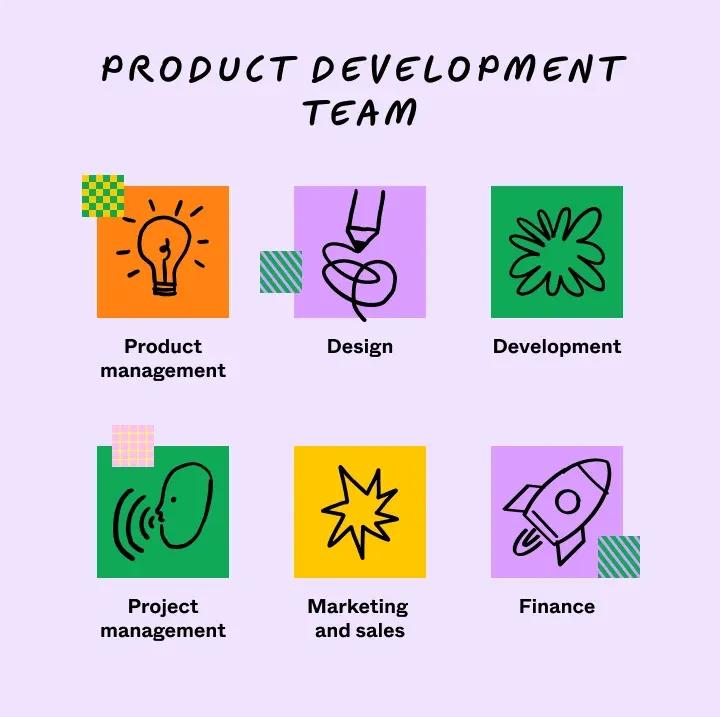
Product development involves input from several teams and departments, including:
- Product management: A product manager is responsible for overseeing and leading the product development strategy. They define the vision, build the product roadmap, manage the product team, and ensure successful product launches.
- Design: Designers are the creative brains behind a product’s look and feel. They enhance the user experience and build the user interface by focusing on usability, functionality, and aesthetics. Design teams create prototypes and collaborate with developers to facilitate a smooth handoff.
- Development: Developers bring the design team’s vision to life by translating their designs into programming languages. They collaborate with designers during the testing and iteration phases to ensure the product meets requirements.
- Project management: Some product development teams have a project manager who oversees the project. Project managers primarily handle tasks like facilitating communication between departments, determining the project’s scope, monitoring progress, and allocating resources.
- Marketing and sales: This team is responsible for determining the target market, crafting the product message, and creating a marketing plan to get the final product in front of the right audience.
- Finance: The finance team handles the projected budget and ensures the product is financially feasible. This includes assessing market conditions and analyzing the cost of the product itself.
6 stages of the product development life cycle

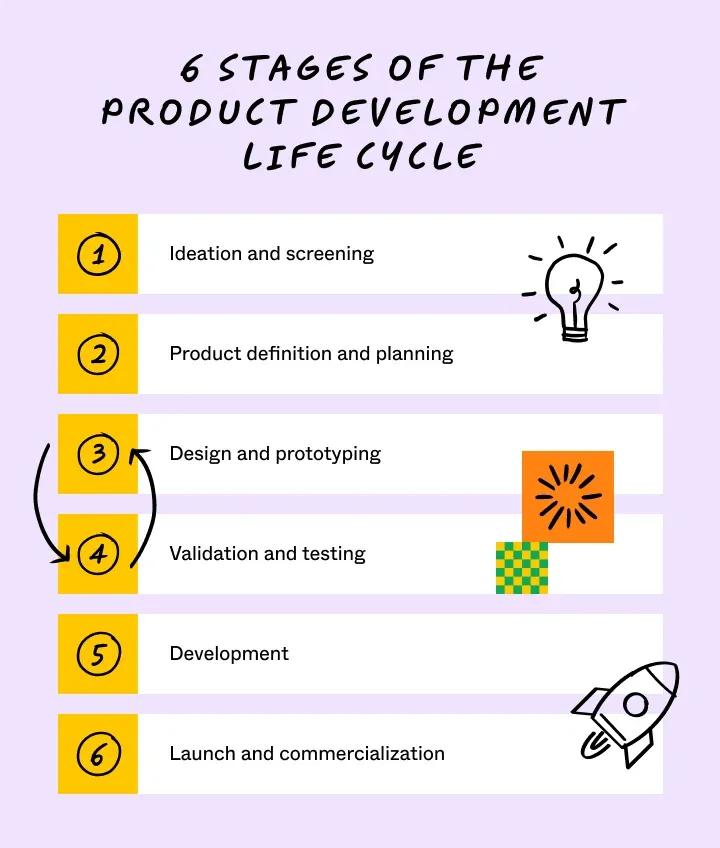
Though the product development process isn’t linear, well-defined steps help enhance efficiency, improve collaboration, identify goals, and scale efforts. Here are the six stages of the product development life cycle to guide your team to a successful product launch.
Stage 1: Ideation and screening

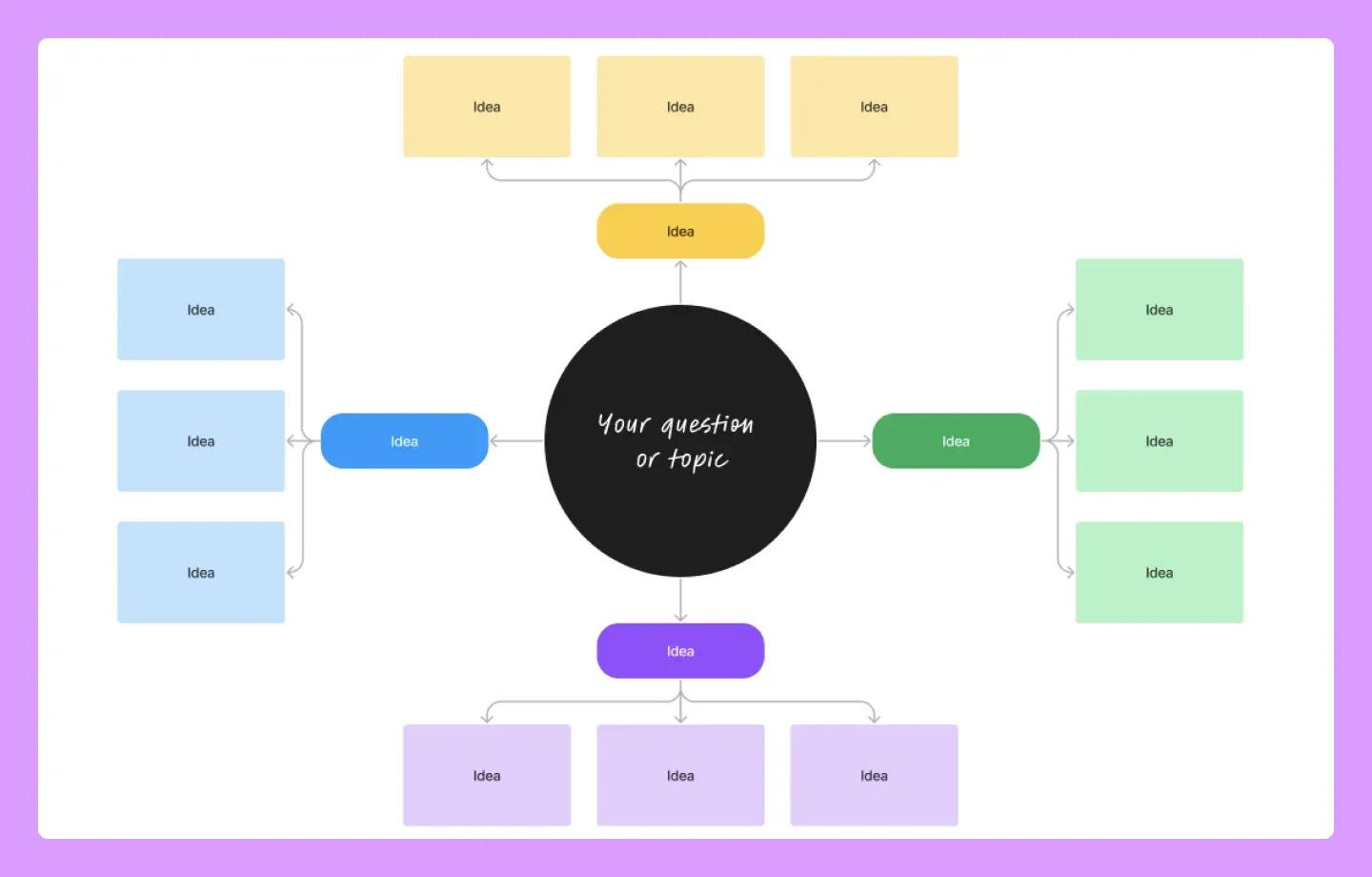
Every great product starts with many ideas before developing into a winning concept. The ideation phase involves brainstorming sessions and screening potential products based on factors like feasibility, market fit, customer needs, and profitability.
When faced with many options during this phase, design partner Casey Sheehan of Work & Co. suggests asking three questions to navigate and prioritize your ideas effectively:
- Why does this platform need to exist?
- What does it need to do?
- How are we going to build it?
Answering these questions will help you focus on solutions that meet user needs and can be delivered successfully.
Several ideation and screening methods can enhance this stage:
- Mind mapping is a visual brainstorming technique that organizes ideas around a central topic, encouraging further exploration of relationships and the generation of innovative concepts.
- The SCAMPER model, a technique that uses seven prompts (Substitute, Combine, Adapt, Modify, Put to another use, Eliminate, and Reverse), analyzes existing products and encourages the generation of new ideas.
- A SWOT analysis helps quickly determine the viability of your product idea by identifying strengths, weaknesses, and the competitive landscape, leading to more informed decision-making.
- A market analysis considers user needs by identifying potential customers, their pain points, and your product’s unique advantages. This screening method validates product ideas and ensures they fill a market gap.
Stage 2: Product definition and planning

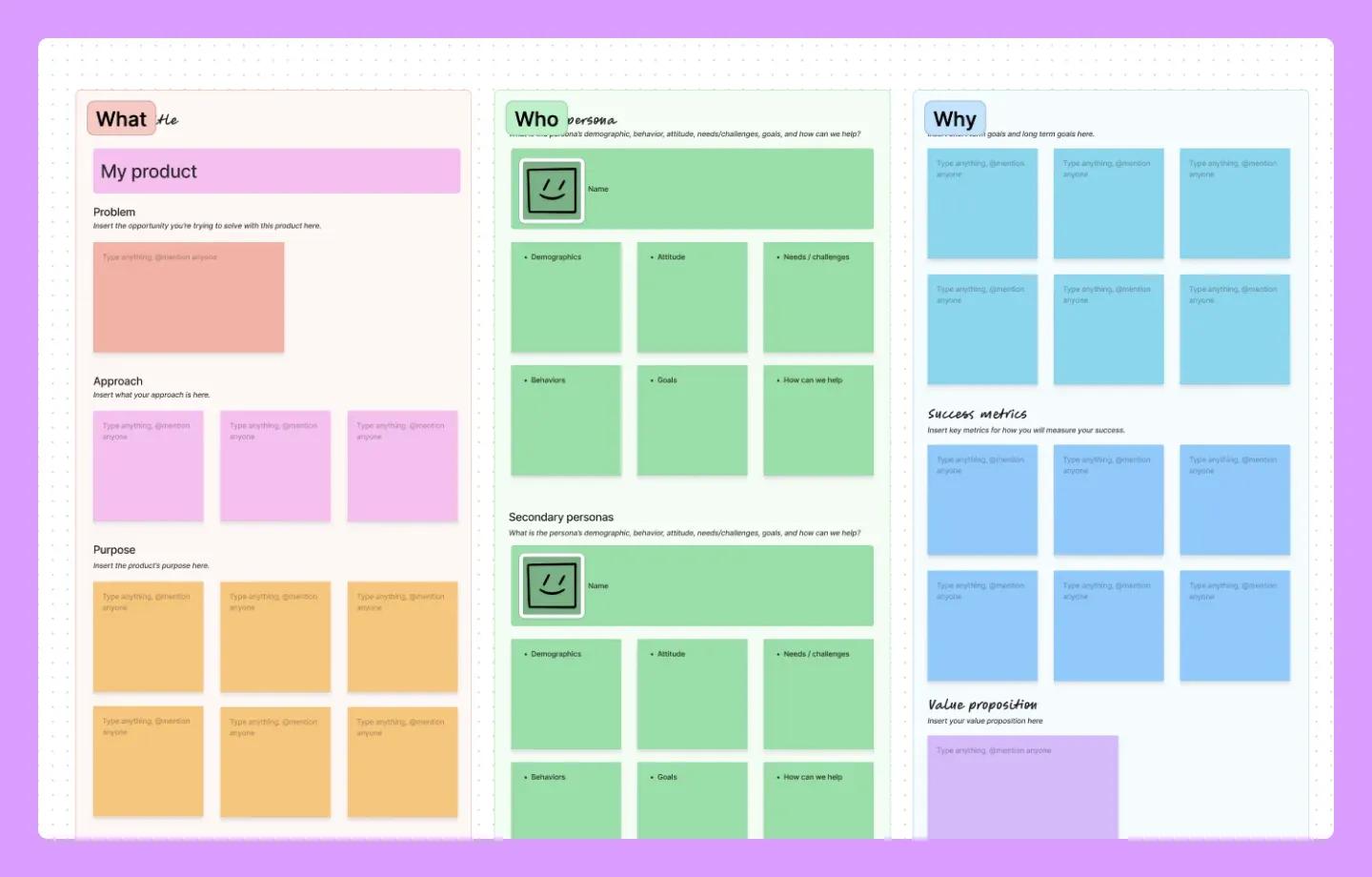
Now it’s time to flesh it out and define the product’s features, functionalities, and target audience.
During this stage, your team’s product manager is responsible for creating a product roadmap. The product roadmap clearly outlines the project goals, timeline, tasks, and metrics to track. Plan in phases and adopt an iterative approach to allow for adjustments based on feedback. This strategy reduces financial risk and results in higher-quality products.
To further define your product and plan for a successful launch, here are some other actions you can take:
- Create a product requirements document (PRD). A PRD includes an overview of a product’s purpose, functionalities, and features. This document keeps everyone on the same page, ensuring the design aligns with the product’s goals and addresses customer needs.
- Design a product vision board. A vision board helps prioritize features for development and encourages open dialogue between teams to discuss ideas or areas for improvement before development begins.
- Conduct a business analysis. A business analysis identifies customer needs and market demand, helping inform decisions about product pricing, critical features, and your overall product strategy.
- Develop wireframes. A wireframe solidifies the basic features, functionalities, and layout of your product, helping establish a proper user flow and basic information architecture that you can quickly iterate on.
Stage 3: Design and prototyping

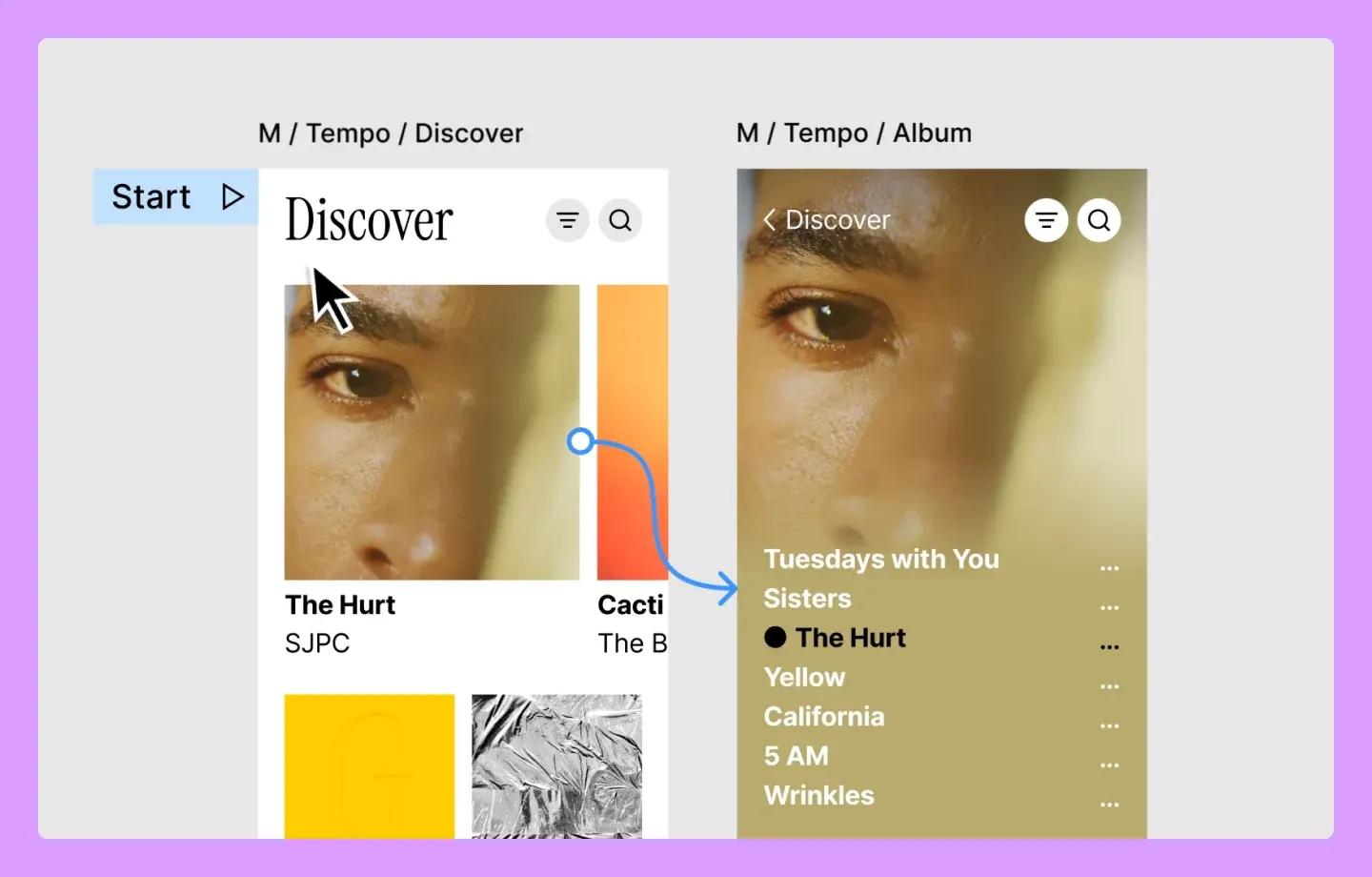
Next, start designing a more tangible and interactive representation of your product. In this stage, UI and UX designers build upon the wireframe to design a prototype. Prototyping is a crucial stage of the product development process, as it allows you to test a product’s core functionalities and get early user feedback.
Use Figma’s prototyping tool to turn static designs into interactive prototypes to share with stakeholders and users. These prototypes show how your design functions in action on multiple screens, allowing you to gather valuable feedback before development begins.
During the design and prototyping stage, here are some tasks you can focus on:
- Make low-fidelity prototypes. Use these prototypes to help validate your product concept and core functionalities, highlighting a basic level of interaction.
- Build high-fidelity prototypes. Use these prototypes to let users click elements, navigate different screens, and experience the product. This early user feedback helps inform future iterations.
- Conduct a feasibility analysis. To determine if your product is feasible, analyze various factors to ensure it will function and thrive as intended. A feasibility analysis typically looks at the technical, financial, operational, and market feasibility to help make informed decisions ahead of development.
- Create a minimum viable product (MVP). Taking the initial user feedback from earlier prototypes, have your development team translate the designs into a functioning product, also known as the MVP. The MVP acts as the first version of the final product, guiding ongoing iteration and refinement.
Stage 4: Validation and testing

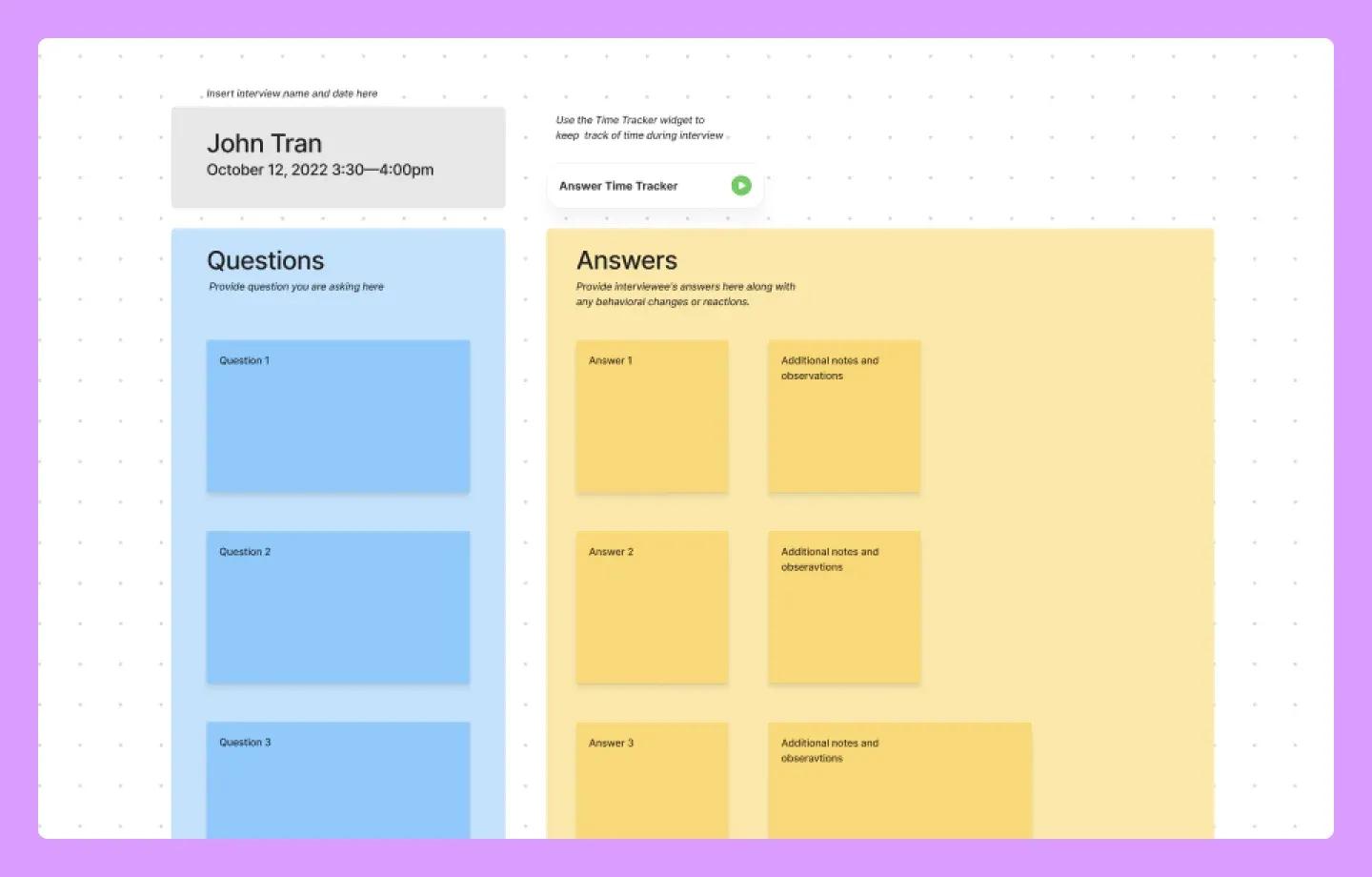
Prior to product development, validate and test with real users to identify potential issues and areas for improvement, ensuring it meets user needs. There are many AI product design tools that can help optimize this process. After testing, iterate and refine the product until it’s ready to launch.
Here are some actions you can take during this stage:
- Run usability testing. Observe target customers interacting with your product to ensure ease of use and navigation. User interviews can help you track user behaviors and gather feedback on potential improvements.
- Conduct functionality testing. Have users perform various actions to uncover bugs and test the product’s functionality, ensuring a smooth user experience.
- Perform market testing. Introduce the product in a real-world environment to validate its market fit and competitive positioning. This helps inform marketing, distribution, and pricing strategies before the official launch.
- Run a data analysis. Collect and analyze data from testing to identify trends and patterns in user behaviors, prioritize bug fixes, and guide product refinement before final development.
Stage 5: Development

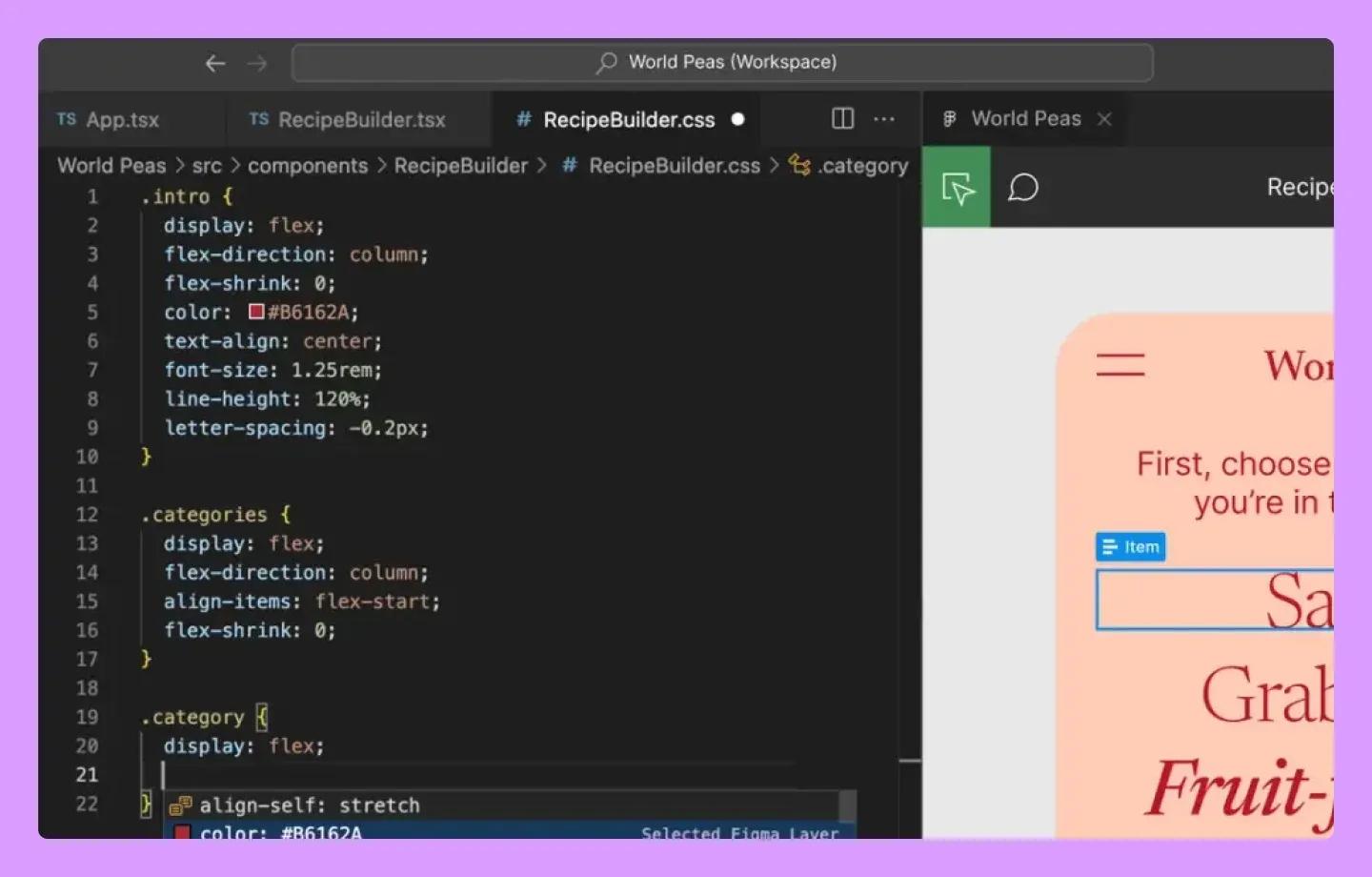
With a validated concept, user feedback, and final specifications in hand, the product is ready for full-scale development. Figma's Dev Mode simplifies the design-to-developer handoff, allowing developers to inspect designs, access code-related information, and copy code snippets for a more efficient development process.
Responsibilities during this product development stage include:
- Develop the product. Engineering teams start coding the product based on the finalized design from the testing phase. They also create documentation outlining programming languages, APIs, and databases.
- Conduct quality assurance testing. QA teams monitor the entire development to identify and report bugs in real-time. Regression testing ensures the product continues functioning as intended after the team implements changes and new code.
- Define a deployment strategy. Once the product is ready, it moves from a testing environment to a live environment accessible to end users. A blue/green deployment strategy can provide a controlled staging environment to minimize user impact during updates, ensuring a smooth launch.
Stage 6: Launch and commercialization

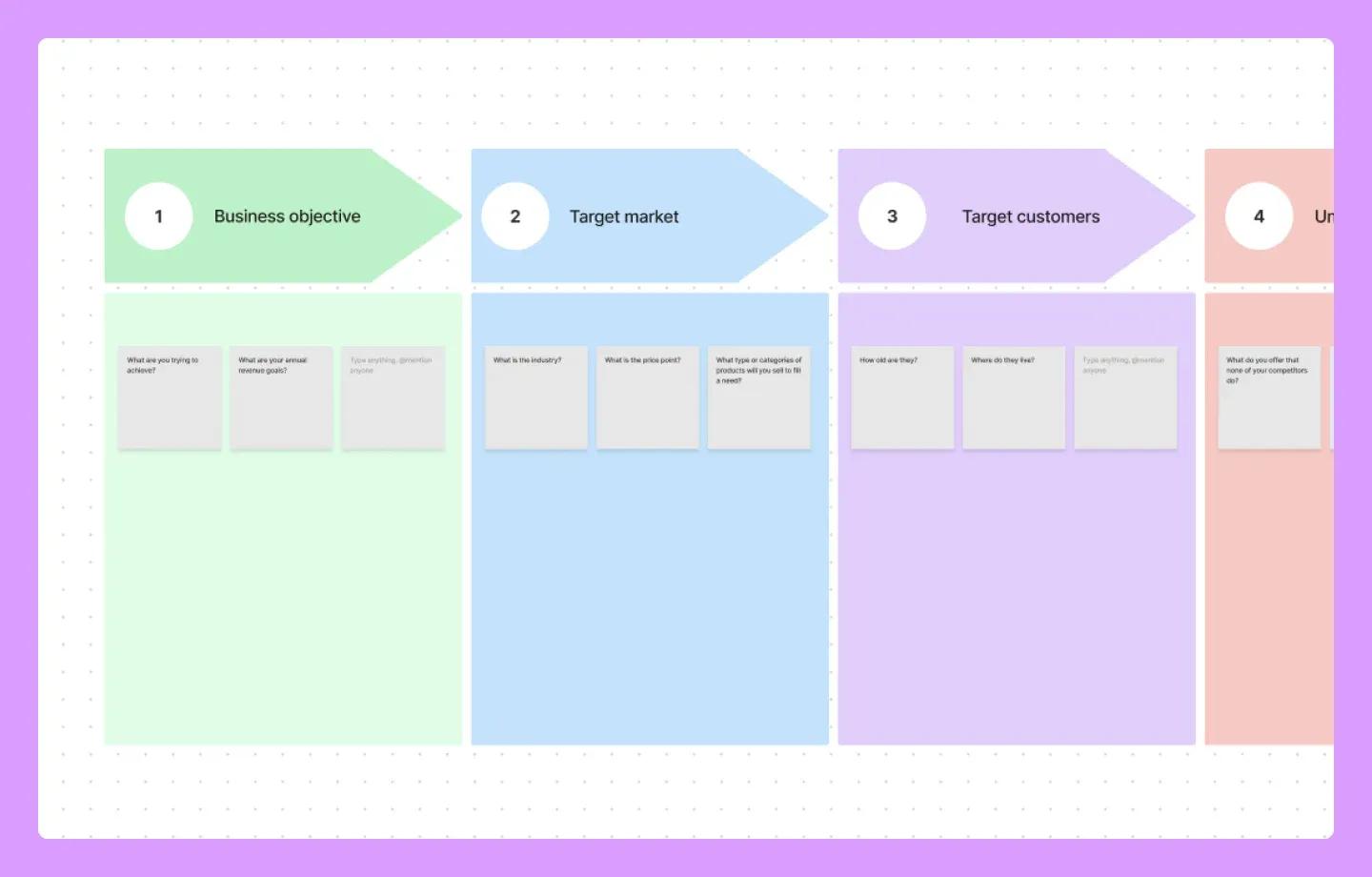
With your product ready for the market, it’s time to launch your go-to market strategy. Focus on crafting a marketing strategy, identifying distribution channels, and setting success metrics. A go-to-market strategy template helps outline unique selling points and marketing objectives before sharing your plan with stakeholders and launching it to users.
During the final stages of product development, prioritize these tasks:
- Craft a marketing strategy. Create a marketing strategy to understand your target market, craft messaging that resonates with them, and generate buzz around your product. Have your marketing and PR teams develop press releases, social media campaigns, and secure media coverage to excite users about your product launch.
- Determine distribution channels. Use different distribution channels to get your products in front of your target market. For example, if you’re launching an app, your channels may include your company website, relevant app stores, and social media platforms.
- Conduct post-launch iteration. After launch, monitor performance to uncover ways to improve your product and ensure it remains relevant. For example, the team at Oura Ring holds project retrospectives to reflect on performance and determine areas for improvement after each project.
- Establish KPIs. Measure the success of your product launch by tracking key performance indicators (KPIs) like sales figures, customer acquisition costs, user engagement metrics, or customer satisfaction ratings.
Product development tips and best practices
Here are some best practices and tips for designing and developing products in a world of constant iteration:
- Practice human-centered design. Prioritize your users’ needs throughout the process. Make sure you have a deep understanding of their needs and invite them into your product development process to gather feedback. This ensures you’re creating a truly human-centered product.
- Embrace agile methodologies. The agile process promotes collaboration, iterative testing, and adaptability. Short development cycles allow for faster correction and better product outcomes.
- Automate work. Product managers can use AI to their advantage to help improve efficiency and accelerate the product development process. For example, FigJam’s AI features can help you organize brainstorming ideas or summarize user feedback, giving you more time to focus on the actual product.
- Review work often. Set up a regular feedback schedule at every stage. Design critiques facilitate sharing work with your team and stakeholders, promoting continuous feedback and improvement.
- Embrace imperfection. Products are always works in progress. There’s never a perfect time to launch. Embrace the iterative process and continue refining post-launch.
Product development strategy examples
Check out how industry-leading companies like Spotify, Dropbox, and Duolingo successfully execute ongoing product development strategies that prioritize the needs of their users to create better products.
Example 1: Spotify
Spotify’s agile approach to product development, also known as “The Spotify Model,” focuses heavily on autonomy, cross-functional collaboration, and customer satisfaction.
Teams, which Spotify calls “squads” and “tribes,” are a mix of designers, developers, product managers, and testers. Each team owns specific features of the app and collaborates with other teams working on related areas. This approach fosters faster decision-making and quicker iterations, ensuring a cohesive experience for end users.
Spotify also prioritizes user feedback through surveys and its online community to iterate on features. It leverages user listening habits to create personalized experiences and playlists, keeping users engaged and entertained. Spotify’s constant iteration and experimentation approach has led to the development of groundbreaking features that encourage users to come back every day to see what’s new.
Innovative product feature: Spotify understands that users’ music preferences change throughout the day, so it created the Daylist feature. Daylist uses AI to analyze user listening data and deliver a personalized playlist that updates throughout the day based on a user’s mood and listening habits. This feature offers a fresh and innovative approach to music discovery that’s truly user-focused.
Example 2: Dropbox
Since the start, Dropbox has focused on user needs by offering a seamless solution that solved a common customer pain point: file sharing. Its product-led growth strategy prioritizes user feedback and data to develop new features and improve existing ones.
Dropbox’s vision has always been to provide users with a simple and easy way of working. To stay ahead of the competition, Dropbox uses technological advancements to its advantage and prioritizes quick iteration to ensure it’s developing features that enhance the user experience and stick to its core value of simplicity.
Innovative product feature: Dropbox Dash is an AI-powered universal search function that helps improve searchability across various applications. The Dropbox team’s research showed how much time employees spend looking for files. Dropbox Dash solves this user problem, offering customers a single source of truth for finding and sharing content.
Example 3: Duolingo
Duolingo is a leading language learning app that differentiates itself from competitors by focusing on gamification. While many users struggle to stay motivated with traditional language learning methods, Duolingo and its team of linguists, game designers, developers, and native speakers developed features that gamify learning. The team implemented rewards, streaks, leaderboards, and speaking exercises to position the app as an engaging and interactive learning tool.
Duolingo also embraces a work-in-progress mentality and emphasizes its commitment to improvement. Through user surveys and test questions within its courses, Duolingo uses the results to develop new, more engaging lessons so it can stick to its mission of making learning fun and universally accessible.
Innovative product feature: Duolingo gamifies learning by implementing rewards like celebrations, badges, and streaks to enhance the learning experience and keep its users motivated. Users receive badges for completing tasks or reaching important milestones, helping them feel accomplished and eager to learn more. Streaks helps users build daily learning habits and keeps them coming back to the platform, making learning a consistent experience. Duolingo also lets its users connect with friends to see their progress and celebrate achievements together, which fosters accountability.
Make product development easier with FigJam
The product development process relies on constant learning and refinement. By embracing an iterative approach, you can build a product that remains relevant to your users. Ready to turn your ideas into innovative products? Figma can help. Here’s how:
- Use FigJam’s online whiteboard tool to flesh out ideas, collaborate with your team, and align on your product development strategy.
- Create wireframes in Figma to flesh out winning concepts, then build interactive prototypes to easily share with stakeholders.
- Bring your product to life with Dev Mode and reduce context switching with the VS Code extension.
Ready to streamline your product development process?
Start planning with FigJam.