Forming, storming, norming, and performing: A guide to Tuckman’s stages of group development


Share Forming, storming, norming, and performing: A guide to Tuckman’s stages of group development
Explore more from
Team productivity
Plan, align, and collaborate in FigJam
Org charts, Kanban boards, meeting notes—everything your team needs to stay on track, all in one place.

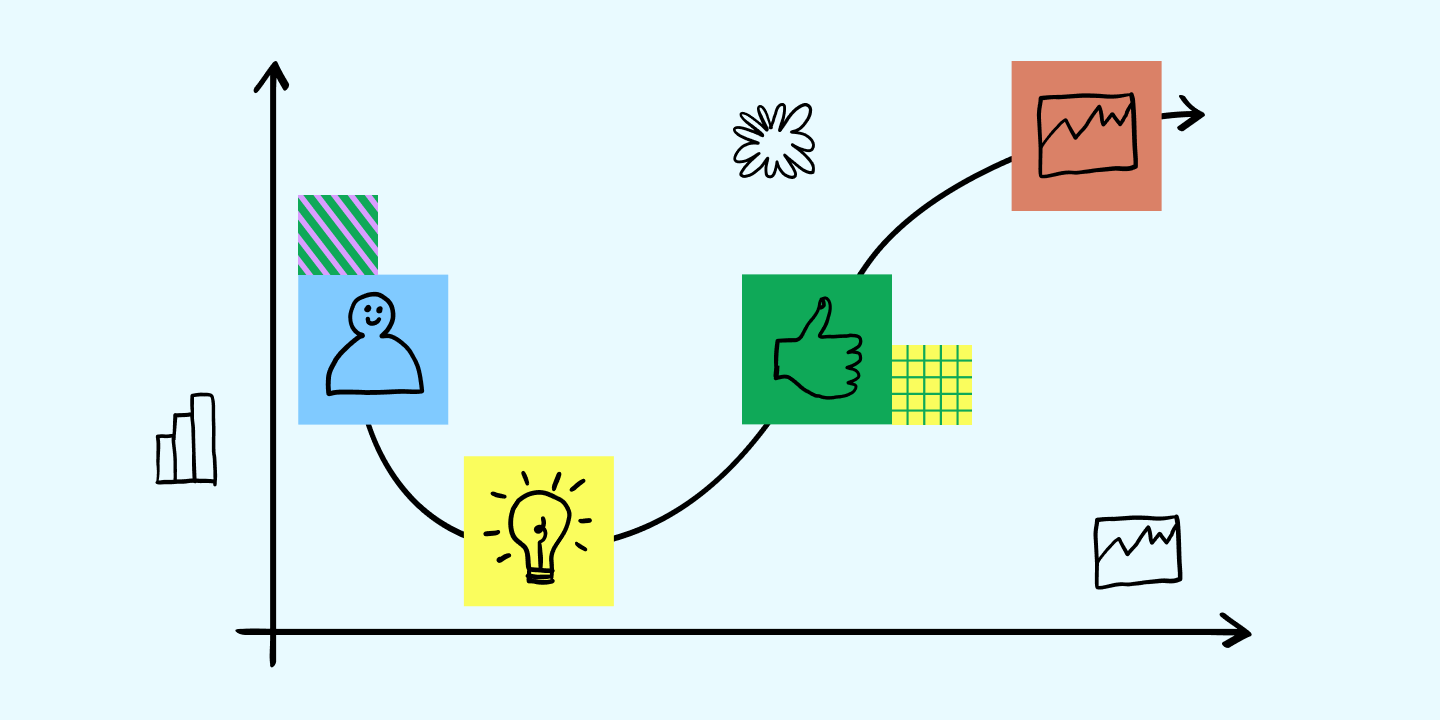
Think back to the last time you worked on a group project. At the start, each team member was likely excited and eager for the project ahead. But you may have felt frustrated as different working styles clashed, and you had to learn how to work in harmony. As you got to know one another and more clearly defined the team’s roles, you could collaborate to reach your goals and complete the project.
These stages of group development are also known as psychologist Bruce Tuckman’s forming, storming, norming, and performing concepts. Tuckman’s model details the emotional phases groups go through during team development.
This article covers:
- The definition of forming, storming, norming, and performing.
- What to expect during each stage.
- Tips for strengthening performance during each development phase.
What is forming, storming, norming, and performing?

In 1965, Tuckman created a model describing what groups experience working on a project. The concept involves four stages: forming, storming, norming, and performing.
According to Tuckman, these stages are necessary for teams to learn how to work together. In 1977, Tuckman added a fifth stage, adjourning (also known as mourning), which marks project completion.
Each stage comes with unique feelings, challenges, behaviors, and objectives. These stages of team development help teams learn how to work together to reach their project goal.
How do the 5 stages of team development work?

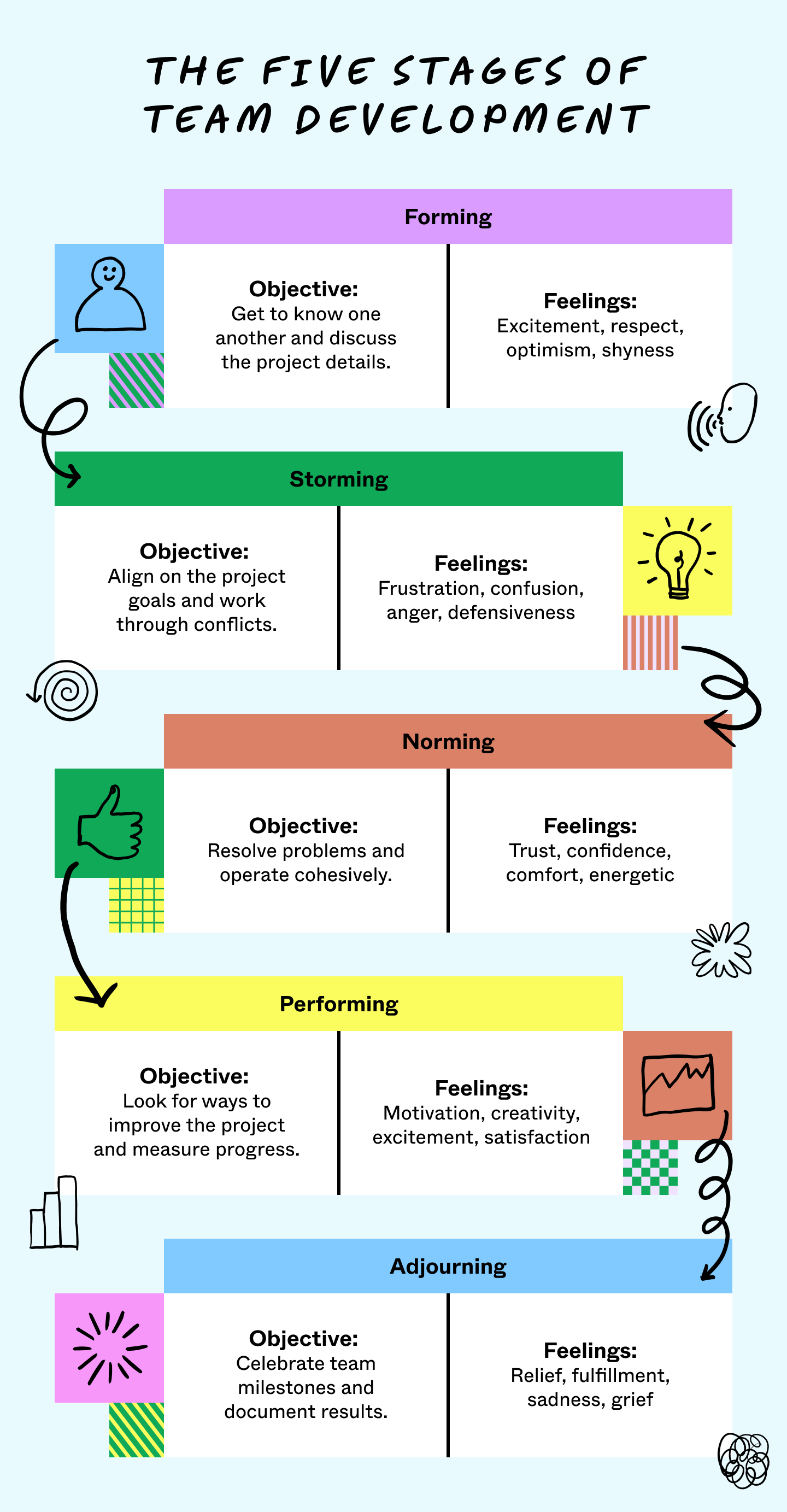
Each stage is essential for a team to work harmoniously. Here are Tuckman’s five stages of team development in more detail.
Stage 1: Forming
Main objective: Get to know one another and discuss the project details.
The forming stage marks the start of team development and “forming” the team. Group members get to know one another and establish roles and responsibilities during the project kickoff meeting. The group leader will then discuss project details. Feelings during this stage are typically positive and respectful, though some people may also experience shyness or anxiety.
Tasks involved in the forming stage include:
- Host a kickoff meeting. The project kickoff meeting focuses on getting the group acquainted. The team leader asks questions to uncover each person’s background and skills. Then, they’ll highlight important information about the project goals and timeline.
- Define team roles. The team leader helps establish a team structure, highlighting each group member’s responsibilities based on their skills. This helps team members understand their roles and expectations.
- Set team objectives. Next, the leader covers what the team needs to reach the desired outcome, including communication, collaboration, and conflict resolution strategies.
Pro tip: Start your kickoff meeting with an icebreaker exercise. This helps your team get to know one another and practice interacting as a group.
Stage 2: Storming
Main objective: Align on the project goals and work through conflicts.
The storming stage is where team members become more comfortable voicing their opinions, which may cause conflicting viewpoints. Conflict in the storming stage is normal and helps teams understand how to communicate effectively.
The early feelings of positivity and excitement start to fade, and feelings of frustration arise. The team may question roles and responsibilities, working styles, and project expectations. Working through the storming stage may be difficult, but effective listening and communication help move projects forward.
Tasks involved in the storming stage include:
- Align on project outcome. Setting small milestones helps the larger goal feel more achievable.
- Redefine responsibilities. Clarify individual responsibilities and tasks to avoid confusion. It also ensures each team member understands their role in helping the team reach its goals.
- Resolve conflict. To get to the next stage, team members put emotions aside and learn to work through conflicts.
Pro tip: Create a team charter that outlines roles, responsibilities, and key objectives. A team charter helps team members align on how to achieve the project goals.
Stage 3: Norming
Main objective: Resolve problems and operate cohesively.
During this stage, conflicts resolve, and teams learn how to work together. Team members understand their roles, making executing tasks easier for each person. They also learn how to resolve disagreements as they arise.
The team starts to feel a sense of camaraderie as they understand expectations. They’re also more open to sharing and receiving constructive feedback. Trust develops, and teams may begin socializing and engaging in bonding activities. This sense of unity leads to an increase in productivity and performance.
Tasks involved in the norming stage include:
- Check in on progress. Team members become more comfortable giving and receiving feedback. This makes it easier to discuss progress and how to work together to achieve goals.
- Work collaboratively. Though individual tasks are still important, team members may put their differences aside to work toward the shared goal and prioritize the group’s needs ahead of their own..
- Encourage team interaction. Hosting off-site activities helps deepen team relationships, encourage collaboration, and keep morale high.
Pro tip: Use a goal tracker template to keep your team on track. This helps visualize the team's progress toward the project goal.
Stage 4: Performing
Main objective: Look for ways to improve the project and measure progress.
The performing stage is when the team starts to perform at its best. There is minimal conflict, and teams are more autonomous. If conflicts arise, they’re easier to work through with the team’s newfound resolution strategies.
Motivation and creativity are high as teams move closer to project completion. Teams often feel a sense of satisfaction, excitement, and responsibility to one another. Bonds between team members become stronger, and some may even begin to feel sad as the project end date nears.
Tasks involved in the performing stage include:
- Revisit the project timeline. As the project nears completion, checking on deadlines and the project status ensures team members are on track. This is also a great time to determine if resources or tasks need reallocation to keep the project on schedule.
- Brainstorm improvement ideas. Teams may meet to brainstorm ideas for team improvement, leaning on one another for support and setting new goals if necessary.
- Measure progress: The team evaluates progress and performance. They also start to celebrate their success as the project ends. Recognizing team success helps keep motivation high until the end.
Pro tip: Use an editable timeline template to track progress and make changes or additions to the project timeline.
Stage 5: Adjourning
Main objective: Celebrate team milestones and document results.
The adjourning stage, also known as the mourning stage, is the final stage of team development. This stage marks the end of the project. The team focuses on celebrating accomplishments and wrapping up final tasks.
Teams experience feelings of relief and fulfillment as they reflect on their achievements. After building strong relationships, they may also experience feelings of sadness as they go their separate ways.
Tasks involved in the adjoining stage include:
- Wrap up final tasks. With the bulk of the project complete, the team focuses on finalizing tasks needed to finish the project.
- Document results. Documenting project results will help future teams. This may include lessons learned, areas for improvement, and successes.
- Celebrate success. The team hosts a formal meeting celebration, where the leader highlights each team member's contributions and accomplishments.
Pro tip: Conduct individual meetings with each team member to review their accomplishments. Discuss how they can use their skills to transition to a new project and team smoothly.
Excel at team development with FigJam
The forming, storming, norming, and performing concepts help teams understand the different phases they go through to reach effective productivity and collaboration.
FigJam’s shared online whiteboard helps facilitate team collaboration to better align project plans and goals during every phase of group development.
But it doesn’t stop there. FigJam’s template library has powerful and ready-to-use tools to bring teams together before every project
- Use FigJam’s project charter template to define the purpose and goal of your project.
- Use the team charter template during the storming stage to define team roles and responsibilities.
- Create a centralized place for teams to reference key meeting notes, project tasks, and deadlines with FigJam’s meeting notes template.
Ready to master team development? Use FigJam today to make collaboration easier.