How to write a project charter


Share How to write a project charter
Explore more from
Strategic planning


You’ve got big ideas but limited time, budget, and people. A strong start can make the difference between a smooth project start and a stalled-out mess. That’s where a project charter comes in.
A project charter is a short document that sets the stage for success. It aligns your team, defines your goals, and connects your work to larger business objectives. By learning how to write a project charter, you can align each member of your team to deliver ground-breaking projects.
Read on to find out:
- What a project chart is
- How to write a project charter
- Key elements of a project charter
- Where to find project charter templates and examples
- Best practices and tips for writing and using project charters
What is a project charter?
A project charter is a short, formal document that officially authorizes a project. It serves as a foundational agreement, outlining the project’s purpose, objectives, key stakeholders, and scope of work. Providing a high-level overview ensures everyone involved understands the project’s core elements and shared goals.
This critical alignment tool prevents miscommunication, scope creep, and resource waste. It also helps teams prioritize their work and align with broader business goals and can serve as a reference point during decision-making.

How to create a project charter in eight steps
A project charter should describe your overall objectives and how you plan to meet them. Treat the process like taking an inventory, where you compile all the details about your project. Here are eight steps to get you started.

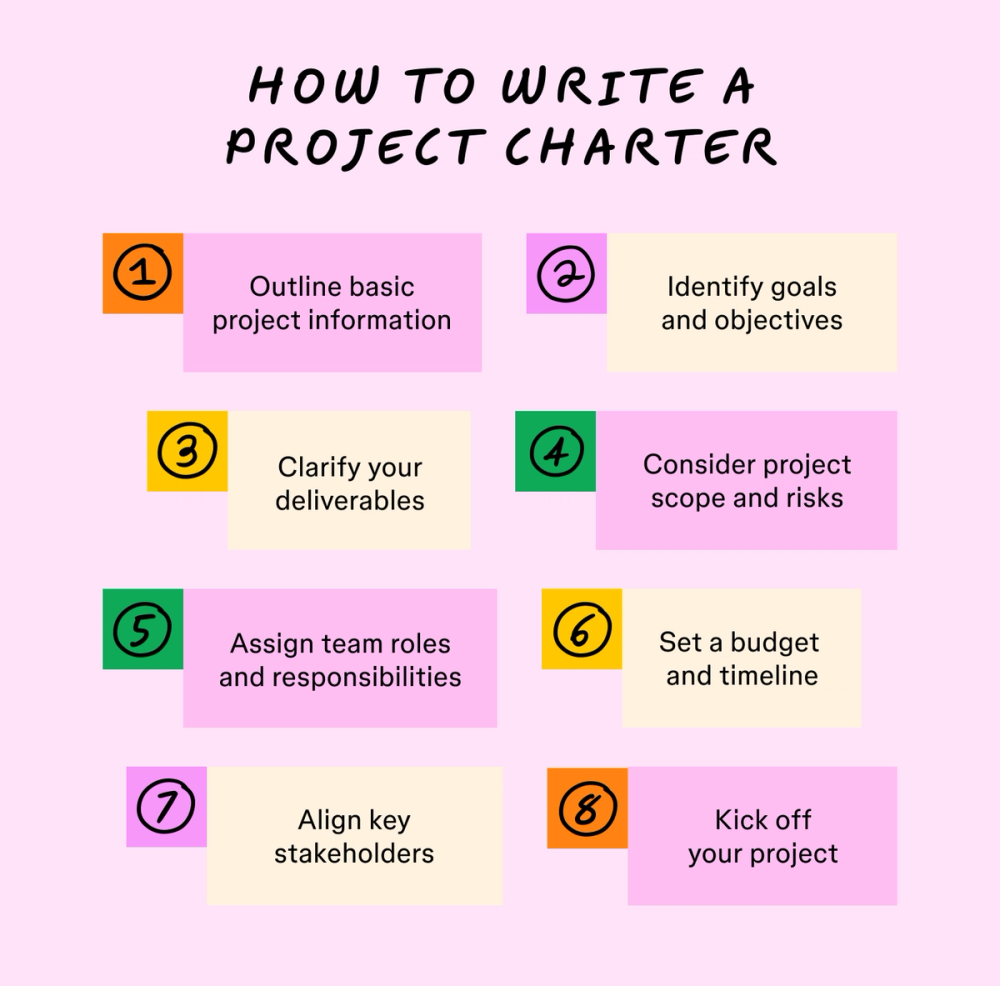
Step 1: Outline basic project information
Start with the basics. Include the project name, stakeholders, and key contacts. Add a revision date so everyone knows they’re working from the most current version.
Step 2: Identify goals and objectives
Charters explain your project’s goals and objectives and why they’re important. You can think of goals as broad, long-term aims, and objectives as measurable, short-term steps on the way to your goal.
As you explain the project’s purpose, clearly state the problem it solves or the opportunity it will create. If you can explain how objectives feed into your goals and what success metrics you’ll be tracking, stakeholders can better understand how your project will proceed.
Step 3: Clarify your deliverables
Describe the product or service that will come from your project. Deliverables can range in scope, from small UI changes to launching a new product. When outlining your deliverables, explain how the user will interact with them and the factors you considered as you scoped your deliverables. If possible, include metrics highlighting your deliverables’ quality.
Step 4: Define project scope and surface risks
A clear project scope defines rigid boundaries around your project. It outlines what’s in and out of scope, helping teams stay focused and avoid unnecessary work. Stakeholders can help your team members allocate resources, clarify goals, and better understand the intended deliverable.
Also include any known risks. For example, if your redesign might go over budget, call it out now. When stakeholders see potential tradeoffs up front, they can help troubleshoot—or decide whether the benefits outweigh the risks. If you already have backup plans, add those here too.
Step 5: Assign team roles and responsibilities
Project charters list the team members who will work on the new initiative. At a minimum, the charter should outline participants’ names and job titles. You should also lay out the teams responsible for each part of the project, the tasks each member will complete, and the project manager they can turn to for support.
Step 6: Set a budget and timeline
When setting the budget, consider where you’ll draw funds for the project and the resources needed to complete it. At this stage, you may want to conduct an in-depth cost-benefit analysis.
Similar to the budget, your project timeline will include multiple dates for milestones and reviews. While a small project may only need an ending date specified, larger ones should include multiple milestones with check-ins along the way. Explain what you’ll achieve at every project stage so stakeholders can measure your progress. Keep a clear channel of communication open so everyone stays on track and aware of encroaching deadlines.
Don’t worry if numbers shift later—your goal here is to create a realistic starting point and show you’ve thought it through.
Step 7: Align with key stakeholders
Don’t hit “send” or “share” until you’ve reviewed the charter with stakeholders. Highlight assumptions, define success criteria, and confirm expectations. Getting buy-in now will help you avoid bigger issues later.
Project assumptions consist of details you believe are true in the planning phase. While they won’t all hold up, they provide a baseline for building your charter. Your success criteria define the standards you’ll use to measure a project's outcome and the value it brings.
Step 8: Kick off your project
Once you align on success criteria, it’s time to dive in. Schedule a project kickoff meeting with your team to review goals and responsibilities and ensure everyone is on the same page. You can also share resources and schedule project check-ins related to milestones.
To help your team stay organized at the beginning of a project, use the Figma project kickoff template.
Try this free project charter template
Want to make a charter with visual flair? Get started with FigJam's free template today.
Project charter example
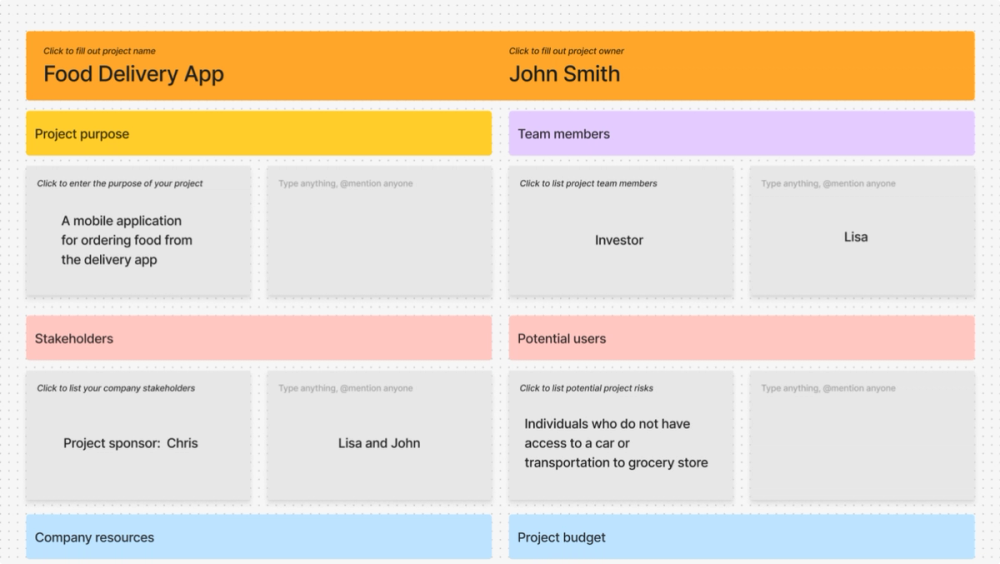
To see the FigJam template in action, check out this simple project charter example:

Key elements of a project charter
What’s the bare minimum of info a project charter needs to be effective? Alternatively, how much is too much?
If your charter covers these basics, your team will have a reliable roadmap from kickoff to delivery:
- Project name
- Project purpose/objective
- Project owner and associated team members
- Other stakeholders
- Potential users
- Project budget
- Other company resources allocated
- Project constraints and potential risks
- Timeline with milestones/deadlines
With these key criteria at your fingertips, you and your team can proceed with confidence, delivering game-changing results on time and within budget.
What is the purpose of a project charter?
A project charter aligns everyone—stakeholders, team leads, and contributors—before any real work begins. Think of it as the foundation for your project. It helps you define goals, justify the investment, and clarify what success looks like. Here’s what a strong project charter can do:
- Authorize project. Your charter persuades stakeholders and investors by illustrating how a project is worth your team’s time and resources.
- Set a clear direction. The charter outlines the “what” and “why” of your project. Teams can refer to it throughout the project like a roadmap to stay focused and aligned, especially if priorities shift or new stakeholders join later on.
- Align teams across functions. It’s easier to stay in sync when everyone works from the same document. A shared understanding helps reduce silos and speeds up decision-making.
Who is responsible for creating the project charter?
The project manager is usually responsible for writing the project charter, but they rarely do it alone.
Since a good project charter needs to reflect shared goals, cross-functional priorities, and real-world constraints like budgets, timelines, and resources, it often relies on input from stakeholders, department leads, sponsors, and even subject matter experts.
The project manager typically drafts the document and refines it with the others before submitting it for approval. Depending on your organization's structure, an executive sponsor or steering committee may also need to sign off before the project can move forward.
When should you write a project charter?
A project charter is written early on, ideally before any major work begins. It’s often created at the very beginning of the project lifecycle, during the initiation phase, to help secure buy-in, clarify objectives, and set expectations for everyone involved.
This early alignment helps ensure everyone is on the same page before teams start executing or allocating resources.
Project charter vs. project plan: What’s the difference?
A project charter is overarching, while project plans focus more on a project’s minutiae and step-by-step processes. Project plans emphasize milestones, timelines, and metrics for success. If project charters outline an initiative’s vision, project plans explain how you’ll bring it into reality. Put simply, a project charter often informs a project plan.
Other similar documents include:
- Project briefs are a more concise charter written after project approval. A creative brief provides the same basic context and summarizes why a project is worthwhile.
- Business cases outline the risks and benefits of investing in a project. You see them when making large initiatives or introducing new products and services. Business cases typically involve more financial data than project charters.
- Statements of work note what is and isn’t included in a project and its deliverables. They can also include acceptance criteria and project assumptions.
Project charter best practices
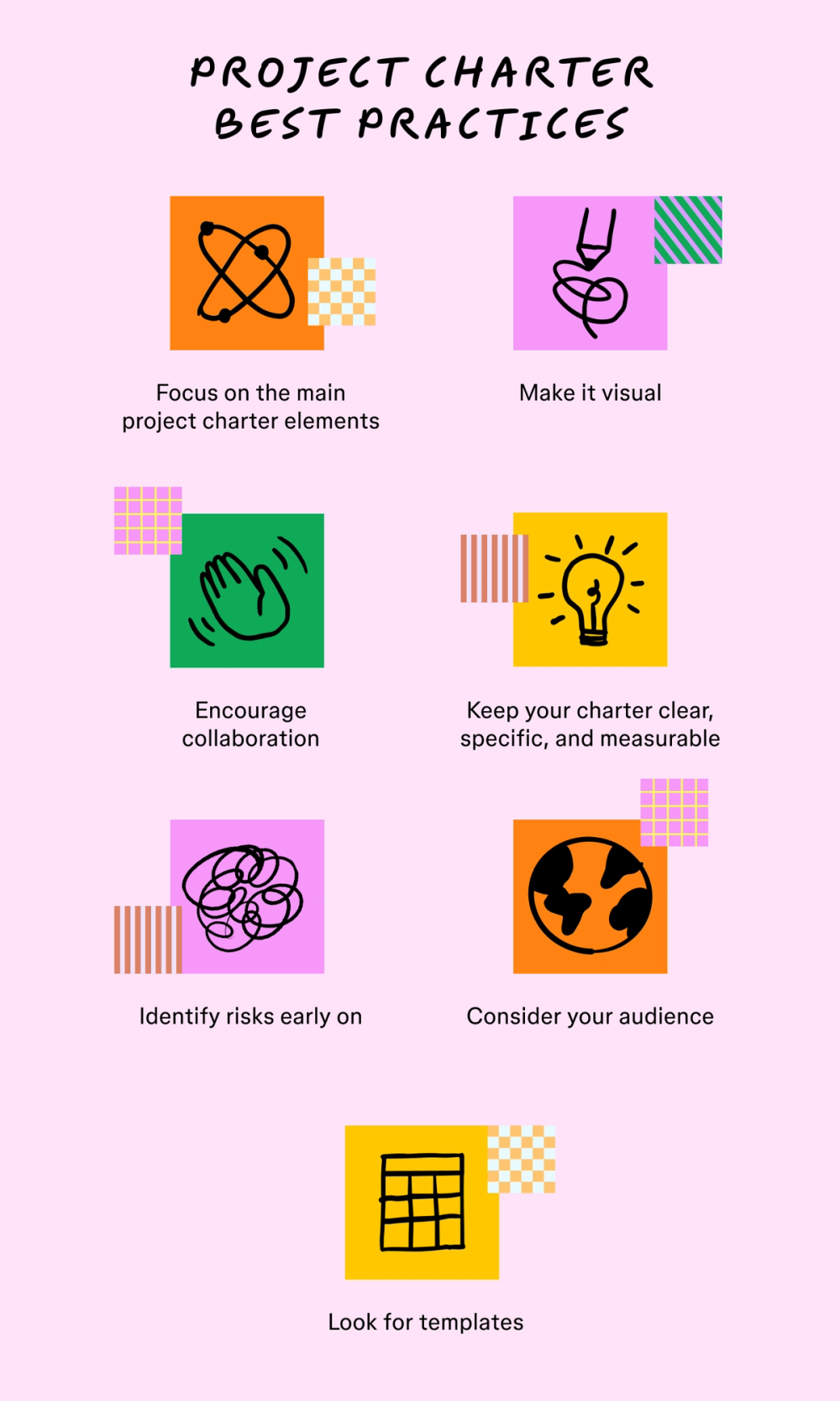
Creating a first project charter often requires time and practice. To speed up the process, here are some best practices for writing your charter document.

Focus on the main project charter elements
When writing a project charter, ask yourself “who,” “what,” and “why” questions. While your project exists on paper, think through your deliverables' eventual value. You can get to the heart of why your project matters by asking:
- Who do you need to agree with on this project’s direction?
- What is the core value proposition of the project?
- Why should this project get approved?
Answering these core questions helps you anchor the project and clearly explain its importance to stakeholders.
Make it visual
Visualizing your project can persuade stakeholders. When you need to lay out the finer points in detail, design elements and images help you illustrate those points. Include diagrams and flowcharts to help visualize milestones or break down complex workflows.
Encourage collaboration
Writing a project charter should always involve collaboration. Your stakeholders, managers, and teams all bring unique insight to the table, so make sure you’re involving the right parties. Combining their perspectives can help develop a shared vision of the project. Breaking down these silos early also enables smoother cooperation between teams later on in the project.
Keep your charter clear, specific, and measurable
Charters need to explain a project’s value in clear terms. You can communicate a project’s importance by keeping the document short and straightforward:
- Clear. State the project’s goals, success criteria, and value to stakeholders and how they map to company goals.
- Specific. Describe the pain points your project solves or what particular benefits it offers.
- Measurable. Identify key performance indicators (KPIs) to measure the success of your project.
Identify risks early on
A comprehensive project charter considers what could go wrong or throw your team off track. Identifying potential risks and challenges early in the charter phase allows you to proactively troubleshoot. This foresight demonstrates thorough planning and helps build stakeholder confidence by showing you’ve considered potential roadblocks. It can also prevent delays, budgeting issues, and scope creep.
Consider your audience
While a project charter serves as a foundational document for everyone involved, remember that different stakeholders will approach it with different perspectives.
For executives, focus on the big picture: strategic alignment, potential ROI, and high-level risks. For hands-on team members, make sure their roles and objectives are clear and actionable. Tailoring your language and emphasizing relevant sections can help your charter resonate with each group and gain their full support.
Look for templates
When it comes to project charters, there’s no need to start from scratch. Use a customizable project charter template to streamline the process and ensure you don’t miss the most important sections. Templates also help you stay consistent across different projects, making it easier for stakeholders to quickly find the information they care about.
Kick off your project planning with FigJam
to do their best work by setting clear, attainable goals.
A great project starts with alignment. FigJam can empower your team and help you get there. Here’s how:
- Use Figma’s project charter template to create a project charter, then explore a collection of strategic planning templates to help you and your team drive your project to completion.
- Use the meeting notes template to help organize talking points and record those “ah-ha!” moments.
- Use FigJam’s project kickoff template so team members know what to expect for the project ahead.
- Try out FigJam’s Gantt chart template to track and manage your team’s project timeline.
Collaborate in real-time with your team members using FigJam’s shared online whiteboard to exchange feedback, design solutions, and track progress.
Collaborate, align, and kick off your project with confidence.
Ready to write a project charter?
Keep reading


What is a Gantt chart?
Learn how to create a clear timeline and structure for your project teams.

What is a decision matrix?
Learn what a decision matrix looks like, when you should use it, and how to make one.


How to create a product requirements document
Learn how to ensure that key features make it into the release.