What is a go-to-market (GTM) strategy? + How to build one
Share What is a go-to-market (GTM) strategy? + How to build one
Explore more from
Strategic planning


A go-to-market (GTM) strategy is a detailed plan for bringing a product or service to market. It acts as the blueprint for engaging with potential customers and positioning your product competitively to ensure a successful launch. It outlines your value proposition, key objectives, target market, marketing plan, pricing strategies, and distribution tactics.
Think of Apple in the early days. The company didn’t just throw its products out there and hope for the best. Instead, Apple carefully crafted its strategy, highlighting its unique and revolutionary offerings. It generated buzz around its products through strategic reveals and controlled leaks to build anticipation. From the release of the first Macintosh to the iPod and iPhones, Apple continues to craft GTM strategies that produce excitement and innovative experiences.
Read on to learn:
- The purpose of a GTM strategy and its benefits
- Essential GTM frameworks and models
- How a GTM plan differs from a marketing strategy
- How to develop a go-to-market strategy
- Examples of successful GTM strategies
What’s the purpose of a go-to-market strategy?
A GTM strategy aims to successfully bring a product to market, whether by introducing it to your existing customers or entering a new market.
It creates a clear roadmap for an effective launch by outlining your ideal customers, how you’ll reach them, and what makes your offering stand out. This strategic plan minimizes the risks of a product launch and ensures your product reaches its intended audience at the perfect moment.
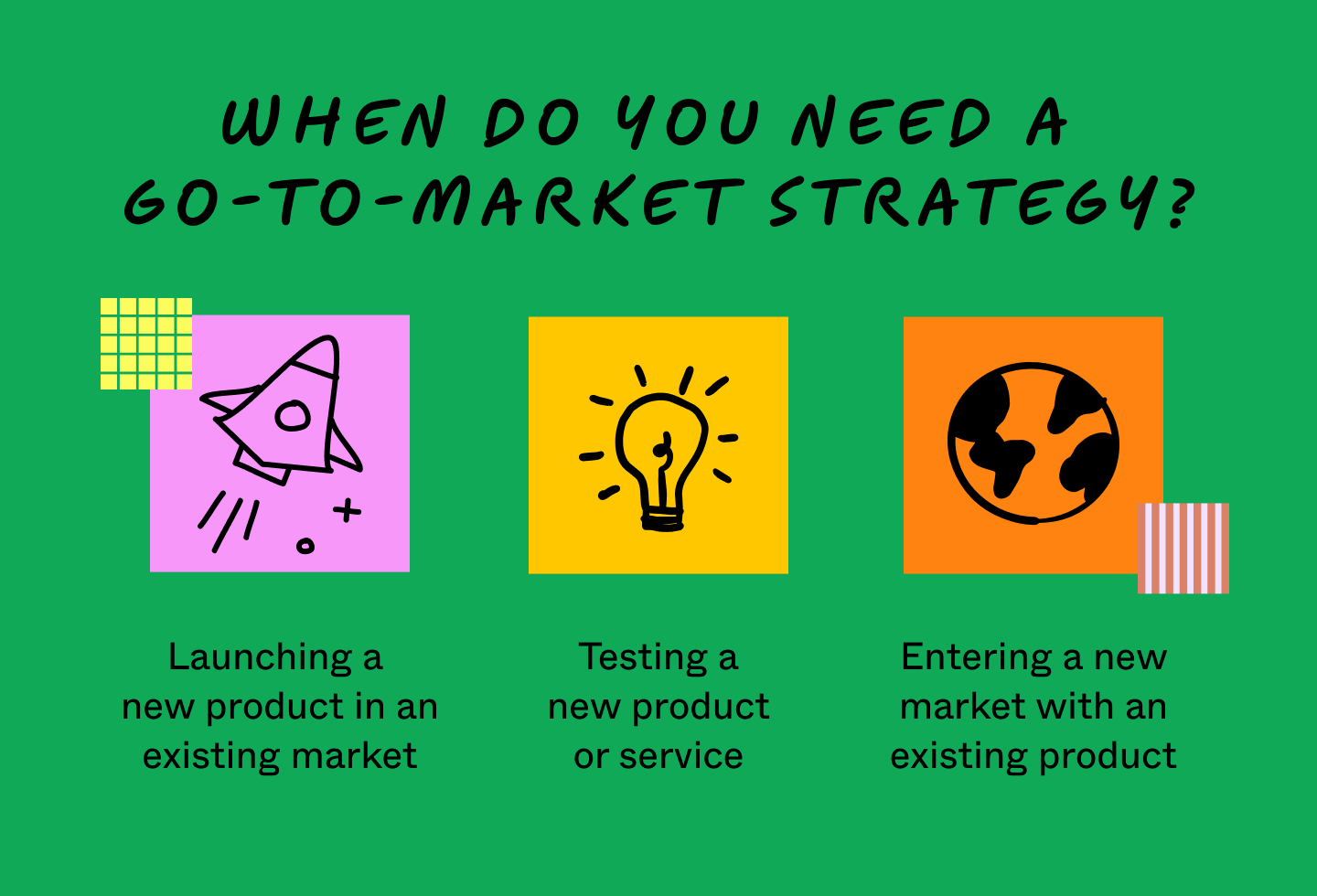
When do you need a go-to-market plan?

A GTM strategy is most useful when:
- Launching a new product in an existing market. A GTM strategy is always necessary when bringing a new product or service to your customers. It helps differentiate the product from your other offerings.
- Entering a new market with an existing product. When targeting a new market, you need to create a fresh GTM strategy to research your new customer demographics, scope out the competitor landscape, adapt your product message, and redefine your distribution channels.
- Testing a new product or service. A GTM strategy is also helpful for testing new products with potential users to gauge market fit. For example, after launching the open beta of Dev Mode, Figma collected user feedback to improve the product and ensure it met the needs of a new target market: developers.
Benefits of go-to-market planning
Aside from a successful product launch, a well-defined GTM strategy offers several benefits, including:
- Reduced time to market. A strong GTM strategy streamlines the launch process by anticipating unexpected roadblocks and setting clear timelines, allowing you to get your product in front of customers faster.
- Lower costs. A well-defined strategy includes the most effective ways to reach your target market and identifies strategies that offer the best ROI, decreasing unnecessary costs and marketing spending.
- Higher-quality leads. A GTM strategy requires a deep understanding of your target audience, leading to more targeted marketing strategies that attract the right customers.
- Competitive edge. Understanding how to differentiate your product from what’s already out there and crafting unique messaging leads to stronger market adoption, giving you an advantage over your competitors.
- Streamlined product development. Incorporating feedback loops into your GTM strategy informs ongoing product development and future iterations. This means you can continue to refine your product to resonate with your audience.
Essential GTM frameworks and models
While every product is unique, most successful GTM strategies rely on one of three core growth motions. Choosing the right framework means aligning your team and resources with your customers’ preferences.
| Model | Description | Ideal for |
|---|---|---|
| Product-led growth (PLG) | Product drives acquisition via free access | Self-serve tools |
| Sales-led growth (SLG) | Sales reps drive deals via demos | Complex, high-ticket enterprise solutions |
| Marketing-led growth (MLG) | Content drives demand via education | Competitive markets that need brand authority |

Product-led growth (PLG)
In this model, the product itself drives customer acquisition. Users are encouraged to sign up and experience the product’s value firsthand, typically through a free trial or freemium plan. This bottom-up approach relies on an intuitive user experience that spreads organically within teams.
Success here hinges on time to value—how quickly a user realizes the benefit of your solution. Tools like Figma Make accelerate this by allowing teams to generate interactive prototypes from text prompts instantly. This lets you test new ideas and iterate with users days or weeks faster than traditional development cycles.
Sales-led growth (SLG)
Sales-led growth puts the sales team at the center of revenue generation. This approach works best for complex, high-ticket products that require customization or executive buy-in. While marketing captures the initial interest, sales reps take the lead on guiding the buyer through the process.
Although this method takes more time and human effort, it’s often the best way to secure large enterprise contracts. A direct conversation allows you to answer specific questions, offer tailored demos, and build the trust needed to secure a deal.
Marketing-led growth (MLG)
Marketing-led growth is all about capturing interest through content. Educational articles, social media, and community events build trust early on, so when a customer is finally ready to buy, they already know who you are.
This approach shines in competitive markets where features alone aren’t enough to stand out. Consistently showing up where your customers are helps you become a trusted resource. It plays the long game, nurturing potential buyers until they’re excited to take the next step.
Ready to scale your marketing content?
Don’t start from scratch. Use our library of templates to create consistent, on-brand assets for your next launch.
GTM strategy vs. marketing strategy
A GTM strategy is a short-term, tactical plan focusing on a specific product launch. It outlines how you’ll introduce your new offering to the market and defines your target audience, how you’ll reach them, and how you’ll position yourself against competitors.
A marketing strategy is a long-term plan that focuses on ongoing marketing initiatives. It defines your target audience, establishes your brand identity, and outlines your long-term goals, acting as a roadmap for all your marketing efforts.
In essence, a marketing strategy sets the overall vision, while a GTM strategy focuses on the specific marketing tactics needed to execute a successful product launch.
How to develop a go-to-market strategy

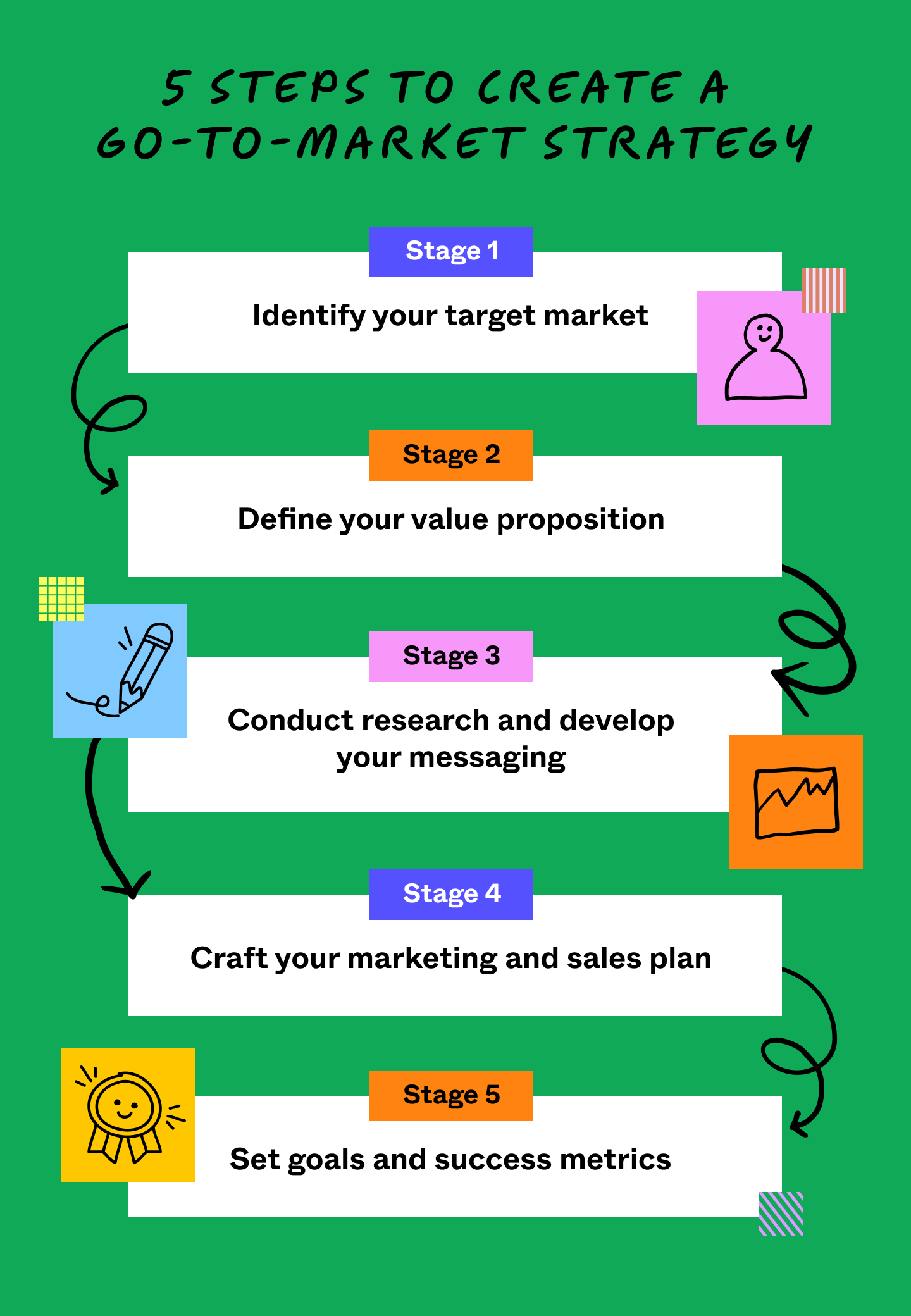
Ready to nail down your GTM strategy? Here are the five steps to successfully bring your product to market.
Step 1: Identify your target market
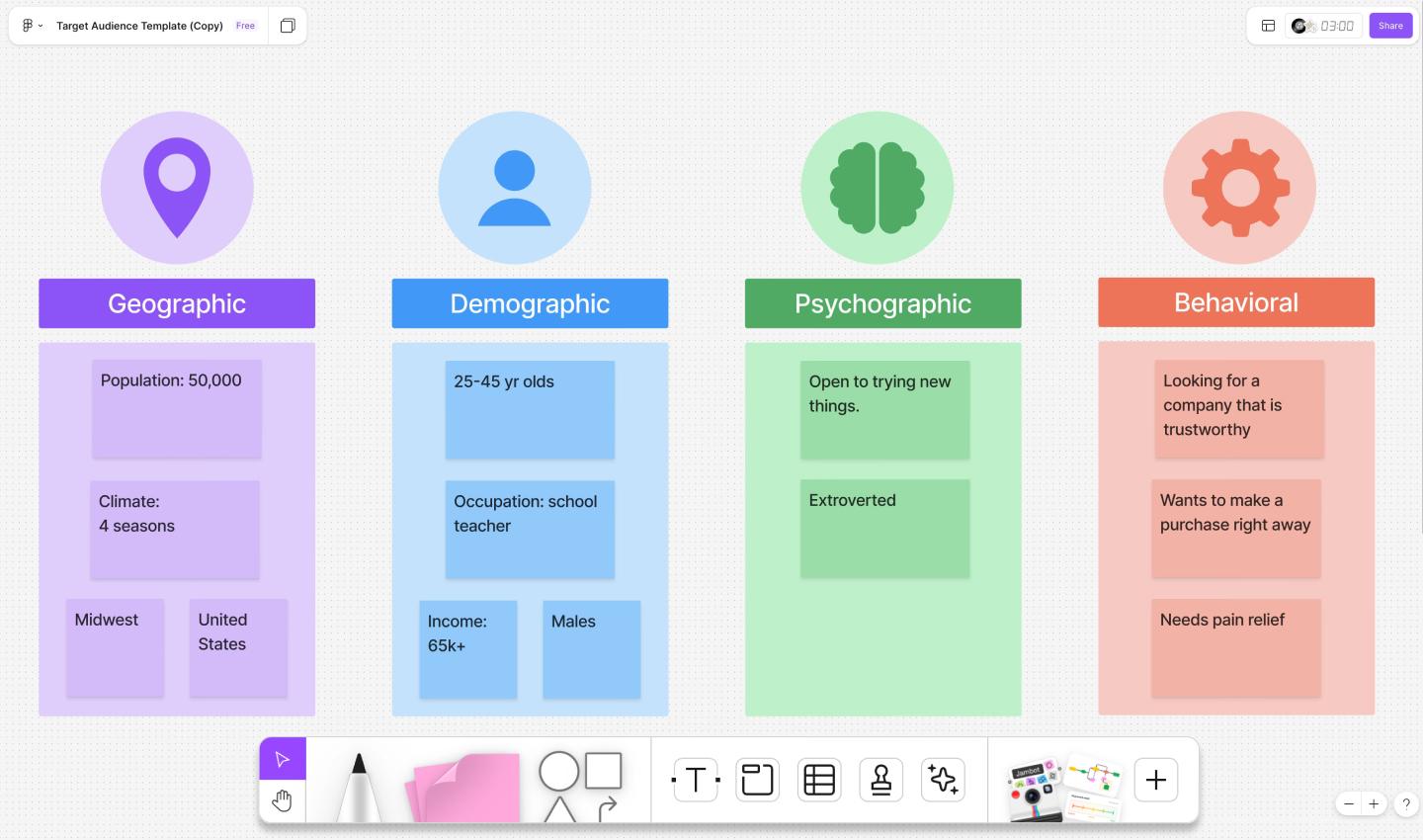
Every successful GTM strategy starts with a solid understanding of your target audience, including their needs, pain points, and behaviors. To identify your target market, consider developing the following:
- Ideal customer profiles (ICPs) focus on the specific customer segments (B2C) or companies (B2B) that your product benefits, outlining data like demographics, firmographics, pain points, and business goals.
- User personas are fictional profiles that emphasize unique psychographics, behaviors, needs, challenges, and goals for specific users within your customer segment. They add a human element to your ICP and help you better tailor your message to match different types of customers. User personas often include names, job titles, habits, and unique problems.
Tip: While demographics are important, take the time to really understand your customers’ worlds. What keeps them up at night? What online communities do they browse? What podcasts do they listen to? By understanding these unique behaviors, you can tailor your messaging to resonate deeper, ensuring a strong product-market fit.

Step 2: Define your value proposition
A value proposition is a short statement communicating your product’s unique selling point and why your target audience would benefit from it. A strong value proposition is crucial for your GTM strategy because it helps guide your messaging, sets you apart from competitors, and defines the “why” behind your product to attract the right customers.
When crafting your value proposition, focus on outcomes, not features. Remember, people don’t buy features; they buy the experiences those features create. Tap into your target audience’s frustrations to uncover why your product provides an emotional benefit.

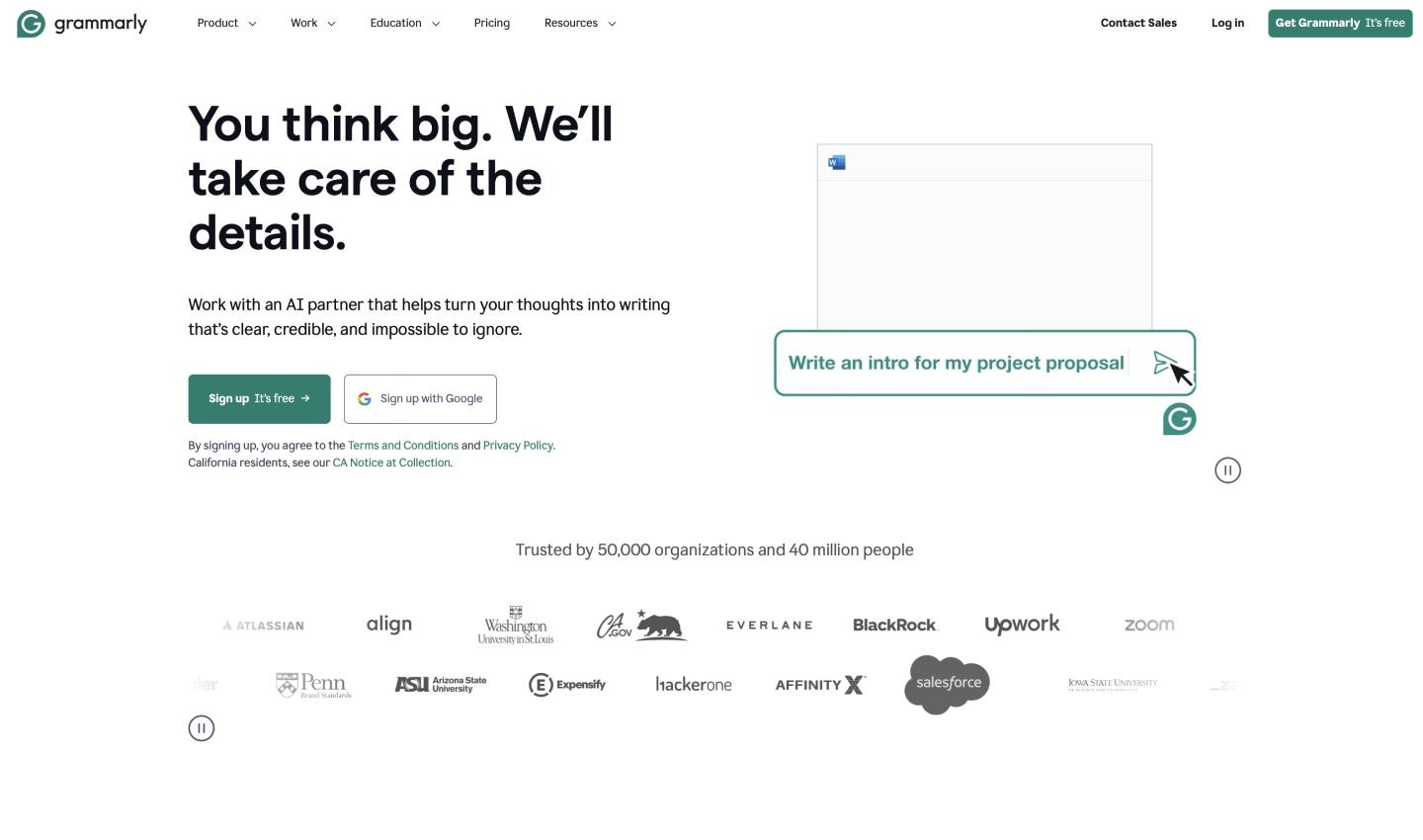
Grammarly does a great job of crafting a value proposition that’s clear, concise, and resonates with its target audience. It creates an immediate connection by selling the benefit of mental space: the freedom to focus on your ideas while the tool handles the execution.
Tip: Use an empathy map to unlock a deeper understanding of your target audience and help craft a value proposition that speaks to your customers’ needs and frustrations. This helps you identify their challenges and desired outcomes to ensure your value proposition hits the mark.
Step 3: Conduct research and develop your messaging
Next, conduct a market analysis to gauge the current market landscape, trends you’re seeing, and what your competitors are doing. Ask yourself:
- What market gaps can my product address?
- Does my product truly solve a problem for my target market?
- What are the potential risks and challenges associated with entering this market?
- How will I price my product competitively?
With a solid understanding of your target market and the competitive landscape, it’s time to craft your product messaging. This messaging expands on your value proposition, explaining how your product solves your users’ problems. Think of your value proposition as a headline of an article and your messaging as the article itself, highlighting all of the important details and context tailored to the reader’s interests.
Product messaging guides your marketing and sales efforts, informs content creation, and ensures your product resonates with your target audience, ultimately converting them into customers.
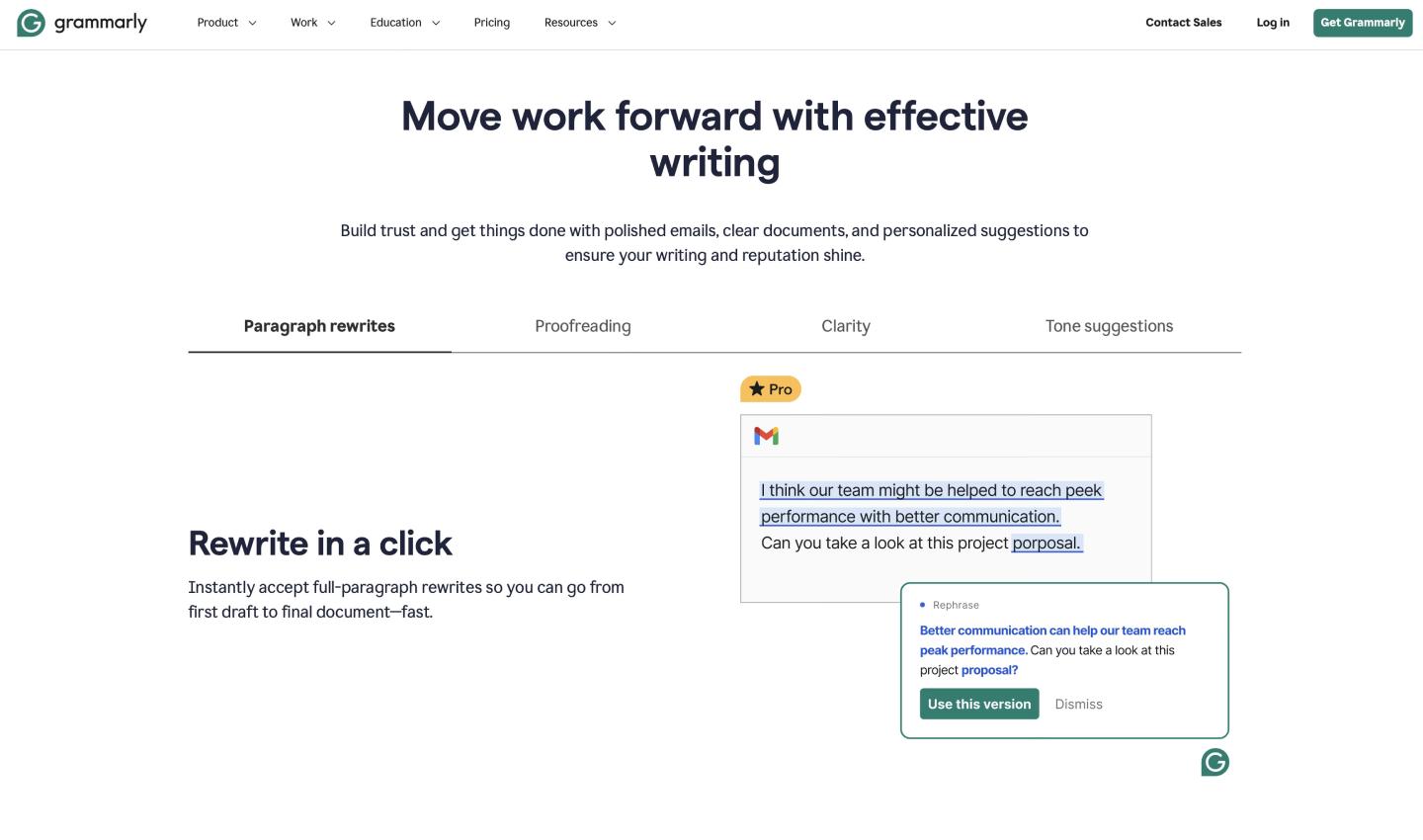
Grammarly builds upon its value proposition by highlighting features that solve its users’ problems, like catching typos and fixing writing mistakes. Its messaging is easy to understand and uses targeted language to speak to the needs of its market.

Tip: Conduct a competitor analysis to identify your direct and indirect competitors. Analyze their strengths, weaknesses, marketing and promotion tactics, and pricing strategies to uncover your competitive edge and where you fit into the market.
Step 4: Craft your marketing and sales plan
Your marketing and sales plan is a vital component of your GTM strategy. It’s how you’ll acquire your customers and ensure you direct your efforts to the channels and promotion tactics that yield the most success.
During this stage, hone in on developing the following:
- Distribution strategy. Define how you will deliver your product to your audience, whether through your website, app stores, or third-party retailers.
- Marketing strategy. Select tactics like social media, blogs, or email to attract and engage prospects. Use your user personas to identify where your audience spends time and tailor your content to match.
- Sales strategy. Align your tactics with the buyer’s journey. Prospects in the awareness phase often engage best with educational resources, while those in the decision stage may need a demo to close the deal.
- Pricing strategy. Choose a model that reflects your value and fits your customer's willingness to pay. Consider approaches like freemium tiers, which allow users to experience the product before upgrading for premium features.
Dollar Shave Club (DSC) is a great example of a company that mastered targeted marketing by pinpointing a common pain point for men: overpriced razors.
Its solution? An affordable and convenient subscription model that delivers razors directly to customers’ doors, eliminating the hassle of going to the store. Leveraging the social media platforms where its audience spent the most time, DSC created funny, engaging content that set it apart from competitors and aided its success.
Tip: As you continue learning what works best for your product and audience, refine your marketing and sales strategies to ensure continuous improvement. Ana Boyer, designer advocate at Figma, says it best: “Remember, building awareness is an ongoing effort. If you don’t see immediate traction, that’s okay! Companies make marketing moments not only during a launch but continuously—and you can use this same approach through updates and evangelism.”
Step 5: Set goals and success metrics
Finally, define goals and key metrics to monitor your product launch's success. Outlining goals gives you actionable targets and provides clear benchmarks for measuring success.
Monitoring performance is crucial because it allows you to gauge how your product is doing in the market and whether it’s meeting user expectations. This helps identify opportunities for improvement and inform decisions that drive sustainable growth. The metrics you choose to track should quantify your goals and validate your product’s effectiveness.
Some metrics to consider tracking include:
- Customer acquisition cost (CAC) measures the total spend required to turn a prospect into a paying user.
- Conversion rate shows the percentage of visitors who become paying customers.
- Session length and frequency analyze how long a user spends on your platform and how often they return.
- Sign-ups monitor the number of users who sign up for your product.
- Website traffic looks at the number of leads visiting your site and identifies what channels they’re coming from.
Tip: Use a goal-setting approach that starts small and gradually builds as your product gains traction. For example, product development company Linear uses a methodology that begins with small, achievable milestones you can track to avoid becoming overwhelmed by ambitious ones. This keeps you focused on feasible goals while propelling you toward long-term success.
Ready to map out your full strategy?
Browse Figma’s library of frameworks to visualize your roadmap, from SWOT analysis to long-term planning.
Successful GTM strategy examples
Below are three strong GTM strategies from top companies that fueled initial growth and contributed to their ongoing success.
Example 1: Headspace
Mental health platform Headspace focuses on making meditation accessible and easy for everyone. Its initial GTM strategy targeted different markets, from busy professionals seeking a quick way to relieve stress to open-minded individuals with preconceived notions or limited knowledge of meditation.
Headspace’s strategy built trust with its audience through endorsements and partnerships with celebrities and big-name brands like Nike, Starbucks, and Netflix. This helped establish credibility and made meditation more approachable.
Headspace also prioritized building brand awareness through educational content to address its audience’s growing interest in mental health and emphasized user experience to make it enjoyable for beginners. Its freemium subscription model also aligned with its mission of making meditation available to all, allowing potential users to experience the platform.
By sticking to its value proposition of making meditation easy and accessible, Headspace has positioned itself as a leader in the mindfulness app space.
Example 2: Airbnb
Airbnb’s original GTM strategy needed to target two sides: hosts and guests. For hosts, Airbnb focused on earning potential, highlighting the opportunity for hosts to earn additional income by renting out their living space.
For guests, Airbnb marketed itself as a unique and affordable way to “travel like a local” by offering stays in apartments and homes in various locations. It targeted travelers seeking experiences beyond traditional hotel stays by leveraging photos from hosts to showcase listings, curated travel guides, and engaging with travel media to build brand awareness.
Today, Airbnb continues to iterate its product to stay competitive, keep users engaged, and stick to its value proposition of offering unique experiences. Its newest category, “Icons,” goes beyond traditional stays by offering customers exclusive and memorable moments, like a private concert with a famous musician or the opportunity to drift off in the house from the Pixar movie “Up.”
Airbnb introduced this new feature by collaborating with celebrities, influencers, and artists to offer these experiences to individuals seeking unique activities and stays.
Example 3: Slack
Slack redefined the B2B market by treating business software like a consumer product. Its GTM strategy flipped the traditional sales model on its head: Instead of pitching to C-suite executives (top-down), Slack targeted end users directly (bottom-up), focusing specifically on developers and product teams who were tired of email.
This strategy is known as “land and expand.” Slack lowered the barrier to entry with a seamless onboarding process and a generous freemium model, allowing small teams to adopt the tool without needing budget approval. As these teams became reliant on the product, usage spread organically to other departments.
Eventually, the tool became so embedded in the company culture that purchasing an enterprise license became a necessity. This approach proved that B2B growth could be driven by user experience rather than aggressive sales tactics.
Kickstart product launch planning with FigJam
The key to successfully bringing a product to market is a well-thought-out plan. By investing time in understanding your target audience, developing unique messaging, and choosing the right distribution channels, you can craft a proper GTM strategy that establishes a strong market position and informs future marketing initiatives.
Ready to streamline your product launches? Figma can help.
Here’s how:
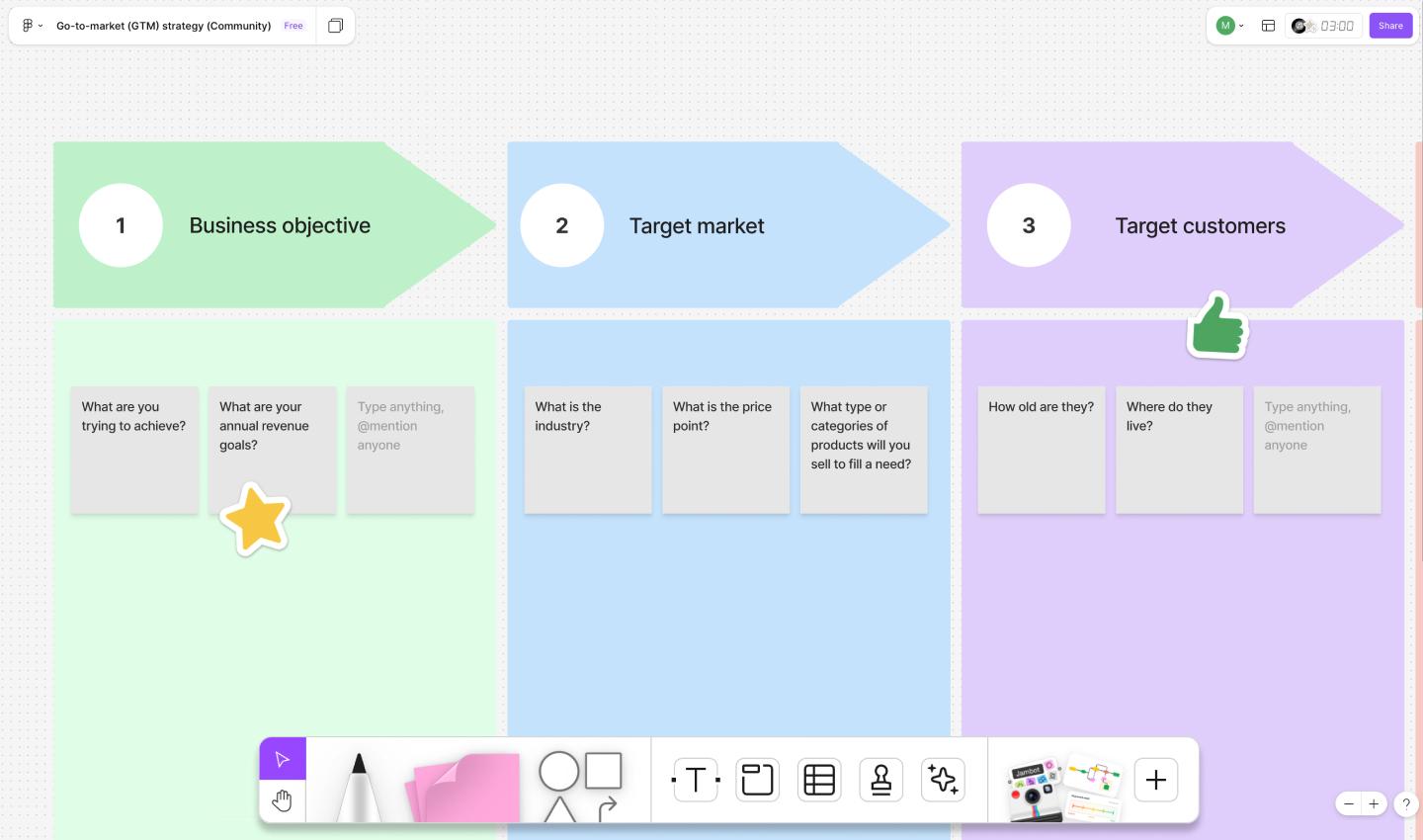
- Start by using FigJam to collaborate with your team and map out your GTM strategy on a shared online whiteboard.
- Use Figma Slides to present your roadmap and get stakeholder buy-in with interactive, visual decks.
- Accelerate your launch with Figma Buzz, instantly scaling the creative assets needed for your campaigns.
Plan your go-to-market strategy
Bring the entire group to the strategy room with Figma’s collaborative presentation templates.
Keep reading


How to start a presentation
Learn how to start a presentation with 15 fun and engaging examples, and see how Figma can take your presentation to the next level.


How to make a business website in 5 simple steps
Learning how to make a business website isn’t as challenging as you might expect. Discover how to create a website for your business and how Figma can help.