Kotter’s 8-step change model: How to sustain change effectively
Share Kotter’s 8-step change model: How to sustain change effectively
Explore more from
Strategic planning

Change is part of every workplace—new tools, shifting strategies, evolving priorities. But without structure, even well-intentioned change can fizzle out. Picture a mid-sized software team rolling out a new project management system. A few months later, people are still using the old tools, deadlines are slipping, and no one’s quite sure what went wrong. The issue wasn’t the tool—it was the lack of a plan for getting people on board.
That’s where Kotter’s eight-step change model comes in. Developed by Harvard professor John Kotter, this framework gives leaders a clear way to turn strategy into action—and make change stick. It focuses on people just as much as processes, helping teams move from initial urgency to long-term adoption.
Read on to learn:
- What Kotter’s eight-step change model is
- The eight steps in the change model
- Examples of Kotter’s eight-step change model
- Benefits and outcomes of organizational change
- Strengths and weaknesses of the model
- Tools and resources for change leaders
What is Kotter’s eight-step change model?
Kotter’s eight-step change model helps leaders implement organizational change effectively. First introduced in his 1996 book Leading Change, the framework outlines the steps leaders can take to turn ideas into sustained action.
Each of the eight change management steps is designed to build momentum, from rallying support early on to embedding new behaviors into everyday workflows. The model is often used in large-scale change efforts, but its principles can apply to teams of any size.
The eight steps in detail
Kotter’s model breaks change into eight steps, from creating a sense of urgency to instituting change.

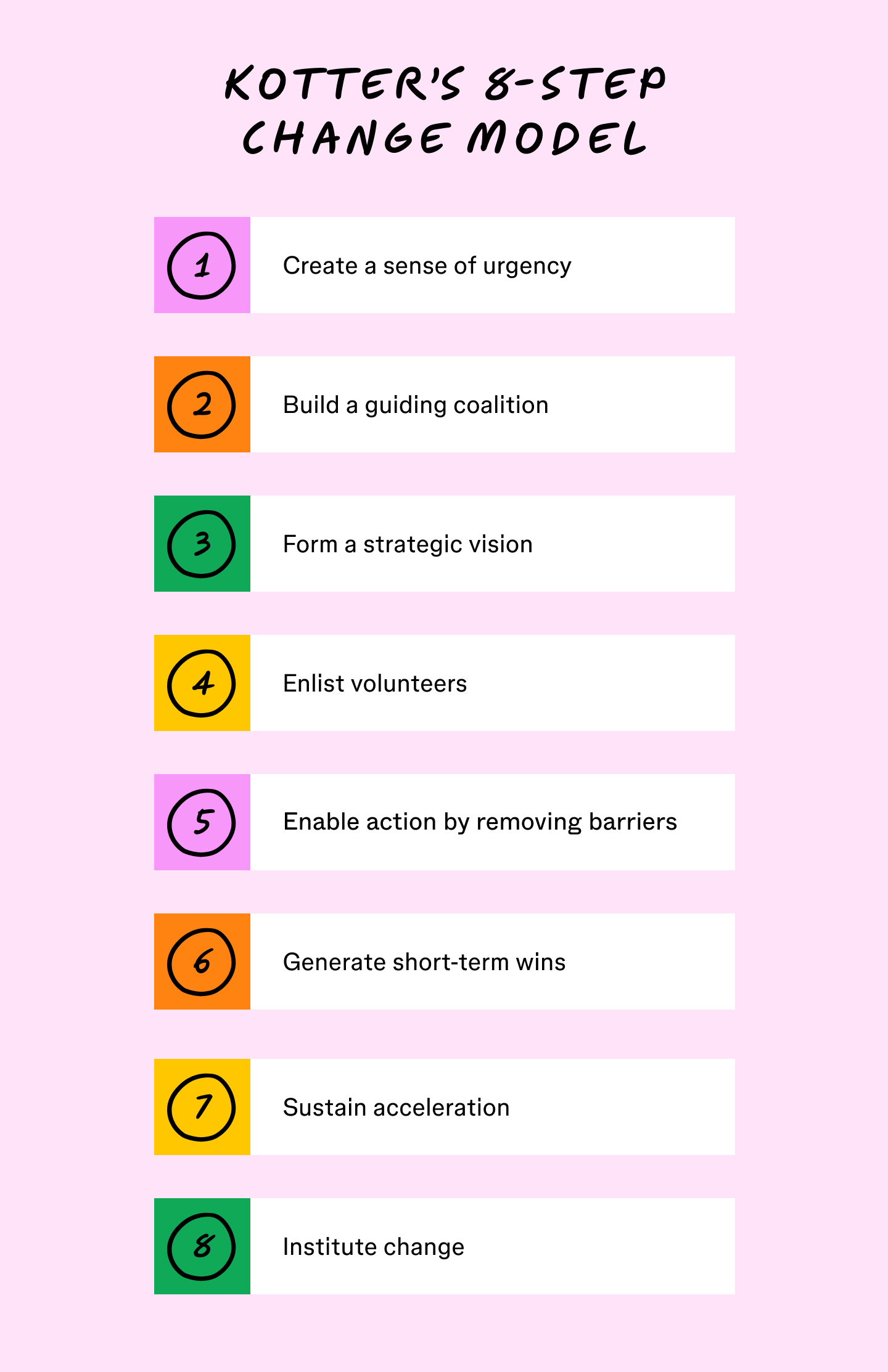
Step 1: Create a sense of urgency
Change needs a reason to stick. Without a shared sense of urgency, teams may stall or stay stuck in the status quo. Communicating why the change matters sets the foundation for action.
Actionable strategies:
- Use real-world data, such as industry trends, competitor comparisons, and financial data, to make the case for change.
- Run a SWOT analysis to identify threats and opportunities.
- Open up space for honest conversations so teams can engage with the “why” behind the need for change.
Step 2: Build a guiding coalition
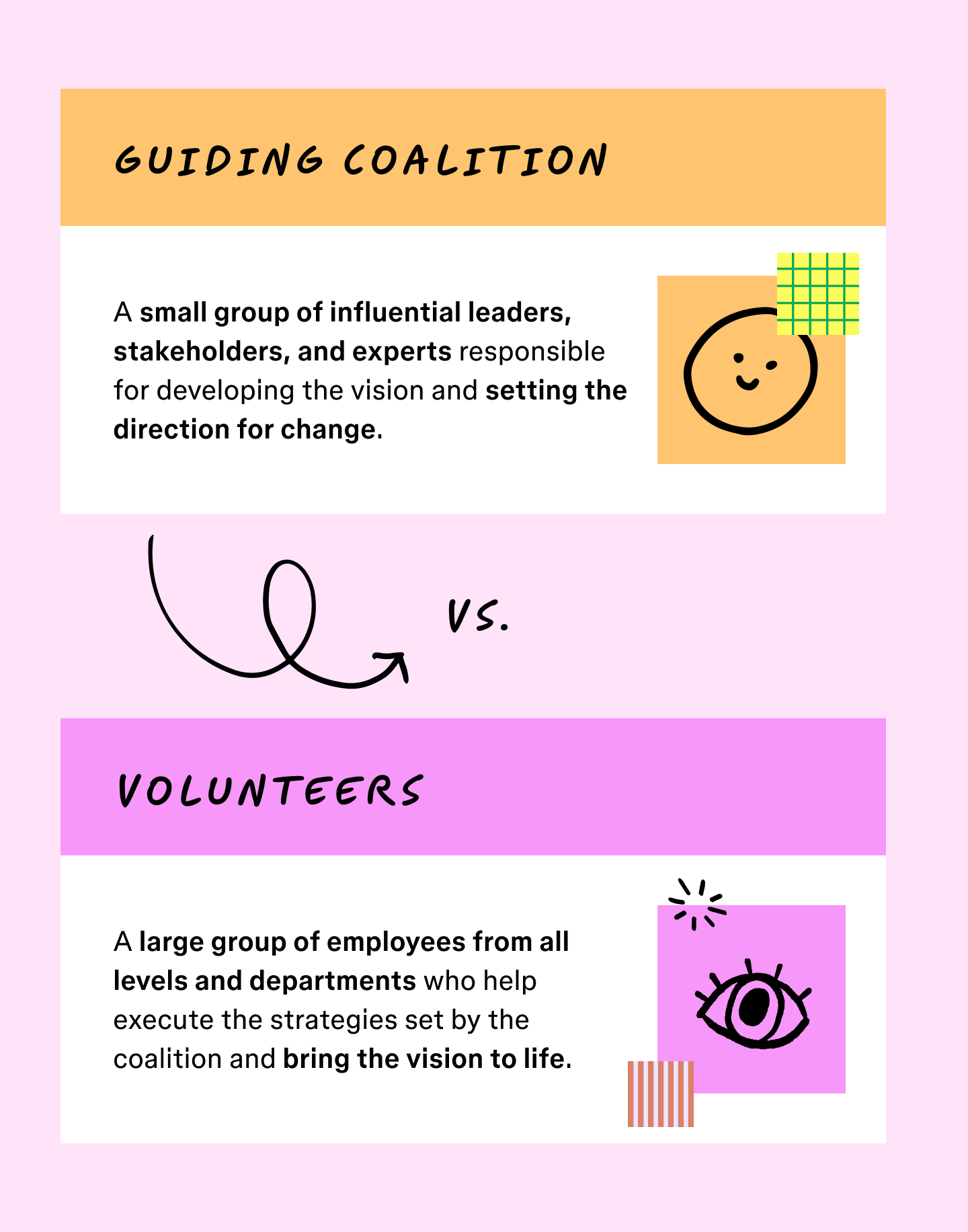
A strong core team helps keep change moving. This group should include leaders and stakeholders who bring credibility, influence, and perspective across the organization.
Actionable strategies:
- Choose a diverse group that includes senior leaders and subject-matter experts from various departments.
- Clarify roles and responsibilities from the start.
- Foster connection with team-building activities to build trust and break down silos.
Step 3: Form a strategic vision
A clear and compelling vision statement keeps teams aligned. It helps people understand what’s changing, why it matters, and where the effort is headed.
Actionable strategies:
- Use a mission, vision, and values template to ground your message.
- Craft a concise and repeatable vision—something people can easily repeat and share.
- Reinforce the message through multiple channels, like meetings, messaging platforms, or videos.
Step 4: Enlist volunteers
Change gains momentum when early adopters get involved. Volunteers become ambassadors, helping spread the message, answer questions, and model new behaviors.
Actionable strategies:
- Highlight the opportunity for professional and personal growth.
- Offer training and resources so volunteers can communicate clearly and lead by example.
- Celebrate and recognize their contributions publicly.

Step 5: Enable action by removing barriers
Even motivated employees can get stuck if systems, tools, or policies stand in the way. Clearing roadblocks helps people take action more confidently and consistently.
Actionable strategies:
- Ask for input to uncover friction points.
- Simplify processes or adjust workflows that slow progress. Adjust organizational charts to align with the initiative, if needed.
- Provide tools and support that make it easier for teams to follow through.
Step 6: Generate short-term wins
Visible progress keeps teams motivated. Quick wins show the change is working and help build trust in the process.
Actionable strategies:
- Use SMART goals to set achievable milestones.
- Share progress openly to build team momentum.
- Connect each win to long-term outcomes.
For example, a pilot project using a new workflow can demonstrate faster turnaround times or fewer errors—proof that the change management approach works.
Step 7: Sustain acceleration
Once the process gets moving, it’s important not to lose steam. Ongoing progress keeps change alive and builds toward deeper, lasting transformation.
Actionable strategies:
- Reinforce the purpose and benefits of implementing change to maintain momentum.
- Use each success as an opportunity to review and improve. Use the Kaizen methodology to develop a culture of continuous improvement.
- Empower emerging leaders to champion the vision and introduce fresh ideas.
Step 8: Institute change
For change to last, it has to become part of your organization’s culture and everyday systems. That means reinforcing new ways of working through onboarding, training, and cultural norms.
Actionable strategies:
- Celebrate milestones and recognize how far the team has come.
- Update training and onboarding so new hires adopt the change from day one.
- Assign ongoing advocates to model desired behaviors and ensure continuity.
Map your change strategy
Use Figma templates to guide every step with your team.
Kotter’s eight-step change model examples
Kotter’s eight-step change model can guide everything from design updates to company-wide software rollouts.
Here are two examples that show how teams can apply this change process to real initiatives.
Example 1: Updating a UI design

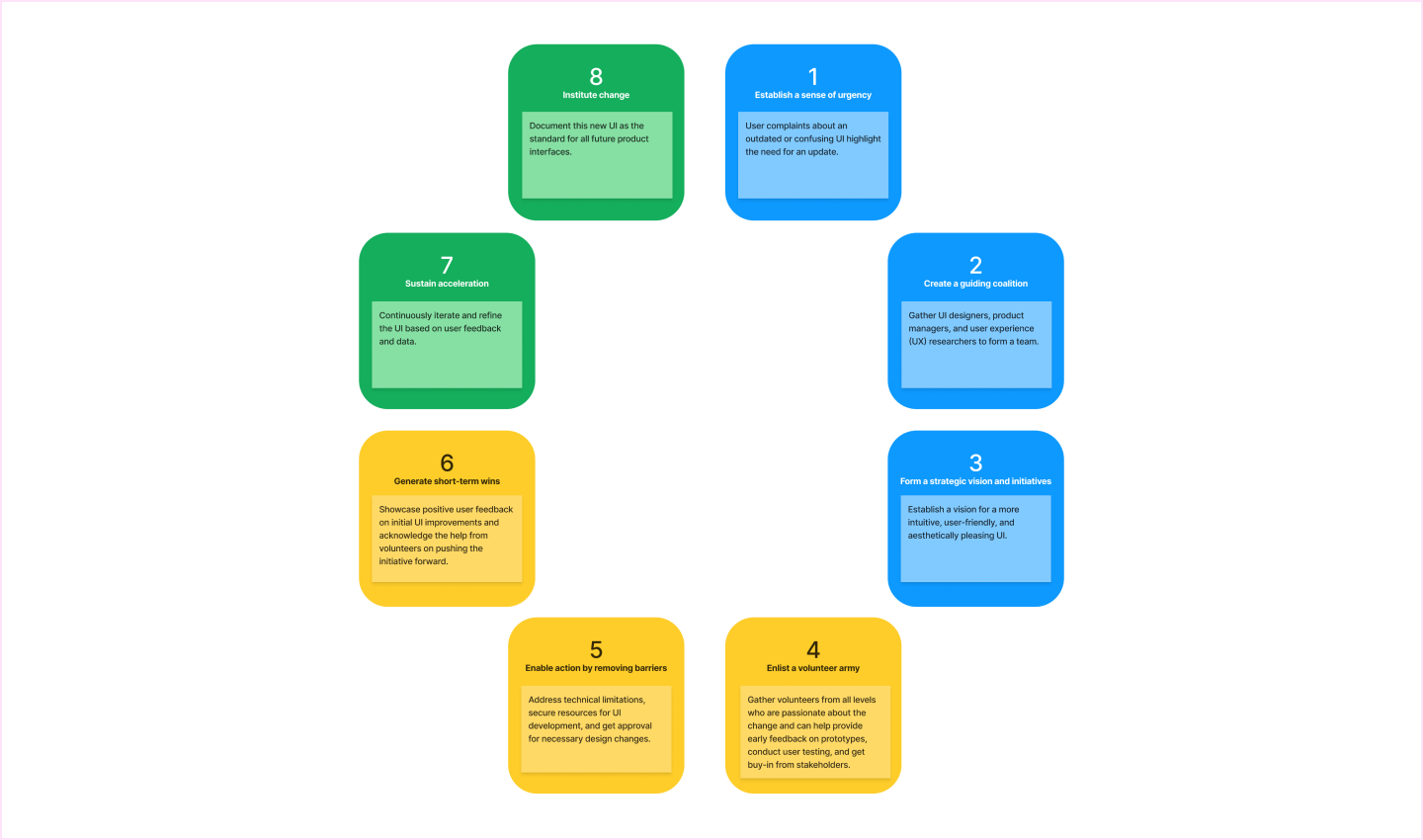
Let’s say a product team receives consistent feedback that their app’s interface feels outdated and hard to navigate. Rather than jumping straight into design changes, they apply Kotter’s eight-step model to plan the process.
- Urgency. User feedback and support tickets reveal common points of confusion. The team compiles trends that show how the outdated UI affects retention and onboarding.
- Coalition. Designers, product managers, and user researchers come together to lead the initiative. They align on goals, outline responsibilities, and present a united message about why the redesign matters.
- Vision. The group defines a clear direction for the new experience. The product should feel simpler, more intuitive, and easier to navigate for both new and returning users.
- Volunteers. Employees from different departments offer to participate in early testing cycles. Their feedback shapes early decisions and helps build broad support since they can speak to the value of the redesign in real terms.
- Barriers. Technical constraints and outdated workflows are addressed early. The team secures engineering time, updates design guidelines, and streamlines approval steps so progress does not stall.
- Wins. A refreshed onboarding flow launches first and receives positive feedback. The team shares early improvements in completion rates and highlights how volunteer input made the changes stronger.
- Sustain momentum. Insights from the onboarding update inform the redesign of other parts of the product. Regular feedback and quick iteration help the team maintain energy and refine decisions with confidence.
- Institute change. The updated patterns and interaction guidelines are added to the internal design system. This ensures future features follow the new standard and prevents the team from drifting back to old habits.
Pro tip: Use this change template for UI design to implement a new user interface efficiently.
Example 2: Adopting new software across teams

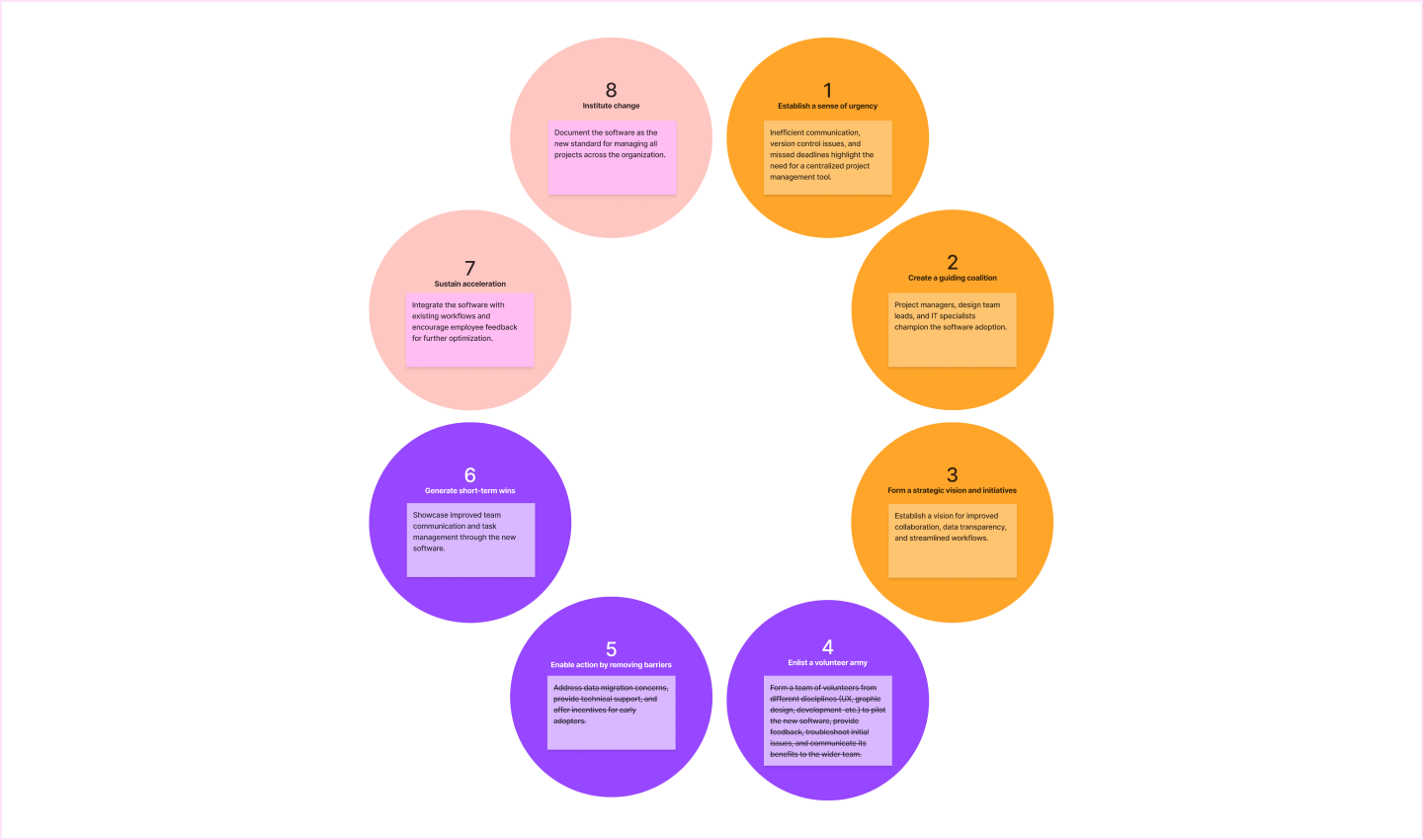
A company’s current project management tool isn’t scaling well, leading to missed deadlines and confusion. Leadership decides to move to a new platform but wants to avoid disruption.
- Urgency. The team reviews communication gaps and missed handoffs from the past quarter. Seeing how often projects stall or duplicate efforts makes the need for a shared system clear.
- Coalition. Project managers, team leads, and IT specialists collaborate to guide the rollout. They define what success looks like and agree to support their teams as questions and challenges come up.
- Vision. They outline a straightforward goal for the change. Work should be easier to follow, updates should be visible to everyone involved, and teams should be able to rely on one central place to track progress.
- Volunteers. Colleagues from different roles volunteer to pilot the tool. Their early testing helps surface friction points and gives the coalition real insight into how the platform will work in day-to-day use.
- Barriers. The coalition focuses on smoothing the transition. They help teams import existing work, answer technical questions, and create simple guides that reduce any hesitation about learning a new system.
- Wins. After a short trial, the pilot group reports clearer communication and fewer missed updates. These early results are shared across the company to show the value of the new tool in action.
- Sustain momentum. The rollout expands gradually, so each team has space to adjust. Feedback is gathered throughout the process, and small improvements are added as the tool becomes part of regular workflows.
- Institute change. The company updates its process documentation and onboarding materials so new employees learn the tool as part of their introduction. From that point on, the software becomes the standard for planning and tracking work.
Pro tip: Use this change template to guide your team to success.
Benefits of Kotter’s model
Kotter’s structured approach delivers multiple organizational benefits:
- Increased employee engagement. Employees feel valued and motivated when they’re included in change initiatives.
- Improved efficiency. Early removal of obstacles streamlines processes and reduces delays.
- Sustained momentum. Celebrating short-term wins keeps morale high and propels ongoing change.
- Better adaptability. Teams build the habit of responding to change, not just reacting to it.
- Aligned leadership. A shared vision makes it easier for managers and teams to coordinate, even under pressure.
- Longer-lasting results. Embedding new behaviors into team norms makes change more durable without constant top-down pressure.
Strengths and weaknesses
Kotter’s model is one of the most widely used frameworks for guiding change, but like any model, it works best when used in the right context.
Strengths:
- Clear structure. The step-by-step guidance makes it easy to follow.
- People-first focus. It emphasizes guiding teams and maintaining a clear vision.
- Works across teams. Because it encourages broad participation, it helps teams coordinate across departments and break down silos.
Weaknesses:
- Linear approach. Not every change effort follows a clean sequence. Some teams may need to loop back or adapt as things evolve.
- Cultural oversight. The framework doesn’t always account for internal politics, team dynamics, or differences in how people process change.
- Time-intensive. The model encourages thorough planning and involvement, which can be challenging in fast-paced or urgent situations.
Tools and resources for change leaders
Successful change requires the right tools to plan, communicate, and track progress. Figma makes it easy to visualize initiatives and keep teams aligned.
- Project management tools. Use platforms like Asana, Trello, or Figma’s building blocks to map timelines, assign responsibilities, and monitor progress.
- Communication platforms. Share updates and collect feedback using Slack, Teams, or Figma’s built-in commenting features for real-time collaboration.
- Visual collaboration tools. Facilitate brainstorming, stakeholder analysis, and step-by-step change planning with FigJam and Figma prototyping, enabling teams to see the change journey in action.

FAQ
Below are answers to frequently asked questions about Kotter’s eight-step change model, helping leaders understand how to apply it effectively.
Why is Kotter’s model important for change management?
Kotter’s model offers a clear, structured roadmap for managing organizational change. Focusing on leadership, communication, and employee engagement helps teams overcome resistance and achieve lasting results.
The model’s emphasis on creating urgency, building coalitions, and celebrating early wins helps maintain momentum throughout complex initiatives.
Is Kotter’s model suitable for all types of organizations?
While effective for many organizations, Kotter’s eight-step model isn’t a one-size-fits-all solution. It’s particularly well-suited for large, hierarchical organizations. Smaller or more agile teams may need to adapt certain steps for greater speed and flexibility.
Leaders should also consider cultural nuances, adjusting the model to align with their team’s communication styles and values to ensure successful implementation.
How long does it typically take to implement Kotter’s eight steps?
Implementation time varies with organization size and change scope—small initiatives may take months, while large transformations can take a year or more. Focusing on sustainable progress and celebrating short-term wins helps maintain momentum and reinforce change.
Implement change with FigJam
Kotter’s eight-step change model is a tried-and-true framework that breaks down organizational change into manageable steps. If you’re ready to implement change and unlock your organization’s potential, FigJam can help.
Here’s how:
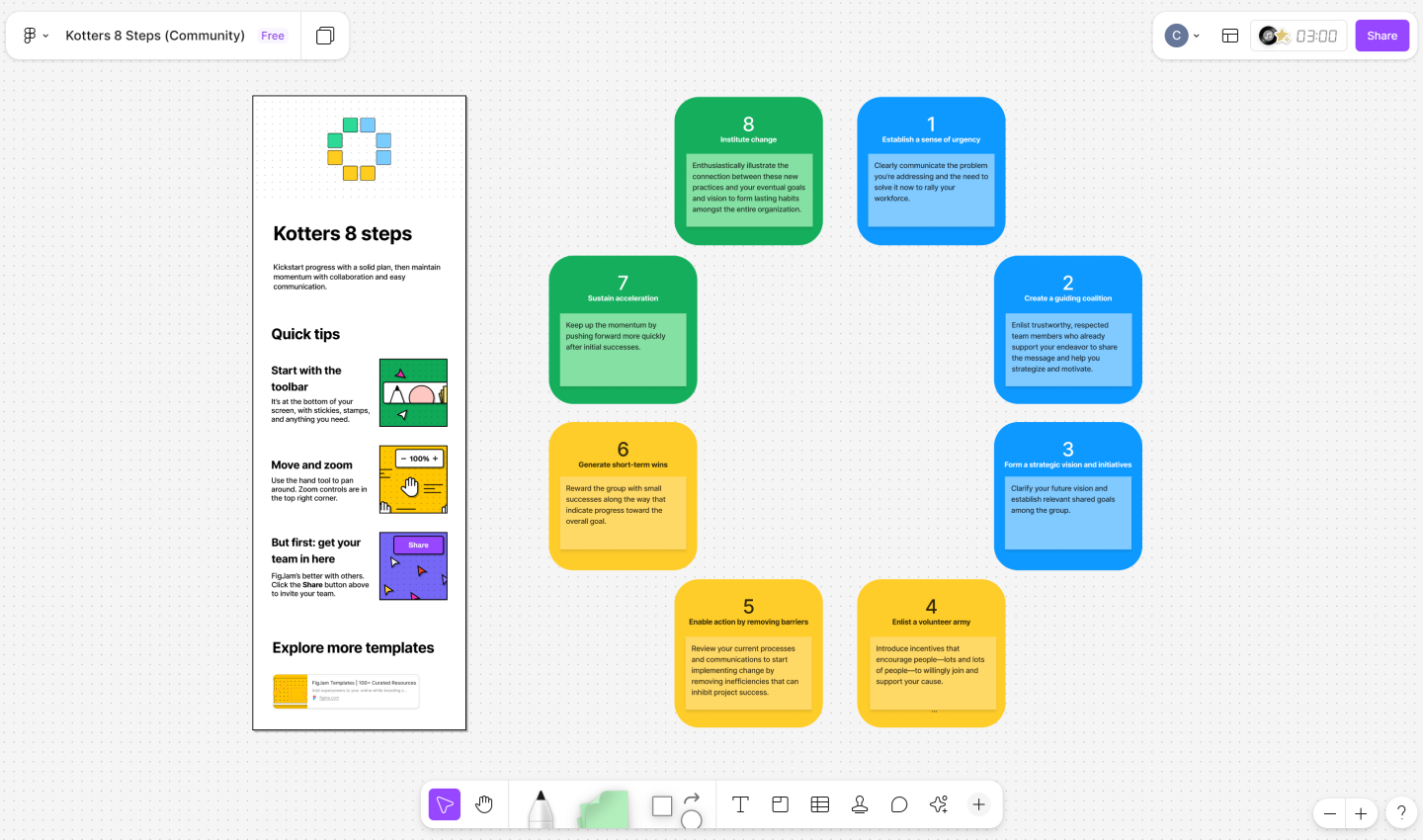
- Use FigJam’s eight-step change model template to visualize the steps and note what you need to achieve your desired results.
- Build an organizational chart to help identify individuals for your guiding coalition and enlist your volunteer army.
Explore FigJam templates to inspire organizational change, like the ADKAR model.
Explore FigJam
Collaborate in real time with ready-made templates.
Keep reading

How to draw a data flow diagram in 5 simple steps
A data flow diagram explains how system inputs trigger processes and create outputs. Learn how you can use these charts to improve systems and experiences.

What is a UML diagram?
Curious about what a UML diagram is? Learn how Unified Modeling Language diagrams represent systems, processes, and workflows to simplify complex ideas.