
5 design skills to sharpen in the AI era



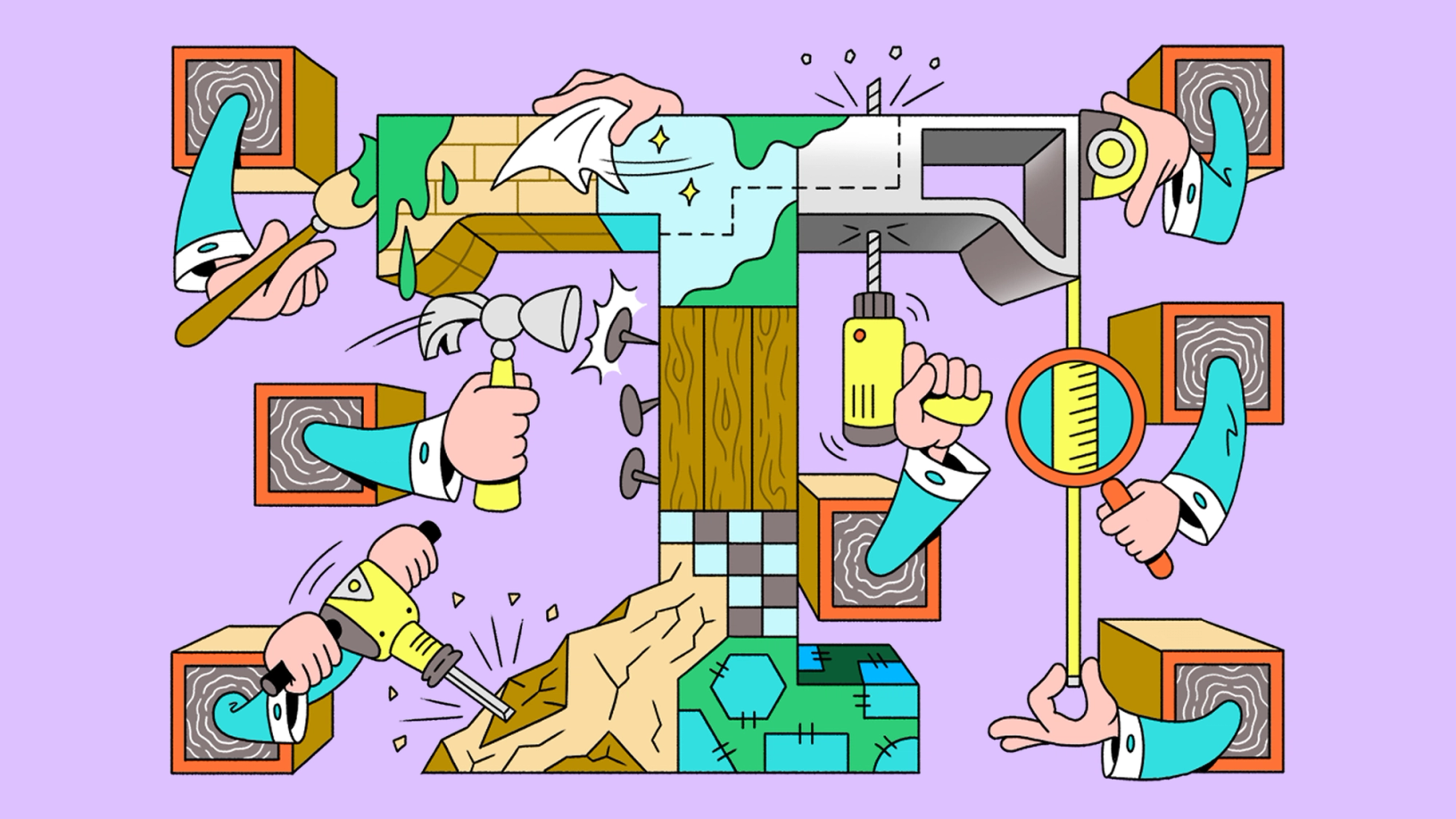
Our latest research highlights the skills designers need to meet the moment.
Share 5 design skills to sharpen in the AI era
Hero illustration by Kyle Platts
AI is reshaping the way products are made: It’s accelerating exploration, lowering barriers to entry, and widening the circle of who can participate in the design process. In response, teams are honing new skills to meet the moment. In our recent report State of the Designer 2026, we asked the design community which skills matter most to them in the age of AI. Here, we’re sharing what those skills are—and how to perfect them.

Read State of the Designer 2026 to discover how builders around the world are upleveling their skills and using AI to push their craft further.
1. Building up your AI toolkit—and your prompting prowess

Check out our study on hiring to learn more about how AI is the driving demand for design.
Today, AI fluency is no longer a nice-to-have. Over half of designers and hiring managers say that AI design skills—like the ability to prompt your way to a quick prototype or vibe code an app—are essential. This is because designers who have embraced AI in the last year are feeling the difference: 91% say it helps them create better designs, and 89% say it helps them work faster. And as AI makes it easier for people to reach beyond their current roles, For years, the boundaries between product development roles have become less defined. Our latest report quantifies this shift and explores what it means for you and your team.

Are roles and responsibilities a thing of the past?
This can look like anything from using AI to tweak images Today we’re introducing three new AI image editing tools that make precision editing faster, cleaner, and more intuitive—powering a more complete creative workflow in Figma. A growing number of product managers are finding that the fastest way to clarity is to build. Inside Figma Make, they’re pressure-testing assumptions early, building momentum, and rallying teams around something tangible. Design and cooking share a truth: Preparation determines the outcome. Structured prompts turn AI from guesswork into a reliable design partner.Introducing three new tools for precise image editing in Figma

Prototypes are the new PRDs
Cooking with constraints: A designer’s framework for better AI prompts

Learn how to write prompts that turn AI into a more reliable design partner.
Further reading on AI workflows



2. Leaning into multiplayer product building
As AI lowers the barrier for non-designers to participate in the design process, collaboration is more important than it’s ever been. The majority of hiring managers rank cross-functional collaboration as a top-five skill, while 90% of designers say it helps them do their best work. And AI isn’t just expanding the need for cross-functional partnerships—it’s making those connections stronger. In fact, 80% of designers say AI tools help them collaborate more successfully.
AI is also reshaping how teams collaborate. Instead of clear handoffs between distinct disciplines, now it’s about fluid partnerships on everything from strategy to ship. New tools let anyone design from anywhere Now you can take workflows that start in Claude Code even further in Figma.

From Claude Code to Figma: Turning production code into editable Figma designs
Further reading on collaboration

3. Being a systems thinker
Teams need strong foundations to keep craft high. “AI has automated a lot of surface-level design work,” says one designer we surveyed. “Now the value lies in systems thinking and the ability to translate complexity into clarity.” Forty-seven percent of hiring managers rank systems thinking and service design as a top-five requirement for new hires. Designers are leaning into the tools and skills that fall under this umbrella: solving user problems with testing and research, maintaining clear documentation, and codifying taste and quality with design systems As AI reshapes how we make products, design systems are evolving from libraries of reusable parts into living frameworks that scale taste and craft. We spoke with product leaders and practitioners about the shifts they’re seeing in how design systems are built, used, and maintained.

5 shifts redefining design systems in the AI era
Further reading on systems thinking



→ How design systems power the new pace of product development
4. Creating AI features that add value, not just sparkle
Many teams are scrambling to keep up with rising user expectations, quickly experimenting to figure out how AI might fit into their products. That’s why 37% of designers rank designing AI products as a top-three in-demand skill, while 39% of leaders say it’s a top-five skill for new hires. "We’re building end-user products that integrate AI workflows in various ways and we need [team members] who understand those workflows and/or are able to quickly learn to integrate them into a broader platform,” says a design hiring manager in the tech industry. And this is true across product roles: 48% of hiring managers say designing for AI products is a top-five skill for non-designers, making it an organization-wide expectation.


Learn how the Headspace team built Ebb, an AI companion that puts trust and transparency first.
There’s pressure to build AI features in order to stay competitive, but those features still need to solve real user problems. Instead of giving into AI hype, go a layer deeper by capturing human intent and trust Creating an AI-powered feature for mental health poses myriad challenges—especially around keeping users safe and supported. Here, the product and brand teams talk through how they built Ebb with care and sensitivity.

How Headspace built an AI companion that fosters trust and transparency
Further reading on building AI-driven products


5. Upholding craft through visual polish, taste, and intention
Nothing can replace a designer’s eye, and over half (58%) of designers and hiring managers rank visual polish as the number one most important skill. As AI lets designers go from prompt to prototype in minutes, craft—the curiosity, intuition, taste, and intention With more teams moving faster than ever, the real differentiator is craft—the curiosity, intuition, taste, and intention behind every detail.

How to harness skills that AI can’t automate
This means starting from first principles, rethinking old playbooks, and iterating until the right direction earns your confidence. And while AI can accelerate that exploration, it can’t choose to wander beyond the brief, challenge whether assumptions are wrong, or follow an unexpected hunch with patience. That’s where your expertise matters: sensing what will resonate, noticing when something feels off even if it technically works, and designing for a human response.
Further reading on keeping craft high




Thriving in the age of AI isn’t just about trying new workflows—it’s about how well you can evolve your skillset to meet the moment. Whether you’re leveling up in your current role, looking for a new one, or setting out at the beginning of your career, it’s never a bad time to hone your craft.
To learn more about how teams are sharpening their skills in the AI era, read State of the Designer 2026.
How are you approaching today’s rapidly-changing design landscape? Below, take our quiz to see what you have in common—or not—with your peers.
Madeline Stafford is a writer and editor at Figma. She was previously a content marketer at Faire, where she told stories about makers and culture. Before that, she worked in the art world.