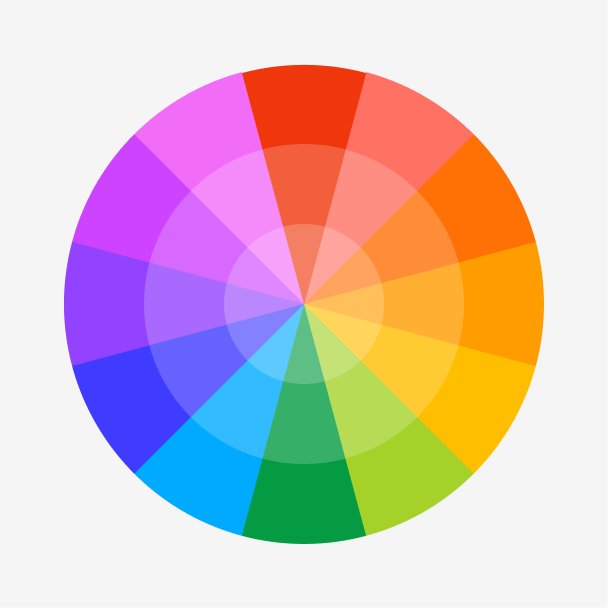
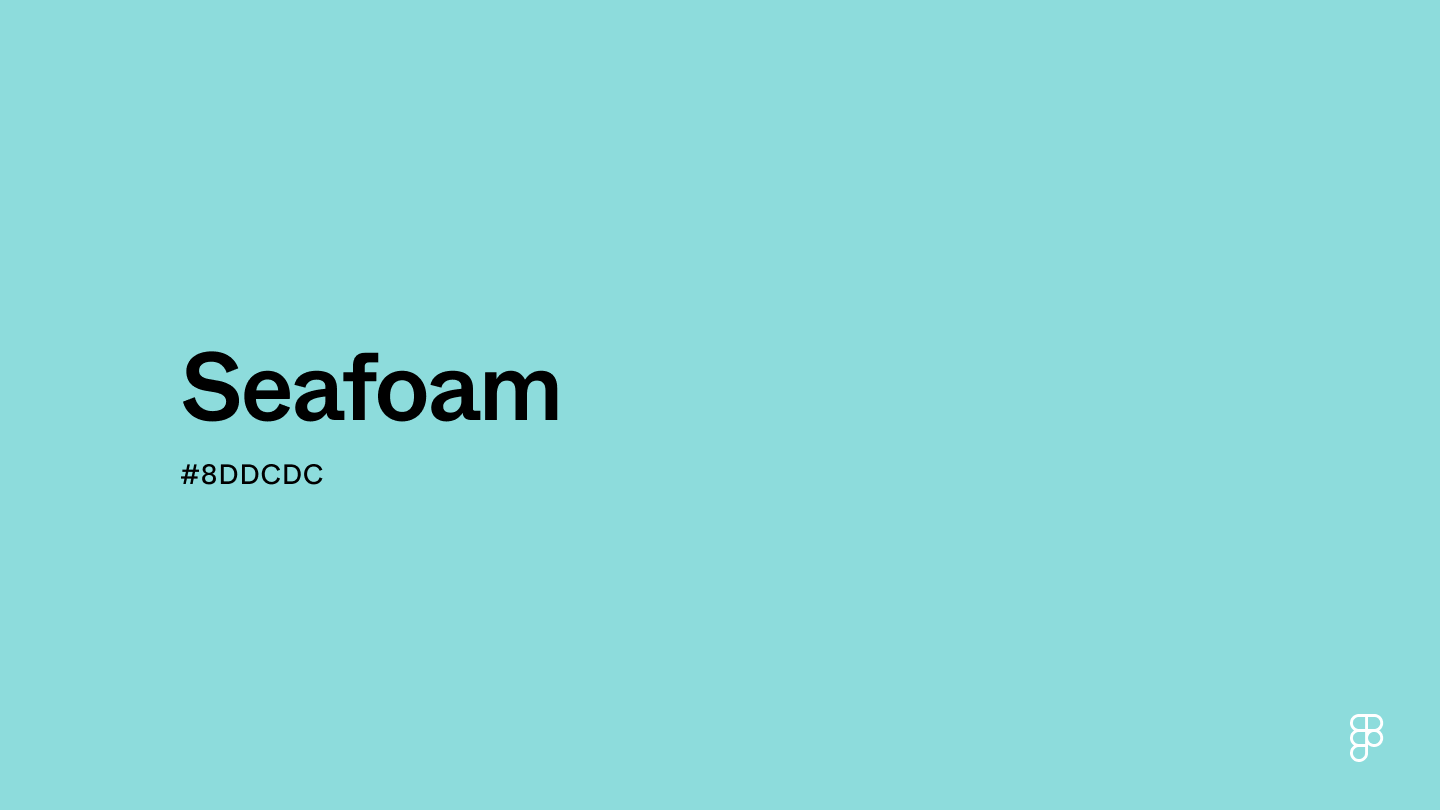
Seafoam is a light, soft greenish-blue hue that sits between green and cyan on the color wheel. This position blends elements of both colors, giving seafoam its characteristic light and airy quality.

Color variations
Shades
Tints
Tones
Hues
Color harmonies
Complementary
Split
Monochromatic
Analogous
Triadic
Square
Custom palettes
Amazonite
Salt Lake
Pangea
Seafoam is defined by the following color codes and values to ensure consistency across various digital platforms and devices.
- HEX code: #8DDCDC
- RGB value: 55.3% red, 86.3% green, and 86.3% blue
Accessibility considerations play a crucial role in UX and UI design color choices. Figma offers plugins in the Community to make sure your designs meet Web Content Accessibility Guidelines.
Here are some ways to use seafoam in your designs:
- Establish a tranquil base. Use seafoam as your primary background color to create a sense of serenity. This works well for meditation tools or productivity apps.
- Create visual interest. Pair seafoam with contrasting accents to create a more dynamic look. Consider vibrant pops of coral, sunshine yellow, or deep teal to add energy without overwhelming the user.
- Convey growth and nature. Seafoam’s association with the ocean and fresh air makes it a perfect choice for apps and websites related to sustainability, health, or plant life.
Keep in mind that color and its meaning can change from culture to culture—and at any given time. If you are designing for a global audience, research color considerations for your specific regions.
For variations within the same green-blue spectrum as seafoam, consider:
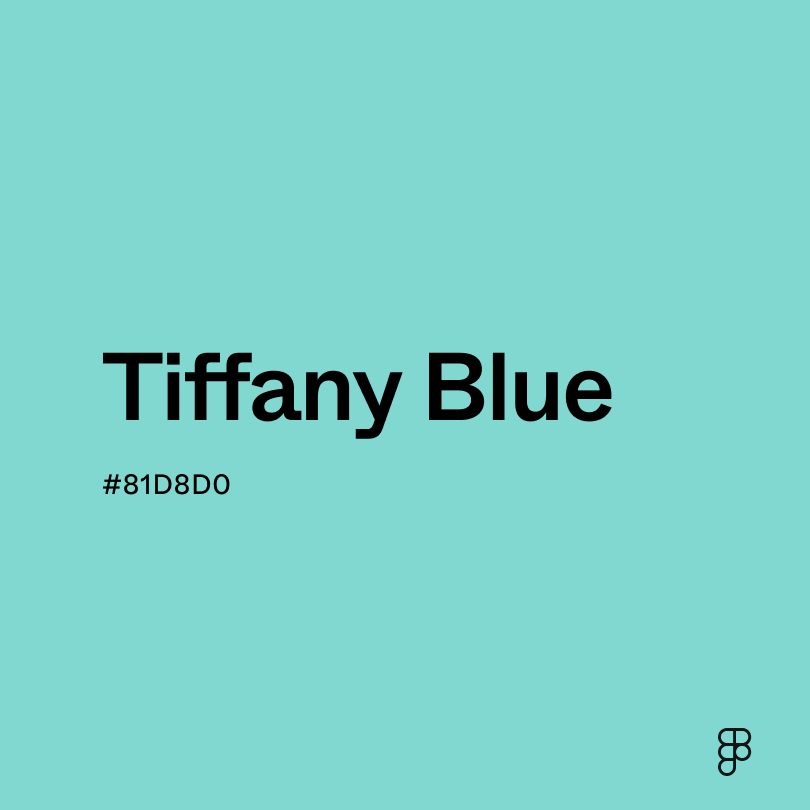
- Tiffany Blue® (#81D8D0) is slightly more blue, evoking a sense of sophistication.
- Blue-green (#00D1D1) is a darker and more saturated version of seafoam.
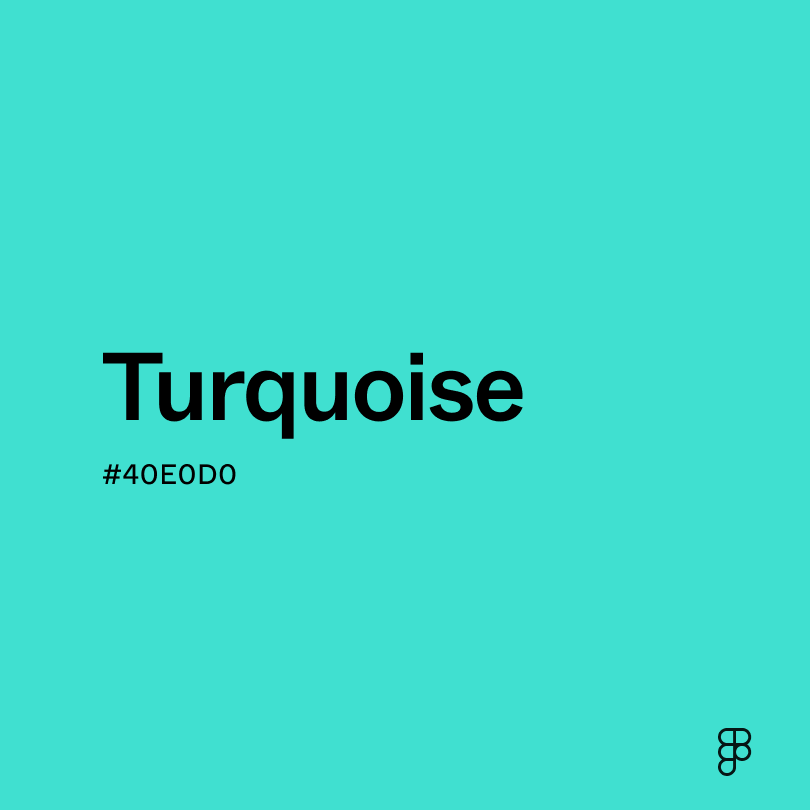
- Turquoise (#40E0D0) is a tad more green, adding a touch of energy and liveliness.
- Cyan (#00FFFF) is a more vibrant alternative, reminiscent of tropical waters.
To complement seafoam, consider pairing it with:
- Seashell (#FFF1E7) enhances seafoam’s airy and light qualities, creating a clean, coastal palette.
- Taupe (#54463A) provides a warm and grounding base that lets seafoam’s cool tones shine.
- Coral (#FF8559) has a vibrancy that injects a dose of energy, creating a playful and beachy vibe.
- Puce (#E491A6) adds a touch of romance, complementing seafoam’s gentle coolness.
- Pastel yellow (#FFEE8C) combines with seafoam for a cheerful and sunny feel.
Other colors worth considering include navy blue for a classic nautical look, white for a crisp and airy feel, or charcoal gray for a touch of modern elegance.
While seafoam is airy and beachy, it may clash with:
- Chartreuse (#CCFF00) can overwhelm seafoam’s softer green tones, creating a busy look.
- Fuchsia (#FF00FF) clashes with seafoam’s cool green-blue hue, creating a jarring effect.
- Olive green (#636B2F) creates a muddy and murky feel next to seafoam’s light and airy tone.
- Purple (#9D00FF) creates an unbalanced look, making seafoam appear washed out.
Seafoam’s soft green and blue hues are a symbol of the ocean’s gentle waves and frothy bubbles on the shore. It combines the tranquility of blue with the growth and renewal of green.
In color psychology, seafoam promotes feelings of peace and relaxation. The cool greens and light blues create a calming effect, similar to refreshing tropical waters. It can also evoke a bright and cheerful mood.
In UI design, seafoam In UI design, seafoam works beautifully as a serene background color or for adding subtle highlights. It pairs well with vibrant colors such as coral or tangerine, enhancing the overall visual vibrancy of the design. .
The color seafoam got its name from capturing the essence of the greenish-blue waves of the ocean. The first documented use of “seafoam green” in English appeared around 1916.
While its name is new, the foundational hues—green and blue—have a long history. These colors have adorned ancient Egyptian murals, Mesoamerican art, and various artifacts such as pottery, sculptures, and architectural elements—a mark of their significance across many cultures and eras.
Today, seafoam is a popular choice for its ability to create calm, refreshing environments.
Contrast checker
Contrast 1.57
- Large Text
#8DDCDC
- Normal Text
How you design, align, and build matters. Do it together with Figma.
| Category | ||
|---|---|---|
Fail | Fail | |
Fail | Fail | |
Fail | Fail |
Contrast 13.4
- Large Text
#8DDCDC
- Normal Text
How you design, align, and build matters. Do it together with Figma.
| Category | ||
|---|---|---|
Pass | Pass | |
Pass | Pass | |
Pass | Pass |
Color simulations
Protanopia
Deuteranopia
Tritanopia
Achromatopsia
The hexadecimal color #8DDCDC, known as seafoam, has RGB values of R:141 G:220, B:220 and CMYK values of C:36, M:0, Y:0, K:14.
| VALUE | CSS | |
|---|---|---|
| HEX | 8DDCDC | #8DDCDC |
| RGB DECIMAL | 141, 220, 220 | RGB(141,220,220) |
| RGB PERCENTAGE | 55.3, 86.3, 86.3 | RGB(55.3%,86.3%,86.3%) |
| CMYK | 36, 0, 0, 14 | |
| HSL | 180°, 53, 70.8 | HSL(180,53%,70.8%) |
| HSV (OR HSB) | 180°, 35.9, 86.3 | |
| WEB SAFE | 99CCCC | #99CCCC |
| CIE-LAB | 82.921, -24.126, -7.685 | |
| XYZ | 49.493, 62.014, 77.068 | |
| xyY | 0.262, 0.329, 62.014 | |
| CIE-LCH | 82.921, 25.32, 197.67 | |
| CIE-LUV | 82.921, -37.029, -7.999 | |
| HUNTER-LAB | 78.749, -25.626, -2.9 | |
| BINARY | 10001101, 11011100, 11011100 | |
| iOS - SwiftUI | Color(red: 0.553, green: 0.863, blue: 0.863) | |
| iOS - UIKit | UIColor(red: 0.553, green: 0.863, blue: 0.863, alpha: 1) | |
| Android - Compose | Color(0xFF8DDCDC) |