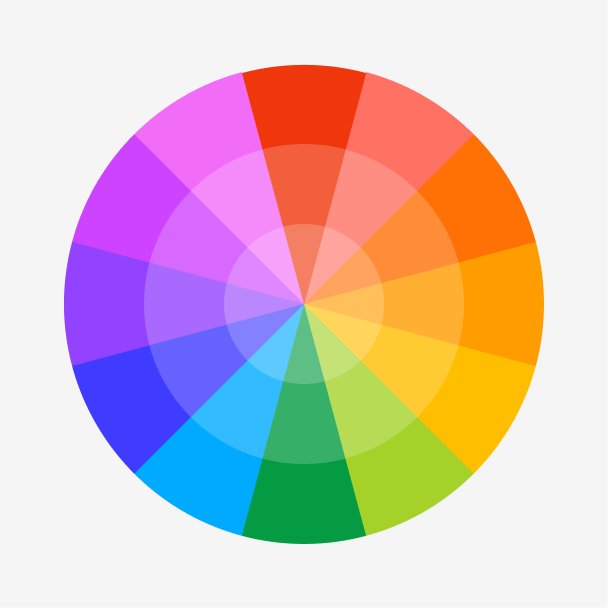
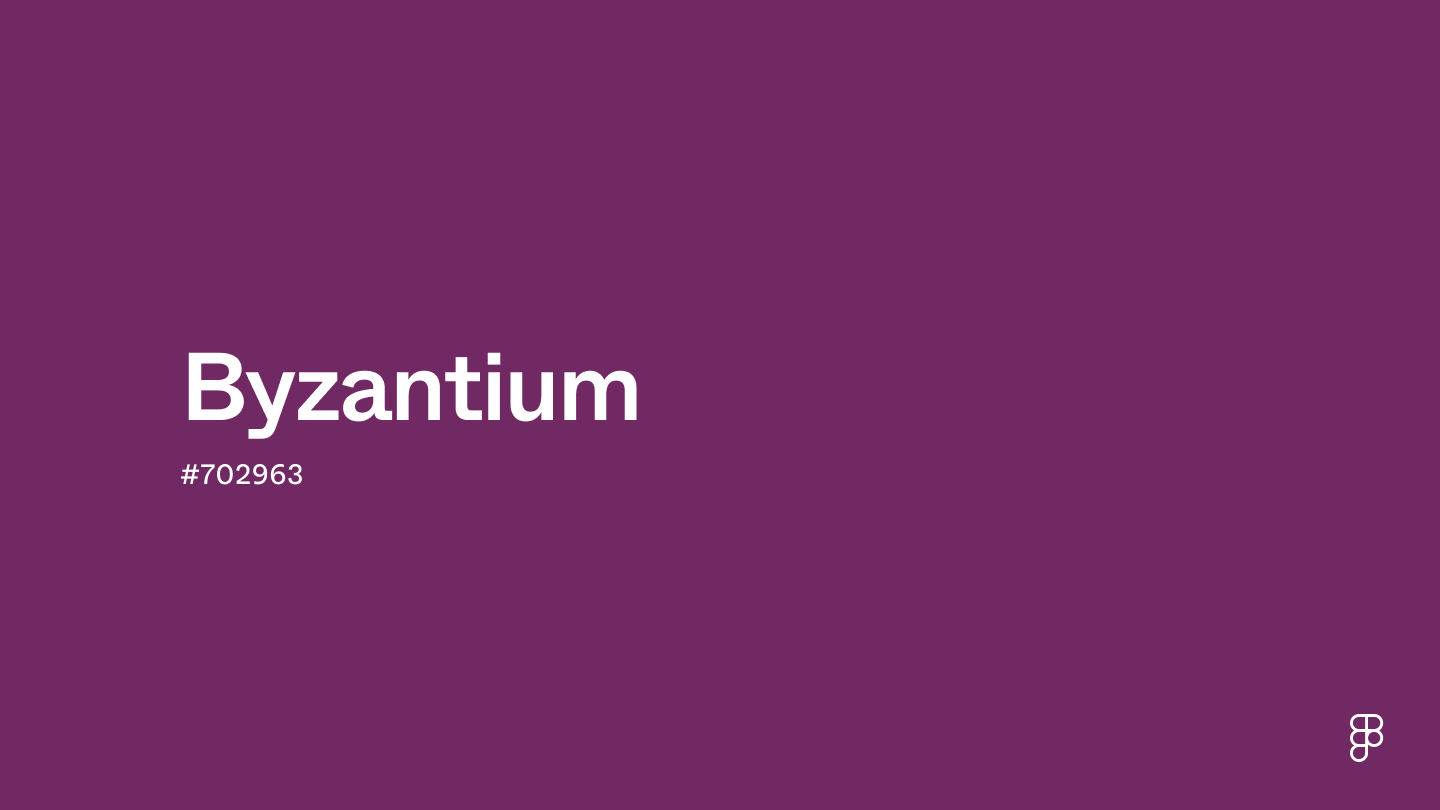
Byzantium is a deep, rich purple with hints of red, evoking luxury and mystery. It sits between purple and reddish-brown on the color wheel. Related shades include royal purple and wine. Use Byzantium to add a touch of elegance and depth to bold and dramatic design projects.

Color variations
Shades
Tints
Tones
Hues
Color harmonies
Complementary
Split
Monochromatic
Analogous
Triadic
Square
Custom palettes
Royal Grape
Mulberry Moss
Fuchsia Reverie
Byzantium is defined by the following color codes and values to ensure consistency across various digital platforms and devices.
- Hex Code: #702963
- RGB value: 43.9% red, 16.1% green, 38.8% blue
Accessibility considerations play a crucial role in UX and UI design color choices. Figma offers plugins in the Community to make sure your designs meet Web Content Accessibility Guidelines
For variations within the same spectrum as Byzantium, consider:
- Aubergine (#372528): Offers a dark, reddish-purple reminiscent of Byzantium’s richness and depth, imbued with earthy undertones.
- Mauve (#e0afff): Presents a lighter, slightly more pastel version of Byzantium, maintaining the purple hue with a softer touch.
- Indigo (#560591): Captures the dark, bluish-purple essence closely related to Byzantium, with a deeper, more contemplative tone.
- Dark Purple (#341539): Encases the deep, mysterious vibe of Byzantium, leaning into a darker shade while staying firmly in the purple spectrum.
To complement Byzantium, consider pairing it with:
- Mint Green (#ADEBB3): This fresh and cool shade contrasts with Byzantium’s deep, warm undertones, creating a balanced and vibrant look.
- Gold (#EFBF04): Gold’s warm, luxurious hue enhances Byzantium’s opulence, adding a touch of elegance to any design.
- Peach (#FFD3AC): With its soft, warm tones, peach adds a gentle freshness that complements Byzantium’s richness.
- Slate Gray (#6D8196): This muted, cool gray offers a modern contrast to Byzantium, providing sophistication and depth.
- Powder Blue (#B8E3E9): Powder blue’s soothing and serene qualities balance Byzantium’s intensity while adding a calming touch.
While Byzantium is a deep and regal shade, it may clash with:
- Neon Green (#2CFF05): Neon green's high brightness creates a stark and distracting contrast with Byzantium's rich depth.
- Bright Yellow (#FFED29): Bright yellow, with its intense vibrancy, fights for attention, overshadowing the sophisticated tone of Byzantium.
- Orange (#FFA500): Orange's warm, lively hue can clash with Byzantium, leading to a dissonant and visually unsettling pairing.
- Cyan (#00FFFF): Cyan's lively coolness can compete harshly against Byzantium, resulting in a jarring visual conflict.
- Hot Pink (#FF46A2): Hot pink’s intensity can overpower Byzantium's mature richness, disrupting balance in a color palette.
Contrast checker
Contrast 9.61
- Large Text
#702963
- Normal Text
How you design, align, and build matters. Do it together with Figma.
| Category | ||
|---|---|---|
Pass | Pass | |
Pass | Pass | |
Pass | Pass |
Contrast 2.19
- Large Text
#702963
- Normal Text
How you design, align, and build matters. Do it together with Figma.
| Category | ||
|---|---|---|
Fail | Fail | |
Fail | Fail | |
Fail | Fail |
Color simulations
Protanopia
Deuteranopia
Tritanopia
Achromatopsia
The hexadecimal color #702963, known as Byzantium, has RGB values of R:112, G:41, B:99 and CMYK values of C:0, M:63, Y:12, K:56.
| VALUE | CSS | |
|---|---|---|
| HEX | #702963 | #702963 |
| RGB DECIMAL | 112, 41, 99 | RGB(112,41,99) |
| RGB PERCENTAGE | 43.9, 16.1, 38.8 | RGB(43.9%,16.1%,38.8%) |
| CMYK | 0, 63, 12, 56 | |
| HSL | HSL(311.0, 46.4%, 30.0%) | HSL(311.0, 46.4%, 30.0%) |
| HSV (OR HSB) | 311.0°, 63.4, 43.9 | |
| WEB SAFE | #10251102 | #10251102 |
| BINARY | 01110000, 00101001, 01100011 | |
| iOS - SwiftUI | Color(red: 0.439, green: 0.161, blue: 0.388) | |
| iOS - UIKit | UIColor(red: 0.439, green: 0.161, blue: 0.388, alpha: 1) | |
| Android - Compose | Color(0xFF702963) |