




Design isn’t just a discipline or skillset—it’s a way of working. Here, we explore the evolution of design through the decades, the promise of design as a differentiator, and why non-designers deserve a seat at the table.
Share Why design is for everyone
Illustrations by Zoé Maghamès Peters
Design isn’t just what I do; it’s who I am. It’s the lens through which I view the world, the language I use to communicate ideas, and the framework I employ to solve challenges. I know many of my teammates and designers across the industry feel similarly.
But no matter how much we identify as designers, design isn’t ours to own. In fact, I believe that design isn’t owned by anyone. Design is a powerful tool, a mindset, and a mode of operation that should be accessible to everyone More people than ever are using design in their daily work. By making our tools and processes more inclusive, we can empower everyone to practice design with confidence—regardless of their title.

It’s time we expand our definition of design
Over the past few years as a Designer Advocate, I’ve observed how hundreds of teams and thousands of individuals design and build products. I’ve learned that no matter how skilled we become as design practitioners, there will always be limits to what we can accomplish individually. When teams are collectively equipped with design knowledge, they can not only ship exceptional user experiences, but also design better processes and systems.
The future of design lies beyond individuals or departments. When design becomes a shared organization-wide practice, truly great work can be achieved at scale. But to understand this future, we have to take a look back.

Learn more about how to foster a design-driven culture.
Design through the decades
At its core, design is a way to solve problems. As technology evolves, design evolves with it, giving us novel solutions to the challenges that each new frontier poses. Design helps us shape technology into formats and experiences that consumers can understand and use; it’s the key to transforming prototypes into market-ready products.
In 1979, for example, Sony developed the technology to create a portable stereo that delivered high-quality audio via cassette tapes. Leveraging the technology from their Pressman tape recorder, Sony’s engineering team created a lightweight, more portable device by miniaturizing components, removing the recording feature, and enhancing sound quality. This was the foundation of what would become the legendary Walkman, which helped define the gadget era of the ’90s.

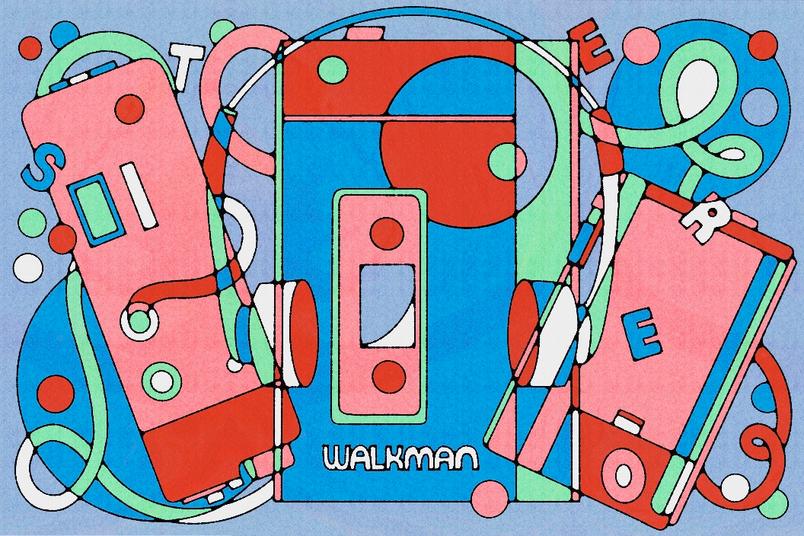
But the Walkman wasn’t just a technological triumph—design played a pivotal role in its success as an iconic product. While the Walkman’s lightweight and compact form factor was largely a result of stellar engineering, its intuitive interface—the product of extensive user testing—made it accessible to a broad audience, which drove its widespread adoption.
Kozo Ohsone, then general manager of Sony’s tape recorder business division, was instrumental in setting the direction for the device. Kozo field-tested early prototypes while on business trips, sharing user-centric insights on how to make the device more portable and improve usability for a broader audience. This research also led to the introduction of innovative social features, such as dual headphone jacks for sharing music and a “hotline” button that enabled users to converse while listening together.
When it was first released, one of the defining features of the original Walkman TPS-L2 was its distinctive blue and silver color scheme, accented by the orange hotline button. At a time when most consumer electronics came in solid shades of black, silver, gray or white, the unique color scheme helped differentiate the device and made it instantly recognizable. Modern design principles—like interface design, accessibility, and user-driven research rooted in design thinking—played a key role in its success as a product and cultural icon.
The rise of interface design
In the mid-2000s, industry focus turned away from hardware and towards the software that powered consumers’ favorite devices. Apple demonstrated impressive feats of hardware engineering with the MacBook, iPod, and iPhone, but software was equally critical to powering the usable interface, haptics, and touch screen details that made their devices a must-have. The launch of the App Store brought about a new economy of mobile software, sparking an industry-wide race to create well-designed and innovative experiences.
Across the industry, the rise of Web 2.0 and apps spawned a new generation of software giants, along with a broader shift towards investing in software. Although the basics of interface design existed before software, it was software that truly propelled it forward, helping users make sense of increasingly complex digital interfaces. Technology was no longer bound by the limitations of physical interfaces, allowing for the birth of new, more powerful paradigms of interface design.

Digital-native interface design
At first, design mirrored familiar physical interfaces through skeuomorphism—a design approach in which digital components imitate physical elements—with buttons, sliders, and scroll-wheels that an era of gadgets had helped to establish. This approach reduced the learning curve for digital interactions and got users interacting with digital interfaces in new ways.
Apple’s Human Interface Guidelines (2007) and Google’s Material Design (2014) played a key role in underscoring the importance of interface design.
Over time, these paradigms were codified into systems like Apple’s Human Interface Guidelines and Google’s Material Design and further solidified through frameworks such as Atomic Design. As technology shifted toward software, the intersection of design and technology became interface design.
Design thinking is a methodology for solving problems creatively. IDEO CEO Tim Brown says, “Design thinking is a human-centered approach to innovation that draws from the designer’s toolkit to integrate the needs of people, the possibilities of technology, and the requirements for business success.”
Alongside interface design, design thinking became top of mind for companies who wanted to create more intuitive and emotionally resonant products With more apps than ever, features will only get you so far. It’s time to put resonance on the roadmap.

The new competitive moat is emotion
Design as the differentiator
This embrace of design thinking and design as a company priority echoed a broader shift: As technology became more widely adopted and accessible, software itself was no longer the differentiator; today, design is what sets products apart.
Proprietary cloud infrastructure enabled companies like Amazon, Alphabet, and Microsoft to scale their services and become global tech giants. However, these companies soon realized it was more profitable to productize the very infrastructure that was crucial to their initial success. This commodification of technology, seen in services like AWS, Google Cloud, and Microsoft Azure, now enables millions of companies to scale globally with ease. AI has followed a similar path, with productized services like ChatGPT, Claude, and Midjourney allowing anyone to integrate AI features into their products.
This cycle of proprietary invention followed by the commodification of technology has yielded significant productivity gains for businesses. At the same time, it no longer guarantees a lasting competitive advantage. As technology levels the playing field, teams must find new frontiers for meaningful differentiation to navigate this new reality.
Today, design extends beyond product interfaces. User experience, design systems, and design thinking are now complemented by computational design—the concept of using data, algorithms, and AI to iteratively design for massive scale. Together, these approaches continue to transform technology into successful, user-centric products. While design has been integral in maximizing the value of technology, most organizations have yet to realize the true scope of its potential across all areas of the business.
How to meet evolving user expectations
Today, digital products have grown exponentially in both scale and complexity. Super apps like LINE, Grab, and WeChat provide everything from ride-hailing to e-commerce in a single platform. Users now expect seamless experiences across multiple devices and platforms, along with polished visuals, full accessibility, and options for customization and localization as a minimum standard. This combination of increasing complexity and elevated user expectations has made designing competitive digital products more challenging than ever before. As a result, design must now be applied far more systematically than in the past.
Not only is having a design system increasingly the default approach, but design now also undergoes the same rigorous validation processes that engineering teams apply to code: Scalability and consistency are verified through linting and accessibility checks, while functionality is stress-tested by injecting real data across multiple language translations to identify unintended behaviors and edge cases.
At the same time, generative AI tools like ChatGPT and Midjourney are making teams think anew about not only how to accelerate their workflows, but also the AI-powered products they’re building. Designers must now adapt and expand their skills to meet these evolving demands and redefine the way products are designed As AI democratizes product development, design will be the differentiator. But what exactly does “good” look like, and what does it mean for our craft?

What is good design in the age of AI?
Today, “tech literacy”—the ability to understand and use technology—already distinguishes leading talent and organizations. But to drive real innovation, organizations will need to go further, combining “tech literacy” with “design literacy”—an understanding and application of design principles. Just as coding skills have expanded beyond engineering, the next era of design practitioners won’t be limited to traditional design roles.


When companies invest in fostering design literacy beyond the design team—creating transparent processes, inclusive feedback mechanisms, and shared design values—they don't just make better products; they create business advantages that are difficult for competitors to replicate.
Through my journey as a Designer Advocate, I’ve observed that the organizations most successful at achieving high levels of design literacy are those that truly believe in the potential of design—not as a trend to follow, or a box to check, but as something fundamental to the success of their mission. It’s the difference between an organization that merely adopts design and one that lives and breathes it as culture. The belief that more design, in more places, inevitably leads to better outcomes is what drives them toward success.
Design is for everyone
Design has made remarkable strides over the past few decades, becoming a vital component of business and bringing concepts like user experience (UX) and design thinking into our everyday vernacular. However, despite this progress, design remains largely confined to those who identify as professional designers. Those who truly understand its value recognize that widespread adoption of design thinking leads to greater innovation and progress. As more people adopt and apply design principles, they push the boundaries of what’s possible in new and surprising ways.
To meet the growing demand for the next phase of design, we need to empower a new generation of non-designers to use design as a tool, not just a title. Design is more than a role; it’s also a culture, a process, and a medium. To fully leverage design within an organization, design needs to be something that everyone owns and understands.
If you're interested in learning about how to build design-driven culture, download our ebook, which has a practical framework and actionable strategies with insights from industry-leading organizations.