
The art of the professional pivot



Six creatives working in the product design world share their journey to making big leaps and side shuffles into their next career chapter.
Share The art of the professional pivot
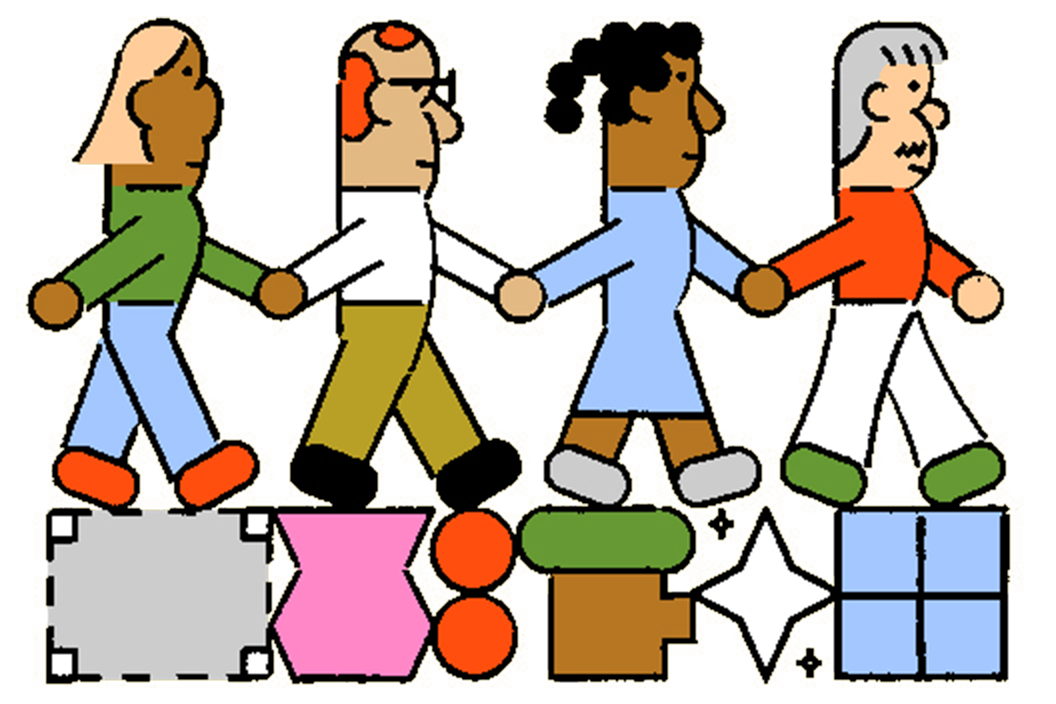
Illustrations by Min Heo.
By definition, to pivot is to turn in another direction, something we do countless times over the course of our lives. From macro life changes to mundane little adjustments, to pivot is to live. But in the last 20-some-odd years of the “move fast, break things” tech era, the term has taken on a near-messianic tone.
But how do the rest of us, as professionals, pivot? We checked in with six creatives who have pivoted in, out, and through product development to see how those essential in-flight career moves helped them hone their skills, deepen their interests, and better tune their passions to their professions. Whether they started in HR, or have seen themselves transform from designer to founder, each person we talked to tried a different pivot technique, ranging from the let’s-blow-this-thing-up hard left to a simple reframe. If you’re considering a big (or small) change, read on to learn how to make your pivot a success.
The reframe
A reframe is a small pivot with potentially big results. It’s all about a shift in thinking, a pivot in emphasis, not a 90-degree course correct. Reframes are great for when you’re blocked in your role or craft, and need a new POV. More segue, less plot twist.

How Ry pivoted into seeing design differently:
Go deep enough into Ry Reid’s backstory and you’ll see that their career started with a pivot from customer support at a fintech company into a UX writing gig at Pinterest. However, Ry’s most meaningful reframe hit not when they switched disciplines, but when they set out to make a bigger impact. After time spent at Pinterest and Spotify honing their UX writing skills, Ry was hired by Uber Eats, where their ideas just weren’t landing. Ry says, “I was hitting this wall because I was trying to do what I had always done, which was use my writing skills to try to convince people what to do, and I realized fairly quickly that no one really wants to read another doc.” After Ry was passed over for a promotion, they got some powerful advice from a design manager—instead of describing their ideas, why not try visualizing them? It was a scary idea for a writer, especially one who believed that “designing” something was synonymous with making it “beautiful.”
Check out Ry's talk at Config 2023, where they dive into their reframe.
For their next project, Ry mocked up something very rough, first with pen and paper, and then in Google Slides. They shared it in Slack, and were shocked when the designer and product manager responded within minutes. By reframing their communication style, from writing to low-fidelity visual design, Ry unlocked an additional layer of creativity and boosted their impact. Ry says, “That was the first time I had visually pitched an idea. The UX that I had proposed was what we ended up going with, and an actual designer helped create the pixel-perfect vision for the engineers to build. Anyone can pitch great ideas; the final polish is a specific skill in design.”
Is a reframe right for you?
Questions to ask yourself:
- Do you like what you do, but feel like you keep bumping up against the same problems?
- How long has it been since your last promotion?
- Has someone shared advice that makes you feel excited and nervous?
Tips from Ry’s reframe:
- Be open to tough feedback: Ry accepted the fact that they were passed over for a promotion and had the courage to not only ask why, but to use that advice to shift their perspective.
- Look for mentors adjacent to your role: Sometimes the best advice can come from people who understand what you do but see it from a different perspective.
- Reframes always involve a degree of risk: Ry shared their first visual designs in spite of their discomfort. Look for low-stakes opportunities to ease into a reframe.
The boomerang
Boomerangs are for people looking to make serious changes in a known environment. If you choose the boomerang, you can take on a drastically new role within the comfort and familiarity of a company you already know.

How Erica pivoted from HR to design, at the same company:
Erica Simunovic is in her second role and second stint with the Los Angeles–based adtech firm, Tatari. She kicked off her first role at Tatari leading people operations. Now, five years and a product design bootcamp later, she’s back at Tatari and working as a designer.
It can feel incredibly risky starting over in a new discipline, but when you’re armed with the knowledge of how a company and culture operates, you’ll pivot on firmer footing. “Before I took my first job at Tatari, I actually had a deposit in for a UX design boot camp,” she says. “That always stuck with me.”
Erica recently spoke at a panel about non-traditional pivots into a product design career.
During her bootcamp, Erica made a pro move that boomerangers should heed—she stayed in touch with Tatari’s Head of Product Design, sharing her growing portfolio and asking for feedback on her work. By keeping close to her Tatari colleagues, and bringing them along for the ride, she made her pivot feel less left field and more like a natural evolution. She says, “Now, in my role as a product designer, I find myself applying a lot of the same qualities I relied on in people ops but in a different context.”
Is a boomerang right for you?
Questions to ask yourself:
- Do you like your company and its culture, but feel like you could see yourself working on a different team?
- What’s your company’s track record of supporting high-performing employees through role transfers?
- Can you boomerang into a growing department at your company?
Tips from Erica’s boomerang:
- Take people along in your journey: Keeping in touch with colleagues was key for Erica, especially those working in the field she was aiming to pivot into.
- Take stock of how much is too much change: The boomerang is a great choice for those who want to make space for a significant transformation while keeping a lot of other variables—location, culture, commuting times—in check.
- Do your best to leave your job on good terms: It’s far easier to boomerang back when you’ve got former colleagues eager to work with you again.
The unfolding
This style of pivot is all about embracing your existing interests and bringing them to the fore. The key is to follow your intuition, investigate how your experiences build on each other, and then take a leap—not so much into the unknown, but more deeply into yourself.


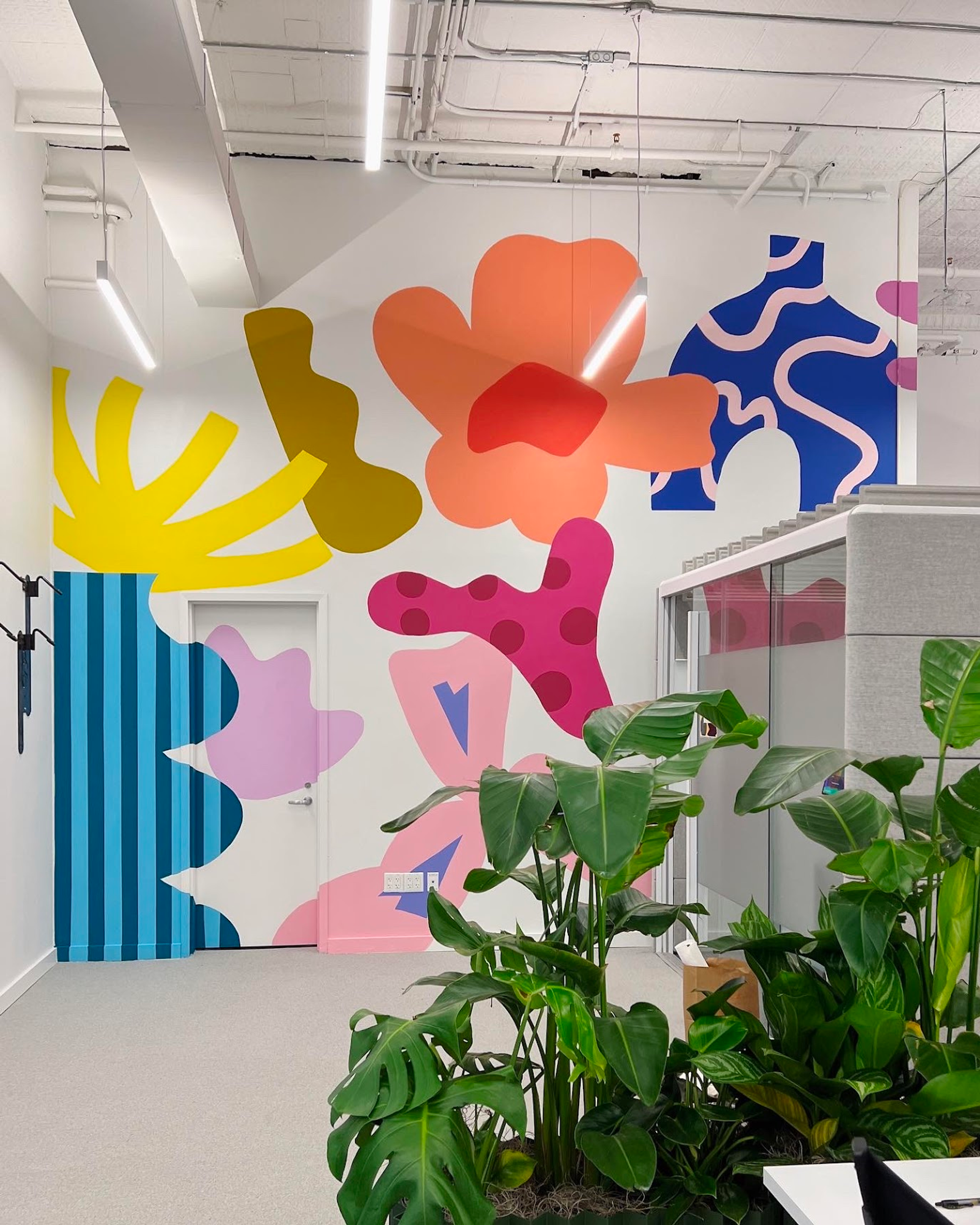
Dipa painted a mural for Figma’s New York office during Maker Week, a dedicated week for the team to pause day-to-day work and come together for innovation and connection.
How Dipa pivoted into her creative career
Software engineer and multi-disciplinary artist Dipa Halder doesn’t describe her pivot from engineering into art as a big “aha” moment. “I was, for a very long time, what author Julia Cameron would call a ‘shadow artist,’” Dipa says. “I was too afraid to expose my artistic dreams, even though looking back, those dreams have always been there, patiently waiting to be expressed.” Since rediscovering her passion for art through digital illustration, Dipa has expanded her canvas, pushing into mediums like painting, interior design, and murals—including two at Figma’s London and New York offices.
An unfolding is a very natural type of pivot, one that tends to follow passion and intuition as opposed to cold logic. Because unfoldings are often deeply personal, they take many forms, but they work so well because all the ingredients are already there. “Engineering and my time at Figma have given me a fierce, ‘I have no idea how to do this, but I know I can figure it out’ attitude,” she says. “That trust muscle and conviction in myself is so strong now, and I think that’s what really pushes me to take big swings in both my life and my art.”
Is an unfolding right for you?
Questions to ask yourself:
- Am I holding back from spending more time doing the thing I really love?
- What lessons can my current role teach me about how to approach my passion?
- Do I worry too much about security at the cost of my happiness?
Tips from Dipa’s unfolding:
- Make space for the work you love: Listen to yourself when you feel like you’re not getting enough of it.
- Take your time: Sometimes it takes a while to accept it’s time for a change, and before you know it, you might realize it’s already happening.
- Find a way to blend your day job and your passion: When Dipa worked as a software engineer at Figma, she also designed murals for two offices, giving her the confidence to treat her passion like work.
The stretch
The stretch is not necessarily a linear pivot, so prepare to meander, explore, and open yourself to opportunities that allow you to learn your way to your next role. The stretch will feel like a very natural pivot for learners and autodidacts.

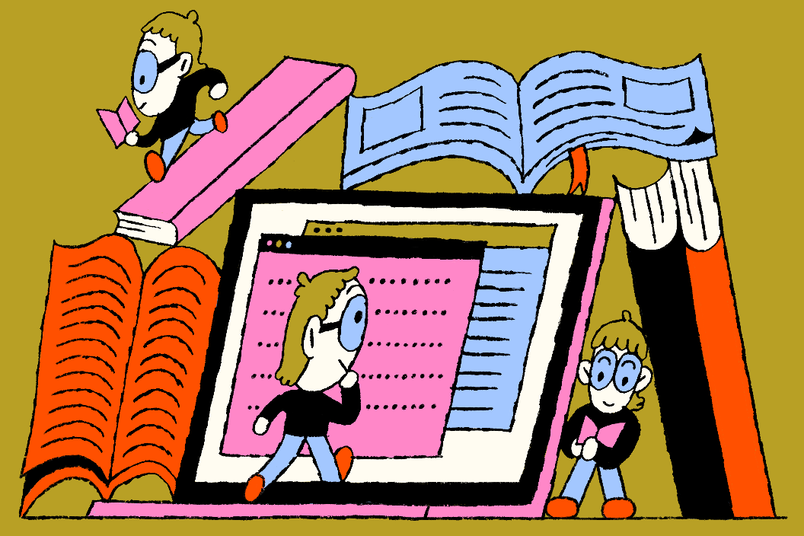
How Pierre’s love for learning fuels his pivots:
Some pivots are born of a kind of restlessness, a drive to keep moving, learning, and evolving. That’s certainly the path that design engineer Pierre-Marie Fort took, one that started with a childhood fascination with games and websites, and wove through a number of disciplines until eventually landing as a front-end engineer at the vaunted agency AREA 17.
Pierre knew he wanted to end up in the creative industries, so he went to art school where he studied the basics by learning painting and drawing. From there, he also learned that he didn’t care much for advertising, and eventually his curiosity brought him to graphic design. “I’m someone who likes to learn new stuff and take on new challenges,” says Pierre. “I was working at a graphic design studio and we were making sites for some clients and it was just an opportunity that I took and I threw myself into. I knew basic CSS and HTML, but not at a very high level.”
The kid who grew up on Angry Birds and iWeb no-code websites suddenly found himself stretching into coding and documenting the sites he and his colleagues were designing. He learned on the fly, he looked up a million resources, and, thanks to his learner’s mindset, he figured it out. “Three or four years ago, I didn't know anything about coding,” he says. “And now, thanks to the fact that I just had to learn as I went, I have a dream job at a company that I really looked up to. Maybe one day I’ll get tired of it,” he laughs. “But then I guess I’ll learn something new.”
Is a stretch right for you?
Questions to ask yourself:
- Am I often asked to stretch into a different role than what I was initially hired to do?
- Do I have a skillset that other people on my team lack? Does this skillset push my work forward in new ways?
- Do I get energy from being out of my comfort zone?
Tips from Pierre’s stretch:
- Find like-minded people: When you’re still exploring, it’s important to work for people who encourage you to explore and share your passion.
- Heed the call: If you sense that you have a predisposition to a certain skillset that you can strengthen, try to develop it on the job.
- Be open to change: As disciplines grow, more specialization and niches pop up. There is likely one that will fit you to a T.
The hard left
The hard left is a total change of direction, and as such, this is a fairly advanced and disruptive pivot. But if you’re certain that you’re on the wrong track, sometimes you have to make a big move. You may need to go back to school or get more training. Plan for any serious gaps in employment or income and be open to working your way up the ladder.

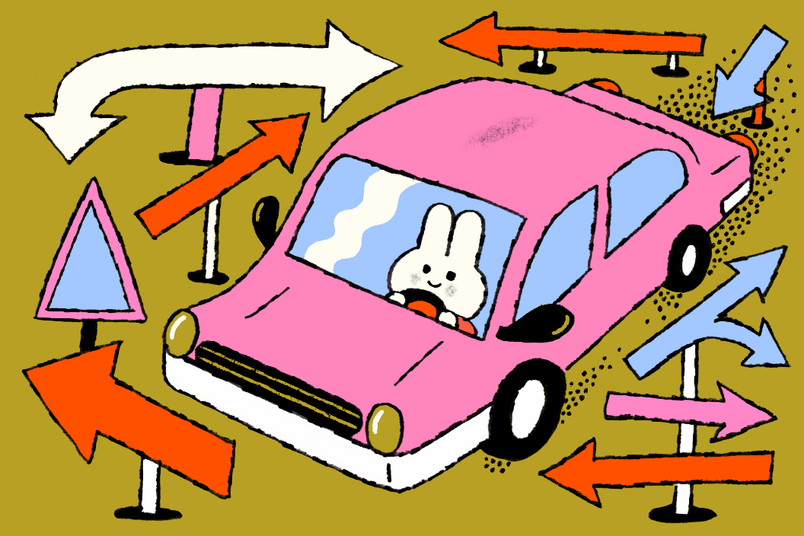
How Aaron pivoted from musical education into product design:
Aaron Cecchini-Butler was all about music for as long as he can remember. While getting an MFA in music composition, he started to worry that the career path ahead of him just didn’t comport with his life goals. Aaron was composing all day and working at an afterschool program to help make ends meet. “I watched as a lot of my colleagues who are smarter and cooler were getting sucked into the adjunct professor vortex. They were making less money than I was, and I was playing dodgeball for two hours a day and leaving! I needed more than that for what I envisioned for my life.”
Aaron had some experience in coding and liked math, so a lot of pieces were in place already when he seriously considered a bootcamp in UX design. Today, on the other side of his hard left, Aaron is a senior product designer at Allergan Data Labs: “My time in music–all the effort and rejection–prepared me for the ways in which you really have to be resilient in design. Today, if I design something and the stakeholders don’t like it, I’ll design 16 more, and figure out what’s good.”
Is a hard left right for you?
Questions to ask yourself:
- Will the economics of my current role fit my future goals?
- Can I commit my time and money to making a big change?
- Do I know enough about my new field to know that it will be right for me?
Aaron’s hard left tips:
- Look ahead to where your path takes you: Envision what a day in your life will be like in several years if you don’t make a change. Better yet, meet someone who’s already a few steps ahead of you.
- Invest in upgrading your skills: You may need a formal education in your new skill. Look into a boot camp, coaching, grad school, an apprenticeship, or even a relocation.
- Build on your strengths: Identify the skills (hard or soft) you’re bringing from your first career and lean hard on them to propel you into the next chapter.
The blend
A blend often draws on and melds a full array of experiences. You might need to get a good decade or two into your career for the experience, skills, and network to pull one off, but when it works, it’s astounding to see all these seemingly disparate elements of your career gel.

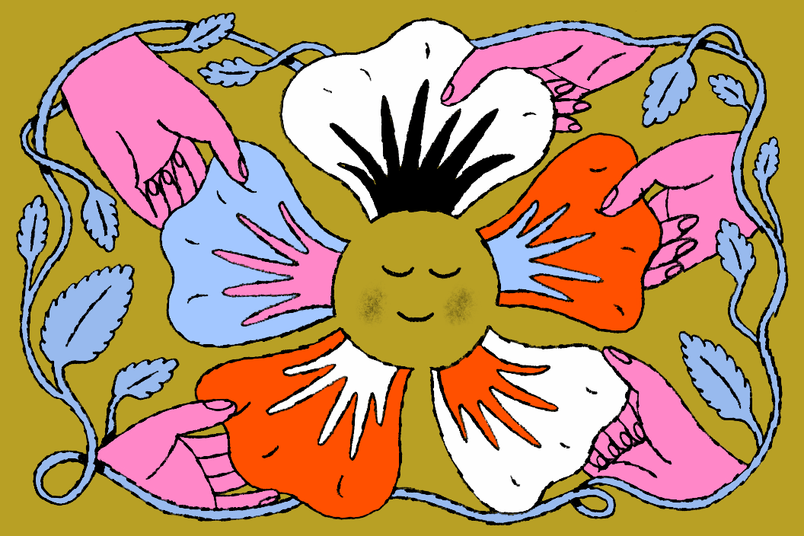
How Rupa pivoted from executive to entrepreneur:
Minneapolis-based designer, founder, and CEO Rupa Parekh is no stranger to career pivots. She’s worked as an activist, as an executive in consulting and big tech, and as an entrepreneur, all of which she has cannily synthesized into a blend.
“In 2016, I was working on an innovation team at Salesforce and at home, my husband and I were trying to figure out how we could help our kids understand their hyphenated identity—I’m Indian American; he’s Turkish American,” Rupa says. “It was my time to align personal, professional, and passion. So I left my job to start something.”
That something was Umani Studio which launched two toy brands inspired by the art, folklore, and vibrance of South Asia. Still, Rupa didn’t think toys and tools were tackling the larger issues of identity and culture in a way that could scale. So, in 2023, she launched Lilokwi, a voice-only app for “audio worth saving.” It’s designed so that people can record, request, and relish the voices they love. “When you listen to voices of the people you know, trust, and love, it fires natural oxytocin,” she says. “You may not realize it, but your voice is a vitamin.” With ideas of home, culture, and identity baked into a digital product instead of a physical one, Rupa has a business that brings together her experiences and her intuition, her hard skills and big dreams. “Sometimes you have to pivot so that your light doesn’t go out,” she says. “You have to protect your spirit.”
Is a blend right for you?
Questions to ask yourself:
- What are the moments in my career that have brought me the most joy? What unites those experiences?
- Is my feeling of discontent tied to the type of work I do, or is it more about focus and emphasis?
- Is my network deep enough that I can ask other people for help as I blend into what’s next?
Ikigai is the elusive Japanese concept of finding an intersection between your passion, profession, mission, and vocation; it’s another approach to the blend. If you’re interested in the blend, this official FigJam template or this community template by Joseph Chua could be a good starting point.
Tips from Rupa’s blend:
- Collect lessons along the way: Pay close attention to the parts that bring you energy, the parts that drain you, and the parts that teach you new skills.
- Make a big change through small pivots: Take into account that your first pivot might just be a quarter turn in the right direction; you might have farther to go to reach your new orientation.
- Dig into your personal identity: Rupa identified that the intersection of identity and culture is where she needed to be working. Figure out the space you need to be in, and use it as a north star.

Explore Figma’s 2023 Handoff
Aaron Britt is a journalist and radio host living in midcoast Maine. His work on art, architecture, fashion, and design has appeared in The New York Times, The New York Times Magazine, National Geographic, Dwell, Afar, Newsweek, and elsewhere. He edited Dwell Magazine and was a columnist for the San Francisco Chronicle. His radio show, Ask the Ages, airs on WRFR and is Maine’s home for far-out music.