
Is the New Deal for business leading by design?


Brian Chesky pulled Airbnb back from the brink by leading through design. But does it really spell the end for the all-powerful product manager? Five industry leaders weigh in.
Share Is the New Deal for business leading by design?



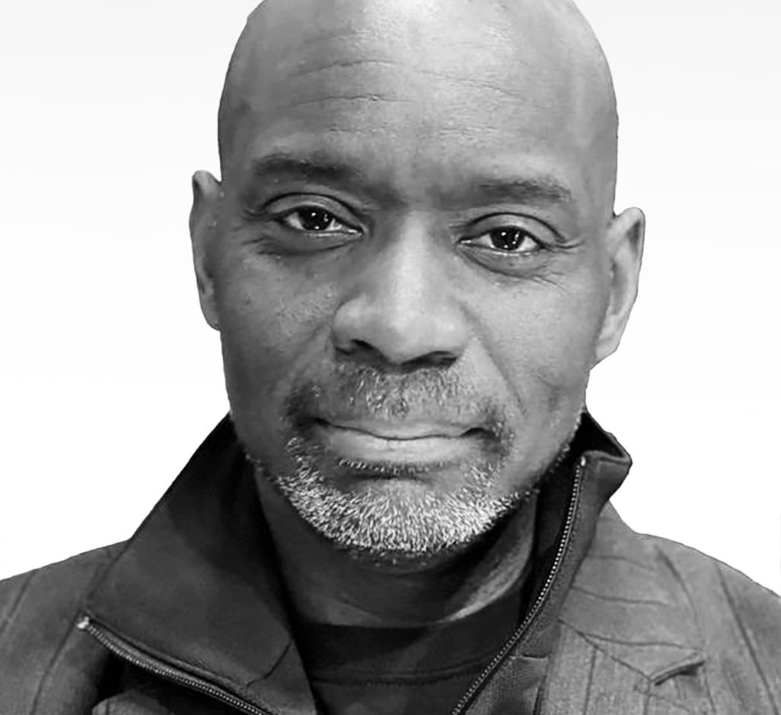



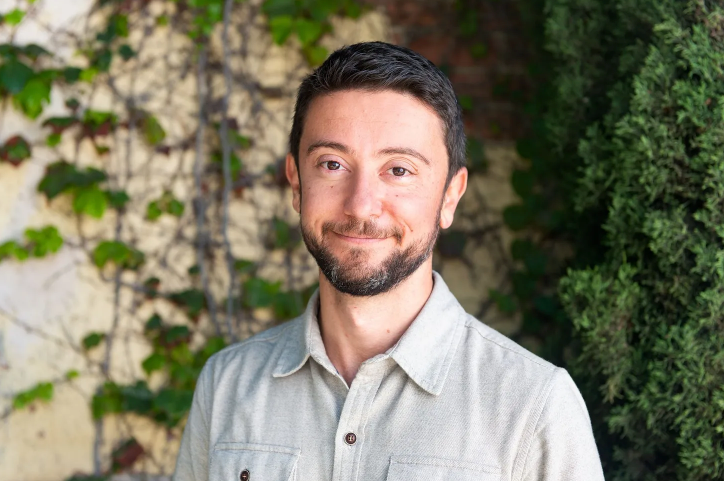


“There’s a whole new generation of designers that aren’t going to work for engineers. They’re going to sit alongside engineers. They’re not going to be told what to do by product managers. They’re going to help drive the product. Some of them are going to choose to drive companies. Because ultimately, what everyone wants is to have a product people love.”
—Brian Chesky, Co-founder & Chief Executive Officer, Airbnb, Config 2023
Illustration by Henri Campeã
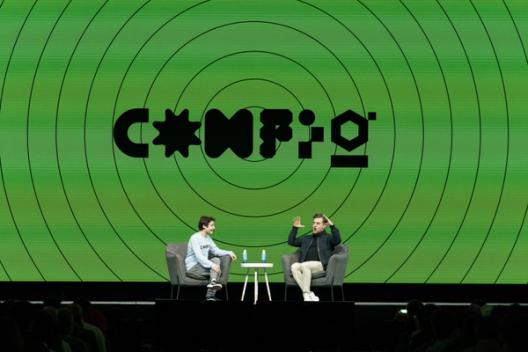
The fireside chat is something of a lost art. Originally conceived by Franklin D. Roosevelt in the ’30s and ’40s as a series of radio broadcasts, they provided the commander-in-chief an opportunity to connect with the American public on a range of topics from policy updates to national crises. One-sided by design, it took on a conversational tone: a sort of folksy, hearthside heart-to-heart. Today, the fireside chat has become more of a shorthand for any high-profile, low-stakes interview, often between two equals. When Brian Chesky and Dylan Field sat down for a fireside chat Co-founder and CEO Brian Chesky talks about design’s catalytic potential for business and the central role it played in Airbnb’s post-IPO growth story.
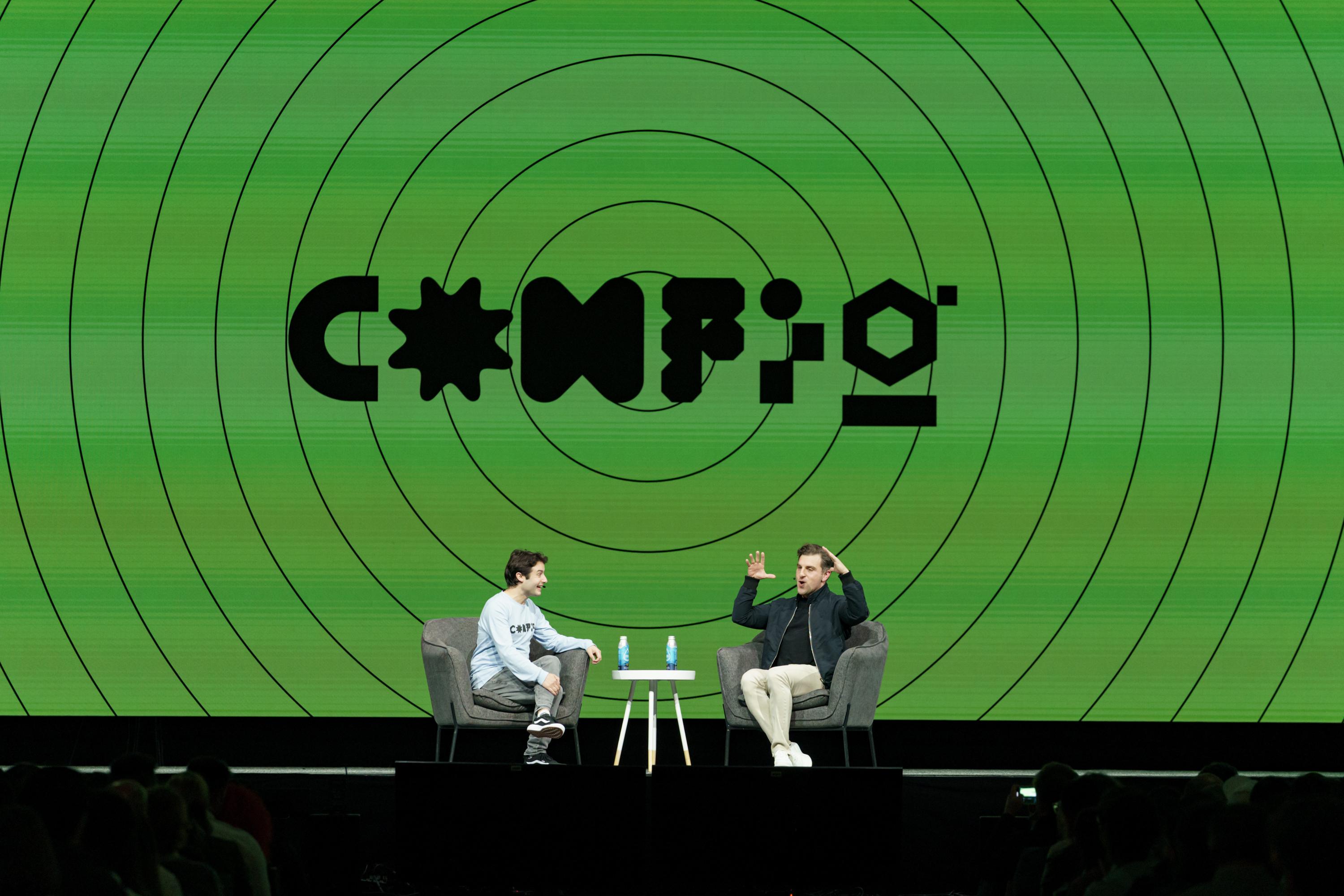
Navigating the intersection of design and business: A conversation with Airbnb’s Brian Chesky
What transpired, though, was a true return to form. The enormity of Moscone Center dissolved into something altogether more essential and intimate. The crinkle of Brian's Poland Springs water bottle might well have been the tinkle of rocks in a nearly drained glass of bourbon, as he proceeded to spin us with a tale of a near-death experience—not of his own life, but that of his company. It was a story for the ages—our age—and maybe more specifically, this moment in tech. And as word spread down the proverbial mountain and dispersed among the cohort formerly known as #DesignTwitter, there was a healthy dose of hyperbole and misinterpretation along the way. But in telling his career journey, Brian got us all thinking a little bit harder about our own. Here, five leaders from across design and product management (PM) weigh in on what was said, and what it made them think.
Julie Zhuo
Current role: Co-founder at Sundial
Previous lives: Vice President of Product, Facebook, trained as an engineer
Mantra: “Know your domain”
Look, the job of a PM, the job of a designer—the job of everyone—is to try and build the best product.
The problem is, it’s really hard to know who has the best judgment, and who has the best context on the ground. The thing with information is, we don’t know what we don’t know. So what happens is we end up saying, “Okay, PMs should always make this type of decision, designers should make this.” But in reality, we should just pick the person with the best judgment and the person with the best context—and those are two different things. Judgment is knowing how to make good decisions, and having context is understanding of all of the facts on the ground. You need both of those things in order to make the best decision possible.
What often happens—and I’ve witnessed this a lot—is that designers actually do have very good judgment when it comes to what will make a product that users respond well to. Again, I’ve worked with many, many PMs for whom I would argue that their judgment was better, but many designers have excellent judgment, oftentimes better judgment than perhaps their PM or engineering counterparts. However, a lot of designers don’t always have the context to put that judgment to use. If you don’t know the business model, or you are missing a lot of really important context for how the product should work, or if you’re only thinking about one side of the equation and not the other, then your judgment’s going to be biased because you’re just going to do what the users want. You’re not taking into account, say, how much they are paying? Or is this the most important user? Is this the kind of user that will make our business sustainable? The judgment is therefore not as applicable because it’s not applied to the same domain of knowledge.
If a designer were to go out and seek to understand this context as well as, say, their PM counterpart, and it turns out they actually had better judgment, then great. They’re in a great position to be able to make a good decision. What’s really important is to be very explicit and clear about what it is that each party thinks they do well and which domain they know well.
The Looking Glass: Higher Level Design
In response to Brian Chesky's Config talk, Julie wrote a long-form post on what it means to achieve higher and higher levels of design.
You really do need to, as Brian says, “wrap your arms around the problem.” I really love that metaphor because it rings true to my own journey, learning to be a founder and learning to be a person who’s building a company and a product at the same time. It’s a reminder for me, too, that as a designer, as somebody who speaks a very similar language and has similar processes, it’s very, very hard to be creative and to do the thing that you’ve been trained to do well, when you don’t feel like you know the domain.
I think many designers have excellent judgment, oftentimes better judgment than perhaps their PM or engineering counterparts.
I’ve taken the many years I’ve spent as a designer, a lot of the design thinking skills I’ve learned, and applied them to how to think about product, or how to think about management, or even now, how to think about building a company or designing culture. But I also tend to think that at high enough levels, all of these roles or disciplines converge and, therefore, part of the fun of continuing to grow is realizing and learning about all of the facets of what it takes to build a great product.
We always have to remind ourselves that all of these are very rich disciplines. The more people there are doing this kind of work, the more we start to discover the nuance and the depth of what it means to do that work well. It’s practically impossible to master all of them, but what we can develop is an appreciation for how, by putting these different brains together, we can get an outcome that’s much better than the sum of its parts.
Steve Johnson
Current role: Vice President of Design, Netflix
Past lives: Vice President of Design & User Research, Linkedin, Head of User Research, Adobe
Mantra: “Design without business is just decoration”
First, I don’t think that really anyone would disagree with “the what” of Brian’s argument. It’s just “the how.” And what I mean by that is this: When Brian says, “Let’s get rid of product managers.” The truth is, he hasn’t. If you go to the Airbnb website right now, the very first job that pops up is product manager for Japan or something, right? When I have conversations with friends at Airbnb, they’re like, “We’re just calling it something different.” We still have somebody who’s an informed captain who is thinking about business goals, trade-offs, engineering resources, design resources, and aligning them all relative to the priorities of the company. That’s exactly what a product manager does.
I don’t disagree with Brian that product managers should be able to communicate in more than just a memo. But if you think about my call to action—and this isn’t a counterpoint to my talk at Config—which is for designers to be more business savvy, Brian and I are actually talking about the same linear line, just one of us is coming from the left to the right, the other’s coming from the right to the left. He and I want the same thing. We want people like you and I—people who have creative backgrounds, who think creatively, think outside the box, think empathetically—people who really engage at a more emotional level, and who don’t turn people into numbers on a spreadsheet. That’s exactly what he and I both want.
I would not want to make the PMs at Netflix go away, and I’m not afraid to tell them if I do. I believe that you need somebody in the room that can evaluate and build a roadmap from a lot of good ideas. Now, if Brian's saying that he is going to get that by getting rid of the term “product manager,” so that it doesn’t come with all the negativity, weight, and hubris that it normally comes with, then amen. Go, go, go, go.
The rivalry [between design and product management] is over. We need to get all that out of our heads. We have to assume that we’re all reaching for the same goal, and it might be time for us to come up with new terms and entirely new definitions of roles and responsibilities based on things that are business-, design-, and member-centric. We can then start a revolution, evolve the entire industry as we see it, to where—at least within maybe Silicon Valley and software—we all start embracing these more hybrid ideas and stop confining ourselves to these small boxes.
We have to assume that we’re all reaching for the same goal, and it might be time for us to come up with new terms.
Sho Kuwamoto
Current role: Vice President of Product, Figma
Previous lives: Vice President of Engineering, Macromedia, founder
Mantra: “Opt for art over middle management”
When we think about our careers, many of us end up having to pick between choices that maybe aren’t perfect. We have certain ideas about what we want to do, and about who we are. But when I was a VP of Engineering at Macromedia, even though I came from the world of engineering, I ended up leading a lot of product work because I was drawn to it. Every place is different. Brian is a leader who comes from the world of design, and he sees things through that lens. What's most important is whether the thing that you are making is going to be really great for people, and if it is, then everything else will magically fall in line.
A lot of PMs, depending on the company culture, serve a middle manager-type role, where really what they’re doing is keeping stuff organized. They’re communicating things up and down the ladder, and they're spending less time solving the real problems. So, I really look at what Brian is saying as a combination of, “Look, designers, you should not discount the value that you can be adding,” and also, “PMs, don’t let bureaucracy get in the way of the right answer.”
It’s very easy in product management to go through the motions without keeping your eye on the ball. You will think to yourself, “I have these leaders that I need to appease, and there are these different opinions, and I need to find some sort of alignment, and I only have a certain amount of time in order to deliver this value, and if I can allocate 30% of my resources to this, and 70% to that, then that’s good progress...” You can try to follow a strategy that has been handed to you by someone else, but strategy is a shorthand for: “Here’s the plan for getting to a good result.” And if you don’t keep your eye on the end result, you end up with a shitty product that only meets all the objectives on paper.
When we think about our careers, many of us end up having to pick between choices that maybe aren’t perfect. We have certain ideas about what we want to do, and about who we are.
The bigger we get, the more we feel bound by rules: “Oh, I’m a designer so I can only do this. Or I’m an engineer, so I can only do that.” But people have a lot to contribute outside of [their job title]. When you put yourself in a box like that, it gets easy to hold yourself accountable for that part only, but everybody on the team should feel accountable for the success of the project. In turn, that leads to people exploring a little bit outside their area, or maybe becoming a certain flavor, like an engineer who does a lot of front-end, or a designer who likes to prototype.
As a PM, I want to try to help the team ship the best version of whatever it is that we’re working on. It’s like I want to be the best film director that I can be for the movie that we’re making. Brian Chesky is describing the PM as a kind of studio exec. They are looking at audience reactions and running all the focus groups and trying to build a safe product that will sell. The truth is probably somewhere in the middle for all of us. But, personally, I want to be all the way on the art side, meaning, I want to help the team ship something that fits our vision of what a truly great product could be, and my hope is that we would do it in such a way that resonates with people. Brian is saying that that is the role of an artist, not a businessperson. That directing the movie is the role of a designer, not a PM. It’s a sensible viewpoint. But, I would never make it as an independent contributor (IC) designer. I didn’t come from that world, and I could never do that job. And yet, I feel like I’m effective at the level that I’m at, which is helping to shape the whole movie. So, where does that leave me?
Lenny Rachitsky
Current role: Author of Lenny's Newsletter and Lenny's Podcast
Previous Lives: Product Lead, Airbnb, Founder, former engineer
Mantra: “A good PM is hard to find (but worth talking about!)”
The takeaway was quite misinterpreted, but still very interesting. What people on Twitter heard was that Brian eliminated the product management function. What really happened was that, to help Airbnb move quickly and survive through Covid, Brian shifted the company to be more vision-oriented: Big, splashy launches, and an Apple-style approach to product, where roadmap plans come from the founders, and less emphasis is placed on experimentation and optimization. In that environment, you don’t need PMs to spend tons of [time] developing roadmaps and experiments and brainstorming. Instead, they can focus more on building great products and their go-to-market plan. So with that, he renamed the product management function “product marketing” to emphasize the marketing/adoption side of building product. To counteract the additional workload of this new role, I believe they now have more program and project managers, who help PMs with coordination, deadlines, updating stakeholders, etc.

Lenny's Newsletter
Yuhki and Sho have both made appearances on Lenny's Newsletter and Lenny's Podcast, the #1 product newsletter and podcast in the world.
It’s interesting to see how excited people were to see the PM role go away. It’s unfortunate, but I totally get why. There are many bad PMs that can suck the life out of any team. In my experience, however, if you have a great product manager on your team, everything gets better, and everything gets easier. A good PM will help you do the best work of your life.
I actually started my career as a software engineer and founded a company that was eventually acquired by Airbnb. I joined as a software engineer, but after a few months of leading the team and doing all the PM-like work, I switched to disciplines. After leaving Airbnb, and having this fear that I was going to forget all of the things I learned during my time there, I started writing, and that eventually turned into this Medium post. The post did shockingly well, which motivated me to keep writing and sharing. So I kept doing this week after week, and it kept spreading, but I was also feeling bad spending time writing because I thought I wanted to start a company again, and this was distracting me from that. Then a friend gave me some really important advice: It’s really rare you find something you enjoy doing, that people also value.
With that, I decided to pause the startup explorations and commit to a weekly newsletter post. Nine months later, doing this every single week, I still have a ton of things I want to write about building products, and people want to read it. Things have only accelerated from there.
There are many bad PMs that can suck the life out of any team. In my experience, however, if you have a great product manager on your team, everything gets better, and everything gets easier.
Yuhki Yamashita
Current role: Chief Product Officer, Figma
Previous lives: Product Manager at Microsoft, YouTube, and Uber
Mantra: “Welcome to the WIP”

Welcome to the WIP
Yuhki has spoken and written extensively on this new order of work, one he describes as, "chaotic because it challenges all of the assumptions and best practices for how we’re supposed to work. At the same time, it’s also liberating—it feels more authentic to the true creative process."
I’m actually not very precious about product management as a function, in the sense that, if you told me [the discipline] was going away tomorrow, I’m sure we’d be able to figure out how to refactor those skills into other roles. Still, there’s no doubt in my mind that the job product managers do is incredibly important, which is talking to customers, understanding priorities, and helping to negotiate trade offs.
Usually there’s a dynamic between designers and PMs because the incentives are different. Where designers are really trying to make the best experience possible, a PM is like trying to get something out the door and show impact faster. Or, you know, they really care about hitting a particular business goal. A great experience is a means to an end, not an end in and of itself. And because of that, they’re not going to champion great experiences for the sake of great experiences. The reality is there are certain companies for which being design-driven is actually critical to business (like Apple), and there are companies for which maybe it’s not. But philosophically, designers always just seem to believe it more than the average human being—or the average PM, at least.
As some companies get bigger, a PM’s job can become more and more internal-facing. It’s all about alignment. It’s all about communication. A big company PM can start to actually get very distanced from, you know, “building product.” That’s the phenomena Brian was was experiencing—just like all the decks, and all the reviews, and all the strategy docs. When you see so much energy being poured into that versus just shipping, it’s very easy to just try to cut it all out, you know? But that’s addressing the symptom, not the problem. I don’t think it necessarily means the role of PM has to be eradicated!
I’ve also seen value in separating perspectives. Some of the best working relationships I’ve had are with designers who are just pushing the boundaries—they’ll always draw something that’s just a little bit impossible, but that in turn, motivates engineers to make it happen because they’re so inspired. As someone sitting in the middle, it’s helpful for me to see these extreme perspectives.
There’s a world where design and product management are going to be refactored over time, because designers are “moving up the stack.” They are no longer just in design details, and that pushes them up in altitude.
Another interpretation is that Brian is actually pushing for even more blurring of boundaries. There’s a world where design and product management are going to be refactored over time, because designers are “moving up the stack.” They are no longer just in design details, and that pushes them up in altitude. Then product managers will get pushed to think even more about the business.
Rethinking Product Building
Yuhki hosted a series of keynote sessions on the topic of blurred roles at Config 2023, including a session with Stripe's Katie Dill and David Singleton and Figma's Marcel Weekes.
The phrase Brian kept using—he wanted designers to have nerve—to me, it felt more like a battle cry for designers than really disparaging towards PMs. There are a lot of people who believe there’s a playbook, or a certain way things must be done. There’s this presumed way a designer might be expected to contribute to something. But he’s arguing that that’s self-imposed, in a way, and it’s true. He’s saying, you know, designers are actually equipped with a really beautiful ability to solve problems creatively, and that turns out to be like a generally useful skill. And designers are uniquely very “first principles”—there’s this insistence that there must be a better way. Those are some of the core attributes of a designer. But you know, they are also core attributes of a great leader, too.