
Navigating the intersection of design and business: A conversation with Airbnb’s Brian Chesky



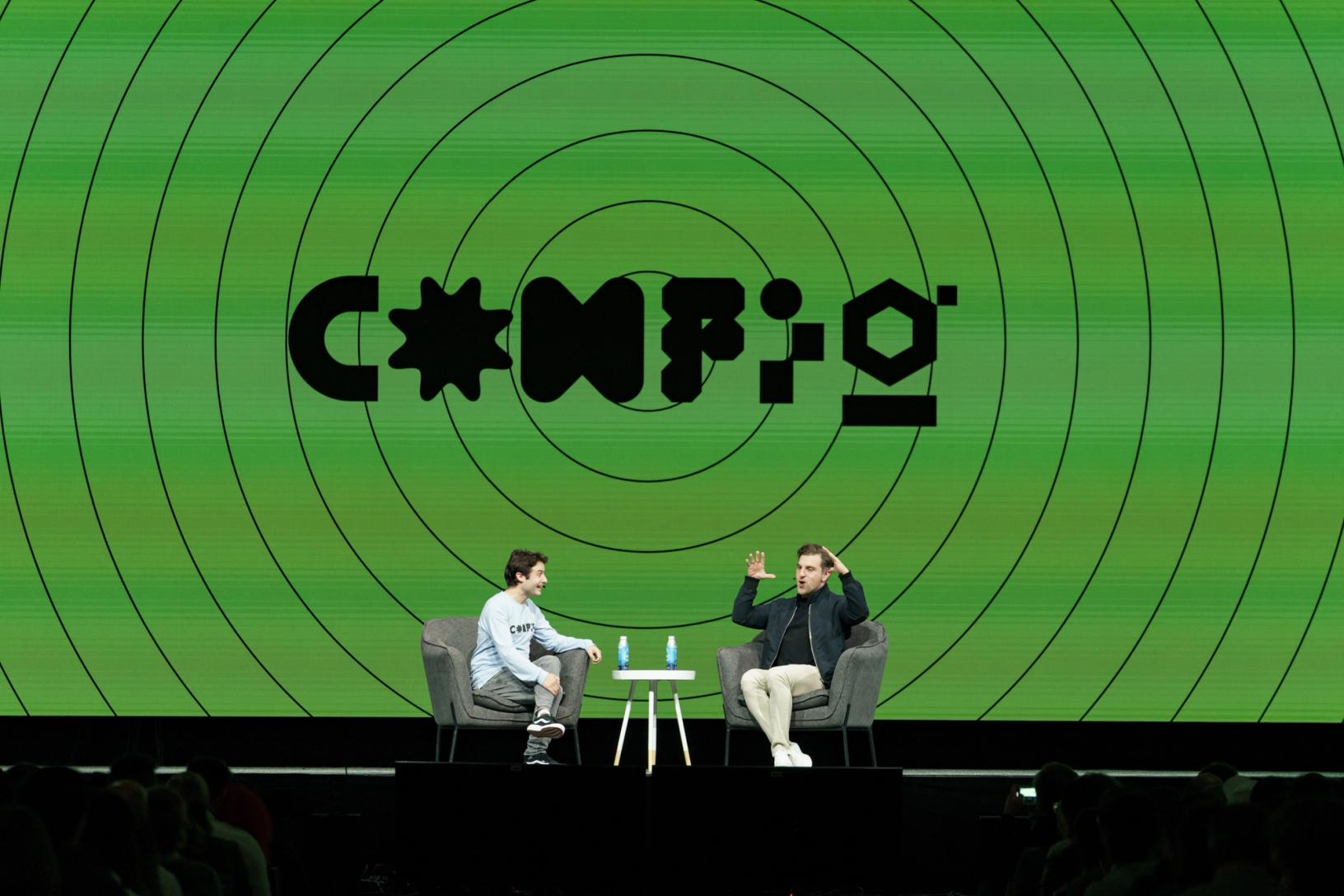
Co-founder and CEO Brian Chesky talks about design’s catalytic potential for business and the central role it played in Airbnb’s post-IPO growth story.
Share Navigating the intersection of design and business: A conversation with Airbnb’s Brian Chesky



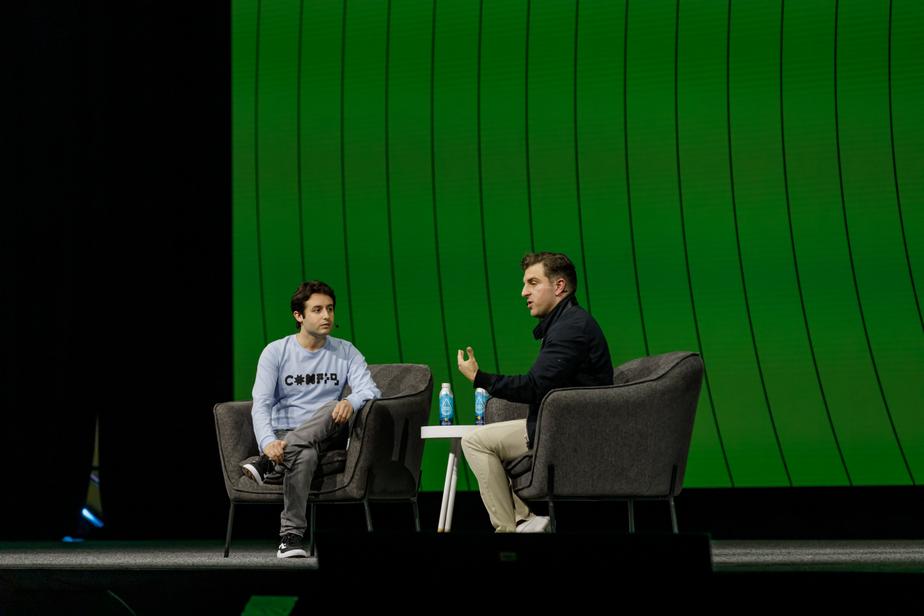
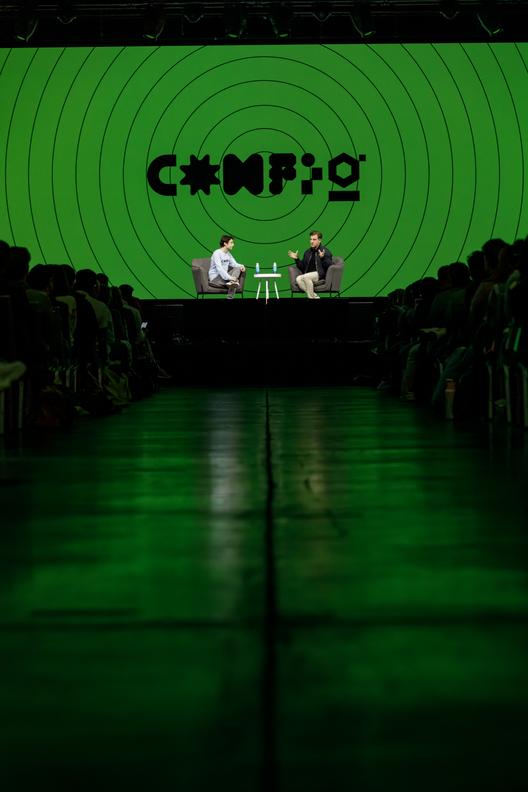
At our annual conference, Config, Figma Co-founder and CEO Dylan Field sat down with Brian Chesky, Co-founder and CEO of Airbnb, to talk about how he led the online marketplace for short- and long-term homestays and experiences to its next stage of growth. Brian opens up about how Airbnb’s customer-centric design philosophy has helped the company scale to new heights. He urged designers to think of their roles beyond conventional boundaries, offering a unique viewpoint on how design thinking could be the third path in business decision-making—and sparked a bit of discourse on #DesignTwitter (but more on that soon… 😉).
For those who might prefer to read the conversation (as opposed to watch or listen), we’ve provided the transcript here, edited for clarity.
Thank you for joining us today. Although Brian likely needs no introduction, for those who may not know, he is the CEO and co-founder of Airbnb. After researching the CEOs of all Fortune 500 companies, I believe—and do correct me if I’m wrong—you are the only designer who is a CEO in the Fortune 500.
If there’s another one, I’d love to meet them.
To kickstart our conversation, let’s revisit a discussion we had last week. You mentioned that, at some point in the company journey, you realized that you were doing things in a very conventional way, despite your design training. Tell us more about that realization.
Sure, let me take you back to the end of 2019. I was feeling somewhat suspicious, as if we had strayed from our initial vision. But to fully understand this, let me take you back to my days at the Rhode Island School of Design (RISD), where I met Joe Gebbia, my co-founder. The idea that a founding team would consist of two designers and one engineer was seen as so unconventional, that one of our initial investors told us, “We love everything, but you and your idea.” The two points of contention were: That strangers would never agree to stay with other strangers and that designers don’t start companies.
Our ethos, born from our time at RISD, was all about bringing design into the boardroom. This was a radical departure from the norm, but it was the foundational premise of Airbnb. For a while, it seemed like we were on the right track—our vision was special and magical.
Ten years later, it’s 2019, and I wake up one day and I have this horrible dream. The dream is: I come back to the company, and it’s unrecognizable. I go on a hike in Bolinas, California with my two co-founders, Joe and Nate, and I tell them about this dream and they said, “What happened?” And I said, “That dream that we had a company that would be magical, that was this amazing product that people loved—that we were starting to lose it. It was starting to wear out.”
And let me explain what was happening. I noticed that there are two types of people at companies that never become CEOs: Engineers become CEOs of Silicon Valley. Marketers become CFOs, finance people become CEOs, operators become CEOs. But the two people that never run companies are designers and Head of HR. I started thinking, “Why is this?” And it’s because design, in some ways, is fragile because companies are organized around the scientific method, and the creative process is something that requires nerve. Over the years, I started losing my nerve. I brought in a lot of people from a lot of different companies, and they brought their way of working towards us.
I noticed that there are two types of people at companies that never become CEOs: designers and Head of HR.
So what do we do? We had like 10 different divisions, each with like 10 different subdivisions. We were very much run by product managers. We had a plethora of A/B experiments. The more people we added, the more projects we pursued, the less our app changed and the more the cost went up. I didn’t know what to do.
It’s now late 2019, and I tell Joe and Nate and they’re like, “Well what are you going to do?” And I didn’t know because we were about to go public, and blowing up the company right before you’re ready to go public is a bad time. So I go back home for the holidays, and it’s now right before 2020. We’re preparing to go public, and I meet two people that changed my life: Hiroki Asai, a creative director at Apple, and Jony Ive, who ran design at Apple. I had forgotten about the magic of this design renaissance that Steve Jobs had [created at Apple]. They described it to me as this way of running a company with design at the center, which was totally different from everything I was taught. Everything I was taught about how you run a company was opposite of what Steve Jobs and Jony Ive and Hiroki did at Apple. So I hired Hiroki—Jony had this firm, we brought him on—and we became his number one client.
And now I have this idea that there’s maybe a better way around the company, but there’s still a problem: We’re going to go public. So what do we do? All of a sudden, I remember our business drops 80% in China. It’s January 2020 and there was this thing that no one in the United States was talking about called Covid. I remember thinking, “Wow, if this thing spreads beyond China it will be really bad.” Within eight weeks we lost 80% of our business. When you’re our size and you lose 80% of your business in eight weeks, it’s like an 18 wheeler going 80 miles an hour and then slamming on the brakes. Nothing good happens. We go from one of the hottest IPOs in the world, to within eight weeks people running articles like, “Is this the end of Airbnb? Will Airbnb exist?” Eight weeks before we’re prepared to go public.
At this point, I’ve luckily never had a near death experience, but it’s been described to me as your life flashes before your eyes. That’s kind of what happened with our business. Our business flashed before our eyes. At that moment, I remember thinking to myself, “I don’t know what’s going to happen, if we can save the company. But how do I want to be remembered? If Airbnb’s like a burning house, and I can only take half the things out of the house, what do I take with me?” It suddenly was really clarifying.
And another thing happened: I realized that for 10 years, I was apologizing about how I wanted to run the company because how I really wanted to run the company was as a designer, but I didn’t have the nerve. But the moment, like it was a crucible moment. So what did we do? We rebuilt the company from the ground up.
We rebuilt the company from the ground up.
We went from a business unit organization to a functional organization. So we had a design department, a marketing department, an engineering department—the way every startup is run. We took all the projects in the company. I asked every lead to show me their roadmap. They couldn’t even figure out their roadmaps because everyone had a sub-roadmap on sub-teams. Those teams had roadmaps and those teams had roadmaps. So I said, “There’s a simple rule: If it’s not on the roadmap, it can’t ship and it must be on one roadmap.” So we put every single thing on one roadmap. Then I said, “We can only do 10% of the things on the roadmap”—that was a wet reckoning—“We’re only going to do a few really big things.” We took the very best people, we put them all on a few projects.
And then I said, “We’re not going to do A/B tests. A/B testing is abdicating a responsibility to the users. We’re going to do a little bit of experimentation, but if we do A/B testing, you’re going to only do it if you have a hypothesis. If B is better than A, you have to know why B was better than A, otherwise we’re stuck with that for like the next 10 years.”
So we are going to focus on shipping things that we’re proud of. If you don’t want to put your name on it, you don’t ship it. The designers are equal to the product managers. Actually, we got rid of the classic product management function. Apple didn’t have it either.
[Applause]
Well, let’s be careful. Hold on. We have product marketers. We combined product management with product marketing, and we said that you can’t develop products unless you know how to talk about the products. We made the team much smaller. We elevated design. I started thinking to myself, “Who’s the product manager when you design a building?” The architect. So we thought of designers very much as architects, and we started doing these release cycles where we’ll ship 80% of the products twice a year.
And then to be clear, we do do optimizations. We do ship code every single hour of every single day. But that’s a budget, that’s about 20%. This is how we started to run the company. I started reviewing all the work. I reviewed the work every week, every two weeks, every four weeks. Before, people thought that was meddling. I said, “You know what? Screw it.” Like we’re going to review everything. I’m gonna be the chief editor. I didn’t push decision-making down, I decided to pull decision-making like an orchestra conductor. What we created was a shared consciousness of like the top 30–40 people in the company, and it was like one neural network, one brain.
So all this is what we’re doing while people say we’re going to go out of business. Something remarkable happens. Not only did we not go out of business, but in the last three years we went from a company that was breakeven to, last year, we did nearly $4 billion in free cash flow.
That deserves a round of applause.
It’s fascinating because that is actually more free cash flow for every dollar earned than Apple or Google, and we did that not by trying to make money. But there’s something amazing: A designer can do more than move pixels on a screen. A designer can design a company to have fewer parts. So we are able to say my competitors are, some of them are former CFOs, and yet, as a designer, we were able to imagine a way to save more money because you could design the company with fewer parts, fewer projects. Design is much more than a department. It’s a way of thinking about the world.
Design is much more than a department. It's a way of thinking about the world.
There’s a whole new generation of designers that aren’t going to work for engineers. They’re going to sit alongside engineers. They’re not going to be told what to do by product managers. They’re going to help drive the product. Some of them are going to choose to drive companies. Because ultimately, what everyone wants is to have a product people love.
You take a company, you have the head and the heart. A lot of companies cut themselves off at the head, and they really focus on one side of the head. But most people don’t think like that. They want a product that is deeply loving. So that’s our story of what we did.

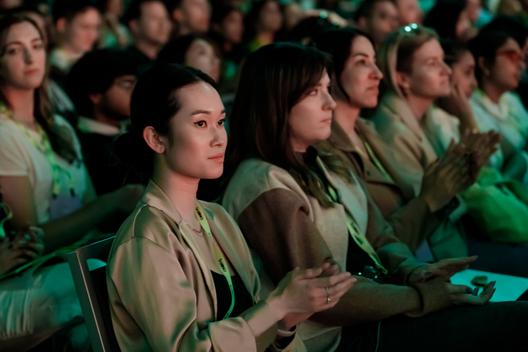

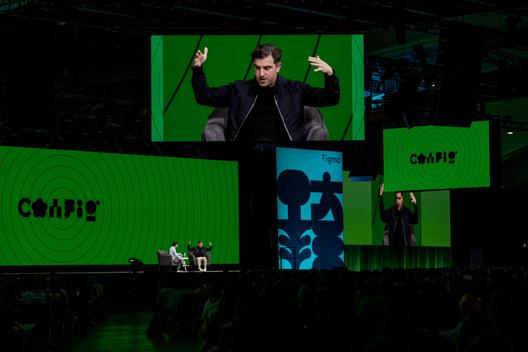

That’s inspiring. The audience seems to have mixed reactions, especially to the idea of ditching A/B testing. Some weren’t sure if they should applaud.
Limited, limited. Indeed, we do use control treatment. But we don’t abdicate responsibility. You have a hypothesis. Think by first principles. “Metrics” are not a strategy. A strategy is not “growing.” That’s not a strategy. We all want to grow. [At Airbnb] we talk about putting your arms around the entire company. We try to have one small design team that sees the entire product, and this is critical because if you have an idea, it’s like pulling on a string of a shirt. If you are contained to one surface, then you’ve got to get the entire company on board, and so that’s why this integrated approach is so important.
Metrics are not a strategy. A strategy is not growing. That's not a strategy. We all want to grow.
So, what advice would you give to individual contributors, design managers, or design leaders who may not have the luxury of being the company’s founder, or working in a founder-led organization, who want to push for a design-driven strategy?
That’s a really good question. I’ve been thinking a lot about this. I noticed lawyers never have to justify their job. Or a CFO doesn’t have to justify why you need a CFO. There’s very few functions where people feel like they have to constantly justify their job. Designers seem to constantly do it. Designers seem to constantly justify their job. Designers are probably a little too self-conscious. Designers should have a nerve, and they should ask themselves: “What are we trying to solve?” And be a little less compromising. I don’t mean to be completely difficult inside the company, but design, as a function, has probably ceded too much ground. Architects don’t seem to have this problem because there’s a thousand years of history around that field.
But, we, designers, came late to the party. Web designers came after software designers, and a lot of the great designers stayed in print and other areas. So these entire functions, like product management, got built before a lot of the design department came in. Make no mistake, product managers are critical, but they shouldn’t be doing the job of designer.
It’s really important to focus on a number of principles:
- I would try to make sure if you are going to do an A/B test or experiment, it should be hypothesis-driven. That if it works, you should be able to say why, not just what.
- Designers should not be just focused on surfaces, they should be focused on user flows.
- You should only ship something that you’re proud of.
- Don’t test something until after you’re happy. Because ultimately, the artist in you, should first and foremost make something for yourself. When you love it and you’re proud of it, now you’re ready to put it out to somebody else.
- Designers should be trying to simplify every single thing they do. I used to think simplifying was removing things. What Jony and Hiroki at Apple taught me is that’s not what simplifying is about; simplifying is distilling something to its essence, and to distill something to its essence, you have to deeply understand it. It’s physics, it’s first principles.
- And then there has to be a sense of craft. Obsessing over every. Single. Detail.
- And then, if you’re in an organization, you have to use their language and explain why it benefits them. If people love your products, they’re going to want to buy more of them.
- What is the goal we’re trying [to achieve]? Well, the goal is we need to grow this thing. [Ask]: “Well, why do we need to grow this thing?” Growth is not a goal. Growth is a direction. That can’t be the goal.
These are some of the things I would do, and I would try to do it in as collaborative a way as possible. But, like I often tell our engineers, the best thing for you [to do] is to pair with design, because otherwise, it’s like running and one of your legs is shorter than the other. You’re not going to go very fast. So the best thing for engineers, and the best thing for product managers, is to pair them with great design from the beginning. For a lot of companies, design has become a service organization. Design should not be a service organization unless that is explicitly the intention of the CEO. That means it’s not your job to catch things, to stop them before it goes out. It means it’s your job to work from the very beginning that design challenges technology, and technology inspires art. It’s not more important than technology, it’s a perfect harmony from the very beginning. Figuring out a way to tell this story, and helping people understand that, you benefit from [my experience].
[Applause]
It’s always impressive how forward-thinking Airbnb is, how you keep an eye on what’s coming up in 6 months, 12 months, 18 months, two years. Can you share your approach to aligning marketing, design, product, and engineering?
Absolutely. So the first thing is we try to have a roadmap. As CEO, I am the keeper of the roadmap. Generally, usually the CEO should be the keeper of the roadmap. Our roadmap is typically about three years out, but it’s very fuzzy. It’s like those video games where it gets fuzzier the further over the horizon. But I have a pretty good idea of what we’re shipping between now and next November. So we’ll have a release in November, we’ll have a release next April, next November, and I have a pretty clear picture. Then about two years out, it gets pretty fuzzy.
Now to be clear, it changes, and I update the roadmap every single week. The near-term is hopefully not changing—that’s churn—but the long-term is constantly changing.
You can measure the health of an organization by the relationship between marketers and engineers. In most companies, marketers are like waiters and engineers are like chefs. If the waiter goes into the kitchen, the chef yells at them. That is not a great relationship. So the first thing is that we actually like to start a lot of product development, not with design, but with marketing. We want [our marketers] to actually have a vision and to figure out how they can tell a story. Then product marketing—again product marketing is product management plus outbound marketing—it’s a smaller function, it’s an extremely influential function. They will work with the designers to establish: What is this project? What are the goals? What are we trying to solve? Then we often will try to present something in its most native form.
So if it’s going to be a keynote, we’ll start with a keynote. Then we go through a really long concept development. So, like, let’s say we launched this product Airbnb Rooms; we noticed the original Airbnb was really slowing in growth, and we wanted to figure out how to revive it. It often starts with insight. The insight was people are nervous staying in the homes of other people—they don’t want to stay in the same home. So we started realizing—wait a second—in our listings, the person is like non-existent, because we’ve been optimizing for the home. So [we start] having this conversation and we’re brainstorming.
That’s when we had an insight: We said, “What if we elevated the profile on Airbnb?” And so then what we try to do is we have historical references. We always try to combine data and research. They’re equally important. Research doesn’t just mean the user, but historical references, and what is a historical reference of a profile with travel? It’s a passport. So we said, “What if we make the equivalent of a host passport for every single host?” So then we started doing research on the kind of attributes you would want to know to stay with somebody. Then we started looking at design language for how you can create an animation.
I love design language systems, but the problem with design language systems is you should design whatever you want and then you put it in the design language system. If you can only pull from the system, you’re never going to be able to take a giant leap if it breaks the system. So there was, there were these new animations we had that opened and closed the passport.
But then we started noticing that people had bad photos. So then we built an operation to take headshots of 40,000 people. If you were a designer in a corner of an app, it’d be hard to convince the marketing department to spend money to take photos. But when you’re integrated you can start to do this, and so these were the things we were able to start doing.
Then we started thinking about how we can tell the story. So we start thinking about what a marketing campaign could be to elevate this product because a lot of products fail because they’re not well marketed. If you ship a feature, and no one knows, did it really matter? And so a lot of times people give up on features too soon. They ship something, the data says it doesn’t work, they kill the feature. Well, did you tell people about it? Do they know about it? And so this is kind of a little bit of the life cycle of how we do it. Then once we ship, we try to study how people are using it. We do look at data. We do sometimes do treatments and controls, but again, they’re always hypothesis-driven.
I think we can all agree that designers should be talking with users and customers. However, the lines start to blur when you’re really trying to define design, versus product management, versus research. How much of design should seep into product or research aspects?
We try to go really deep with experts. Not only do we have a design function, but we have a workshop group of a few dozen people that are trying to cover the entire app. We have a studio that is going through a lot of specific implementations. We have people who focus on haptics, people who focus on animation. I want to have people focus on typography and color. You know, we put UX writing under marketing because marketers historically are more writers, they have more of a writing background. So we really try to align everything to functional expertise.
Let me tell you a quick story about how we improve the product: So we recently created this thing we call the Airbnb Blueprint. I was inspired by something Walt Disney did in the 1930s. He was making this movie called Snow White. It was the first feature-length animated film. It was so long, he couldn’t keep track of the film. So he created this thing called the storyboard. That’s when we realized, “Well what if we do the same thing at Airbnb?” What if we created a storyboard?
So we storyboarded the end-to-end journey for guests and hosts. Then we asked the team, “Every single screen a user sees—put it on one wall.” It turns out there are 150 screens. Then I said, “Every user policy, every time you call customer service, what policy you’re referencing.” It turns out there were nearly 70 user policies. Some of these are a hundred pages each. We map those out. Then I asked them to map out every single operational touchpoint. We map those out. This was really arduous. We call this wrapping your arms around the company.
And then we went through like 20 million customer service calls and we went through hundreds of thousands of social media posts, tons of workshops, and even our firsthand experience. Again, we believe people make products for themselves. Based on that, we created a prioritized map and systematically tried to fix our product.
I used to tell our team: We can’t do new things unless we have permission, and we don’t have permission to work on new things until people love our core service. If they’re complaining on social media, and they’re calling customer service, they don’t love our core service, so we have to get our house in order first. So that’s kind of what we did. But I really try to focus on some pretty deep functional expertise, and I would also just be useful. Like wherever there’s a hole you can fill it.

So, it’s almost like talking with customers isn’t enough. You really have to get that bird’s-eye view of your entire experience.
I think you should be systematic about how you talk to your customers. You should talk to customers, look at the data, understand them, and you should be using the product yourself. Becoming the user in all this is your intuition. Being the designer is like holding 5,000 ideas in your head, some of them contradictory. We tend to call this intuition, and we get really nervous because it seems somehow not systematic. But I actually think a lot of great design comes from deep understanding of a problem. You’re trying to absorb as much information as possible.
Before we end, I’m sure that there’s a bunch of people in this audience who are inspired by your story, and are thinking, “Maybe I should start something.” What advice do you have for them?
Well, I’ll go back to RISD. Why does design need to be in the boardroom when it can occasionally run the boardroom? Why aren’t there at least a few more designers running Fortune 500 companies? I don’t have an answer for that, but I do know a couple things: I think of myself maybe as a designer, but I’m not a designer the way most of you are, but I designed our business model. I designed our expense base. I helped design our organizational chart, our business, how we work, our story. Design is not just how something looks, it’s how it fundamentally works, and it is one of the most important skills that we’re going to need in the 21st century.
Do you ever see two bad options? And you’re trying to pick between two bad options? Sometimes the right path is the third path, and that third path requires creativity.
A lot of business needs more heart and more imagination, and that is what everyone in this room can provide. So I would encourage designers to have a nerve. I would encourage them to know that you can design the world that you want to live in. I want to encourage as many people as possible—whether it is not asking permission for how you want to run your company or how you want to do your job—[to] speak up about what you believe in. If you’re running a design department, try to make sure that the entire company is embracing your philosophy, or at least have a conversation. Also know that designers can run companies, they can build things, they can ship things. Ultimately, you know, when I joined Y Combinator, Paul Graham said, “Make something people want.” Well who knows what people want as well as designers? Not many other people. That is a core value that we can offer to the world, and more designers should rise up and start companies.
[Applause]
I can't wait to see all the change that this room will bring. Brian, I can't thank you enough. Thank you. Please join me in giving him a great round of applause.