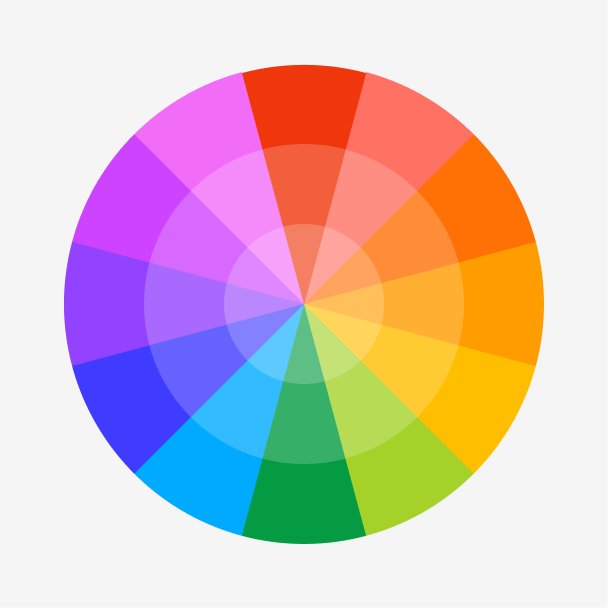
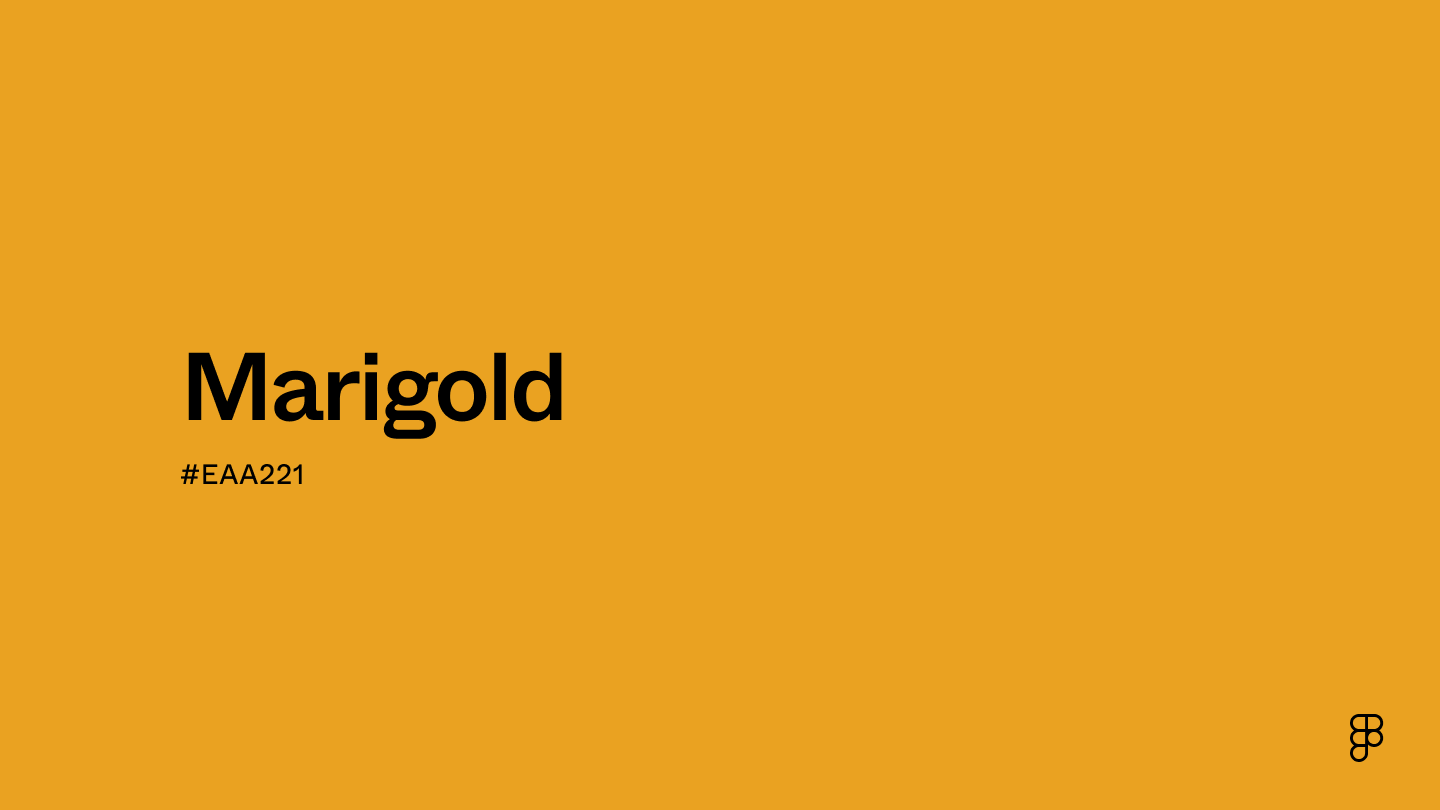
Marigold is a vibrant, sunny hue that exudes warmth and joy. Positioned between yellow and orange on the color wheel, it resembles deep gold. It shares a palette with mustard and saffron. Ideal for adding cheerful accents and an energetic pop to designs.

Color variations
Shades
Tints
Tones
Hues
Color harmonies
Complementary
Split
Monochromatic
Analogous
Triadic
Square
Custom palettes
Marmalade Glow
Azure Ember
Flare Orchard
Marigold is defined by the following color codes and values to ensure consistency across various digital platforms and devices.
- Hex Code: #EAA221
- RGB value: 91.8% red, 63.5% green, 12.9% blue
Accessibility considerations play a crucial role in UX and UI design color choices. Figma offers plugins in the Community to make sure your designs meet Web Content Accessibility Guidelines
For variations within the same spectrum as Marigold, consider:
- Yellow (#ffde21): Bright and cheerful, Yellow captures the sunny brightness often associated with Marigold.
- Mustard Yellow (#ffce1b): Mustard Yellow offers a golden hue with earthy undertones, closely resembling Marigold’s warm richness.
- Saffron (#f1c338): Saffron exudes a warm, golden tone with a hint of orange, echoing Marigold’s vibrant energy.
- Amber (#ffbf00): Rich and golden, Amber shares Marigold’s bright warmth with a slightly deeper glow.
To complement Marigold, consider pairing it with:
- Teal (#069494): Brings a cool contrast that beautifully balances Marigold's warmth, creating a vibrant yet harmonious palette.
- Cobalt Blue (#0047AB): Offers a strong, classic contrast that enhances Marigold’s brightness, ideal for a bold and striking visual effect.
- Olive Green (#636B2F): Provides an earthy contrast, blending seamlessly with Marigold to evoke a natural, organic feel.
- Plum (#660033): Introduces a deep, rich tone that complements Marigold's brightness, adding sophistication and depth.
- Light Gray (#D3D3D3): Acts as a neutral canvas that allows Marigold's vividness to stand out without overwhelming.
While marigold is warm and vibrant, it may clash with:
- Neon Green (#2CFF05): This bright, saturated green creates an intense contrast against marigold, leading to a visually overwhelming effect.
- Cherry (#D20A2E): This strong red hue can compete with marigold’s warmth, creating a jarring, overly saturated visual experience.
- Bright Yellow (#FFED29): While close in brightness, bright yellow can clash due to its cooler undertones, diminishing the depth and richness of marigold.
- Cobalt Blue (#0047AB): The deep, vivid blue contrasts sharply with marigold, creating an unwelcome tension between their saturated tones.
- Dark Purple (#341539): With its deep, cool undertone, dark purple challenges marigold's warm vibrancy, resulting in a less harmonious pairing.
Contrast checker
Contrast 2.17
- Large Text
#EAA221
- Normal Text
How you design, align, and build matters. Do it together with Figma.
| Category | ||
|---|---|---|
Fail | Fail | |
Fail | Fail | |
Fail | Fail |
Contrast 9.69
- Large Text
#EAA221
- Normal Text
How you design, align, and build matters. Do it together with Figma.
| Category | ||
|---|---|---|
Pass | Pass | |
Pass | Pass | |
Pass | Pass |
Color simulations
Protanopia
Deuteranopia
Tritanopia
Achromatopsia
The hexadecimal color #EAA221, known as Marigold, has RGB values of R:234, G:162, B:33 and CMYK values of C:0, M:31, Y:86, K:8.
| VALUE | CSS | |
|---|---|---|
| HEX | #EAA221 | #EAA221 |
| RGB DECIMAL | 234, 162, 33 | RGB(234,162,33) |
| RGB PERCENTAGE | 91.8, 63.5, 12.9 | RGB(91.8%,63.5%,12.9%) |
| CMYK | 0, 31, 86, 8 | |
| HSL | HSL(38.5, 82.7%, 52.4%) | HSL(38.5, 82.7%, 52.4%) |
| HSV (OR HSB) | 38.5°, 85.9, 91.8 | |
| WEB SAFE | #25515351 | #25515351 |
| BINARY | 11101010, 10100010, 00100001 | |
| iOS - SwiftUI | Color(red: 0.918, green: 0.635, blue: 0.129) | |
| iOS - UIKit | UIColor(red: 0.918, green: 0.635, blue: 0.129, alpha: 1) | |
| Android - Compose | Color(0xFFEAA221) |