
The best advice to bring to work in 2025


Industry leaders from companies like Ableton, Snapchat, and Coda set resolutions for managing teams, shipping products, and sparking great ideas in the year ahead.
Share The best advice to bring to work in 2025
We’re fascinated by rules—how to make them, when to break them, and which ones actually matter. And while it’s tempting to offer a prescriptive formula for success, the most useful insights aren’t conventional wisdom; they are anchored in experience, crafted through years of trial and error. Here, leaders at companies like Snapchat and Coda open their personal rulebooks to share hard-won principles that guide their decisions and shape their products.
Look beyond design for inspiration
The best launchpads for design may not necessarily come from design, says Pablo Sánchez, Principal Designer at Ableton. “Draw from emotions, memories, scientific discoveries, or nature,” he advises. “By seeking inspiration in realms beyond design, you cultivate a creative process that is expansive, unpredictable, and deeply personal.” It’s important to design for yourself first, he explains, because that passion will resonate in the final product. Instead of drawing from the conventions of MIDI editors and other music recording apps, Pablo and his team took a page from the minimalist language of Brutalist architecture to create Ableton’s Note app, whose stripped-down UX captures the immediacy of music creation.

Read more of Pablo Sánchez’s rules for designing the unexpected.
Automate the work that gets in the way of work
The job of the product manager is not crafting the perfect OKR, internal doc, or product review, says product lead Peter Yang, whose decade-plus career includes stints at Meta, Reddit, Twitch, and X. While these are necessary tools of the trade, the product manager’s true superpower is in empathizing with the customer, understanding their needs, and facilitating decisions that serve that bigger picture. “Your job is to deliver value to customers and grow your business,” he says. “If you find yourself spending just as much time on these intermediate artifacts as building the actual product, it’s time to take a step back and adjust. Consider delegating the tasks, or automating them with AI.” For example, Peter uses AI to synthesize brainstorms, summarize customer feedback, and clean up product requirement docs.


Read more of Peter Yang’s rules for making products customers love.
Accelerate your users’ time to magic
Charmaine Lee, Product Manager at Snapchat’s Lens Studio, warns against overloading the first-time user’s experience with tips and tutorials. Instead, focus on getting them to the “aha moment”—when someone starts to actually play and create with the tool. “What’s crucial is the time it takes for users to ditch the training wheels, so to speak, and learn to ride the bike on their own,” she continues. “It’s about ushering them to the magical moment where they’re not just users—they’ve become creators. They’re proud of what they can build with the tool, and can’t wait to share it with their communities.” In the case of Lens Studio, an AR tool, the team illustrated the user journey in FigJam and trimmed down the 19 steps it took between downloading the app and submitting the first project down to four key milestones.


Cultivate a mix of meeting types
Not all team meetings or rituals are created equal, says Shishir Mehrota, Co-founder and CEO at Coda. Together with Elise Keith, Founder of Lucid Meetings, he’s created a taxonomy of meetings that serve different purposes. “It’s important to have a healthy mix across all three,” he says.
- Cadence meetings, like staff meetings, standups, and project syncs, “follow a natural cadence: You set goals, you execute, you reflect. A great cadence meeting comes down to one question: Are we on track for the goals we set?”
- Catalyst meetings, like decision-making forums, product reviews, and design crits, help teams change directions and drive progress. “If you have too many of them,” he says, “you’ll probably burn out. A catalyst meeting tends to be decision-focused: Did we get an answer to our question?”
- Context meetings, like All Hands, off-sites, and orientations, are for “establishing context, sharing information and insight, and building connections. Context meetings tend to have the broadest outcomes: Did we come away better enabled to do our job?”

Read more of Shishir Mehrota’s rules for leading great team meetings.
Keep moving, even when it’s hard
No matter how worthy the end goal is, the progress toward it can be a slog, says Dan Mall, Founder of Design System University. “Watching Rocky Balboa lift weights is only exciting as a two-minute montage,” he says. “It’d be agonizing to watch for an hour.” To motivate yourself through the tedium, he continues, “Counteract this force by building momentum. Start all pieces of work a bit earlier, even if they cannot be finished right away. Share work-in-progress early and often. Like friction can slow a rolling ball to a halt, life constantly throws things at me to slow me down. The important thing is to keep moving.”

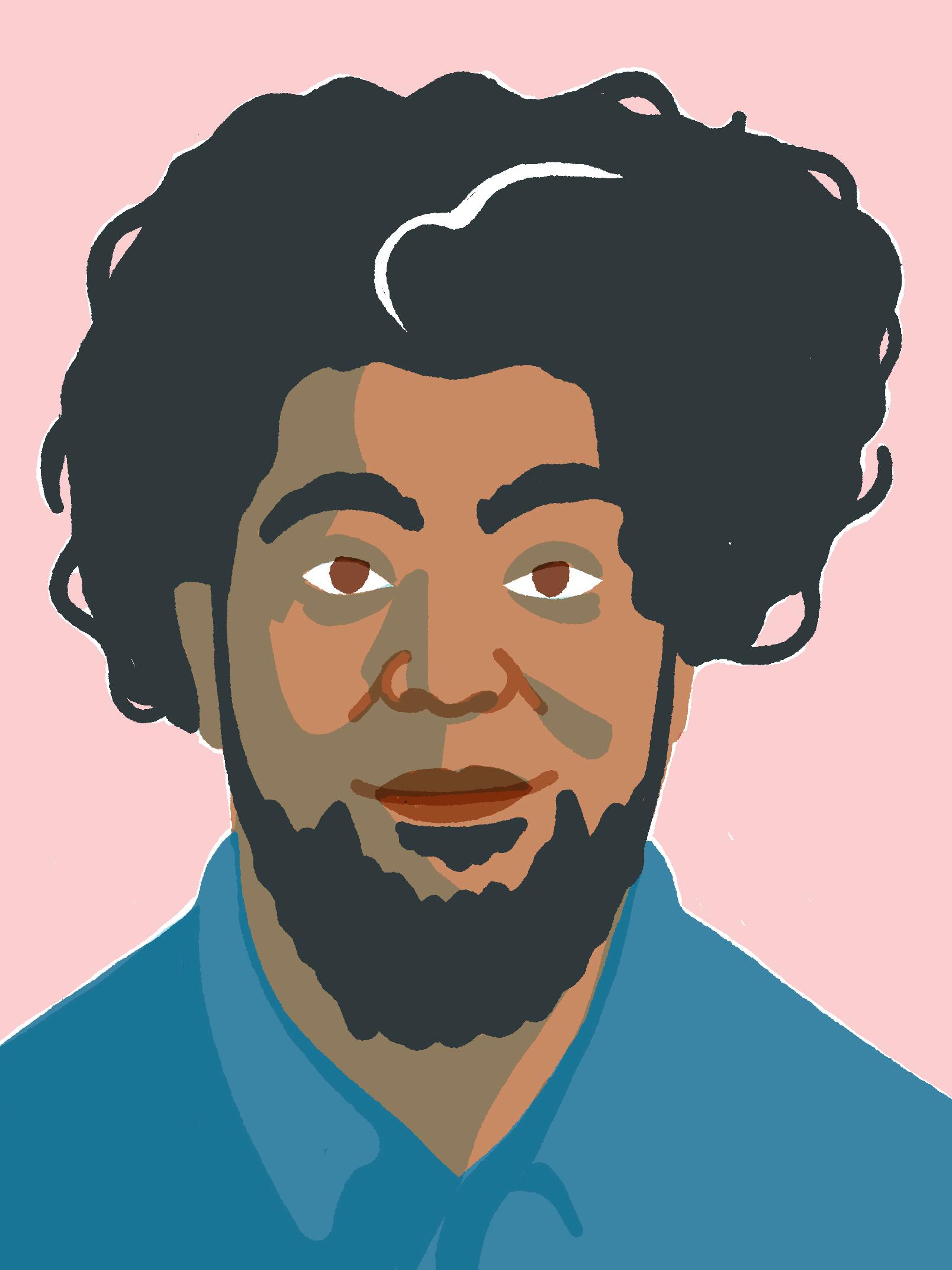
Read more of Dan Mall’s rules for a worthy design career.
Embrace the in-between moments
Sometimes, letting your mind wander is what you need to get the creativity flowing again. Instead of being frustrated with the banality of day-to-day tasks, legendary designer and Pentagram partner Paula Scher finds meaning and opportunity in idle time. “Sit in any waiting room,” she says. “A doctor, dentist, or car inspection garage where you have absolutely nothing to do for about an hour. Or take a flight with no Wi-Fi, and no leg room. Get stuck in traffic. Make sketches on a very small lined pad (even a napkin will do) with a good pen. The worse the environment, the better the result! Your mind will really wander and open up the playground.”


Read more of Paula Scher’s rules for play.
Whether it’s juggling priorities, making tough trade-offs, or knowing when to pivot, there will always be challenges in the product development process. Keep these rules in your pocket for those days when you hit a roadblock and need a dose of inspiration to get unstuck, and read more from industry leaders here.