

Pablo Sánchez’s 7 rules for designing the unexpected


The designer of Ableton’s Note app shares unconventional principles for creating unforgettable digital experiences.
Share Pablo Sánchez’s 7 rules for designing the unexpected
Illustration by Luis Mazón
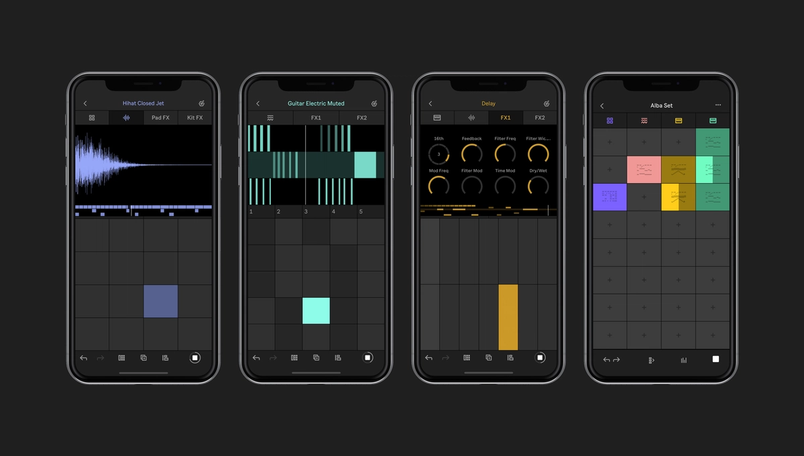
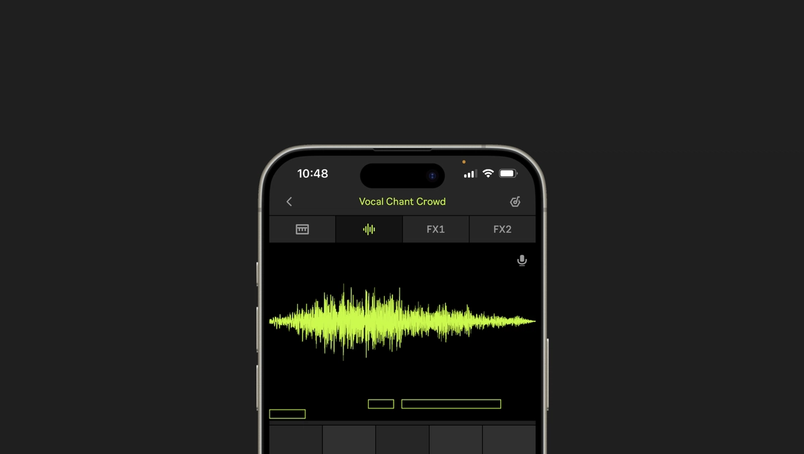
“Creation is a communal task,” says designer Pablo Sánchez at the start of his talk at Config 2024. “Even if you’re working completely alone in a room, when you shuffle ideas from the past and present, a profound connection to the collective is established.” In his session with user researcher Oliver Sommermann, Pablo breaks down how tapping into this “plural consciousness” shaped the development of the Ableton Note app, an interface for sketching music. Instead of a conventional red record button, Note has a “Capture” feature that loops musical phrases after they’re played.
Note’s minimal UI embodies the ephemeral, playful nature of making music, especially in its early stages. Below, Pablo outlines his rules for bringing a fresh perspective to digital design, while staying true to your singular vision.
1. Design for yourself
Great design springs from personal conviction, not just objective analysis. Instead of striving for objectivity—which can compromise your vision and potential—design something that inspires you. After all, you are the only user you truly know. That passion will resonate in the final product, making it feel authentic and relatable.
MIDI (Musical Instrument Digital Interface) messages connect devices that make and control sound.
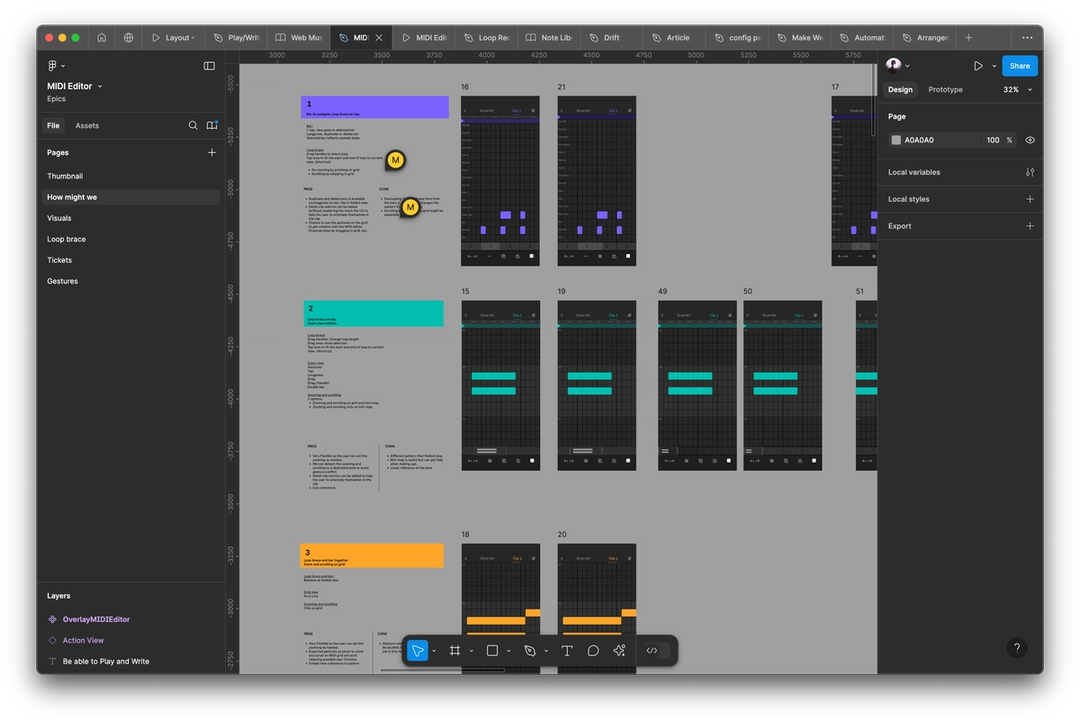
When I joined the Note team, the prototype centered a MIDI editor—something we knew many users would expect. However, I felt the mobile platform invited a more immediate, tactile approach, so I designed a set of instruments for users to play directly instead. After user testing validated this direction, we launched without a MIDI editor.

2. Leave references out of the brainstorming phase
When you brainstorm with design references in mind, you’ve already chosen an existing path. Go your own way by brainstorming without external input. By drawing from your own experiences, you’ll find unique solutions that are inherently in conversation with the ideas of the past and present that you’ve absorbed. Out of this plural consciousness, create assemblages of what compels you. Embrace this vagueness, and trust your process—your experiences and skills will add distinction.
The assemblage I drew from when designing Note included apps like Samplr by Marcos Alonso and Borderlands Granular by Chris Carlson. While their influence isn’t overt, some of their essence is woven into Note.
3. Look beyond design
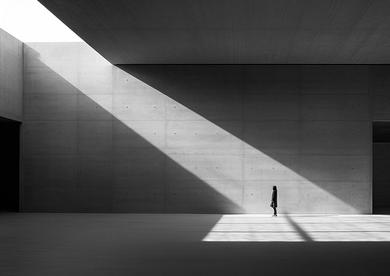
Think of a design that echoes the tension of a suspenseful novel you read, the fluidity of a dance you saw, or the resilience of an animal that fascinates you. Draw from emotions, memories, scientific discoveries, or nature. By seeking inspiration in realms beyond design, you cultivate a creative process that is expansive, unpredictable, and deeply personal. When it came to Note, I leaned into the idea that UX should rival the immediacy of picking up a guitar to noodle. I also pulled from the visual language of Brutalist architecture, where ornament is superfluous.
Note’s minimal interface embodies this approach. The app strips away the complexity of music production, instead presenting a clean space where users can directly “touch” sound.


4. Design for tomorrow
In “Speculative Everything: Design, Fiction, and Social Dreaming,” authors Anthony Dunne and Fiona Raby draw distinction between two types of design: affirmative and critical.
• Affirmative design solves problems, offering answers for how the world is, driving us to buy.
• Critical design finds problems, raising questions for how the world could be, prompting us to think.
Unexpected design sits between these two genres by both reimagining what’s possible and motivating us to explore.
In “The Xenofeminist Manifesto: A Politics for Alienation” by Laboria Cuboniks, an argument for biotechnical civil disobedience is: “If nature is unjust, change nature!” This affirms a future untethered to the repetition of the present. In your practice, speculate beyond the present.
Speculative design challenges us by posing open-ended questions that invite reflection, spark debate, and create alternate narratives bridging reality and imagination. When I teach university students, I challenge them to imagine designs for different eras or realities—to take a page from the speculative tradition of uchronia, for example, and create a time travel app.
This speculative approach proved valuable for Note. Instead of replicating traditional recording interfaces, we asked: Could we create a space entirely free of labels? Could we rethink the fundamentals of music creation itself? Embracing the digital medium, we avoided analogies to hardware and tried to craft an abstract, yet intuitive, interface.
5. Don’t underestimate your users
They are more capable and curious than you may think. Instead of oversimplifying, craft designs that invite exploration and discovery. You’ll end up creating richer, more rewarding experiences. One beta tester of Note thought its minimal design meant it was just a wireframe. Rather than swinging in another direction, however, we iterated until users not only appreciated, but felt liberated by, the simplicity of the interface. They’ve reimagined workflows in ways we hadn’t even anticipated—one artist even surprised us by using the app onstage.
6. Remix and reinvent
The concept of multiple discovery puts forth the hypothesis that most scientific discoveries and inventions are made independently and simultaneously by multiple people. The idea that everything has already been—or is about to be—invented can be discouraging. It can even be creatively paralyzing. I prefer to think that everything is a remix. Fuel your practice by believing that you can create something new, even if someone is doing something similar, or if it’s a combination of previous ideas. The difference between independently arriving at a solution and simply adopting one is vast. One empowers, and the other inhibits.
The difference between independently arriving at a solution and simply adopting one is vast. One empowers, and the other inhibits.
7. Push past the obvious
Why stop at one good idea when three can take you further? Even if you’re happy with an outcome, continued exploration can uncover hidden potential. I once had a screenwriting professor who tasked students with listing 500 adjectives to describe an apple—a seemingly impossible feat that revealed just how far creativity can stretch when challenged.
Instead of settling for the first solution, create three distinct variations of the same concept. Play with different angles—complexity versus simplicity, past versus future. Tailor each version to different audiences, explore different tones, or try diverse design styles.
Also known as the law of parsimony, Occam’s razor is a philosophical principle stating that in the face of multiple hypotheses, the simplest one is preferable.
For every feature in Note, we created three design options ranging from very simple to highly complex. We usually started with the simplest version, following Occam’s razor principle, then either worked to refine it or repurposed the idea for other features. It was only through iterating that we could reinterpret musical tooling with Note and find new ways to sketch with sound.

What are your rules for design? What principles drive your practice, and what have you or your team built as a result? Submit your ideas by December 13, and you may find yourself onstage at Config 2025.