
Meet the maker: Nicole Boettcher’s Figma-designed quilts


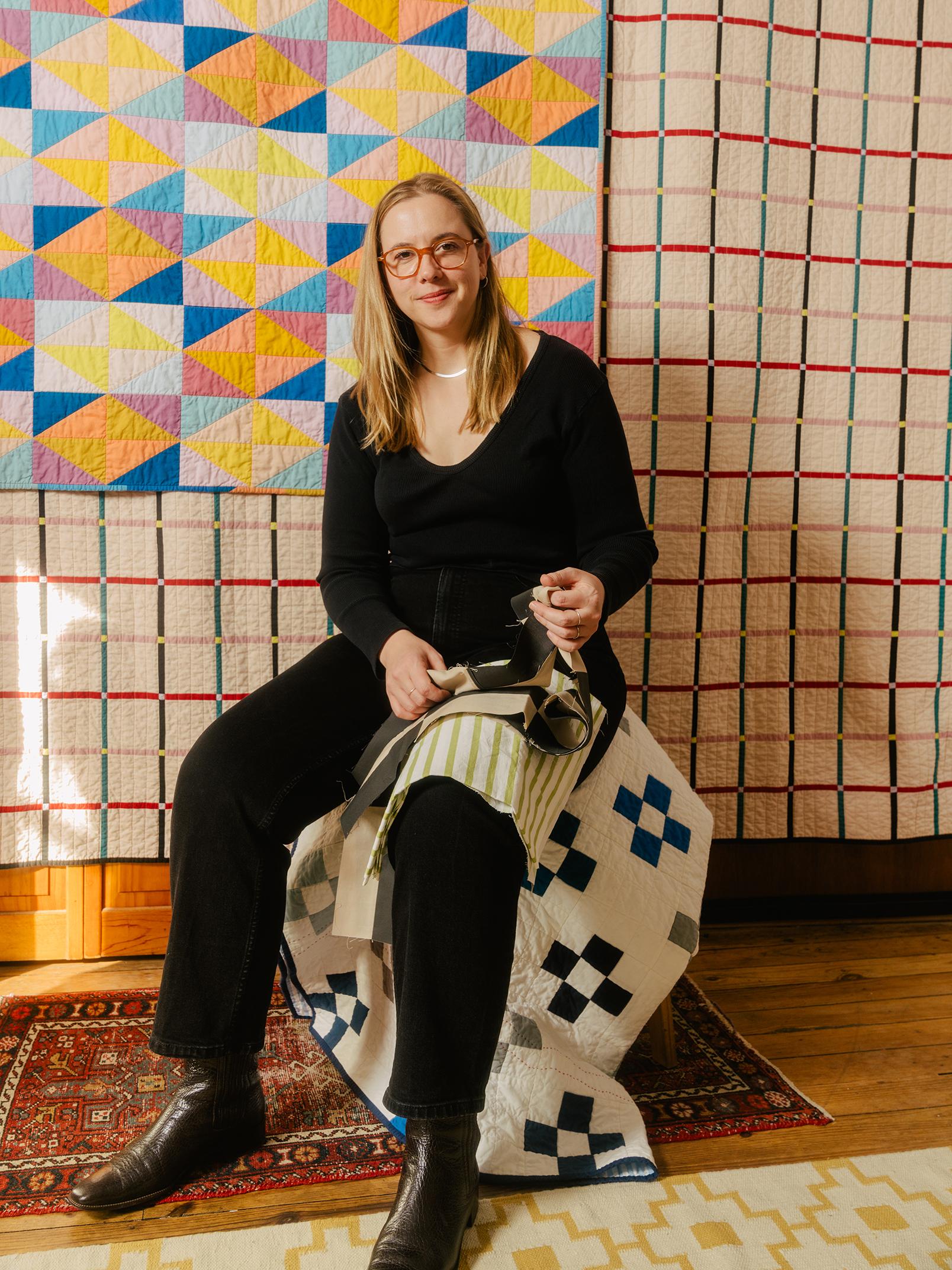
A former product designer now crafts quilts using the design tool she knows best—giving whole new meaning to moving rectangles in Figma.
Share Meet the maker: Nicole Boettcher’s Figma-designed quilts
Photos by Ryan Duffin
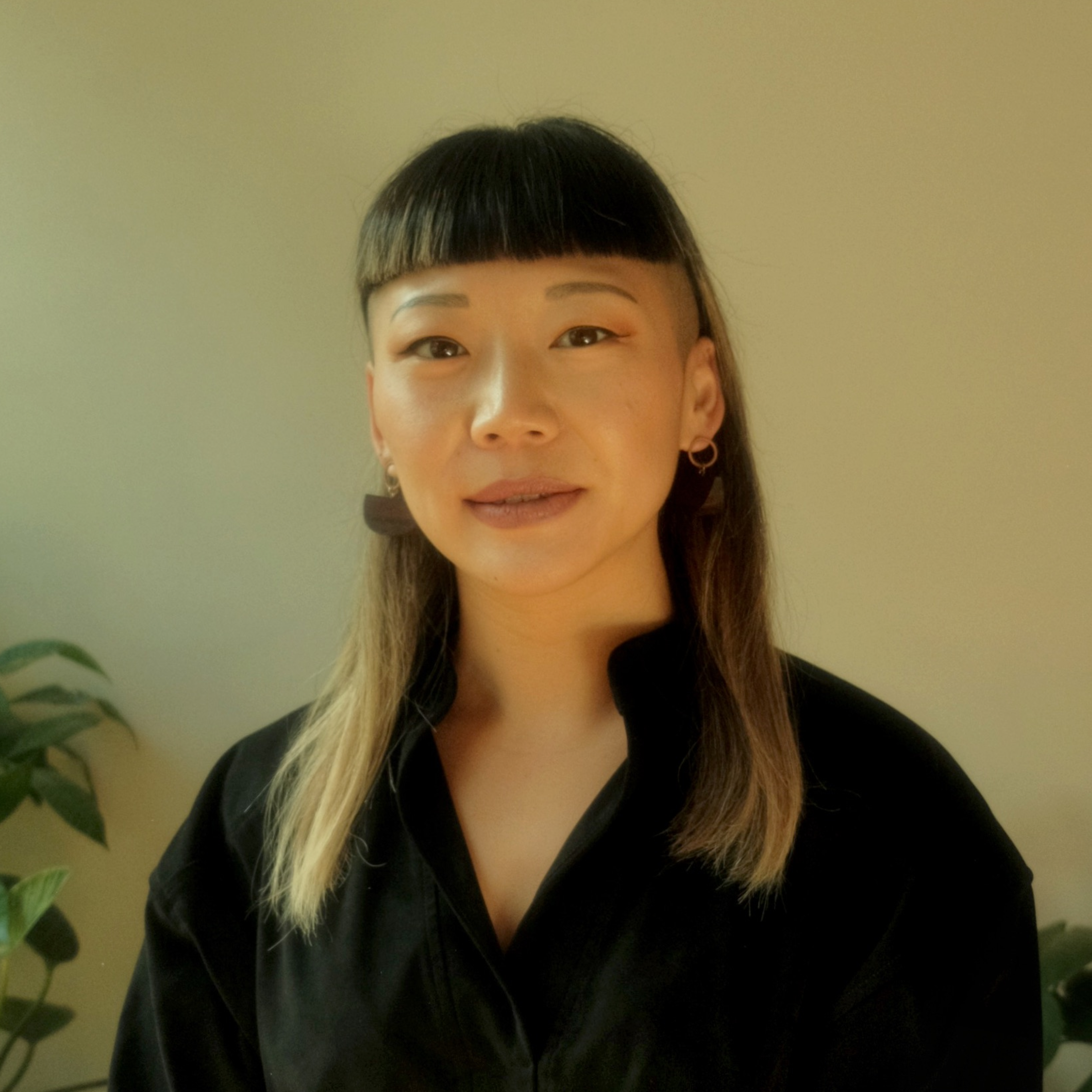
It was 2021, the pandemic had irrevocably changed the nature of work, and Nicole Boettcher was ready for a change. Having spent two-and-a-half years as a product designer at Artsy, an online marketplace for art, Nicole was eager to pick up a craft that would involve working with her hands. She knew how to sew—“I would whip up a throw pillow here and there,” she says—but had been postponing her dream of learning to quilt. “When I had all this free time, something clicked and I thought, ‘Maybe now is the time to do that ‘someday’ project.’”
Teaching herself to quilt meant scouring the web for tutorials from other artists and trying her hand—literally—at beginner patterns. As Nicole’s confidence grew, so did the size of her quilts. And when she was ready to create her own designs, she reached for the tool she knew best: Figma. It’s allowed her to iterate quickly and be efficient with both time and materials.

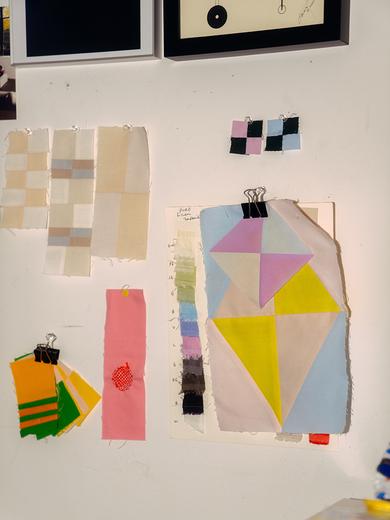

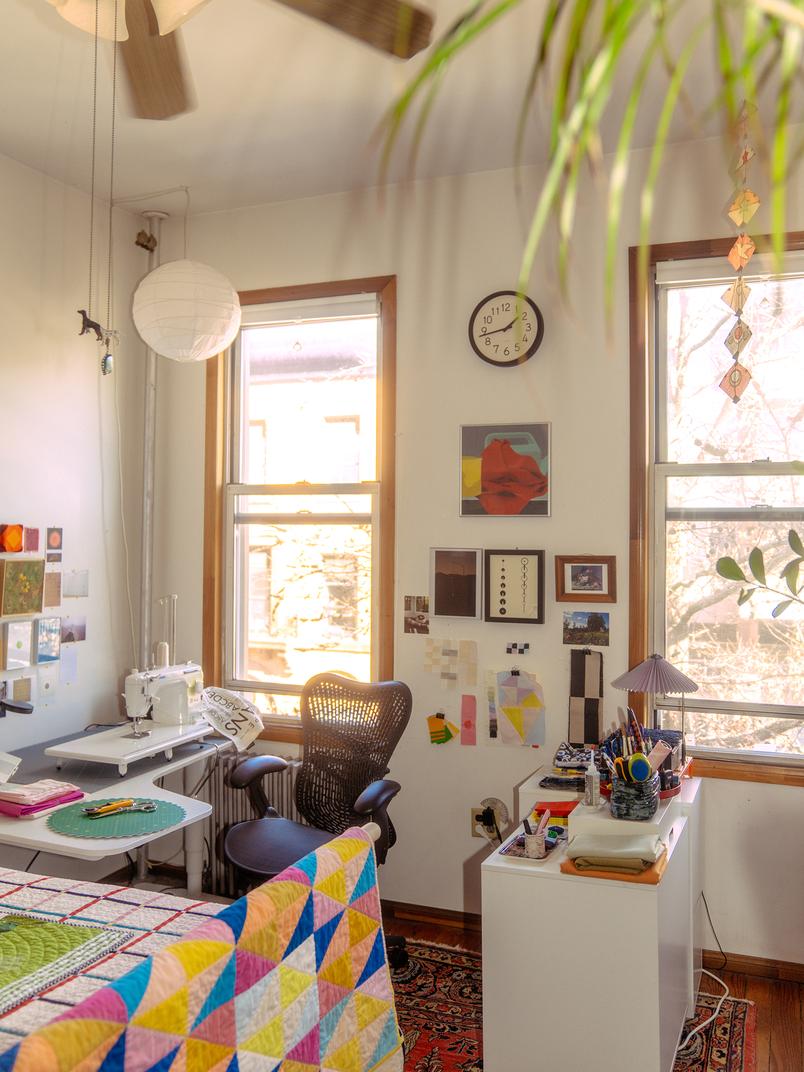
“I would say that I design 80% of my quilts in Figma before I even cut the fabric,” says Nicole. “Other quilters improvise much more than I do, but I think my UX background and experience preparing assets for engineering teams makes me want to go in with a plan. Everything needs to be measured to the quarter inch, and Figma is a great tool for that.”
My UX background makes me want to go in with a plan…Figma is a great tool for that.
There are so many sources of quilting inspiration on Instagram that “it’s painful to choose only a few,” says Nicole, who recommends searching keywords like “Amish quilts” and “Gee’s Bend quilts.” Here are a few of her favorite accounts:
- @_flying.geese_: “My favorite for vintage quilts.”
- @ginarockenwager: “I think Gina’s work changed my life. Her quilts inspired me for years before I started making them myself.”
- @ali_is_sewing: “Her work is wonderful, and she continuously exposes me to my new quilters and artists.”
Designing a quilt in Figma
For Nicole, inspiration stems from her many books on the art of quilting and the hundreds of quilters she follows on Instagram. Often, a design starts with a traditional quilt block—a foundational square pattern—that she wants to play with.
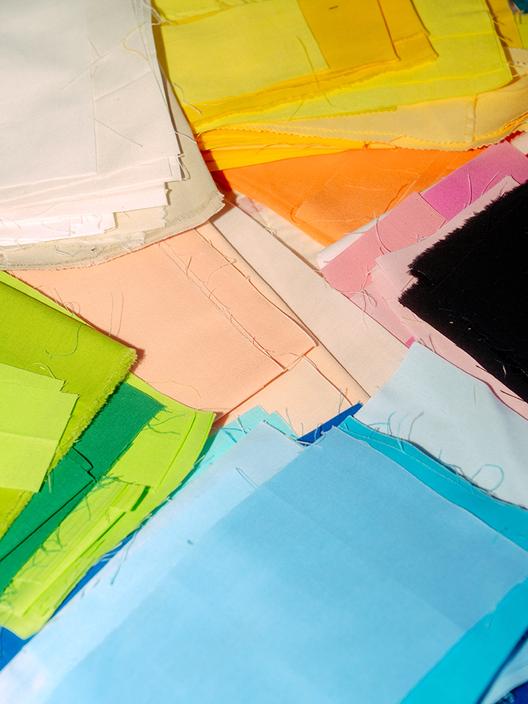
“I like to work with fabrics I already have, so then it’s a question of finding the right patterns and colors,” she says. Thankfully, Nicole keeps a meticulous color library in Figma by pulling in swatches from fabric manufacturers, so it’s easy to update quilt layouts with colors and patterns that she already has on hand. “In a design file, I can just highlight certain sections and apply new colors,” she explains; plugins like Random Colors Fill from the Figma Community can help with iterating on palettes.

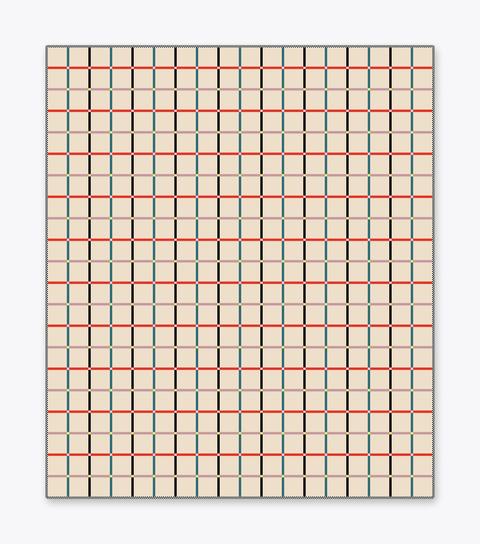

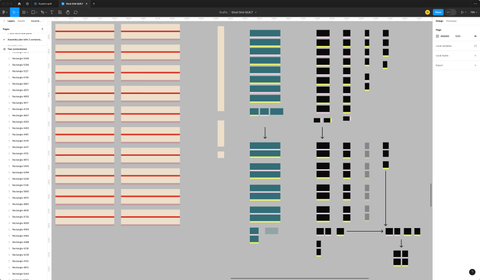

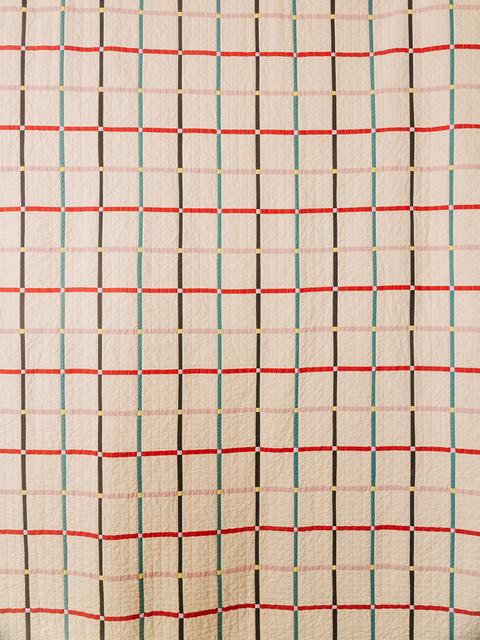

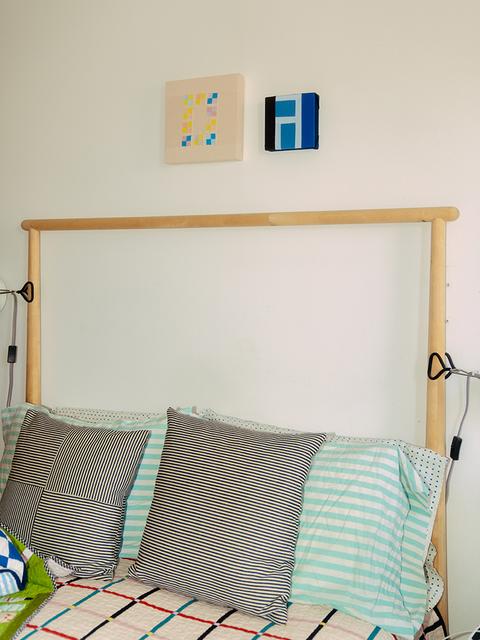
Working in Figma also makes it easy to adjust shapes, patterns, and proportions to get the perfect design—a process that would be much more tedious done through sketching or manipulating cut-outs. Auto layout, for example, helps Nicole easily maneuver each row of a grid at the same time. “Again, with my product design experience, I want to be able to iterate and make 40 versions of the quilt before I pick the one I want to make, and using Figma is so much faster,” says Nicole.
Measure twice, cut once
Once she’s homed in on a design, she duplicates it, breaks it down to its atomic pieces, and uses the Count Things plugin to find out she needs, say, 189 teal rectangles, 378 tan squares, and so on, with pixels correlating with inches. The goal is to figure out how to most efficiently cut the fabric. “I don’t want to generate any scraps if I don’t have to,” says Nicole.
That’s not accounting for seam allowances (room for the stitch), however, so Nicole adds a quarter inch to each side of each piece before calculating how many total yards of fabric she needs to cut. Then, she manipulates the shapes again to figure out which pieces can be sewed together first to minimize the number of steps. For example, instead of cutting out and sewing together multiple tan squares and red rectangles, Nicole can sew together longer tan and red strips that can then be chopped into smaller units. “I don’t know if I could keep all of this in my head,” she says. “For each step, I’m duplicating a section in the Figma file and rearranging it as though in the physical world.”
Scaling up a small business
Fun fact: The handle and business name @couched_liaisons is an anagram of Nicole’s personal handle, @deliciousnachos.
Even before she finished her first quilt, Nicole started an Instagram account to document the journey. After she posted a few of her creations, requests for commissions began to roll in. “Since I wasn’t working a day job, the idea of taking commissions came pretty naturally,” says Nicole, who is still quilting full-time. About a year after she launched her Instagram, Nicole also created a website to list quilts and wall hangings for sale.

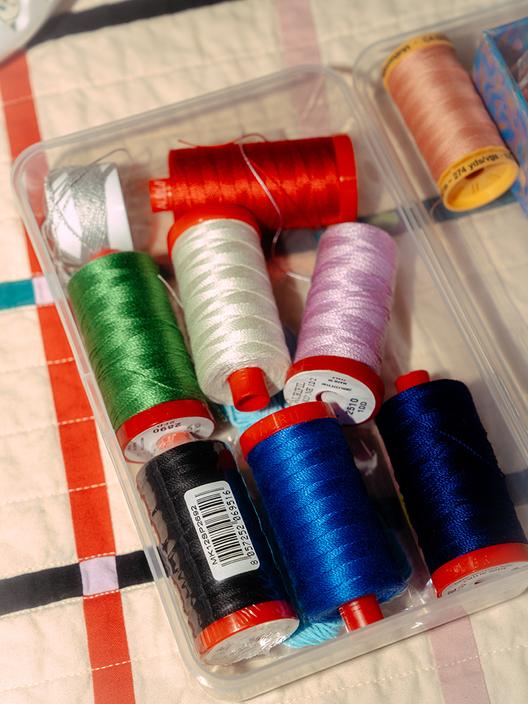


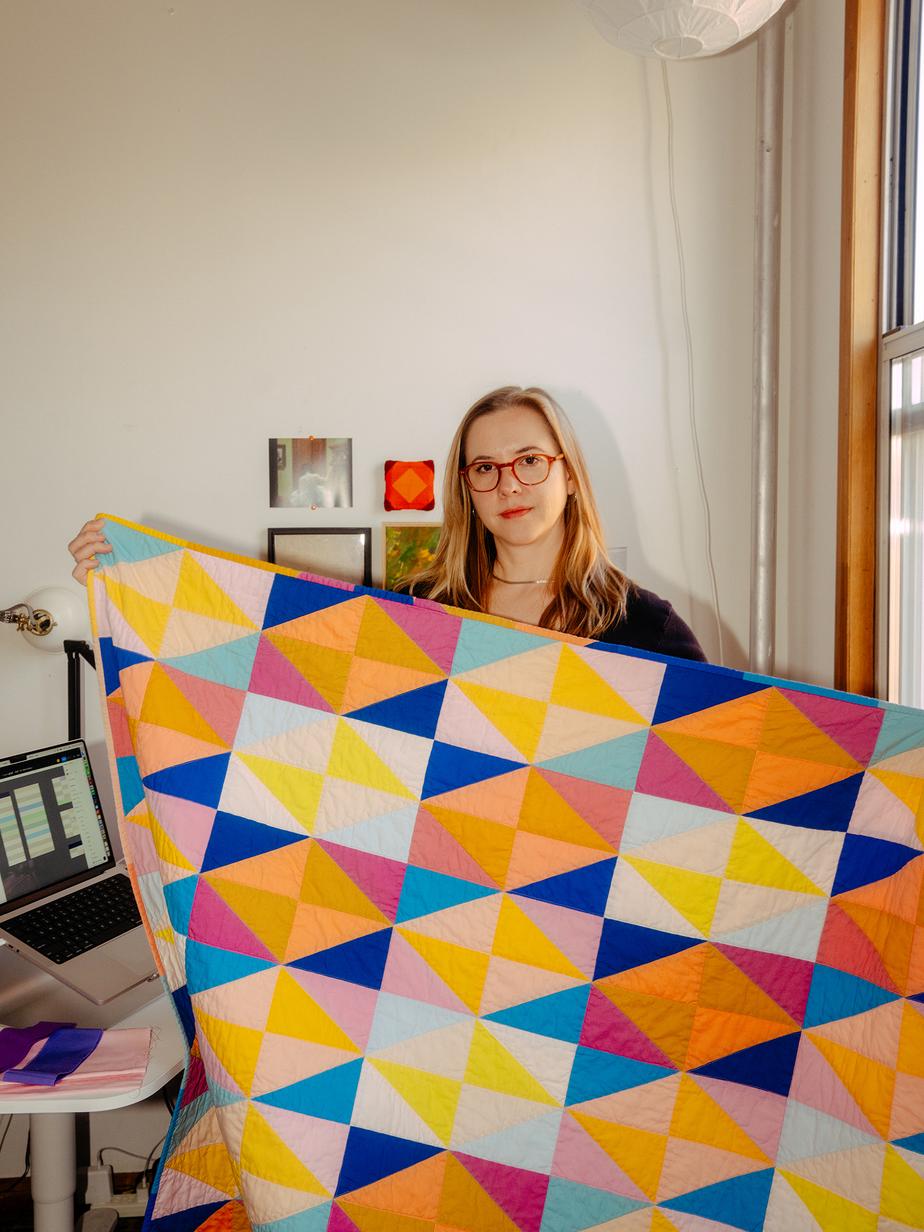
“The first quilt I made was a gift for my partner’s newborn niece, and the second one I made was for his nephew, so I’ve always thought of quilts as things I can make for others,” says Nicole. Once commissions became more regular, she began using Figma to make client presentations, too, with mockups, pricing information, and quilting styles to choose from. “I’ve considered scaling up, but that would require help and systematizing things,” she says, “and I want to keep the quilts handmade by me. So it’s a balance of art and business.”
A craft resurgence
For those who are curious about quilting, Nicole recommends Heidi Parkes’ workshops. “She’s a fantastic teacher focused on hand-stitching,” says Nicole. “She hosts free and paid classes and quilt-alongs that are beginner-friendly and introduce you to a wide range of handwork techniques.”
If you prefer to use a sewing machine, try a pattern, or learn one skill at a time, Nicole suggests checking out the blog and YouTube channel of Suzy Quilts for “a wealth of free tips and tutorials covering every imaginable step of the quilting process.”
Nicole’s not alone in craving a return to craft. That’s highlighted by the plethora of quilters online who are both reviving and pushing the boundaries of a deep-seated tradition. “I’m really inspired by the improvisational quilters who are doing the opposite of what I’m doing,” she says. “Their quilts are expressive and asymmetrical; it’s more like painting.
Want more Figma quilt content? Check out Cinder Blocks, a quilt by Jeffrey Sincich hanging in Figma’s San Francisco office, and the community quilt made by attendees at Config 2020.

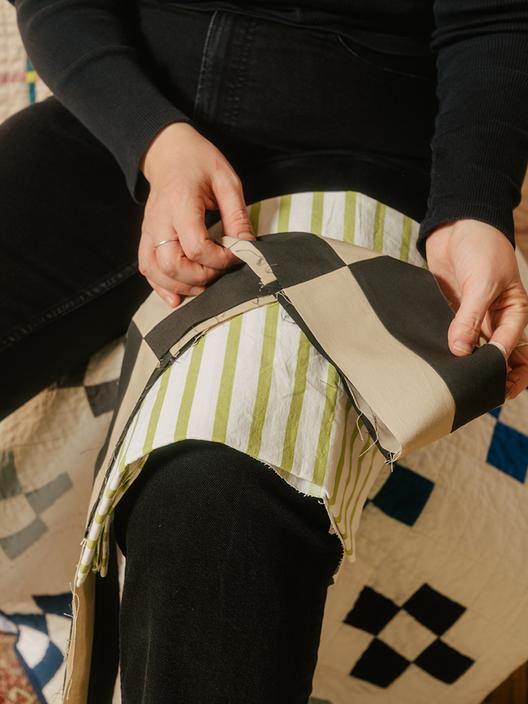
In many ways, Nicole’s transition from designing interfaces to designing quilts feels like a natural one. “Designers like to joke that our job is moving rectangles, so in some ways my life has not changed very much,” she laughs. “But the principles that make a good digital design—like symmetry and hierarchy—are the same in a physical design, so it feels very full circle.”
Want to be considered for a feature? Tell us what you’re making in Figma and FigJam!