

When net zero isn’t enough: Deepening our commitment to climate action by investing in the future


For companies of a certain size, carbon neutrality in the here and now isn’t out of reach—it’s just short-sighted. With our $500,000 investment in carbon removal via Watershed, the enterprise climate platform and marketplace, Figma ensures that vanguard technologies the future depends on will continue to scale.
Share When net zero isn’t enough: Deepening our commitment to climate action by investing in the future




In “A mental model for combating climate change,” Stripe’s Head of Climate Nan Ransohoff explains why carbon removal—a process of capturing carbon dioxide from the atmosphere and storing it in natural reservoirs like plants, soil, or oceans, or products like concrete—is essential to limit rising temperatures.
One of Figma’s core values is “grow as you go”—a principle certainly taken to heart by the founding members of Figma’s Net Zero sustainability-focused social impact group (SIG), which started as an informal Slack channel in 2021. Co-led by software engineers Silas Tsui and Noah Rowlett, Net Zero mobilizes the company in ways both big and small. In just three years, the group has steered all proceeds from the Figma Swag Store toward carbon removal credits through reforestation, led Figma to sign the Climate Pledge to reach net zero by 2040, and pre-purchased $250,000 worth of removals from Charm Industrial—a company that turns agricultural waste into bio-oil.
In addition to measuring carbon footprint, Watershed helps companies prepare and file climate disclosures and reduce their emissions from an operational standpoint. The Watershed Marketplace allows organizations to develop bespoke portfolios of highly vetted carbon removals, and manages credit purchasing from end to end.
This year, the Net Zero SIG has spearheaded Figma’s biggest investment in sustainability ever with a $500,000 purchase in carbon removal credits through Watershed. An enterprise sustainability platform, Watershed helps companies measure their carbon footprint and invest in high-quality decarbonization projects through its Marketplace. Figma’s portfolio spans eight cutting-edge technologies that approach carbon removal in different ways. If you’ve never heard of bio-oil sequestration or enhanced rock weathering, don’t worry—we’ve got you. We grabbed Silas and Noah to talk about how these solutions work, why it’s important to invest in emerging technologies, and why committing to action is the only way forward.
Silas, you’ve been involved with the SIG from the very beginning. How did it grow out of the original Slack group?
A carbon footprint estimates the volume of greenhouse gas emissions caused by a person, organization, or product. It’s typically measured in tons of effective carbon dioxide.
One thing that was really key for the Net Zero SIG building and maintaining momentum was having concrete goals to work toward: Though none of us had formal backgrounds in sustainability, we started by evaluating different vendors to help measure our carbon footprint. That really grounded us because we had this goal, and we were meeting every week to share our progress, which was quite often for a grassroots interest group.
It was really nice that leadership was supportive, and trusted that we had done our due diligence. So after months of research, we partnered with Watershed to evaluate our first footprint. Once we dove in and understood the baseline, the next step was like, “Okay, how do we interpret this?” That helped us evolve our sustainability program and get to the next milestone.
What was the next milestone?
A Net Zero timeline
January 2021: A group forms to discuss how to create a sustainability initiative at Figma.
April 2021: After evaluating a number of carbon accounting vendors, the group commits to Watershed’s sustainability platform, which includes carbon accounting.
July 2021: The group receives Figma’s carbon footprint for 2019.
September 2021: The group commits to investing in carbon removal projects each year based on the company’s annual footprint. Figma purchases carbon removal credits through Watershed’s marketplace, investing in projects like Charm Industrial, to be net zero for 2020.
March 2022: To offset the company’s 2021 footprint, Figma pre-purchases $250,000 of removals through Charm Industrial.
June 2022: Figma signs the Climate Pledge to become net zero by 2040.
July 2022: The group becomes an official SIG called Net Zero.
October 2023: Net Zero invests $500,000 in cutting-edge decarbonization projects through Watershed, keeping Charm Industrial part of its portfolio.
After we got our footprint, we learned that there are two things people do to reach net zero. One is to reduce emissions within your company, and two is to invest in decarbonization or carbon removal projects. Given that reduction planning requires technical expertise—and we were still relatively small and scrappy with about 200 employees—we focused on removals. We realized, “Wow, our footprint is actually pretty small. We could be net zero this first year.”

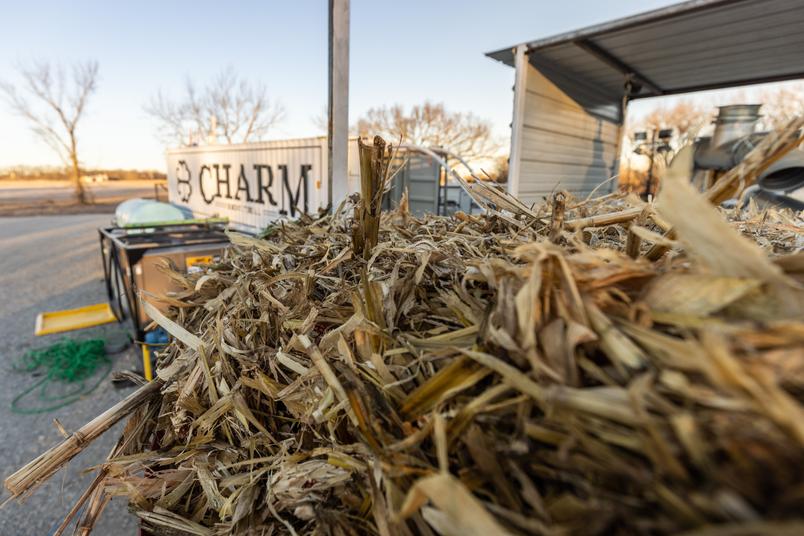
When we presented our plan to leadership, the dollar amount to be net zero was relatively low—less than $100,000, which is where we set our budget. With the remainder, we started looking into cutting-edge technologies that are a bit more expensive due to being nascent, but we felt were important to invest in. In the end, Charm Industrial was our pick. We only purchased 20 tons of carbon removal through the Watershed marketplace, but this is where we started developing a philosophy that we should spend these dollars toward something impactful that scales well, meaning the cost decreases while volume increases. The cost of one ton was $600, but according to their materials and their path to scalability, in five years this could be on the order of low hundreds of dollars, and in 20 years, it could be less than $50.
So in its first year, Net Zero removed 100% of Figma’s emissions from the year before, and that was done through Watershed. Tell us more about how the platform works, and how they’ve helped us scale our impact.
Watershed is an all-in-one platform for companies to start and manage sustainability programs. There are basically three parts to a climate program—measuring, reporting, and acting, which includes reduction planning and removals. Watershed’s software platform makes it easy for a company to do all that and includes their Marketplace with carbon removal and clean power projects vetted for quality, impact, and climate risk. Similar to how Figma has grown, Watershed has grown, too. We’ve been bought in on their vision from their early days even when competitors offered a deeper feature set.
Watershed allows a relatively lean organization like ours to more easily vet these projects. They have their own Science Advisory Board of PhDs who know every single aspect of carbon removal.
We said to Praveer [Melwani, Figma’s Chief Financial Officer], “We think our spend in removals should scale with our company revenue.”
Nature-based solutions involve protecting, restoring, and creating healthy ecosystems that can both minimize emissions and boost carbon uptake. Examples include replanting native forests, restoring a coral reef, or creating green roofs in cities.
I think net zero is going to be the status quo for companies in the future. And given that we were small, we wanted to take advantage and build that muscle early on. “This is what we’re going to spend, and this is how we’re going to do business.” If we wanted to be net zero via nature-based carbon removal solutions, which are cheaper but less durable than permanent carbon removal initiatives, we could do that today. Instead, we’re planning for the future. Being small is helpful. If we hadn’t started this program three years ago, it would be quite hard to be like, “Yeah, we want to start this thing. We need half a million dollars.”
Looking at the portfolio of eight companies we’ve chosen, it’s clear that some of these technologies—bio oil sequestration, direct ocean capture, mineralization in concrete—are pretty esoteric. How did you begin to make sense of them?
Similar to charcoal, biochar is a stable form of carbon made by burning organic material waste like corn husks, wood chips, or manure (also known as biomass). Charm Industrial uses a process called “fast pyrolysis” to convert biomass into biochar and bio-oil, the latter of which is injected deep underground in bio-oil sequestration.
You’re exactly right. These are esoteric, complicated, physics- and chemistry-dependent processes that people are leveraging. Silas and I read articles, listened to podcasts, and watched YouTube videos, really leaning on experts who can explain the science. That technical deep dive was very important in constructing a portfolio that was diverse in terms of methods for tackling climate change.
Touring the facilities in person really took our education to the next level. In my second week at Figma, Praveer, Silas, and Dev [Akhawe, Security Director], and I took an Uber to Charm Industrial in San Francisco. Here’s this person walking us around the facility telling us in extremely fine-grained terms what it means to produce bio-oil, what their machine is doing, and what they’re planning for the next year, the next five years.
One other thing I’d add is getting to tour some of these companies in person helps a lot with demystifying the process. When you hear the words “bio oil sequestration”—
It makes me want to go to sleep.
Yeah, what does that even mean? But when we toured Charm, you could really see what they’re doing. It’s like, “Okay, this is a corn husk, and we turn it into this oil, and then we inject it deep into the ground.” I think seeing that a few times helps us dive in with a little more confidence. Although there are lots of different pathways, at the end of the day, you’re taking carbon from one place and putting it somewhere else.
I’m really happy with the portfolio we put together this year. We have eight projects with four different pathways. We have nature-based solutions with trees, solutions with concrete, with ocean and algae. For a long time, carbon removal was synonymous with direct air capture. Now it can be so much more.
Once you’d done the research, how did you go about actually building the portfolio and allocating the budget?
We essentially looped in all of Figma and said, “Hey, come build this portfolio with us.” So we gave people the list of all the projects that were on Watershed, and said, “If you had $100K, how would you allocate it? Which things are appealing to you?” A lot of these projects have co-benefits besides the carbon removed. They do some good for the community, and that might be creating jobs or reducing wildfire risk. It was really nice to have all these other Figmates engage and learn about this together.
On a more concrete level, cost is a consideration. We went in thinking, this is roughly the average cost per ton we want to hit, and there’s some delivery risk with every project. So we wanted a blend of projects that were early stage and projects that were slightly further along to keep things more balanced.
We wanted to bring in the community. I think a lot of people feel that the climate crisis is too big, too hard, too overwhelming. This is part of an effort to break it down. Taking a piece to learn about is a great way to start building up your vocabulary and understanding, and your underlying confidence that we can do something about it.
I think a lot of people feel that the climate crisis is too big, too hard, too overwhelming. This is part of an effort to break it down.
Are there any other exciting technologies you’d like to call out?
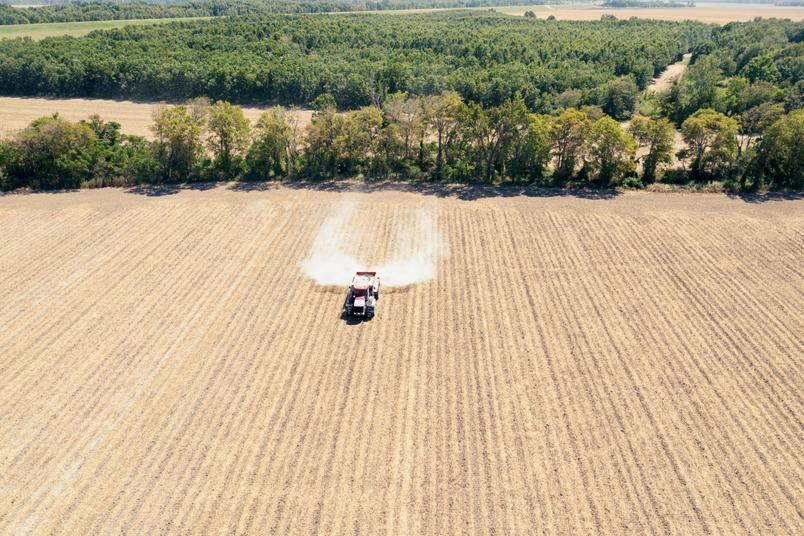
I’ve become a huge nerd about enhanced rock weathering (ERW). In a nutshell, a company called Eion breaks down a mineral rock and applies the nutrient-dense rock powder to fields, reducing the need for fertilizers. When rain or irrigation water interacts with the minerals, it starts a chemical reaction that sequesters carbon. The process, called rock mineralization, is a natural cycle that sequesters carbon for thousands—if not tens or hundreds of thousands—of years. Eion just speeds it up by crushing the rock and getting it to cropland. It’s a form of permanent, high-durability carbon removal, and it can work on a scale much greater than if you were planting a trillion trees, to to speak.

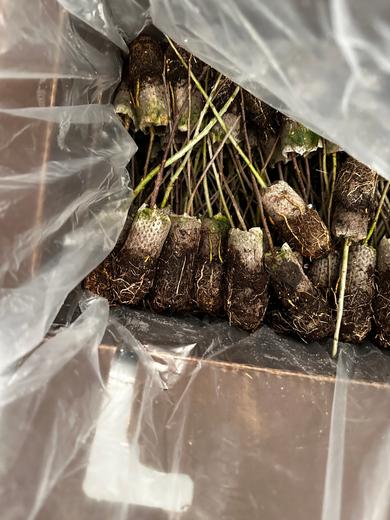

With a lot of these pathways, you can mix and match. What I mean by that is in talking to Living Carbon, we learned that for some of their projects they’re planning to deploy both their supercharged trees with enhanced photosynthesis and enhanced rock weathering on one site. These trees extract more carbon from the air, while spreading basalt helps deacidify soils and increases carbon yield using the same land. I’ve realized that none of these are really solutions in a vacuum. The learnings compound, so the more people working in this space, the better.
None of these are really solutions in a vacuum. The learnings compound, so the more people working in this space, the better.
Carbon credits have “vintages.” Can you explain what that means?
The vintage of a carbon credit is kind of what you’d expect with wine. It refers to the year that the carbon has been removed. The interesting thing about carbon removal markets right now is that there are a lot of early-stage technologies that are still in the process of being scaled up. These companies have a promising proof of concept, but they’re still iterating and learning, so they have relatively low volume overall. Right now, there are a lot of people interested in buying carbon removals, so many purchasers are buying them for dates well into the future.
Another thing that’s helpful with this kind of structure is that it ensures that startups know they’re going to survive. They know that they have this many years to make something work, and that incentivizes more people to enter this space.
We’re investing in the future of these companies in a real way. We could just do the fast and easy work and say we’re going to be net zero and buy low-durability, low-quality carbon removal, but instead we’re saying, “Hey, we believe in this company.” I think that ties directly with a lot of Figma’s ethos of celebrating innovative solutions.
What has co-leading Net Zero taught you about mobilizing for climate in a company, and do you have advice for people wanting to do the same?
We’ve learned the challenges of building something as we go—and keeping stakeholders clued in along the way. It’s a bit of a tricky dance to make sure that we’re dedicating time to not just working with Watershed, measuring our footprint, and building this portfolio, but also engaging the community as well. It’s very human to want to feel empowered against an existential threat, so I think where we’ve seen the most positive response is when we’ve positioned issues around sustainability as a collective learning opportunity. We’ve learned the power of flipping it from “look at all of these things that are going wrong” to “let’s figure this out and learn together.”
An initial curiosity drove us to educate ourselves, ask the hard questions, and push for change in a bottom-up way. I’m proud of what we’ve accomplished so far and am excited to see our efforts continue to scale.
My advice to other companies that are considering their own sustainability plans: Start now. You don’t have to hit a certain milestone—such as headcount, annual recurring revenue, or a key sustainability hire—to start thinking about your impact. If anything, an early blueprint is helpful to have as a north star, and you can always modify your plans as you grow.
Does working on this program make you feel more optimistic about the future?
I feel way more optimistic today. Being in an organization where Net Zero is so supported gives me so much hope. We’re at a time where there’s so much more information available, and so much more energy. I think we’re coming out of this pit of existential dread, at least here in the U.S. There are so many voices saying, “Take your slice of what you're good at, what you're interested in, and what needs doing.” There’s a world of problems, but there’s also a world of possibilities.