

Building a digital-first future for every student



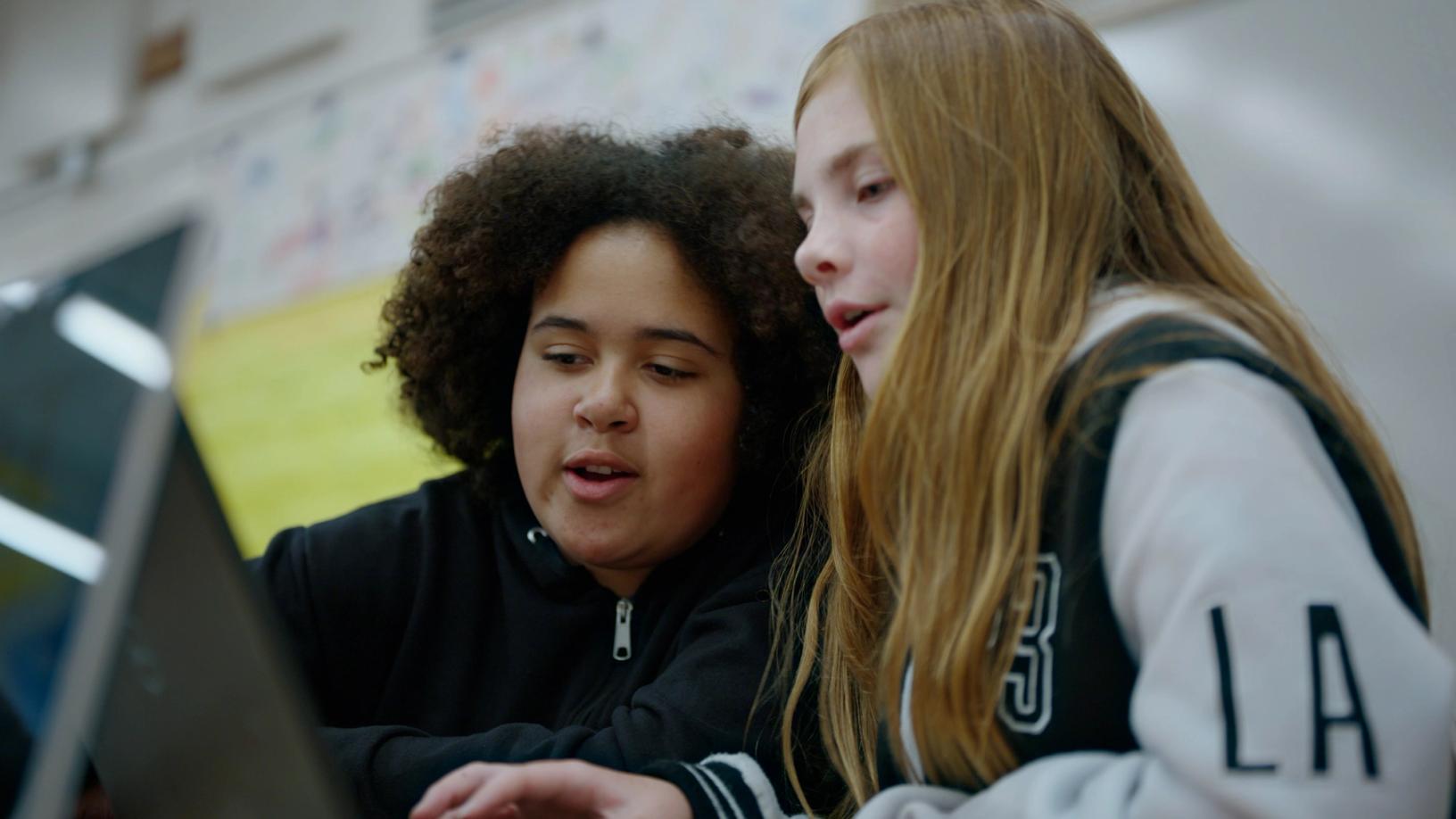
After a year of exponential growth and a successful beta, Figma and Google for Education are doubling down on the promise of bringing design and technology tooling on Chromebooks to K12 students across the US and Japan.
Share Building a digital-first future for every student
Bringing Figma to even more classrooms
Last year, we announced a first-of-its-kind beta program with Google for Education to give free access to Figma and FigJam on Chromebooks at select US high schools. We worked with 50 districts across the US—from large urban districts like Portland Oregon Public School to smaller rural districts like Ferris ISD in Texas—and everything in between.
We knew giving students access to industry-standard design software would help them build foundational skills for the future—learning how to problem solve, think iteratively, collaborate with others, and build empathy. But we also had another hypothesis: By bringing Figma’s infinite canvas and design tooling to Chromebooks, students could engage more deeply with their work and more effectively demonstrate what they know visually—bringing together diagrams, images, mind maps, videos, and more in one place for visual storytelling.
Today, we are excited to take another step forward in this journey by opening up free Figma access to all K-12 districts across the US. Now, any educator and school leader can bring Figma to their districts and classrooms at figma.com/education/chromebooks.
As we make Figma generally available, we’re also expanding access to students of all ages. Even the youngest students will be able to make their ideas come to life with Figma on their Chromebooks. Additionally, K12 districts can now receive free access to Figma Enterprise, our most powerful and feature-rich tier. This is engineered from the ground up for school administrators and educators to have maximum control and visibility into their Figma environment to support class management and student safety. Lastly, we’re expanding our Chromebook partnership globally, beginning with Google schools in Japan, in an effort to answer the call from teachers around the world who want to be part of this program.


The promise of Figma in a K12 classroom
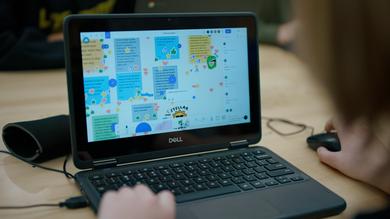
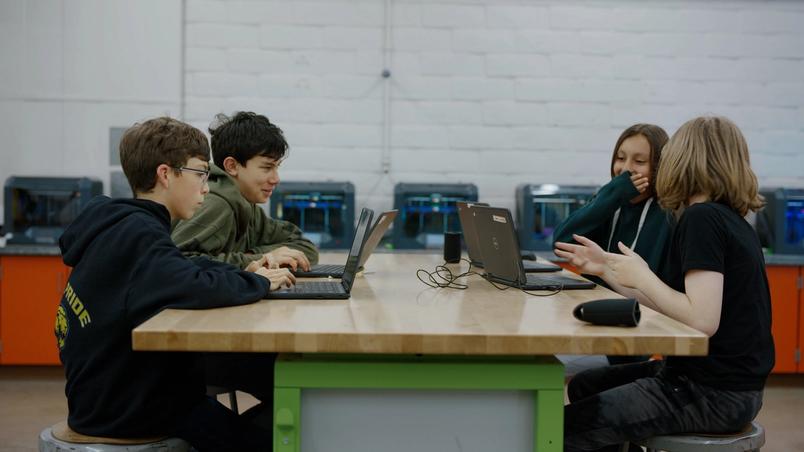
Educators and students took our tools to incredible places during this beta. Students created a breadth of dynamic projects in Figma—from dreaming up design concepts to support nonprofits, to building app prototypes to improve local government services. With FigJam, educators were able to re-imagine their classrooms and curriculums to be more interactive and engaging. From lesson plans, to group work, to study guides, FigJam became the place where teachers and students could come together to create their own unique relationship to learning.
But beyond the impressive projects and prototypes, we were even more excited to see the interpersonal impact: Figma and FigJam transformed the culture of classrooms, students’ sense of connection and belonging.
Elevating student voices, building community, and celebrating differences
“I've seen students absolutely transform over the last couple of months.” says David Curran, a STEAM teacher in San Luis Obispo, CA. “Some entered my class a little quiet, a little shy. But being able to vocalize and represent themselves in Figma and FigJam’s digital spaces has allowed them to become more comfortable, more confident and more excited to engage verbally with their peers. Using Figma in my classroom has allowed students who maybe once saw themselves as just participants, become leaders in the class."
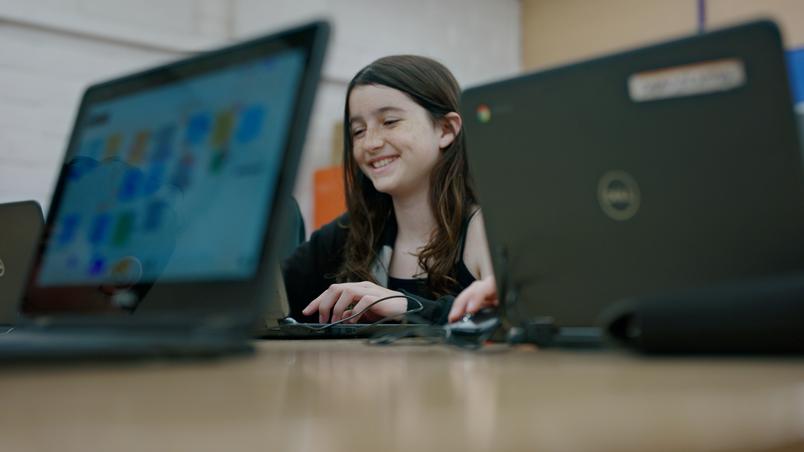
Through stickies, high-fives, emotes, comments, and more, bringing Figma and FigJam into the classroom helped even the most introverted students feel more free to contribute and express themselves. Teachers have told us Figma’s dynamic, bidirectional format helped students who are “hungry for connection after years of remote learning,” often nurturing small digital connections into real, in-person friendships.
This experience of connection and confidence is particularly powerful for neurodiverse students, who don’t always feel comfortable demonstrating their ideas with traditional tools. Figma helps make their work visible in a safe, supportive space.
As Meredith Greene, a special education teacher in Newton Public Schools in Massachusetts said, “In working with students diagnosed with moderate to severe autism, FigJam has emerged as an invaluable tool. FigJam's impact has been so profound that even my non-verbal autistic students are actively improving social skills, executive functioning, self-regulation, and collaboration. FigJam's adaptability and accessibility are truly revolutionizing learning experiences, helping all students reach their full potential.”
Fostering more engaged, future-ready students
Teachers have also shared that the visual nature of Figma helps students engage with material in a modern and fun way. As Libby Griffin, a Technology teacher at Anaheim High School says, “Now that we use Figma, my students are so much more excited to learn and come to class. Some of them even work on Figma side projects at home just because they love to see their ideas come to life.” Rather than relying on traditional assessment types, students can truly make their learning visual with projects like infographics, storyboards, and prototypes. Figma acts as a dynamic sandbox where students can build their own understanding of the world around them in a way that is truly their own.
In some cases, teachers have even told us that students who were once disengaged in traditional classes have found a new sense of purpose with Figma, rediscovering a passion for learning by connecting with design, and feeling invigorated by the prospect of a future working in design and technology. Perhaps for the first time, they feel they’ve “found the thing” they were meant to do. As Margaret Powers, Director of Curriculum & Learning Innovation at The Agnes School in Philadelphia says, “We don’t prepare students in schools in the ways that authentically happen out in the world. But by introducing them early on to tools like Figma and FigJam, we can shift how students interact and help prepare them for the future, no matter what it holds.”

A vision for what’s next
During the course of our beta, AI has shaken up education as we know it. When students have tools like ChatGPT on their phones, writing an essay doesn’t have the same utility, and many educators are left wondering what the future of assessments will look like. Teachers have told us AI is inherently challenging because it “obfuscates what a student truly knows and how they got there”. In contrast to passively prompting ChatGPT, when students create in Figma and FigJam, they actively assemble a mix of media to draw connections and articulate their mastery in a way that is uniquely human and personal.
As computers and AI continue to improve their text outputs, one area where students can lean in is visual storytelling—bringing together diagrams, images, mind maps, and more to draw deeper connections between topics. If we empower students to make their learning visual, we connect them to the deepest of human traditions. We also give them the skills they’ll need no matter what the age of AI brings—problem solving, communication, collaboration, iterative thinking—while also helping them transcend the transactional elements of AI in school.
The Figma for Education team is just getting started. We’re committed to reaching more schools and bringing the power of design to every student. The innovators that will shape our future are in our classrooms today. We’re humbled to be a part of their journey, and we can’t wait to see what they’ll build next.