
Meet the maker: Kelsey Fairhurst’s irresistibly bold flatware



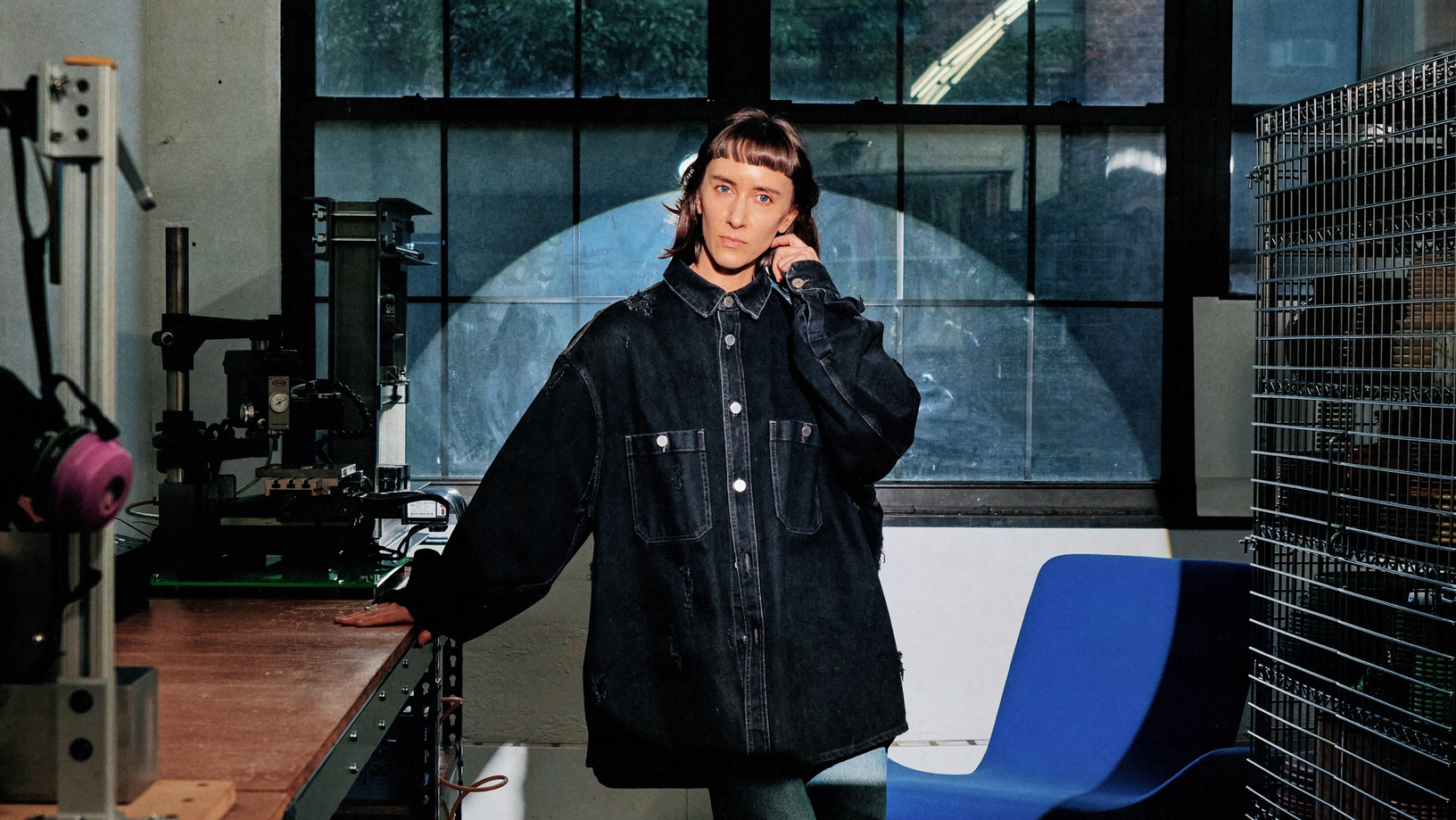
Brooklyn-based designer Kelsey Fairhurst launched Forks Plus, a “softline brutalist” flatware brand, with the help of Figma.
Share Meet the maker: Kelsey Fairhurst’s irresistibly bold flatware
Photography and video by Luca Venter
It all started with a train ride. In 2019, creative director and designer Kelsey Fairhurst was on her way from Brooklyn to New Haven to visit her partner when she decided she needed a travel fork for lunch—one with a removable cover. Back home in her makerspace, she laser cut a fork from a purple acrylic sheet. “I got addicted,” says Kelsey. “It gave me so much energy to use something physical to make something physical.”
Kelsey, who curates midcentury dishware under the banner of dishware.nyc, has always been drawn to bistro-style flatware.
A computer numerical control (CNC) machine is guided by pre-programmed software to cut, shape, and form materials with high precision.
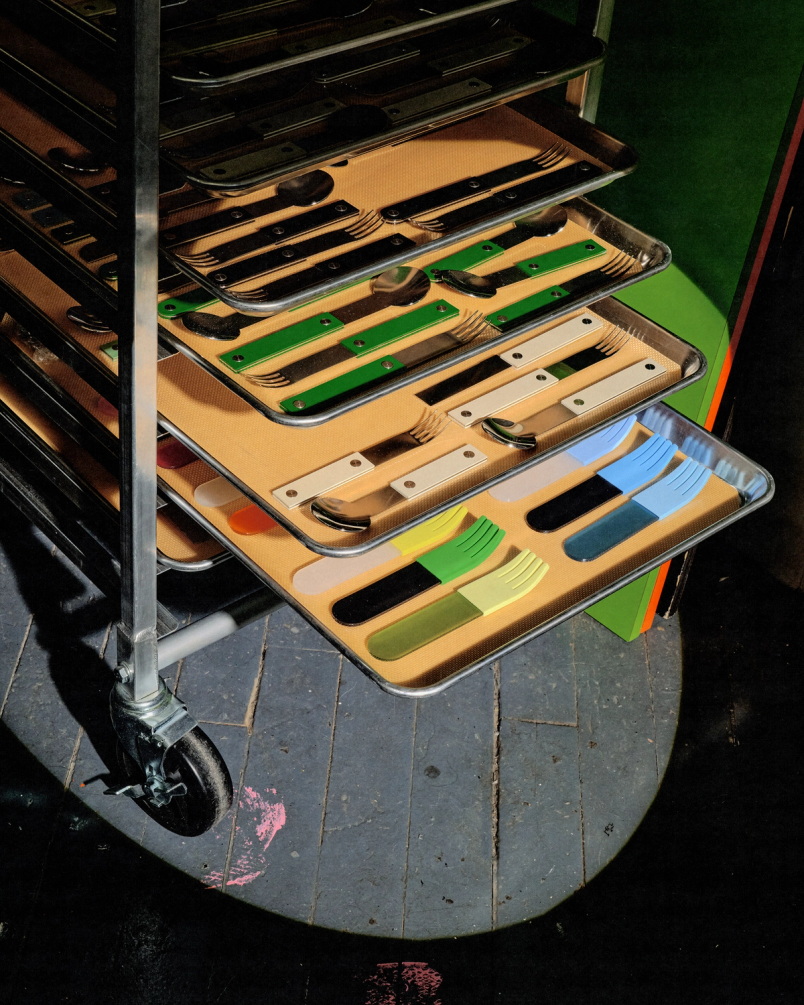
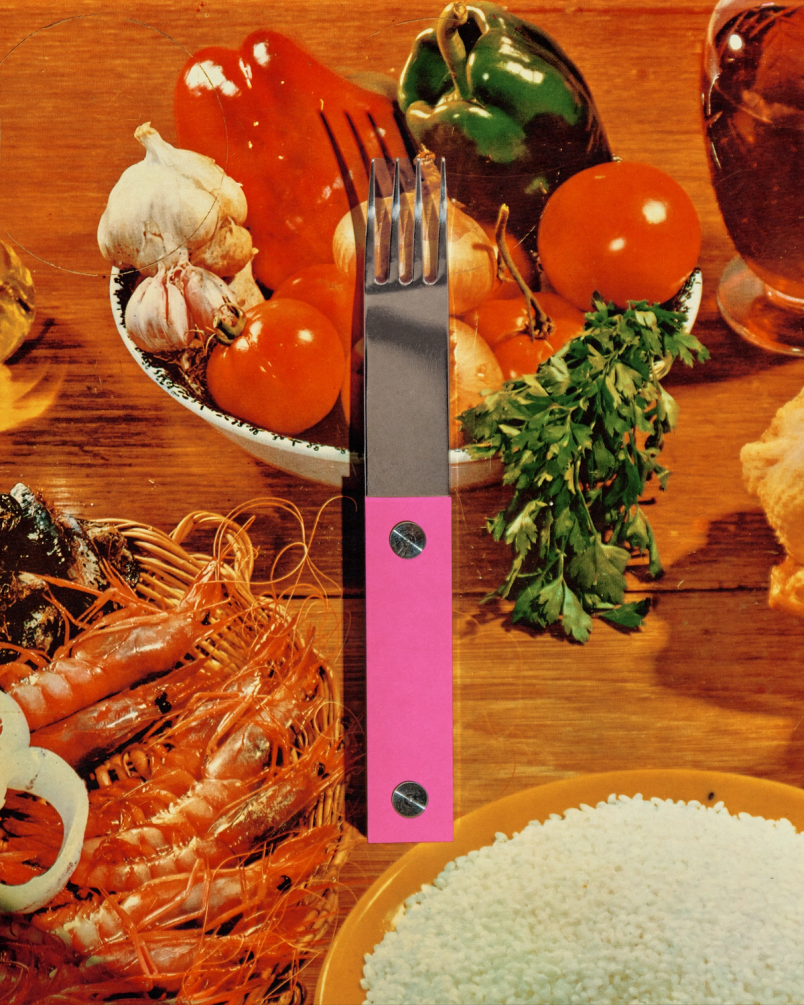
That energy sent Kelsey down a rabbit hole of learning how to produce her own “softline brutalist,” stainless steel flatware under the banner of Forks Plus: Think sculptural silhouettes, exaggerated hardware, and colorful handles. When it comes to the digital side of the business, Kelsey uses Figma to design her web, email, and social media marketing materials. This, too, is its own tactile process. “There’s a hands-on feel within the program that I haven’t found with others, which is how I work best,” she says. From programming CNC machines, to counterboring rivets, to working with manufacturers in her home state of Ohio, here’s how Kelsey brought Forks Plus to life.


From prototype to production runs
Building a prototype is one thing; building up a business is another. With only one flatware manufacturer left in the U.S., Kelsey was left to figure out how to produce on a much smaller scale. As any self-starter might, she turned to the internet for answers. “A lot of how I got where I am came from Googling for a year straight, from how to approach a technique to who I should contact,” she says. She started cold-emailing machinists, powder-coating factories, and other facilities who could handle what she couldn’t in-house. Eventually came a stroke of luck: a response from Garry Yarowski, whose shop, Servo Products, is minutes away from Kelsey’s aunt’s house in Cleveland. “When he learned about what I was doing, he took me under his wing,” she says.
Kelsey made repeat trips to learn how to operate the benchtop CNC machine that Garry made for her. This included crash courses in G-code, or geometric code—the language that tells CNC machines and laser cutters how far to move, which direction to move in, and how fast to do it. Back in Brooklyn, she undertook painfully slow—and sometimes very expensive—experiments. The carbide tool she uses to counterbore rivets in the flatware handles are $300 a pop, but “if you enter the wrong code, and it falls on the wrong angle, it’ll shatter,” says Kelsey. “You have to drill .05 inches into the metal so it sits flush with the rivets. That took me two-and-a-half years to figure out.” When she started, counterboring two holes took 46 minutes. Now, it takes less than one, and she can do a batch of 250 handles a day.
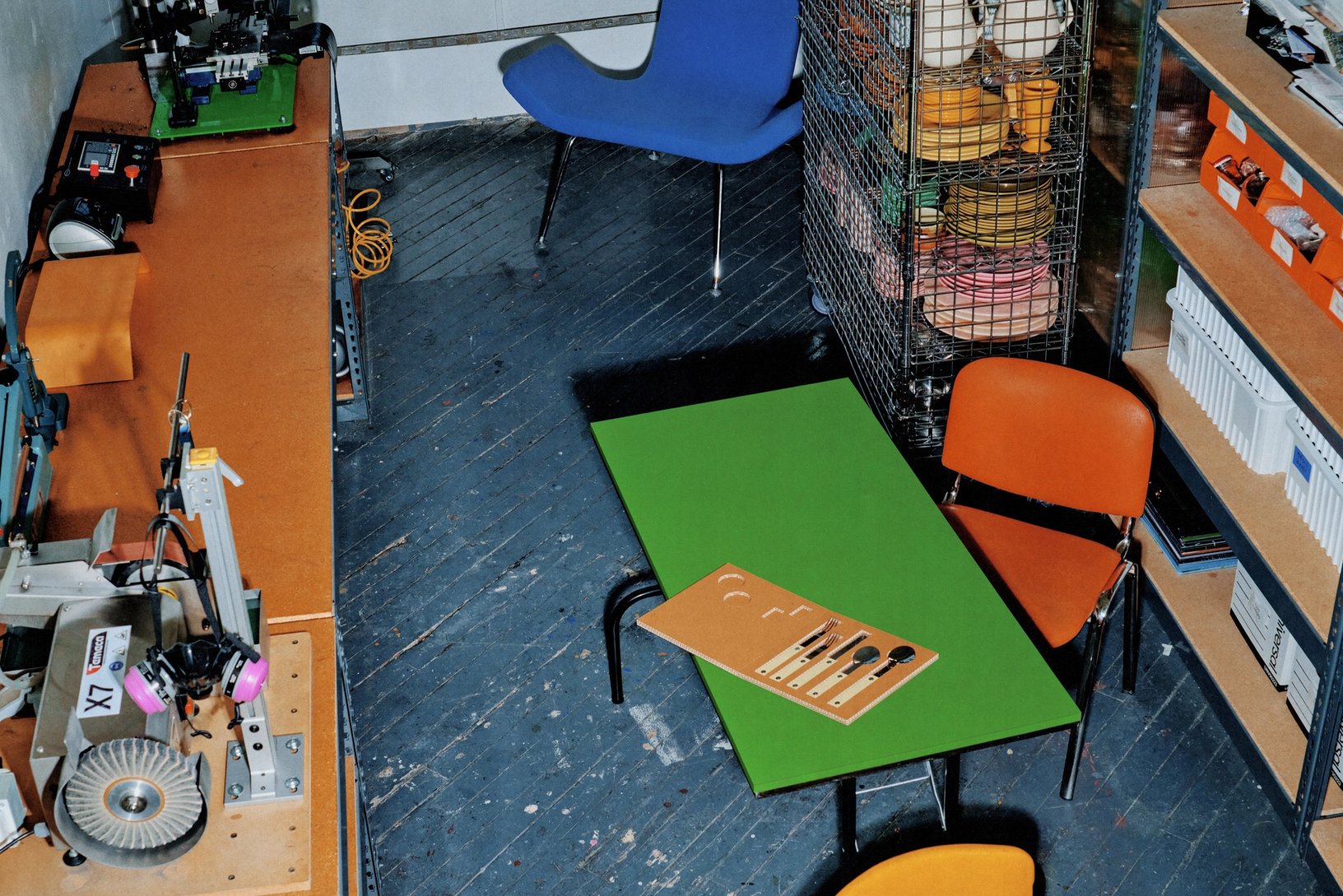
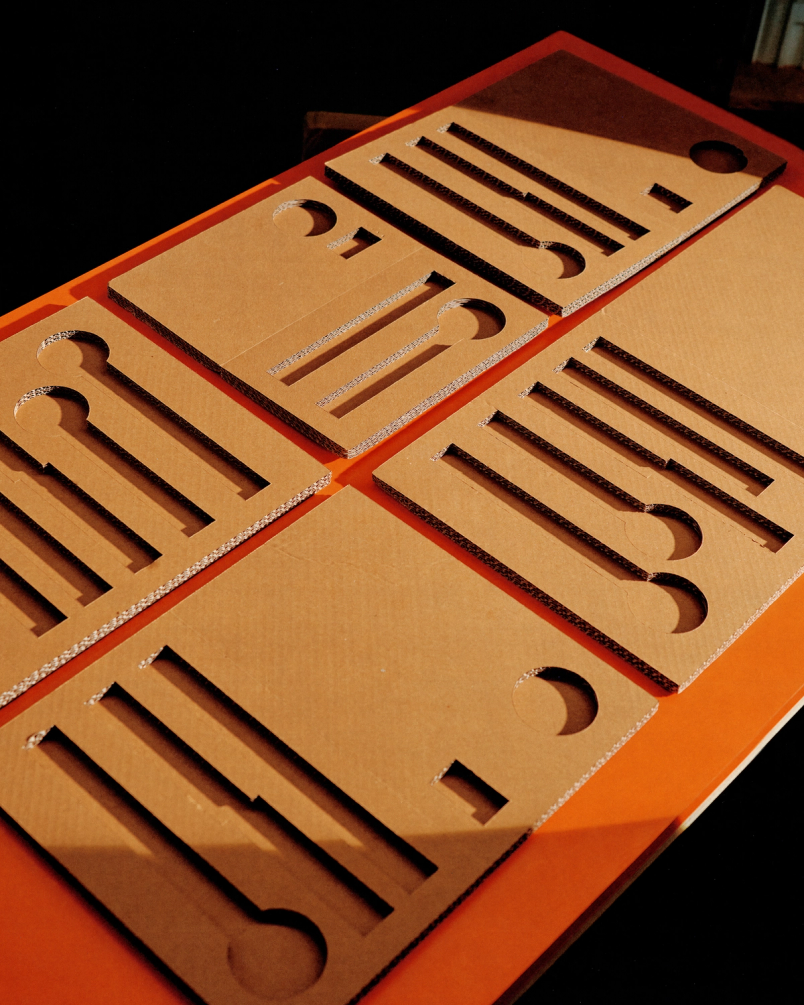
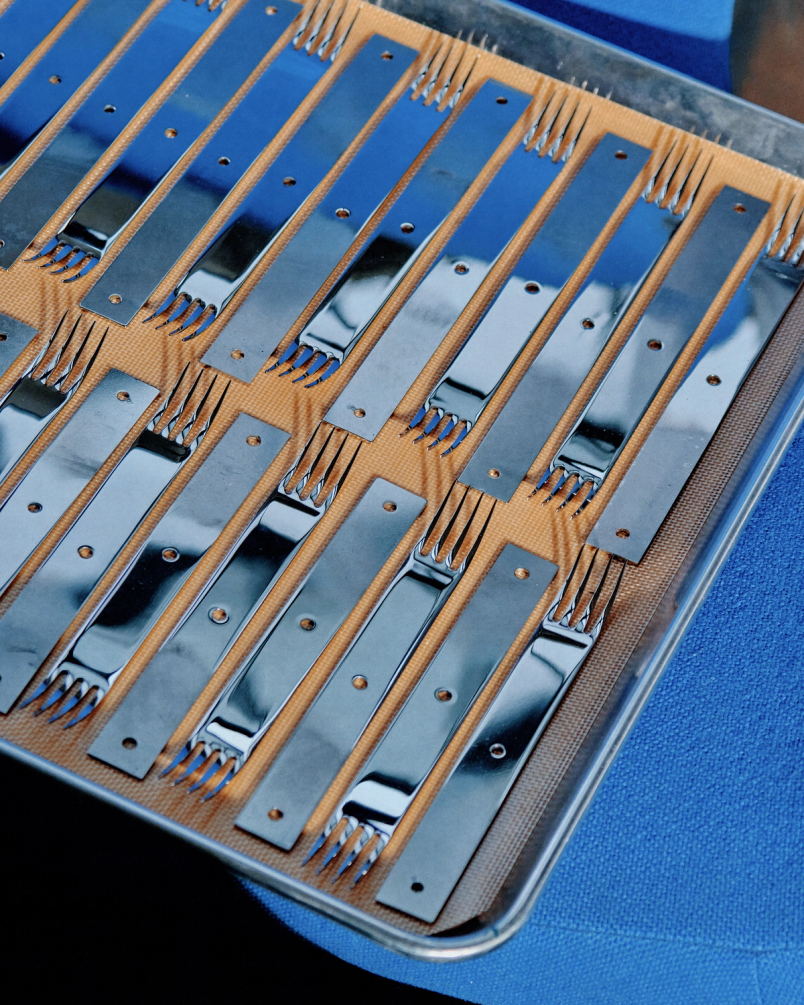
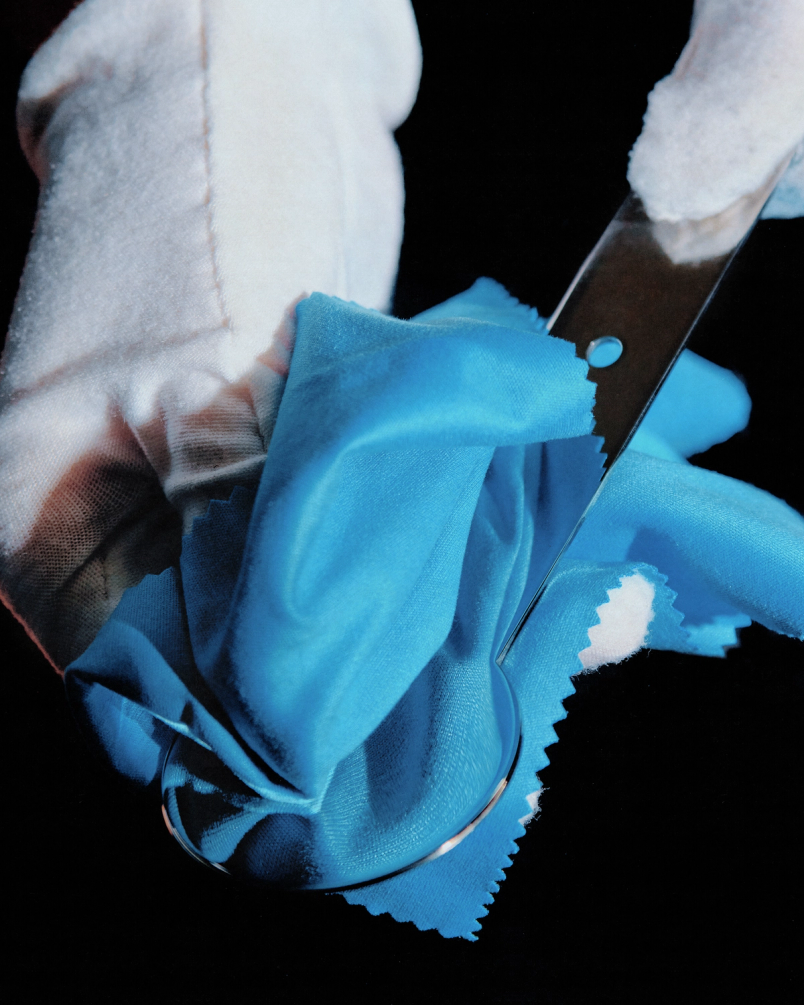
Creating the rivet counterbores, though, is just one step in the process. Kelsey’s studio has speed racks like the ones you’d find in a commercial kitchen, with trays of flatware awaiting treatment. After a factory laser cuts the blanks, Kelsey deburrs them in her studio, using a belt grinder to remove protrusions, or “tabs,” and smooth rough edges. With a hand-operated, 20-ton hydraulic press, she forms the business end of spoons and forks on dies that her partner, Bryant Wells, designed using a 3D CAD program—he also designed and built the Forks Plus website. A Spanish-designed machine creates knife serration. For other stages, like powder-coating the handles and polishing, she relies on regional partners with highly specialized equipment.
Kelsey estimates that today, at the high end, one stainless steel fork takes about 30 minutes to produce, starting with laser cutting in the Midwest and finishing with assembly in-house—a marked improvement over the early days, when counterboring rivet holes was a lengthy, harrowing ordeal alone.

Laying out a creative vision in Figma
The next challenge would be getting her flatware into the hands of buyers. Kelsey quickly realized just how critical visual design would be to Forks Plus’ success: “People respond to images first. Compelling imagery improves the whole social experience, not just ads.” Bridging production and marketing, Kelsey gravitated toward Figma’s “hands-on feel” to produce, organize, and manage assets on Instagram and later the website.



Whether planning Instagram posts, laying out her website or newsletters, or collaborating on product shoots, Kelsey uses Figma much like one might a physical moodboard. She’s able to get a bird’s eye view of thousands of quick smartphone shots and editorial images created during a production run in a file to start curating and forming layouts. “If I put this many images into another program, the file wouldn’t even open,” says Kelsey. “The speed of the program alone is a game-changer.” Unlike a physical moodboard, or designing directly in her website builder, however, Kelsey can iterate ad infinitum with little friction in Figma.

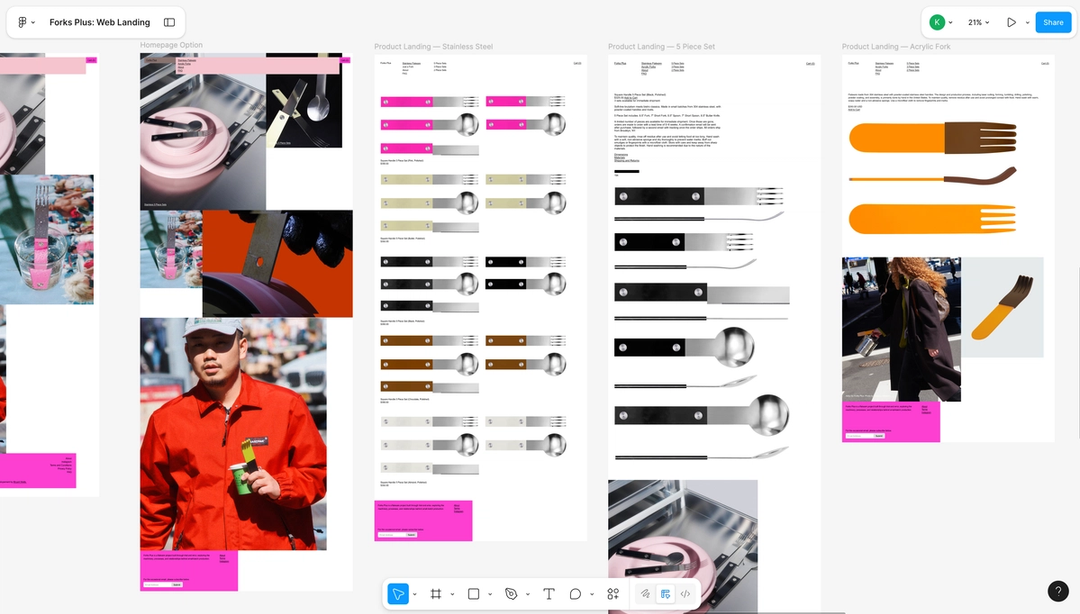
The Forks Plus website is a collage of editorial, product, and process imagery. Being able to quickly iterate on layouts for each page in Figma is instrumental to finding the right mix and arrangement of assets. “Instead of doing this live on the site, it’s so much easier to map out my scale here and figure out the flow,” she says. A file for planning Instagram works in a similar way. Off to one side are a bank of images she can pull into a grid to mock up how her feed will appear. Stepping back using Figma’s infinite canvas helps. “I need to be able to have that zoomed out lens to curate a flow of images,” she says. High-level brand notes off to another side provide a quick guide for selecting images.
Figma helps Kelsey develop ideas in collaboration with photographers. Within a file, Kelsey moodboards by dropping in images that telegraph a vibe, creating a starting point for conversations around art direction. She and a photographer can then leave comments back and forth, getting granular by homing in on an image’s details before stepping back again to see the bigger picture. “You can’t do that in email,” says Kelsey. “Figma has a secret sauce that other programs can’t duplicate.”
Telling her own story
With the production and creative processes feeling streamlined, Kelsey is now working on organizing Forks Plus’ origin story: the making of that first lunch fork, the acrylic “situation” she would eat lunch with on the train up to New Haven. “This is where Figma really comes into play,” she says, “because I have over 10 albums on my phone of the process from the start until now.” A file dedicated to chronicling her journey shows a long flow of images stacked three wide—“but even what I’m showing you now, I cut out 85%,” says Kelsey. The rollout of her maker’s journey will also come with a video component; in another tab in that file, clips shot on Super 8 are arranged in rows, forming a storyboard that she and a collaborator can riff on and hone.


The business side of Forks Plus is becoming more of a focus, too. Expanding the flatware lineup is part of that, potentially with coffee spoons and serving utensils. So are recent conversations around wholesaling acrylic forks in Korea. “It’s just a different beast now because I’m trying to build something that can sustain me and work with wholesalers to extend my reach. It would be nice to make this a career that I can feed myself with,” says Kelsey. When the time comes, good flatware won’t be hard to find.

Explore Software Is Culture, a collection of stories tracing the impact of design on how we think, feel, and connect.