Figma on Figma: Evolving our visual language

Figma’s visual identity has gotten a bold refresh. From playful primitives to a vibrant new palette, we’re unveiling our latest brand evolution—one that speaks to all product builders.

Share Figma on Figma: Evolving our visual language

Over the past decade, Figma has grown from a tool primarily for designers to an ecosystem supporting developers, product managers, and entire product teams. As we’ve expanded beyond our singular design focus, we recognized the need to move past a visual language rooted in vector vernacular—the static cursors and heavy black outlines that defined our brand for the past five years. We wanted our new identity to reflect the many hands involved in crafting the journey from imagination to reality.

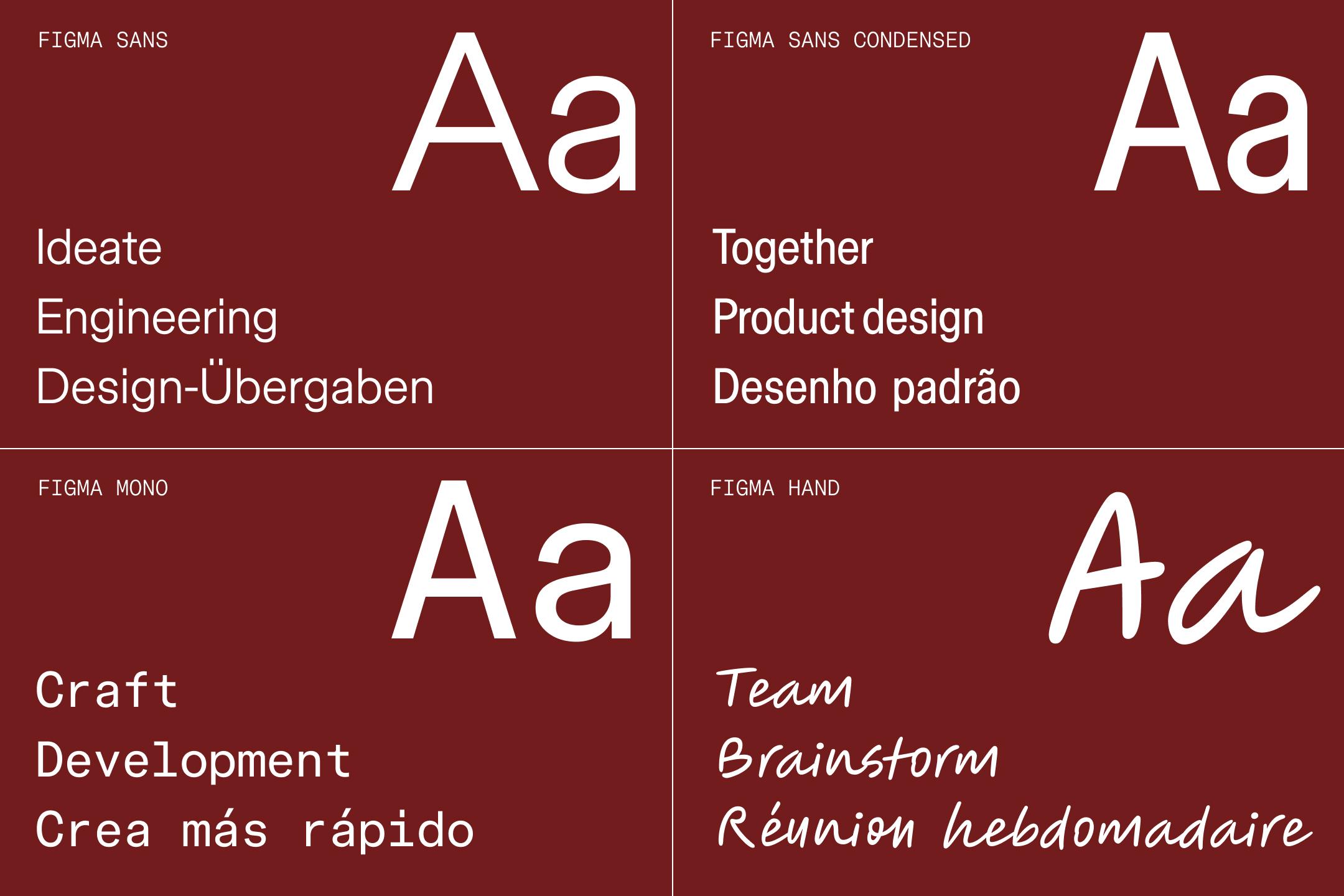
A graphic displaying Figma's custom typefaces. The image is divided into four sections, each showing a different Figma font with the letters 'Aa' in white on a maroon background. The top left section showcases 'Figma Sans' with the words 'Ideate', 'Engineering', and 'Design-Übergaben.' The top right section features 'Figma Sans Condense' with the words 'Together', 'Product design', and 'Desenho padrão.' The bottom left section shows 'Figma Mono' with the words 'Craft', 'Development', and 'Crea más rápido.' The bottom right section displays 'Figma Hand' with the words 'Team', 'Brainstorm', and 'Réunion hebdomadaire' in a handwritten style.A graphic displaying Figma's custom typefaces. The image is divided into four sections, each showing a different Figma font with the letters 'Aa' in white on a maroon background. The top left section showcases 'Figma Sans' with the words 'Ideate', 'Engineering', and 'Design-Übergaben.' The top right section features 'Figma Sans Condense' with the words 'Together', 'Product design', and 'Desenho padrão.' The bottom left section shows 'Figma Mono' with the words 'Craft', 'Development', and 'Crea más rápido.' The bottom right section displays 'Figma Hand' with the words 'Team', 'Brainstorm', and 'Réunion hebdomadaire' in a handwritten style.

We partnered with Grilli Type to create Figma Sans, an opinionated grotesque. In addition to Figma Sans, our brand includes three other fonts: Figma Condensed, Figma Mono, and Figma Hand by OH no Type.

We focused our refreshed brand around four key foundations:

  • Versatile primitives representing the various individuals involved in co-creation
  • Dynamic compositions reflecting varied modes of making and building
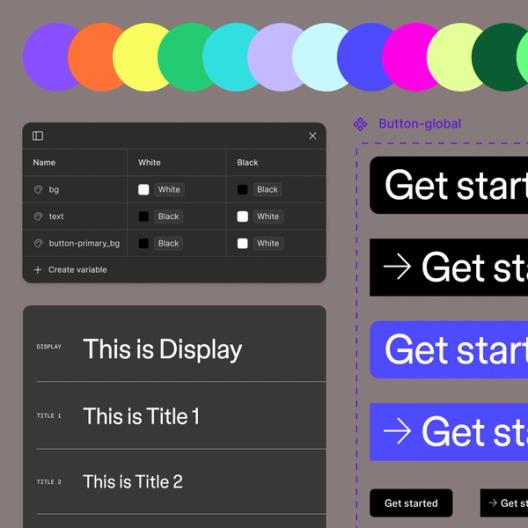
  • An expanded color palette, leveraging variables for easy adaption across contexts
  • Integrated motion principles animating actions and flows in the creative process

Through these elements, we’ve created a visual language that reflects where Figma is today and points to where we’re headed—a place where anyone can bring their ideas to life, regardless of their role or background.

Starting in the sandbox

To kick off the exploratory phase, Figma’s Brand Studio began by examining all the ways people use Figma—from brainstorming and initial ideation, to inspecting elements and adding final polish.

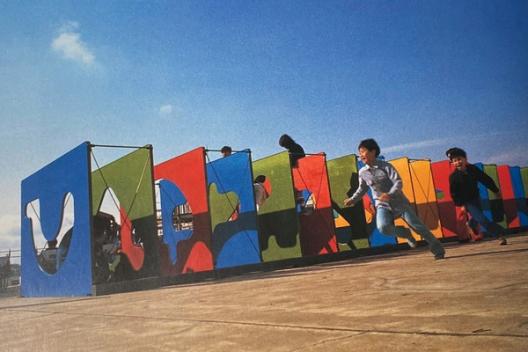
The team was drawn to the concept of activities playing out in a shared space, akin to parallel play. Brand Designer Jefferson Cheng recalls drawing early inspiration from the playgrounds of Isamu Noguchi and Mitsuru Senda: “They were a metaphor for the Figma canvas—a place where people come together to create and experiment.”

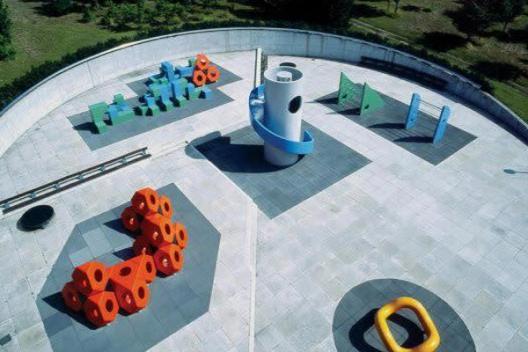
An outdoor playground featuring abstract, colorful climbing structures and play equipment arranged on a large tiled surface. Bright orange geometric shapes resembling clusters of triangular blocks sit on one side, while a tall cylindrical structure with a blue spiral slide stands at the center. Other green, blue, and yellow structures, including a triangular climbing wall and a yellow ring-shaped object, are spread across the area. The playground is surrounded by a low circular wall, with grass and trees visible beyond.An outdoor playground featuring abstract, colorful climbing structures and play equipment arranged on a large tiled surface. Bright orange geometric shapes resembling clusters of triangular blocks sit on one side, while a tall cylindrical structure with a blue spiral slide stands at the center. Other green, blue, and yellow structures, including a triangular climbing wall and a yellow ring-shaped object, are spread across the area. The playground is surrounded by a low circular wall, with grass and trees visible beyond.
Isamu Noguchi, Playscapes in Piedmont Park, Atlanta, Georgia, 1976
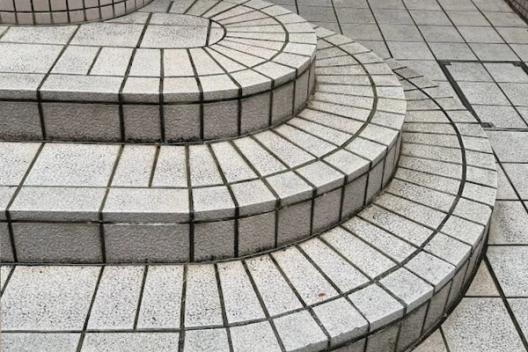
A tiled outdoor staircase with curved steps, made up of rectangular light gray tiles with dark grout lines. The steps are rounded and arranged in a semi-circular fashion, leading to a higher platform. A cylindrical tiled column is visible on the left, with small green plants growing near its base. The design emphasizes clean lines and geometric symmetry.A tiled outdoor staircase with curved steps, made up of rectangular light gray tiles with dark grout lines. The steps are rounded and arranged in a semi-circular fashion, leading to a higher platform. A cylindrical tiled column is visible on the left, with small green plants growing near its base. The design emphasizes clean lines and geometric symmetry.
Inspiration included well-crafted tile work and infrastructure.
Children running and playing around a colorful, maze-like playground made up of large, flat panels. Each panel is painted in bold colors such as blue, red, green, and yellow, with abstract cutout shapes. The kids are energetically running in the foreground under a bright blue sky.Children running and playing around a colorful, maze-like playground made up of large, flat panels. Each panel is painted in bold colors such as blue, red, green, and yellow, with abstract cutout shapes. The kids are energetically running in the foreground under a bright blue sky.
Mitsuru Senda, Panel Tunnel, 1976

While the team ultimately moved beyond the literal metaphor of the playground, they continued to build on the concept of simultaneous activities happening in one shared space. Figma’s infinite canvas, too, served as a sandbox for the team, as they explored directions, as well as tested color schemes and patterns using variables. Brand Studio Director Damien Correll explains, “The canvas allows people to interact with objects in different ways. A developer might look at something as simple as a rectangle one way, through inspection mode, while a designer may see it from an alternate perspective.”

These ways of seeing and interacting became the core of the new visual language. The team mapped out as many activities as they could think of, assigning rules and behaviors to each. These guidelines provided scaffolding for early explorations, and formed the foundation of a visual lexicon where a single element can be manipulated in infinite ways to tell countless stories.

Reimagining iconography and illustration

Our previous illustration system relied heavily on geometric shapes with main character energy—shapes that push on each other and act as protagonists in nearly every vignette. For this refresh, the team sought to create a more flexible language that could grow with Figma in the years to come.

Damien emphasizes, “Enduring visual identities should be thought of as languages, not systems. Systems imply rigid rules and predictability.”

Enduring visual identities should be thought of as languages, not systems.
Damien Correll, Director, Brand Studio, Figma

To achieve this, Figma’s Brand Studio developed a collection of primitives—basic shapes forming the building blocks of our illustrations. These range from ambiguous blobs to representational forms, illustrating various takes on form and function.

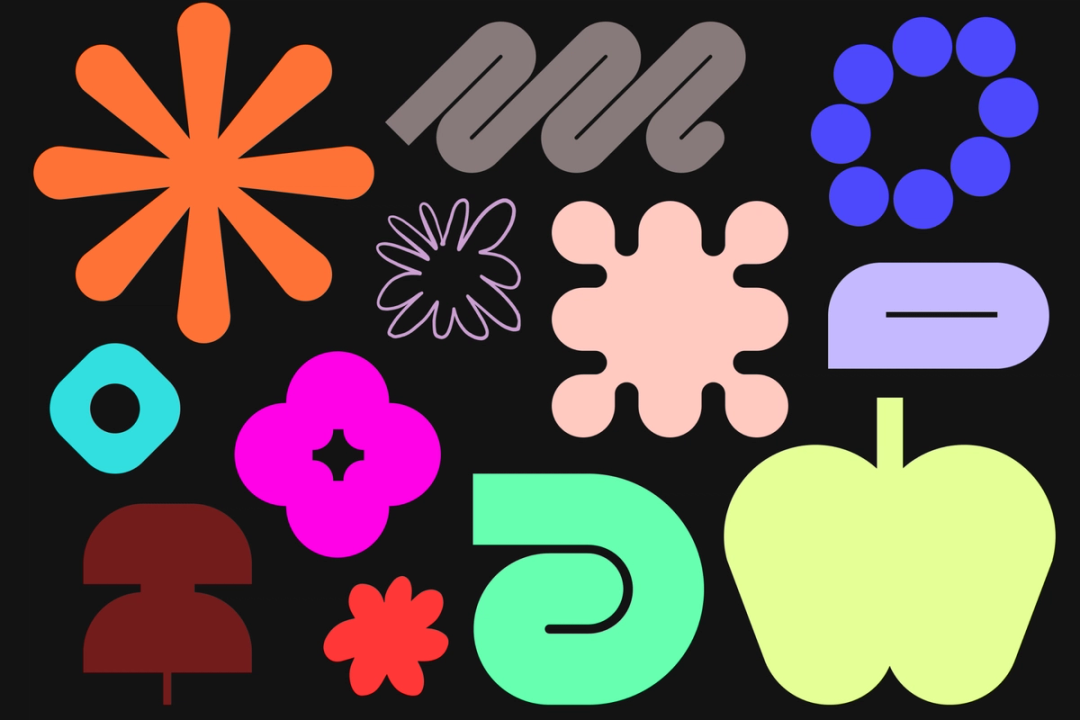
A collection of colorful abstract shapes on a black background. The shapes include a large orange flower-like starburst, a wavy gray line, a blue circle made of smaller dots, and various organic forms in pink, purple, green, and red. The shapes vary in size and complexity, resembling playful, retro-inspired icons.A collection of colorful abstract shapes on a black background. The shapes include a large orange flower-like starburst, a wavy gray line, a blue circle made of smaller dots, and various organic forms in pink, purple, green, and red. The shapes vary in size and complexity, resembling playful, retro-inspired icons.
A close-up photograph of a metal screw joint mechanism. The mechanism features two semi-circular metal clamps connected by a threaded screw, used to hold two pieces of material together. The image highlights the industrial design and functionality of the component.A close-up photograph of a metal screw joint mechanism. The mechanism features two semi-circular metal clamps connected by a threaded screw, used to hold two pieces of material together. The image highlights the industrial design and functionality of the component.

The primitives were inspired by everyday examples of craft, both digital and physical.

Brand Designer Leandro Castelao elaborates, “The primitives are intentionally varied, like the hands that made them.” Their slight incongruities and open-ended nature also mean that more can always be added to the mix.

The primitives are intentionally varied, like the hands that made them.
Leandro Castelao, Brand Designer, Figma
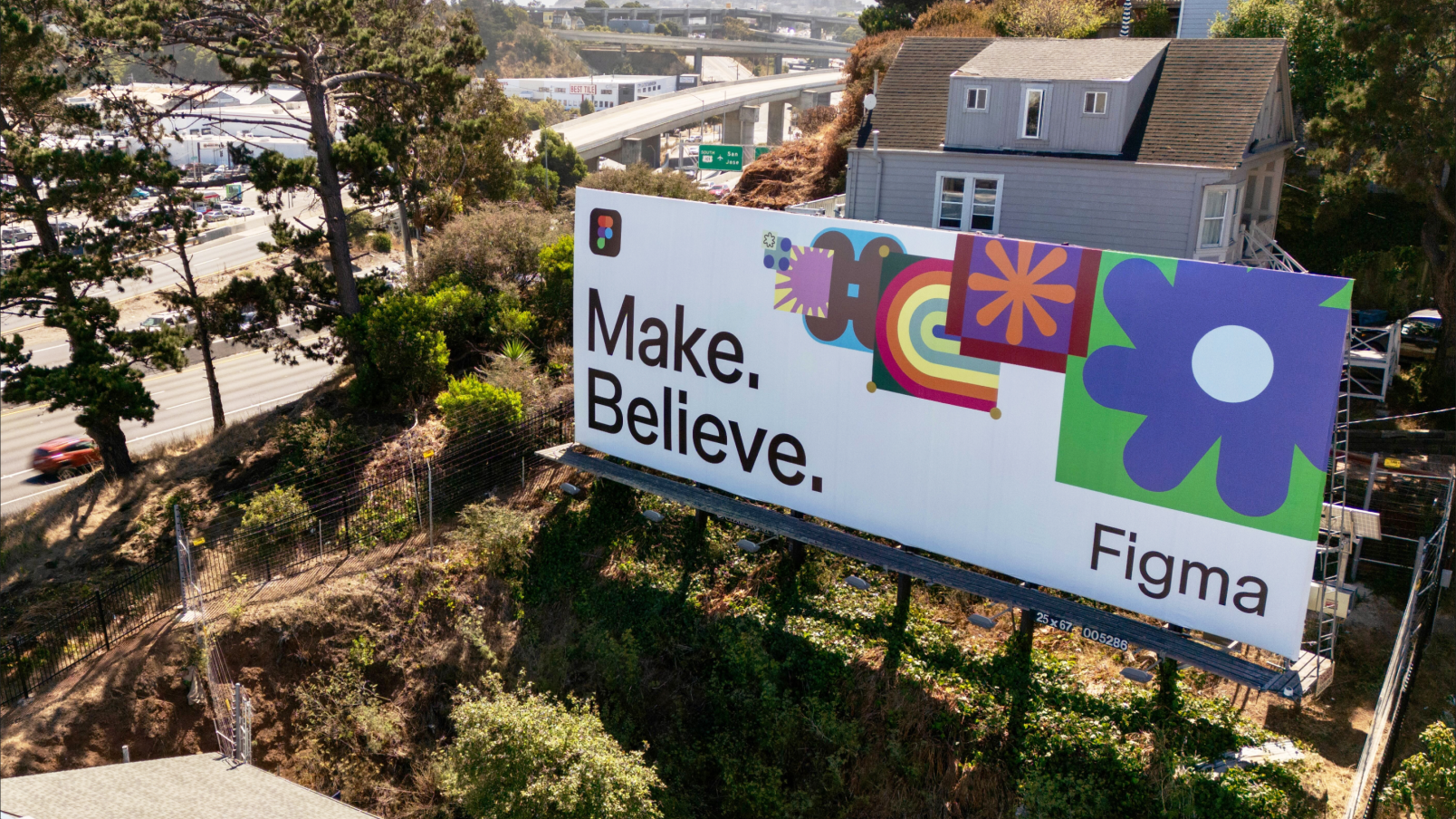
A horizontal Figma billboard positioned along a highway near a hillside covered in trees. The sign displays bold text that reads "Make. Believe." on a white background, with colorful abstract icons, including a large purple flower, a starburst shape, and a rainbow-like pattern. The Figma logo appears on the left, and "Figma" is written in black text on the right side of the billboard. A residential house and distant roads are visible in the background.A horizontal Figma billboard positioned along a highway near a hillside covered in trees. The sign displays bold text that reads "Make. Believe." on a white background, with colorful abstract icons, including a large purple flower, a starburst shape, and a rainbow-like pattern. The Figma logo appears on the left, and "Figma" is written in black text on the right side of the billboard. A residential house and distant roads are visible in the background.
Spot our new brand making jumbo moves in New York, San Francisco, and elsewhere.

While each primitive is distinct, they share key characteristics. They’re unapologetically graphic and more “jumbo” than their predecessors. Think: Big shapes, oversized nodes, and bold use of color. But jumbo isn’t just about size—it’s about putting a focus on the details, the care and precision that goes into making something.

“It’s almost as if we zoomed in on each element, stripping away the non-essential and honing in on composition,” Jefferson adds. Importantly, the primitives are vector-based, ensuring they can be created entirely in Figma.

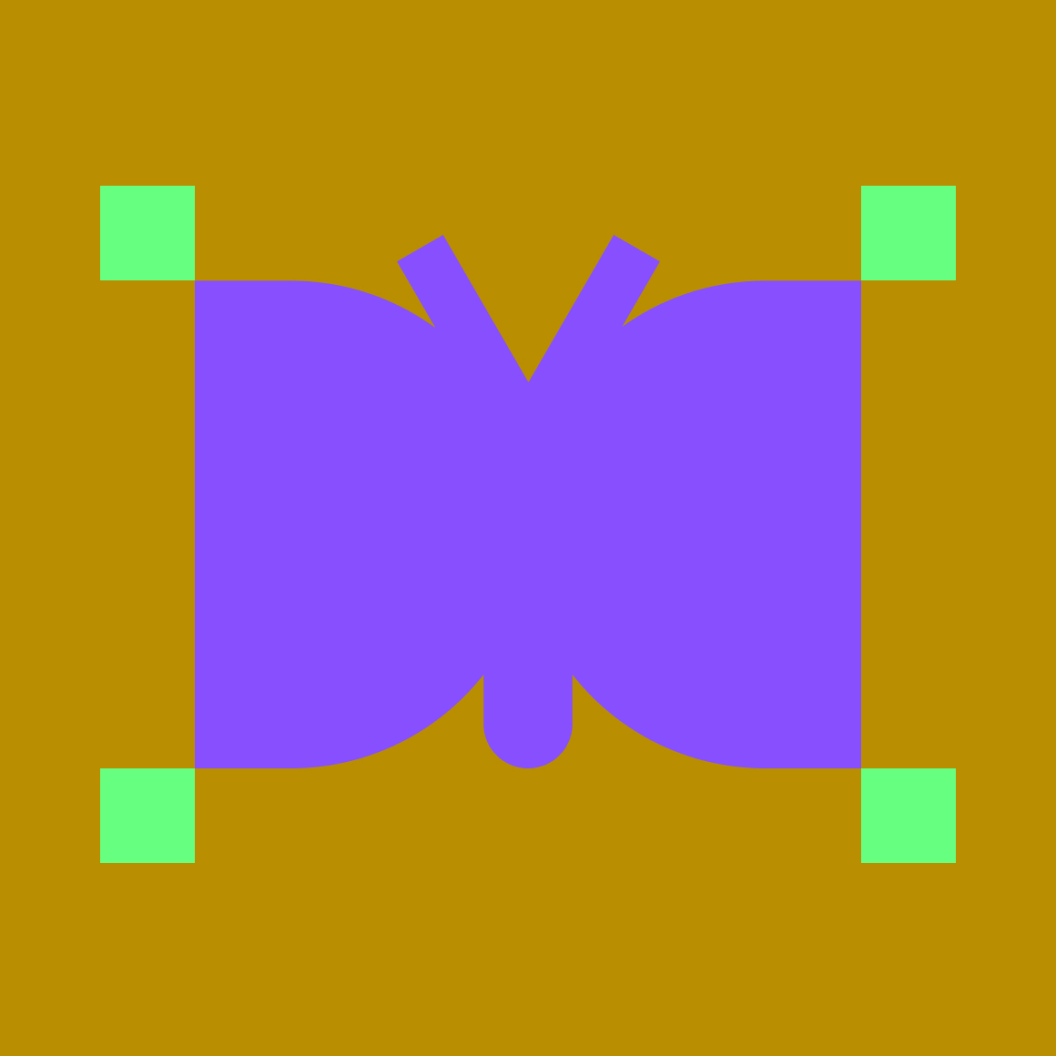
An abstract purple butterfly shape with geometric edges, centered on a mustard yellow background. The butterfly is bordered by four small green squares at each corner, adding a sense of balance to the design.An abstract purple butterfly shape with geometric edges, centered on a mustard yellow background. The butterfly is bordered by four small green squares at each corner, adding a sense of balance to the design.

As the Eamesism goes: “The details are not the details. They make the design.”

Jumbo nodes—large squares fixed to the corner of bounding boxes—amplify Figma UI, implying the act of “selection” on the canvas. For Brand Designer Maria Chimishkyan, seeing jumbo nodes on the butterfly was an early highlight: “Things started to click together. It felt like this poignant, abbreviated take on nodes, meaningfully selective.”

“Selected” objects can expose and interact with other objects on the canvas to create various compositions.

Nodes also unlocked new ways to suggest movement and interactivity. Square nodes become circles when an object is being “edited.” Selected objects can be moved around the canvas or shift their z-axis order—just like in Figma. Primitives can be “passive” (solid-color shapes), “activated” (with pattern), or “hyper-activated” (with wider color spectrums). Borders can also be activated with color, pattern, and scale—in accordance with the jumbo principle.

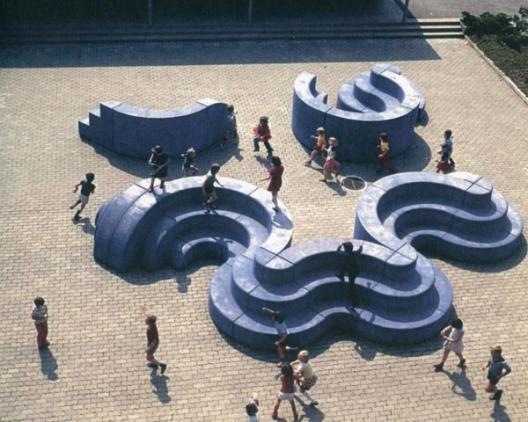
A playground filled with children playing on large, blue, wavy, and circular structures. The play structures resemble flowing, multi-level curves, creating spaces for climbing, sitting, and running. The ground is paved with tiles, and children are seen interacting with the dynamic shapes.A playground filled with children playing on large, blue, wavy, and circular structures. The play structures resemble flowing, multi-level curves, creating spaces for climbing, sitting, and running. The ground is paved with tiles, and children are seen interacting with the dynamic shapes.
An early inspiration image, Ueli Berger’s playgrounds
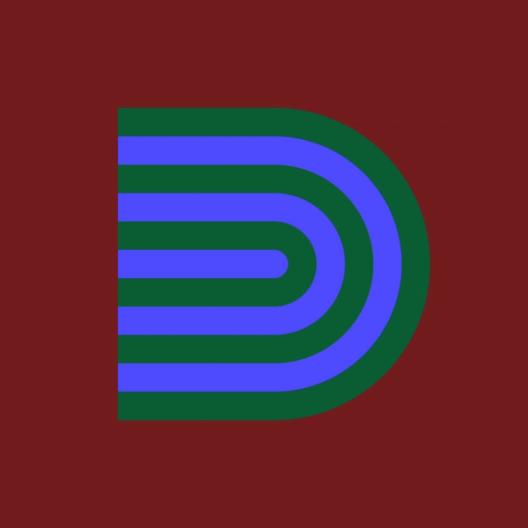
A bold, abstract design featuring a rounded letter 'D' composed of alternating green and blue curved lines. The background is a deep maroon color, highlighting the striking geometric pattern of the letter 'D'.A bold, abstract design featuring a rounded letter 'D' composed of alternating green and blue curved lines. The background is a deep maroon color, highlighting the striking geometric pattern of the letter 'D'.
An activated primitive

Motion designers worked closely with brand designers on animation studies, inspiring even more ideas for how all these elements work together, such as a dashed, marquee border representing hyperactivity and collaboration.

Aligning on composition

Just like in Figma, objects can interact with other objects on the canvas, creating endless compositions. To standardize these arrangements, the team revisited their list of modalities and actions pulled from their audit of the product development process. “Ideation” is represented by freeform collage, like stickies on a FigJam canvas, “designing” relies heavily on manipulation and transformation, and “building” is represented by visual abstractions of coding, inspecting, and annotating.

Taken together, these compositional arrangements comprise four main moves:

  • Overlap: Shapes layer upon each other, embracing the (occasional) messiness of the Figma canvas.
  • Reveal: A selected shape can “inspect” or expose the underlying structure of another element.
  • Clustering: Shapes and patterns cluster together into freeform compositions.
  • Multi-move: Different compositional elements come together.
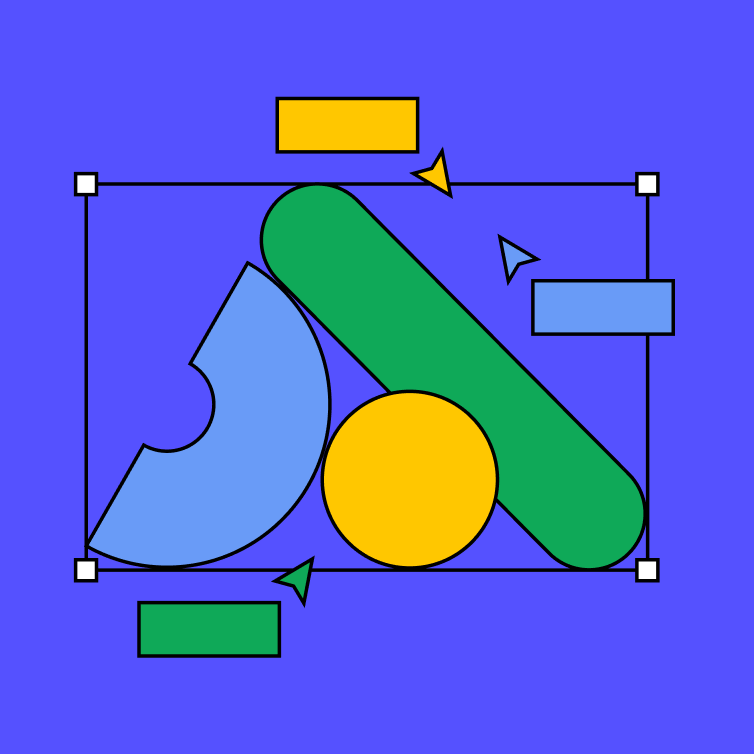
A vibrant abstract design on a bright blue background, featuring various geometric shapes. In the center is a large green diagonal rectangle, overlapping a yellow circle. To the left, a blue semicircle with a small cutout sits beside the green rectangle. A yellow rectangle appears at the top, and smaller blue and green rectangles are positioned at the sides and bottom. Black lines form a bounding box around the shapes, with small white squares at the corners and green and blue arrows pointing inward.A vibrant abstract design on a bright blue background, featuring various geometric shapes. In the center is a large green diagonal rectangle, overlapping a yellow circle. To the left, a blue semicircle with a small cutout sits beside the green rectangle. A yellow rectangle appears at the top, and smaller blue and green rectangles are positioned at the sides and bottom. Black lines form a bounding box around the shapes, with small white squares at the corners and green and blue arrows pointing inward.

Our previous black outline style

An expanded color palette

As shapes and composition convey the multivalent nature of work, our expanded color palette punches up the message. While we’ve retained our signature purple, we’ve introduced a broader range of colors that include bold primaries, bright neons, and muted earthy tones that reflects the diversity of our community and the breadth of what you can do across our products.

In an industry where owning a color or pairing is perceived as the pinnacle of successful branding (think Coca-Cola red or John Deere green), Damien believes that such an approach is unrealistic for many contemporary brands: “[Heritage brands] have put in the time to build that equity and, frankly, were there first. We have an incredible in-house team and they pushed for a more sophisticated palette—recognizing that we need a spectrum with a principled way of using—rather than a limited, color-by-numbers approach.”

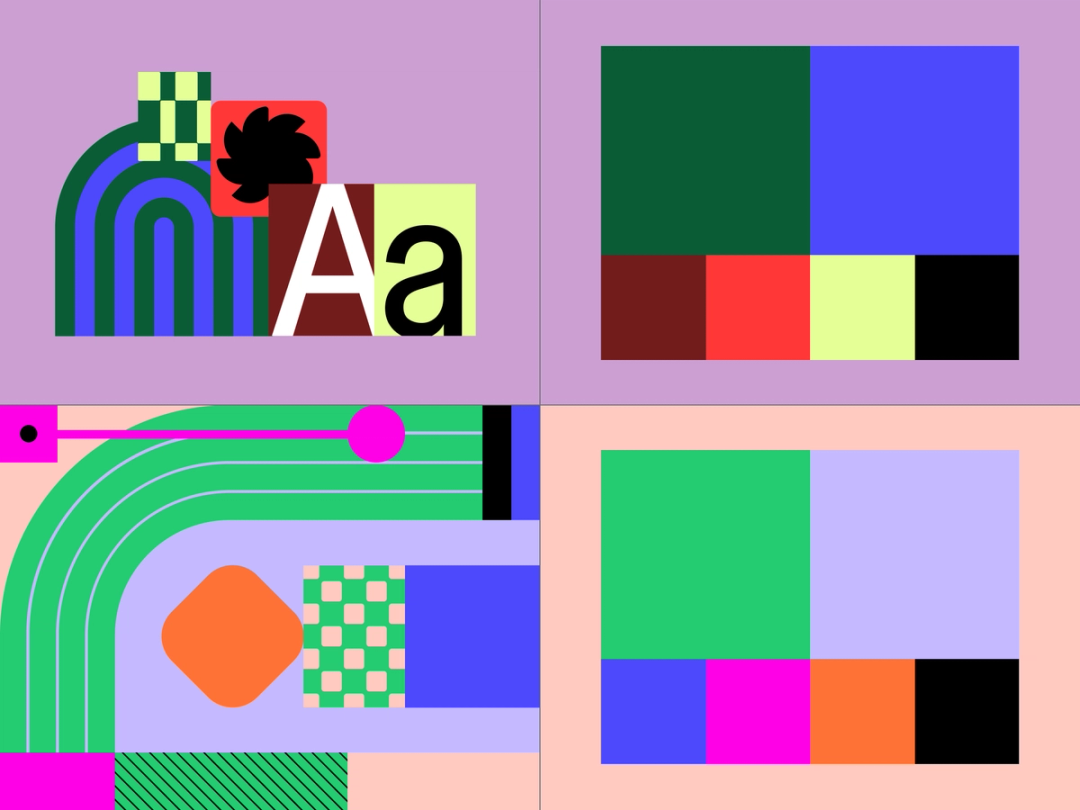
A colorful abstract design divided into four sections, each with bold geometric shapes and a variety of colors. The top left section features curved green and blue lines, a black flower-like shape, and the letters 'Aa' in red, white, and black blocks. The top right section has a grid of rectangles in dark green, blue, red, yellow, and black. The bottom left section contains a curved green path with a pink circle, a checkered green and yellow square, and an orange diamond. The bottom right section displays a set of blocks in green, purple, blue, pink, orange, and black.A colorful abstract design divided into four sections, each with bold geometric shapes and a variety of colors. The top left section features curved green and blue lines, a black flower-like shape, and the letters 'Aa' in red, white, and black blocks. The top right section has a grid of rectangles in dark green, blue, red, yellow, and black. The bottom left section contains a curved green path with a pink circle, a checkered green and yellow square, and an orange diamond. The bottom right section displays a set of blocks in green, purple, blue, pink, orange, and black.
Our vibrant and maximalist approach to color contrasts bold primaries, bright neons, and muted earthy hues across a broad color spectrum.

The Brand Studio developed a complex yet harmonious system of color schemes, using variables to create a range of expressions. They began by pairing two seemingly tonal colors on the same hue level, creating a vibrating effect when viewed side-by-side. Without black outlines, these colors jut up against each other, creating crisp contrasts and a sense of movement, like the energy and flow of teamwork.

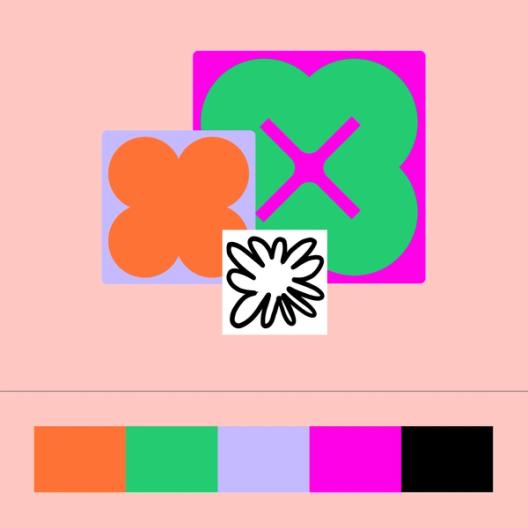
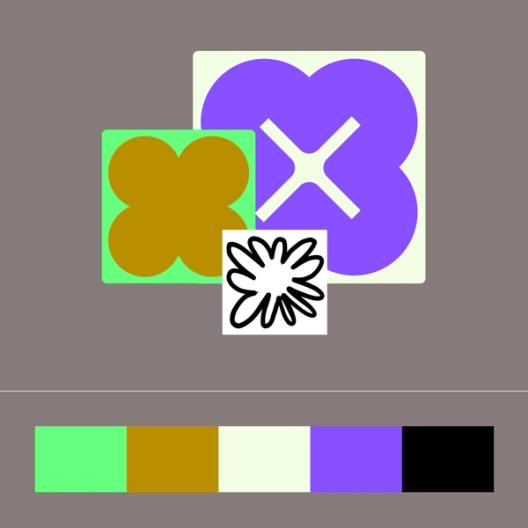
The team built out three hero color schemes, each consisting of a vibrant primary color pair and four secondary colors. These schemes have light and dark modes, swapping out secondary colors depending on context.

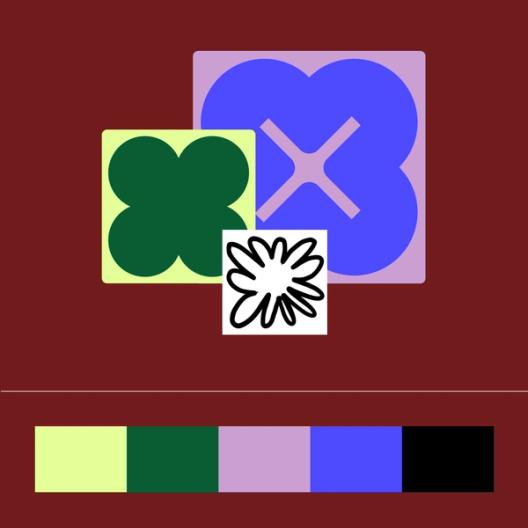
An abstract design on a maroon background. A dark green flower-like shape is in a light green square, overlapping a purple flower with a light blue "X" in a pale purple square. Below, a black and white petal-like shape sits in a white square. The color palette is displayed below as light green, dark green, purple, blue, and black.An abstract design on a maroon background. A dark green flower-like shape is in a light green square, overlapping a purple flower with a light blue "X" in a pale purple square. Below, a black and white petal-like shape sits in a white square. The color palette is displayed below as light green, dark green, purple, blue, and black.
Scheme A: Core
A colorful geometric design on a pale pink background. An orange flower-like shape is placed in a purple square, overlapping a bright green flower with a pink "X" in a magenta square. Below, a black abstract petal shape appears in a white square. The color palette features orange, green, purple, magenta, and black.A colorful geometric design on a pale pink background. An orange flower-like shape is placed in a purple square, overlapping a bright green flower with a pink "X" in a magenta square. Below, a black abstract petal shape appears in a white square. The color palette features orange, green, purple, magenta, and black.
Scheme B: Warm
A geometric design with overlapping shapes on a gray background. A mustard yellow flower-like shape sits within a green square, placed on top of a larger purple flower with a white "X" in a pale green square. Below these is a black abstract petal shape in a small white square. The color palette is shown as green, mustard yellow, pale green, purple, and black.A geometric design with overlapping shapes on a gray background. A mustard yellow flower-like shape sits within a green square, placed on top of a larger purple flower with a white "X" in a pale green square. Below these is a black abstract petal shape in a small white square. The color palette is shown as green, mustard yellow, pale green, purple, and black.
Scheme C: Cool

Two color principles guide both illustration and product images:

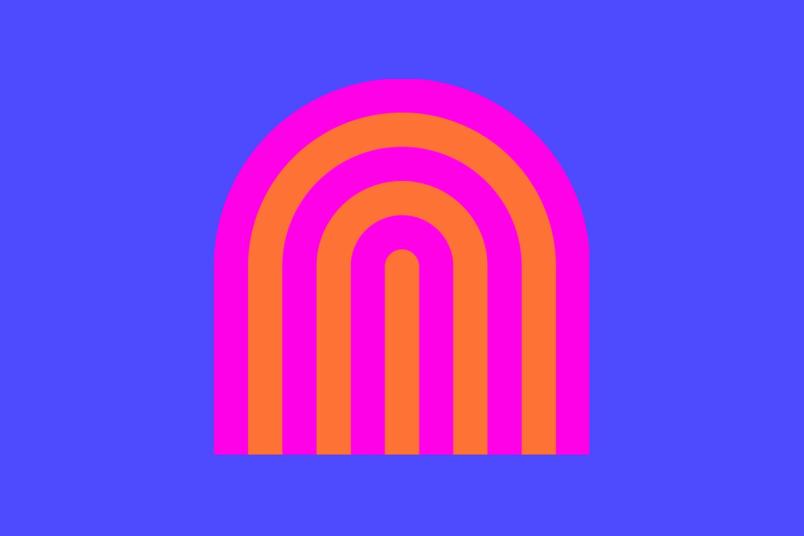
  • Tonal vibrancy: Colors create electric and unexpected pairings that convey activation while balancing contrast and distinction.
  • Adaptive schemes: Color schemes offer flexible use, allowing variations from dark to light, simple to complex, to suit different needs.
A simple, arched rainbow design with alternating thick stripes of pink and orange. The rainbow is centered on a solid purple background, with a bold and minimalistic color contrast between the shapes and the background.A simple, arched rainbow design with alternating thick stripes of pink and orange. The rainbow is centered on a solid purple background, with a bold and minimalistic color contrast between the shapes and the background.
Tonal vibrancy
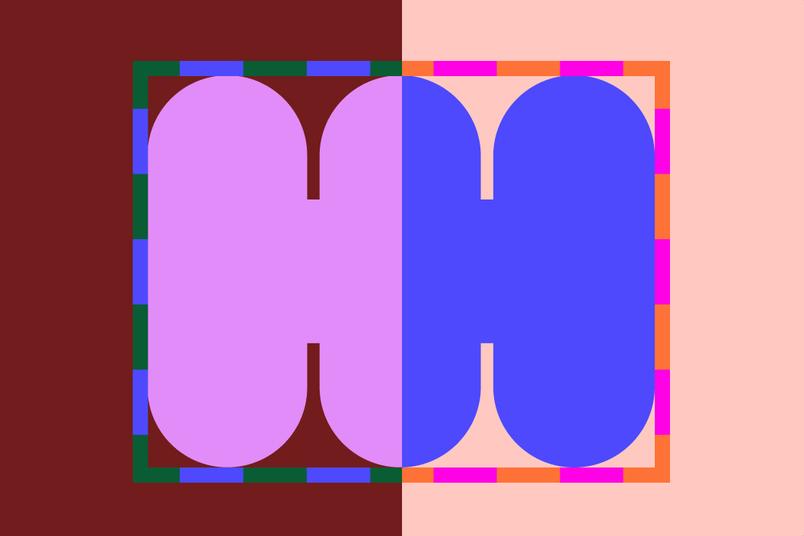
A geometric design divided vertically into two halves: the left side is maroon and the right side is light peach. In the center, two overlapping pill-shaped figures in lavender and blue are enclosed within a checkered frame of green, blue, orange, and pink squares.A geometric design divided vertically into two halves: the left side is maroon and the right side is light peach. In the center, two overlapping pill-shaped figures in lavender and blue are enclosed within a checkered frame of green, blue, orange, and pink squares.
Adaptive schemes
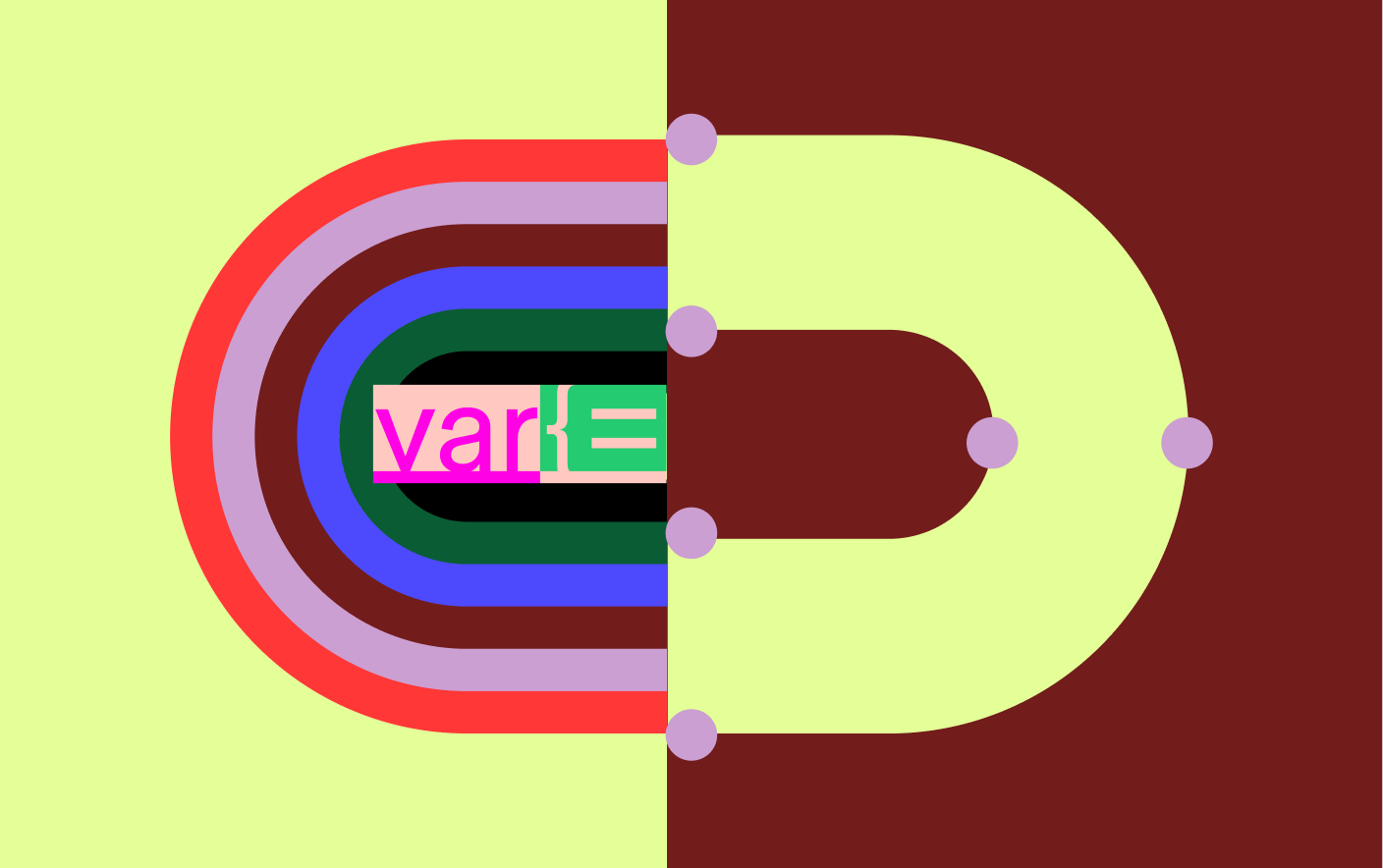
An abstract design with a large U-shaped arc, split down the middle. The left half features concentric curves in red, purple, maroon, blue, and green against a light yellow background, with the word "varE" in pink and green in the center. The right half displays a brown arc on a light yellow background with small purple dots along the curve.An abstract design with a large U-shaped arc, split down the middle. The left half features concentric curves in red, purple, maroon, blue, and green against a light yellow background, with the word "varE" in pink and green in the center. The right half displays a brown arc on a light yellow background with small purple dots along the curve.

Maximalist color schemes are used for emphasis, similar to scale in our jumbo principle.

For emphasis, maximalist color schemes come into play, with colors accentuating pattern, line, or hyper-activated shapes.

Putting it into motion

Motion isn’t just an add-on—it’s an integral part of how we express our principles. From the start, we considered how visual elements would move and interact. “We focused on core moves like selection, activation, and transformation,” explains Gilles Desmadrille, Brand Motion Designer. “It’s about bringing the canvas to life without relying on cursors.”

Craft: Fast, snappy moves mimicking the many decisions made during the design process. Never finished, always evolving and changing.
Interactivity: Elements respond, adapt, and transform based on the interactions and inputs they receive.
Freeform: Introducing camera moves and parallax to create a boundary-less feel and hint at the seemingly endless canvas to bring elements in and out of screen.

The collaborative chaos of building for everyone

The process of refreshing our brand was far from linear and involved months of collaborative exploration. The team worked fluidly, grabbing and riffing off of each other’s work. Oftentimes, the team would lose track of the original authorship of one idea or iteration, an ideal outcome for a team looking to create a scalable system. “Figma lends itself to being egoless,” says Jefferson. “It doesn’t matter where something originates; we’re coming together to make something great.”

It doesn’t matter where something originates; we’re coming together to make something great.
Jefferson Cheng, Brand Designer, Figma

This all-hands-on-deck approach also helped the team iterate quickly. Maria adds, “It’s not like you’re waiting on the one designer that specializes in primitives. We’re all doing them and reusing them.” The team leveraged Figma’s design system features to create brand libraries and toolkits, making assets easily available to everyone at Figma.

Room to grow

“This isn’t the final destination. It’s a new starting point,” says Taryn Cowart, Design Manager of the Brand Studio. “We’ve created a system that’s flexible enough to adapt as we continue to grow and change.”

This is the second part of our series exploring Figma’s latest brand evolution, following our deep dive into our new custom typeface, Figma Sans

.

Figma’s Brand Studio: Andrea Helmbolt, Brand Strategist; Andy Luce, Brand Designer; Becca Ramos, Brand Designer; Catherine Bui, Brand Designer; Damien Correll, Creative Director; Gilles Desmadrille, Brand Motion Designer; Jefferson Cheng, Brand Designer; Kaley Aposporos, Brand Copywriter; Leandro Castelao, Brand Designer; Maria Chimishkyan, Brand Designer; Sydney Halle, Brand Producer; Taryn Cowart, Design Manager

Agency Collaborators: Buck, for out of home campaign; Nimble, for narrative work.

Carly Ayres is a writer, formerly on Figma’s editorial team. She’s written extensively about creative practice and design culture, with work appearing in It’s Nice That, Communication Arts, Wallpaper*, Core77, and elsewhere.

Subscribe to Figma’s editorial newsletter

By clicking “Subscribe” you agree to our TOS and Privacy Policy.

Create and collaborate with Figma

Get started for free