How NIO innovated and delivered at speed using Figma
In the automotive sector, things don’t always move quickly. It’s an industry that’s become accustomed to three-to-five-year cycles from a car’s design to its release. And due to the way software needs to be deeply embedded into hardware, it’s not uncommon for UX work on in-car screens to be completed years before the car hits the market.
However, new entrants to the market want to move more quickly. When Chinese car manufacturer NIO needed a new visual identity for its new sub-brand, firefly, the company wanted to work with an agency that could innovate, iterate and deliver at speed. And it found the right partner in the design agency forpeople.
Based in London and Amsterdam, forpeople has expertise spanning various domains, including graphic, product, spatial, and interaction design, as well as motion, copywriting, research, and strategy. They were the perfect fit for NIO, which wanted to create a distinct viewpoint in the market—focusing on the user and a more seamless experience.
The challenge was to create a distinct brand and visual identity system that would be striking, meaningful and consistent throughout the user’s experience. But forpeople knew the key would be intense collaboration and always-on feedback loops with NIO’s design leaders in Munich and China. And for that, they turned to Figma.

“If you look at the history of how agencies work with clients, most would typically rely on traditional slide decks. We were sharing files, we were on calls looking at static documents, asking the client to move to the next slide,” says James Addison, Creative Director at forpeople. “But that doesn’t cut it when you’re creating tonnes of visuals, need interactive prototypes, and have an innovative client that needs to move at pace. For that we needed Figma, and quite quickly Figma became our creative hub and a nucleus for the collaboration that was at the center of our partnership.”
An identity with the freedom to glow
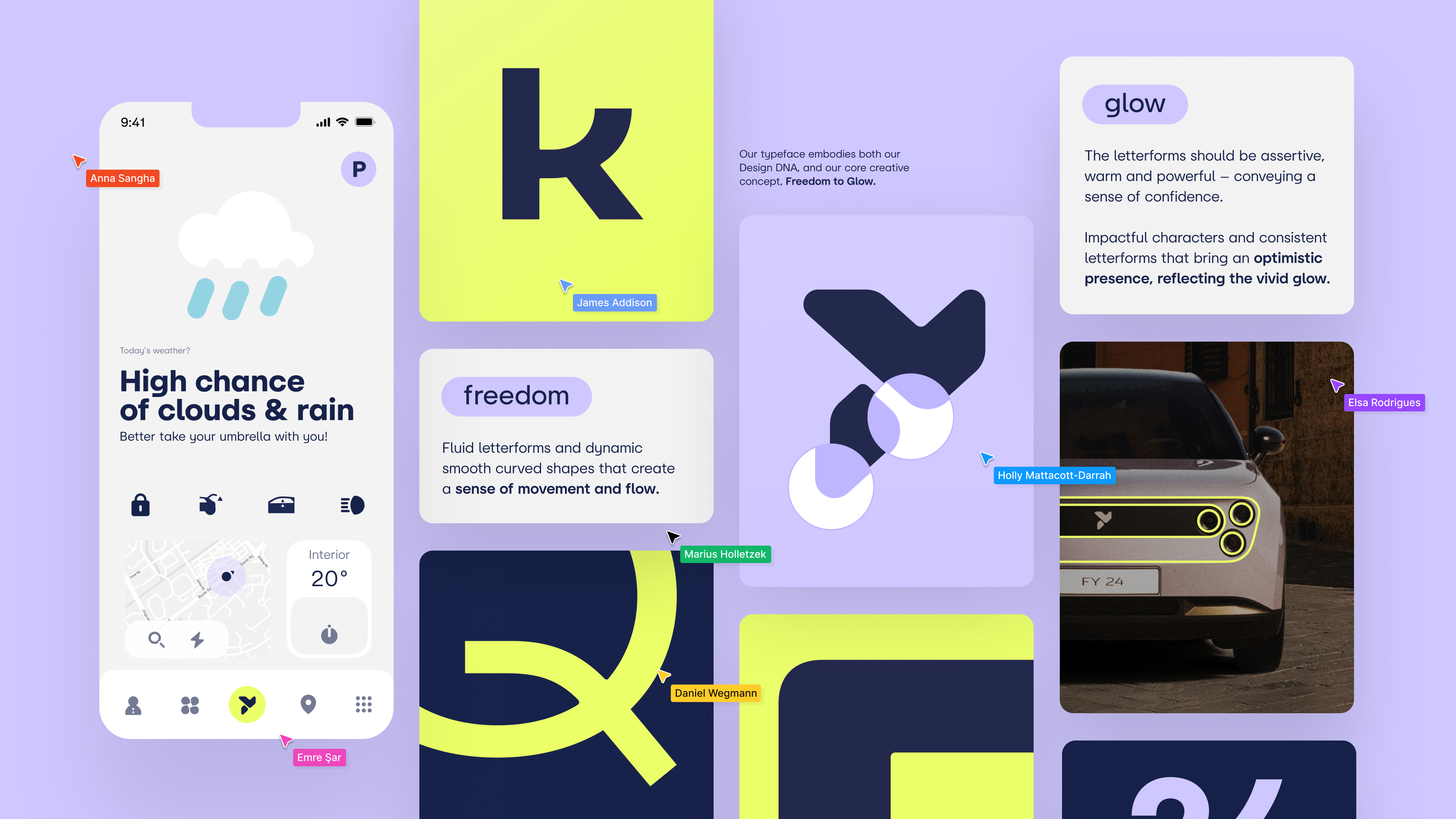
Developing a new visual identity system is an in-depth and detailed process. For NIO’s new car brand, forpeople took inspiration from the way fireflies move, how they glow and the environments they interact with.
Marius Holletzek, Director of Brand Experience Design and Strategy at NIO:
“We wanted the brand to feel inseparable from the car itself—not an afterthought, but something alive within it. Inspired by the car’s design language and the magic of fireflies, our creative direction ‘Freedom to Glow’, captures a spirit of individuality that shines through every detail—from the typography and colours to the way the brand moves and speaks. All of this was conceived with Figma as our chosen platform to develop and share ideas.”

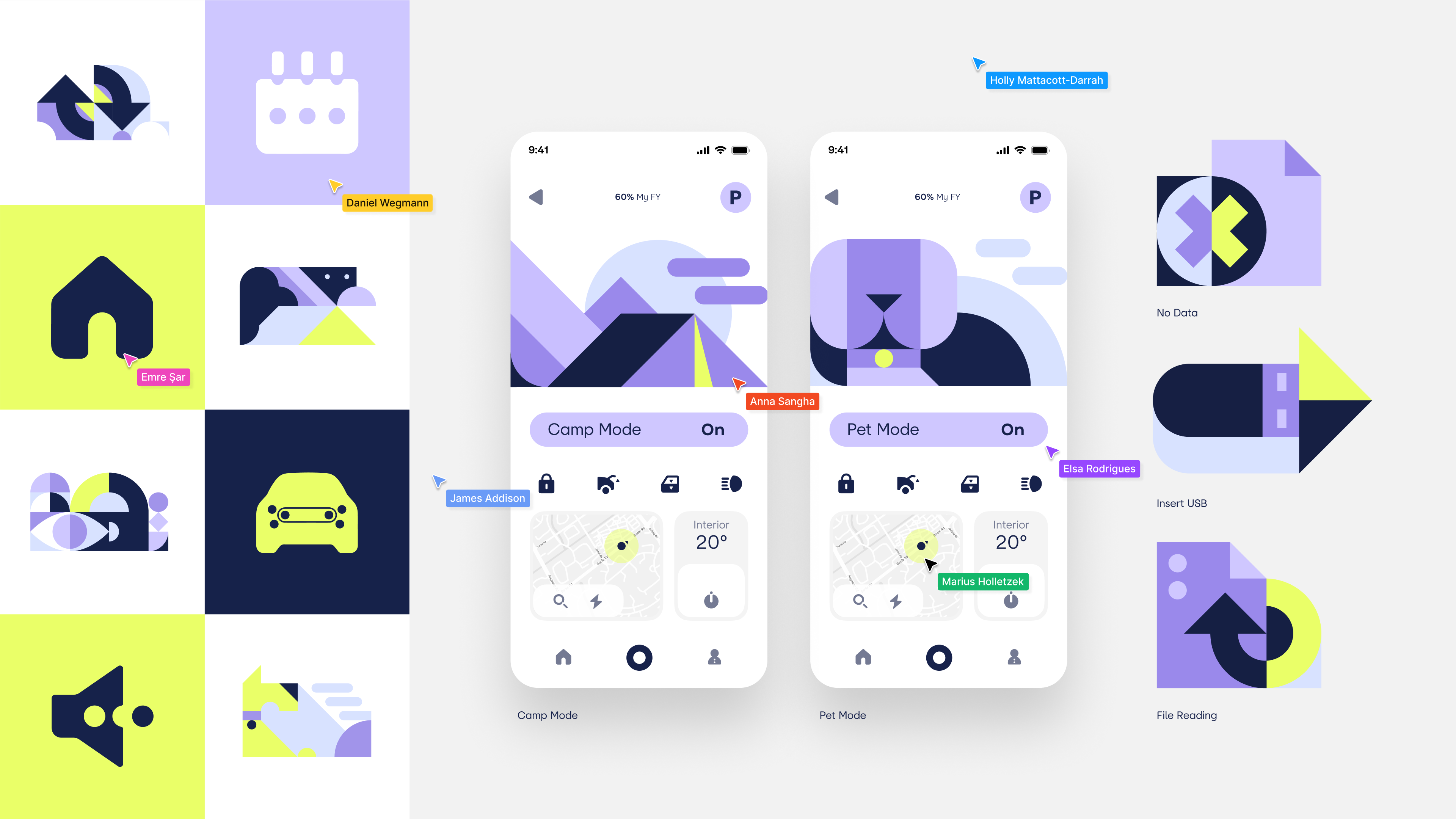
From these beginnings, forpeople started working on the logo. “We went through many ideas and variations for the logo, and this is where the need for fast collaboration came into play,” says James. “This is not the sort of project that could be sent to the client, and then we wait for feedback. There were multiple rounds of iteration, multiple comments on each logo, we needed an always-on feedback loop that couldn’t be achieved by sending endless PDFs via email.”
Using Figma, forpeople created a single collaborative hub for all facets of the project in which NIO’s design team in Munich were able to comment, while forpeople’s team could rapidly progress designs.
From static logos, forpeople’s team were able to develop motion. “There are two screens in the car, and together with NIO we decided that visual elements should be able to move from one screen to the other,” says James. “We ideated around a firefly orb that would move across the two spaces, flitting and flashing across screens to create a visual experience designed to delight users and create a seamless digital experience”.
Some of those concept designs were MP4s the forpeople team added to Figma, some were built in Figma itself.
“We began by experimenting with how the interface itself could behave and how the brand might come alive within the car,” says James. “Using Figma, we explored how type could move, how a firefly’s flicker might translate into a gentle warning and how innovation could feel both solid and soulful. Through these early prototypes, we shaped a direction that became the foundation for the NIO team in Shanghai to build upon and make their own. This was truly a global effort.”
But one of the biggest outcomes of working in this way was the close connection forpeople built with stakeholders at NIO. Both teams found the Figma canvas to be the central point around which they brainstormed ideas, put them into action, and then gathered feedback from stakeholders across their respective organisations.
“We move quickly, and collaborating with the team at forpeople using Figma improved efficiency dramatically,” says Marius. “We don’t want to look at tonnes of presentations, Figma allows us to keep one source of truth, with feedback loops that stay in the file.”
While the bulk of the collaboration happens with forpeople and NIO’s teams working in the file from their offices in the UK and Germany respectively, one fascinating example of how the teams visualize designs comes from NIO’s Design center in Munich.

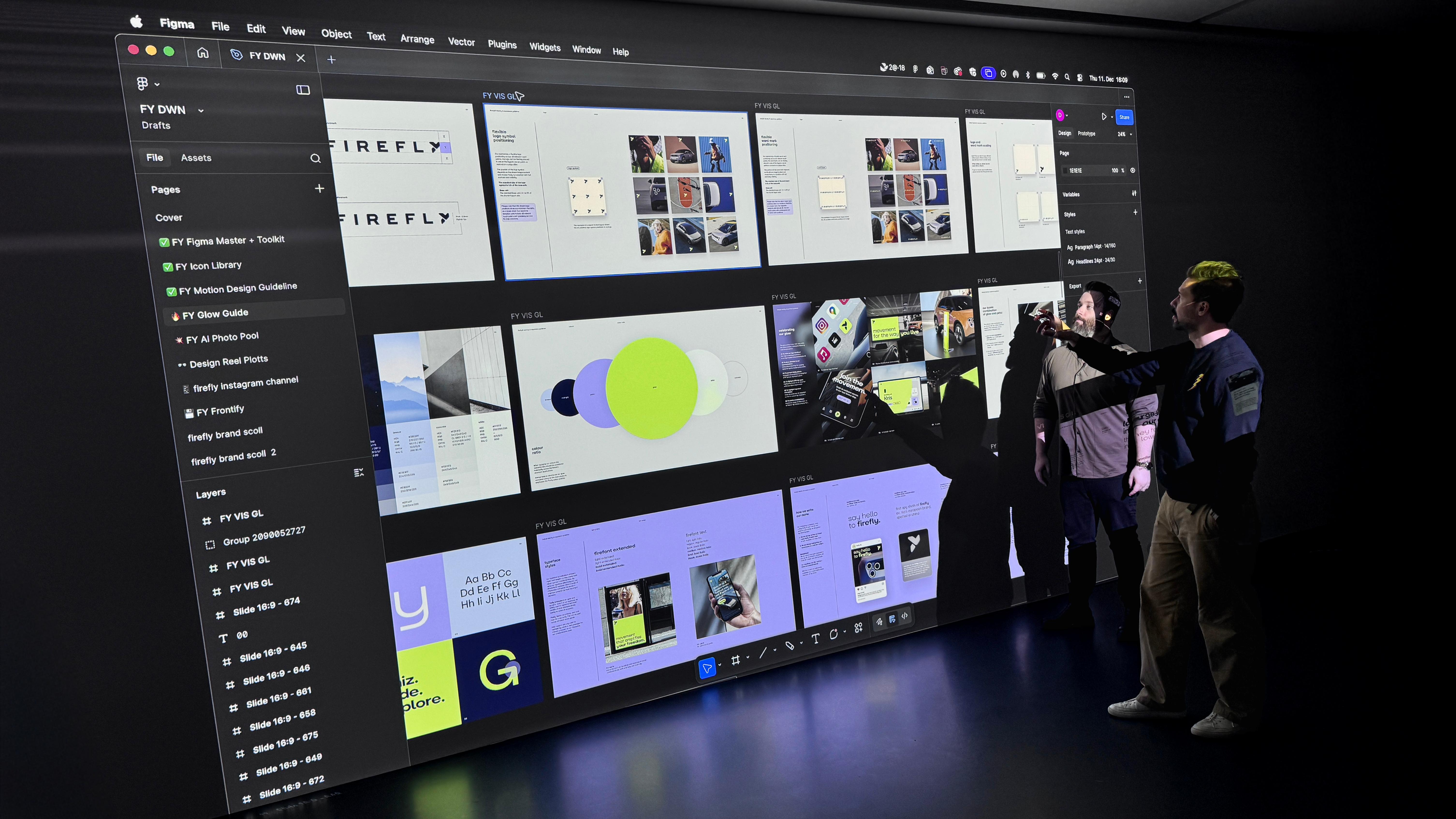
That’s where NIO’s seven-meter “power wall” theatre is located. It’s typically used as an interactive screen for NIO’s design and engineering teams to do full-scale car reviews where they assess and analyse a virtual SUV in cinema-level quality. But it’s also the perfect presentation tool for a Figma file.
“Figma is surely built for remote collaboration. But when we bring it onto our power wall, in-person work becomes even more effective. It becomes a gigantic shared canvas where teams can gather, spot opportunities faster, and turn ideas into action—together, in the same room,” says Daniel Wegmann, Creative Lead at NIO.
NIO’s need for speed reshaped the rhythm of automotive design. With forpeople and Figma, the team cut through complexity to create, test, and refine ideas in real time. The outcome: a bold new identity—and a new benchmark for how fast, focused collaboration can create a model for how design keeps pace with ambition.
See how Figma can help you scale design
Get in touch to learn more about how Figma can help companies scale design.
See how Figma can help you scale design
Great design has the potential to differentiate your product and brand. But nothing great is made alone. Figma brings product teams together in a fast and more inclusive design workflow.
Get in touch to learn more about how Figma can help companies scale design.
We’ll cover how Figma can help:
- Bring every step of the design process—from ideation, to creation, to building designs—into one place
- Accelerate design workflows with shared company-wide design systems
- Foster inclusivity in the product team process with products that are web-based, accessible, and easy to use