How Dave Clark delivers faster work and stronger client relationships with Figma
How Dave Clark delivers faster work and stronger client relationships with Figma
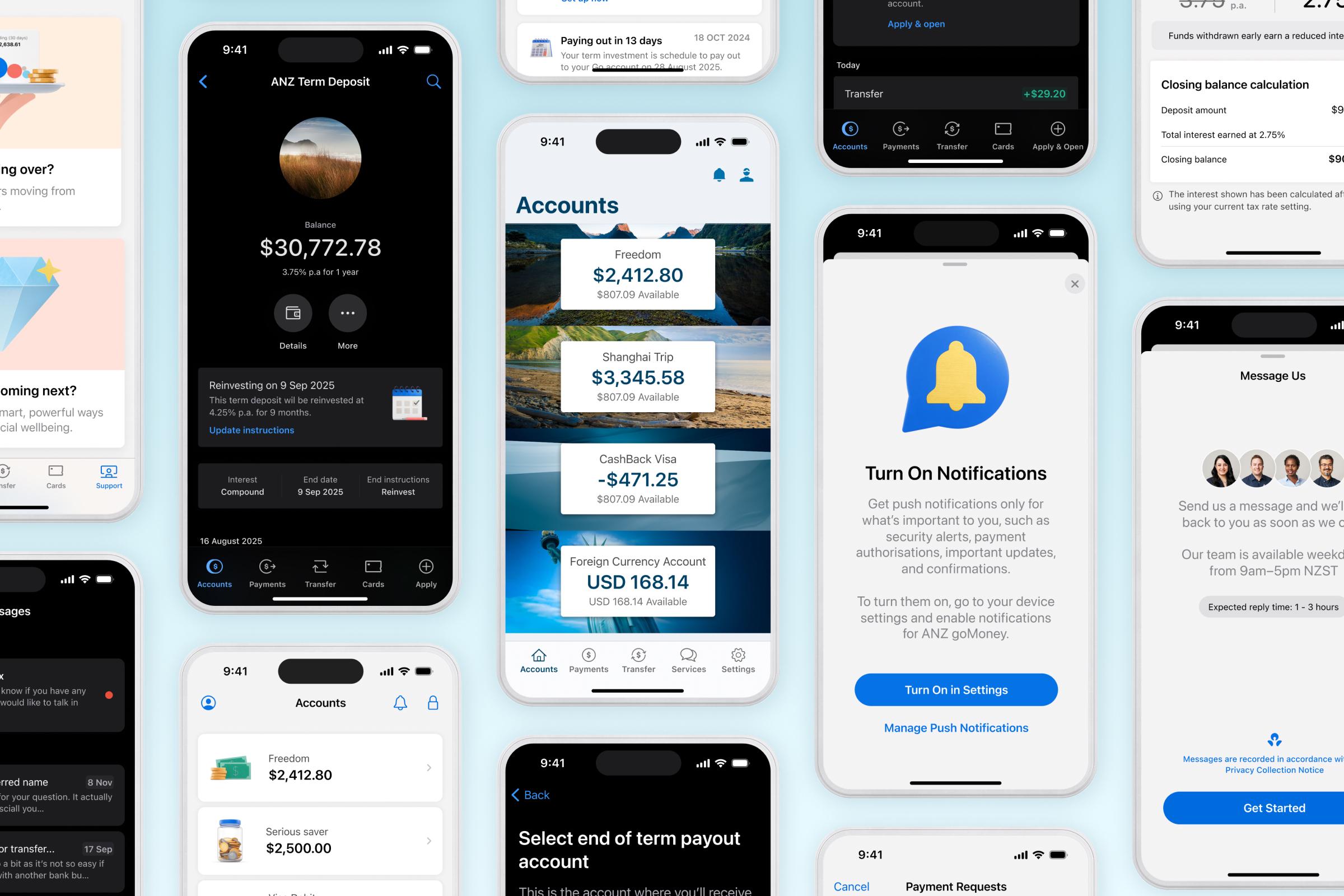
Dave Clark is a digital product and brand agency with offices across Australia, New Zealand and Singapore. They help clients like ANZ Bank and Tencent enhance and scale their digital brands and products, combining strategy, design and development into one integrated offering.
To continue delivering high-impact work consistently across regions, Dave Clark needed to unify its growing 80-person team and streamline client collaboration. By adopting Figma as its end-to-end platform, the agency cut project timelines by up to 40%, accelerated client approvals from days to hours, and freed teams to focus on the strategic, creative work that drives measurable business outcomes.

The challenge: Complex work, scattered tools
As Dave Clark’s projects grew in complexity and its teams grew in size and spread across Auckland, Wellington, Sydney, Melbourne and Singapore, creative coordination became harder to maintain. Every project required input from a wide mix of disciplines—from pure creative directors and writers to product-focused UI designers—often split across countries and time zones.
Speed and precision became essential. But teams were juggling multiple platforms, with no central place to work together in real time. Designers presented static PDFs or rebuilt design concepts in clunky third-party prototyping tools, which could add hours of rework and delay client buy-in.
“You’d have multiple tools, multiple versions, and version history being an added challenge,” says Georgie McCowan, Group Business Director. “You’d go to update a file and find someone had it open on their desktop. Even just making a small change would slow everything down.”
Comments were lost in email threads or on Slack. Approvals stalled and moving between tools meant duplicating work. As the team grew and delivery timelines tightened, the process just didn’t scale. Dave Clark needed a platform that could support its creative pace and precision across borders and bring global teams into one shared space to create together.
The solution: A unified platform to win faster client buy-in
Dave Clark moved to a fully integrated workflow with Figma, bringing brainstorming, design, prototyping and handoff into a single platform. For the first time, motion designers, UX specialists, developers and account managers could collaborate in real time, without waiting for file exports or dealing with version issues.
With Figma’s prototyping tools, the agency could now show clients how a product actually works, not just how it looks. Prototypes are often so realistic that stakeholders often mistake them for finished products.

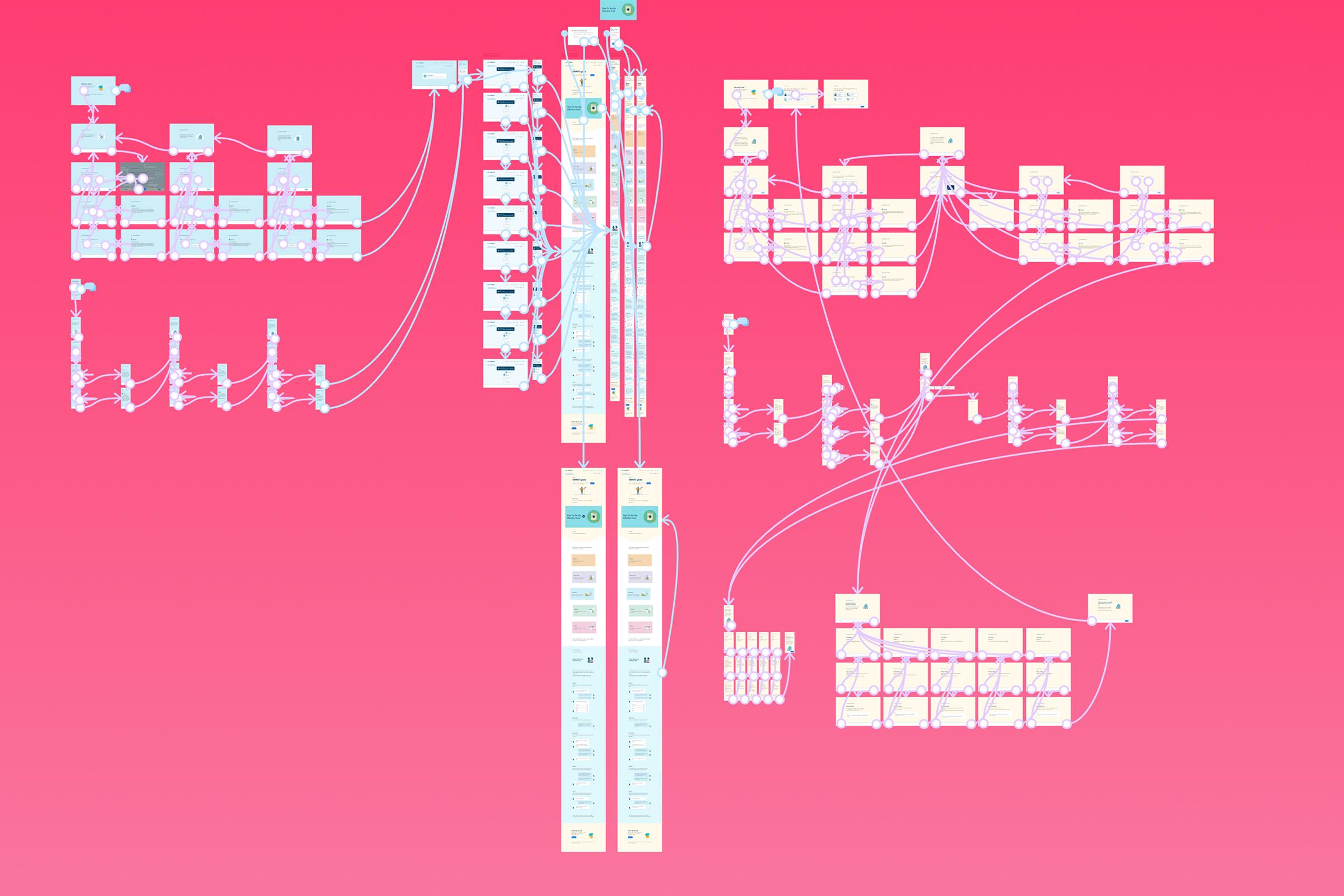
By using variables and components to create rich, interactive flows, the team turned client reviews into working sessions instead of abstract presentations, helping clients grasp ideas more quickly and building confidence early in the process.
Feedback now happens directly in the file, saving hours of email back-and-forth. Prototypes come together in minutes, without switching tools or rebuilding designs. This means quicker approvals, more focused direction, and stronger alignment right from the start.
You can seamlessly copy one thing from FigJam to Figma Design and go all the way to a prototype. You don't have to deal with version control because all the components are live. Those small efficiencies really add up and let you do your work a lot quicker.
— Andrew Smith, Partner and Group Creative Director, Dave Clark
Building ANZ’s system for scale
One of Dave Clark’s most strategic applications of Figma came through its work with ANZ Bank in New Zealand. The bank set out to modernise its design system to better support digital teams across the region. What began as a migration quickly evolved into a broader initiative to improve quality, scale more efficiently, and build long-term design capability. The team also collaborated with ANZ’s design system team in Australia—sharing common components and approaches to working in Figma—to support alignment across markets.
Dave Clark worked side-by-side with the ANZ team to rebuild the system in Figma, introducing shared libraries for web, iOS, and Android. They implemented a token-based foundation to support consistent theming and used variables to power the evolution of their digital products in New Zealand. For documentation, the team chose a headless CMS backed by real components—ensuring governance stayed as usable and scalable as the system itself.

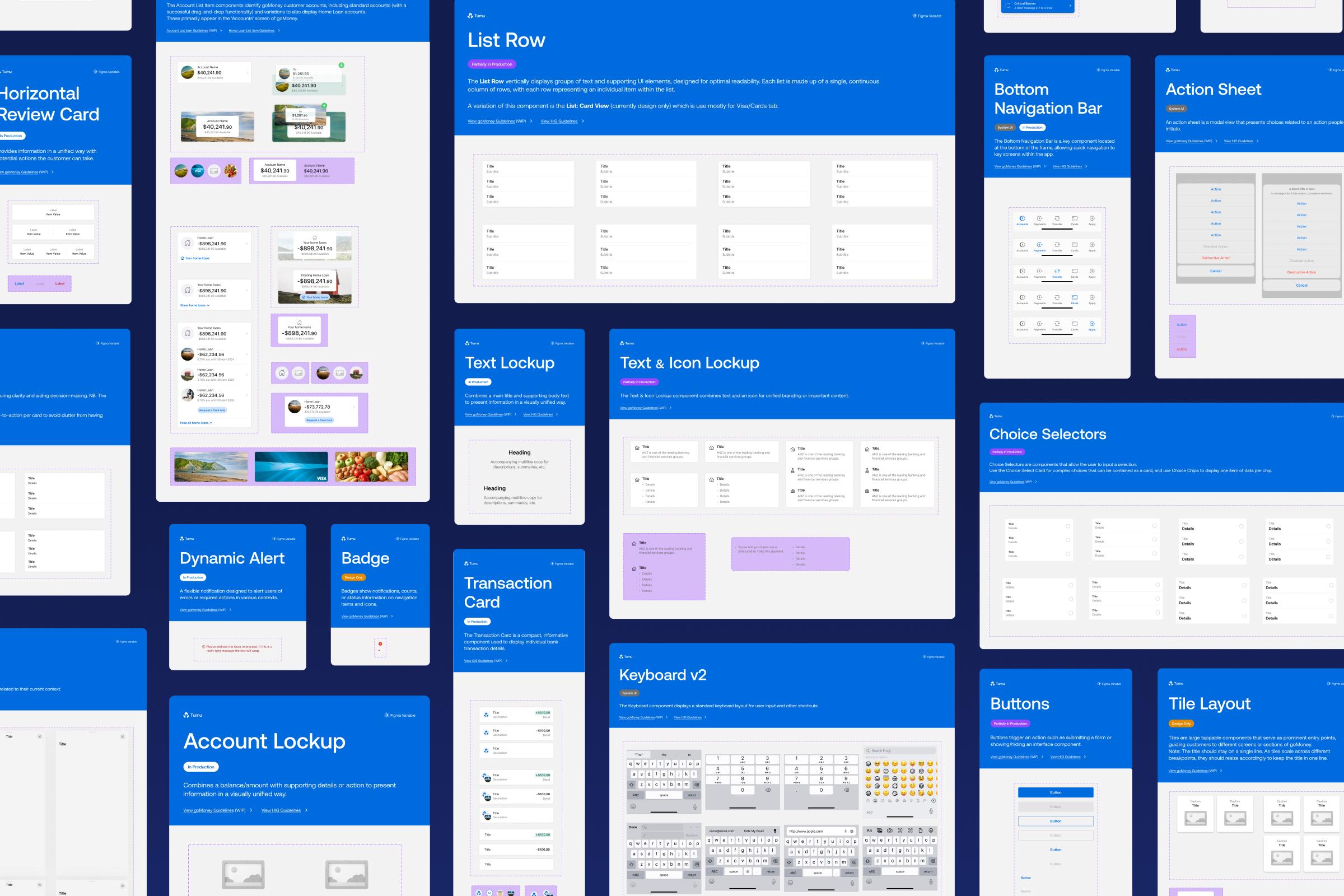
Dave Clark also used Figma to support ANZ’s global brand refresh in 2024, centralising work across disciplines, and bringing designers and stakeholders into one shared space to reduce duplication and deliver better experiences, faster.
Co-creating strategic campaigns with Tencent
Dave Clark’s long-standing creative partnership with Tencent spans global websites, newsletters, social media content, motion graphics, and tactical campaigns for events such as Gamescom.
Figma and FigJam sit at the centre of this work, supporting everything from early concepting to final delivery. Dave Clark uses FigJam to align on art direction, draft scripts, map visual styles, and gather input from stakeholders across time zones. As ideas evolve, the team shifts into Figma to design, prototype, and deliver assets, all within the same connected space.

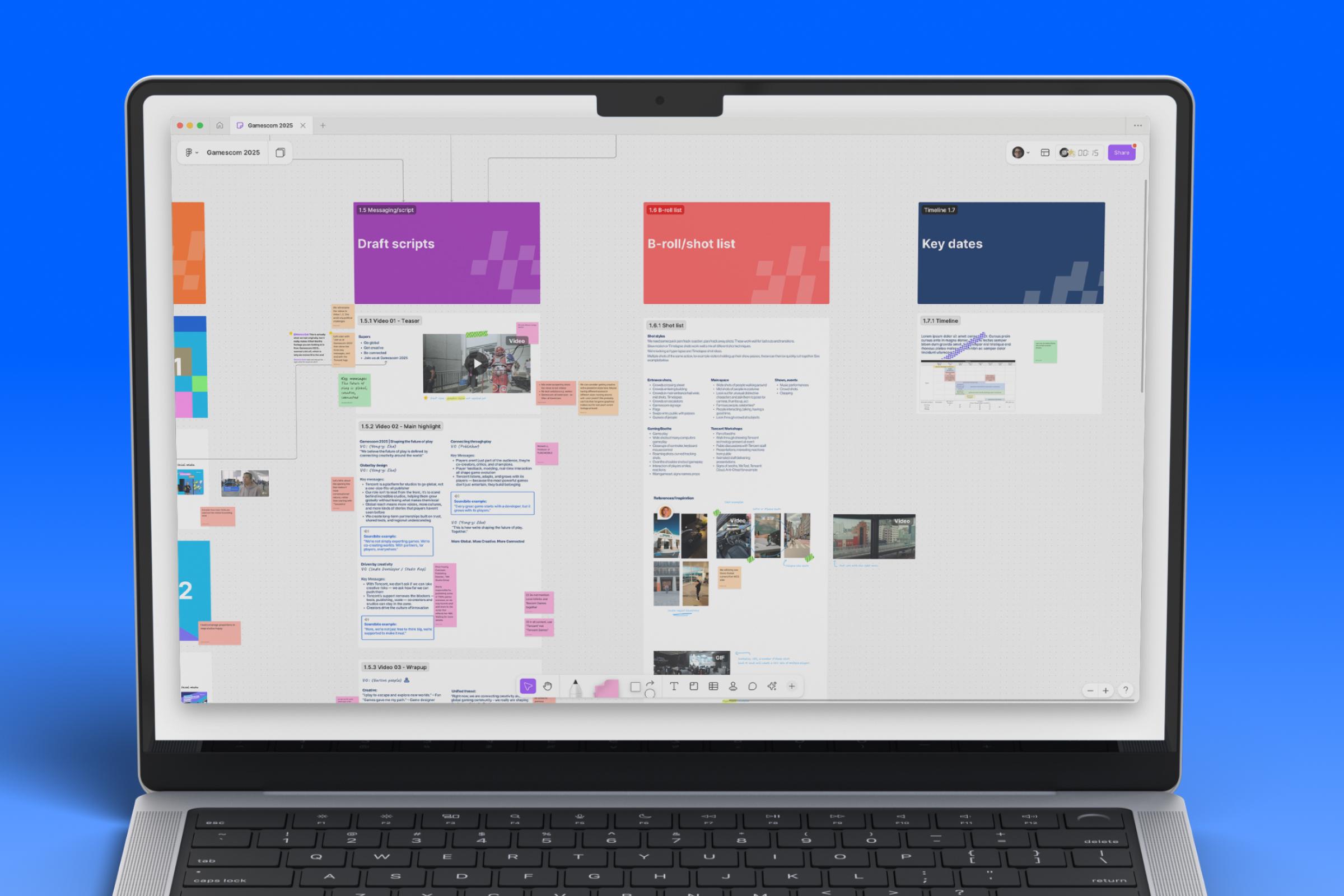
This workflow has powered everything from complex video shoot planning in San Francisco and Cologne to briefing motion teams on rapid-fire content drops under tight timelines. Shared libraries, structured archives, and live collaboration help both teams move faster, stay consistent, and keep campaigns on track—no matter the format or location.
Accelerating design-to-code with Dev Mode
Dev Mode has been a major time-saver for Dave Clark’s design and development teams, reducing friction at handoff and improving the overall quality of builds. What used to take hours of back-and-forth is now resolved instantly—thanks to live access to specs, tokens, and assets all in one place.
“When I get passed a Figma file, I automatically open Dev Mode,” says Adrian Domingo, Developer at Dave Clark. “I can copy text, check padding, spacing, export images in the right size, and grab CSS properties straight from the design. I used to wait 10 minutes—or even days—for a designer to export files. Now I just do it myself.”
Designers are seeing the impact, too. Jane Bennett, a Senior Designer at Dave Clark, says, “I used to spend four to eight hours marking up specs at the end of every project. Now Dev Mode handles most of it automatically. I used to get 20 questions from developers per handoff—now they barely come back.”
Shared variables eliminate the need to memorise hex codes. Developers can explore how components behave using interactive previews. And with version comparisons, they no longer need to ask designers to document every change. Dev Mode highlights updates automatically.
“Rather than writing CSS from scratch, I start with a working draft of many properties,” Adrian says. “That adds up fast.”
A faster, more collaborative agency model
With Figma, Dave Clark has transformed how it works as a global company:
- Up to 40% shorter project timelines
- Client approvals in hours, not days
- Enterprise-scale governance supports global brands like Tencent and ANZ
- More time for creativity as administrative tasks are reduced
- An always-on source of truth across time zones
- One unified toolset means teams don’t need to plan or prototype elsewhere
Looking ahead, Dave Clark is actively exploring how Figma's latest products like Make and Buzz can push their creative practice even further. With Figma Make, designers are turning static concepts into interactive prototypes in minutes, helping clients give earlier feedback without relying on engineering support. One dashboard prototype went from idea to test in a single day of designer time, compared to several days of engineering effort.
The team is also experimenting with Buzz to streamline content delivery workflows. Combined with robust Enterprise-level controls and API access, these tools support Dave Clark’s ability to move fast, stay secure, and deliver standout work with consistency, no matter the region, team, or brief.
See how Figma can help you scale design
Great design has the potential to differentiate your product and brand. But nothing great is made alone. Figma brings product teams together in a fast and more inclusive design workflow.
Get in touch to learn more about how Figma can help companies scale design.
We’ll cover how Figma can help:
- Bring every step of the design process—from ideation, to creation, to building designs—into one place
- Accelerate design workflows with shared company-wide design systems
- Foster inclusivity in the product team process with products that are web-based, accessible, and easy to use