How Mercado Libre scales design for 100 million buyers across Latin America
Summary:
With around 1,500 UX professionals working across six Latin American countries, Mercado Libre is building a continent-spanning product design engine to support 100 million annual active buyers. As its product ecosystem expanded—across e-commerce, fintech, logistics, and more—so did the complexity of collaboration, systems, and delivery.
The company didn’t solve that complexity alone. When the need for a scalable design infrastructure became clear, Mercado Libre turned to Figma’s platform. Its multiplayer and flexible structure mirrored how Mercado Libre collaborated: openly, iteratively, and without silos.
Today, Figma and FigJam are embedded in the company’s broader design ecosystem. They support everything from early-stage discovery to shared delivery with engineering. Alongside initiatives like Andes, Mercado Libre’s design system, and the company’s investment in AI, Figma has helped preserve the company’s startup mindset while enabling the structure, consistency, and cross-functional collaboration needed to design at scale across Latin America.
Figma has amplified the collaborative nature that's already deeply ingrained in Mercado Libre's way of working, breaking down silos and allowing for better alignment and a more unified vision across the entire product development process, ultimately leading to more impactful user experiences.
— Facundo “Facu” Ruiz, UX Operations and Research Director, Mercado Libre
Challenge: Rapid growth, rising complexity
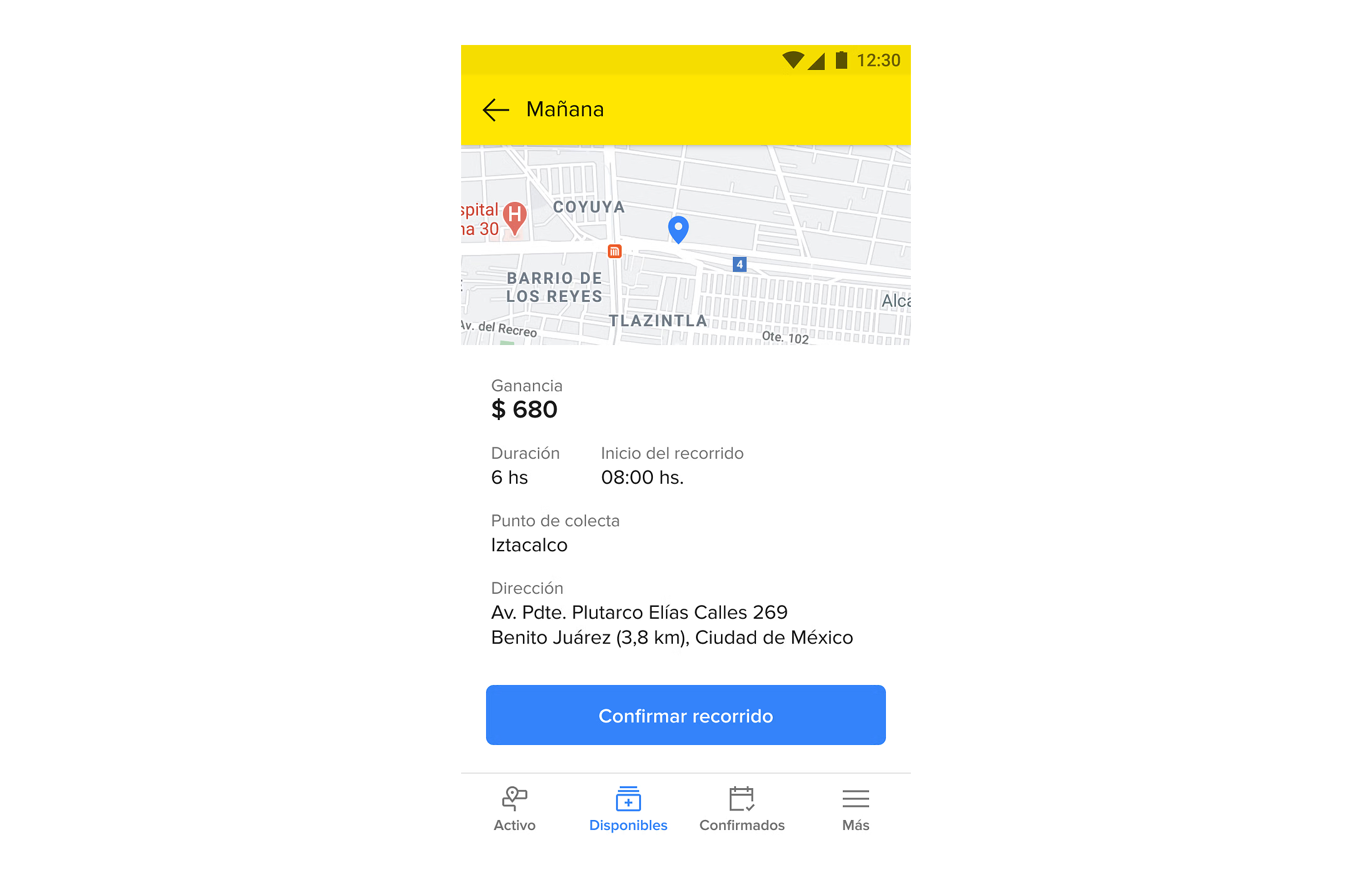
Mercado Libre's UX team has tripled in size over the past decade. As the company’s business units—such as fintech services (Mercado Pago) and logistics (Mercado Envíos)—matured and multiplied, so did its design footprint. While Mercado Libre’s culture values experimentation and autonomy, scaling that freedom also introduced new layers of complexity.

“Even though Mercado Libre is a large corporation, we still have a startup mindset. One of our biggest challenges is finding the right balance between freedom and order,” says Facu Ruiz, UX Operations and Research Director at Mercado Libre.
“We want teams to do their own explorations and build what works for them—but at this scale, we also need some shared structure,” he adds. Rather than impose a rigid structure, Mercado Libre sought tools and systems that could support this balancing act, allowing teams to stay fast and pragmatic while working within a shared framework.
Figma offered a foundation for that structure. Its real-time collaboration, cross-team visibility, and flexibility made it a natural fit for scaling a way of working rooted in autonomy and speed.
Solution: Tooling for structured autonomy
To scale sustainably, Mercado Libre created a centralized “UX Core” team. This internal service group doesn't dictate how teams work. Instead, it offers guidance, tools, training, and systems—including Figma—to help teams collaborate, design, and deliver more effectively.
Our job is to offer best practices and tools—but always with the freedom to adapt. We don’t prescribe one way of working. Figma is core to enabling that flexibility.
— Facu Ruiz, UX Operations and Research Director, Mercado Libre
This mindset, rooted in the company's startup DNA, prioritizes enablement over enforcement. It gives teams the flexibility to work in ways that suit their specific contexts, while still aligning on shared concepts and infrastructure.
UX Core’s answer wasn’t control—it was structure. The team helps teams organize their work into three main stages—understanding, exploration, and delivery—offering lightweight, reusable playbooks for each.
That structure was strengthened with the adoption of Figma Enterprise, which gave Mercado Libre the tools to scale design without slowing it down. With structured naming conventions, workspace-level permissions, and centralized best practices, Figma helped introduce the right amount of structure and autonomy to support Mercado Libre’s designers.
Both Figma and FigJam have become integral to how teams collaborate. FigJam supports early-stage ideation, research synthesis, and shared decision-making, while Figma drives prototyping, feedback, and iteration. This flexible, real-time workspace has helped Mercado Libre extend its “continuous beta” mindset across a growing, distributed design organization.
As we've grown, we've recognized the need for greater structure and improved findability. Figma Enterprise provides us the governance and organizational tools we need to structure workspaces in alignment with our business units, improving efficiency and ensuring a consistent design experience.
— Facu Ruiz, UX Operations and Research Director, Mercado Libre
Andes: A design system for the Latin American region
At the core of that infrastructure is Andes, Mercado Libre’s design system. Originally built in Sketch, Andes was migrated to Figma, where it became more scalable and collaborative.

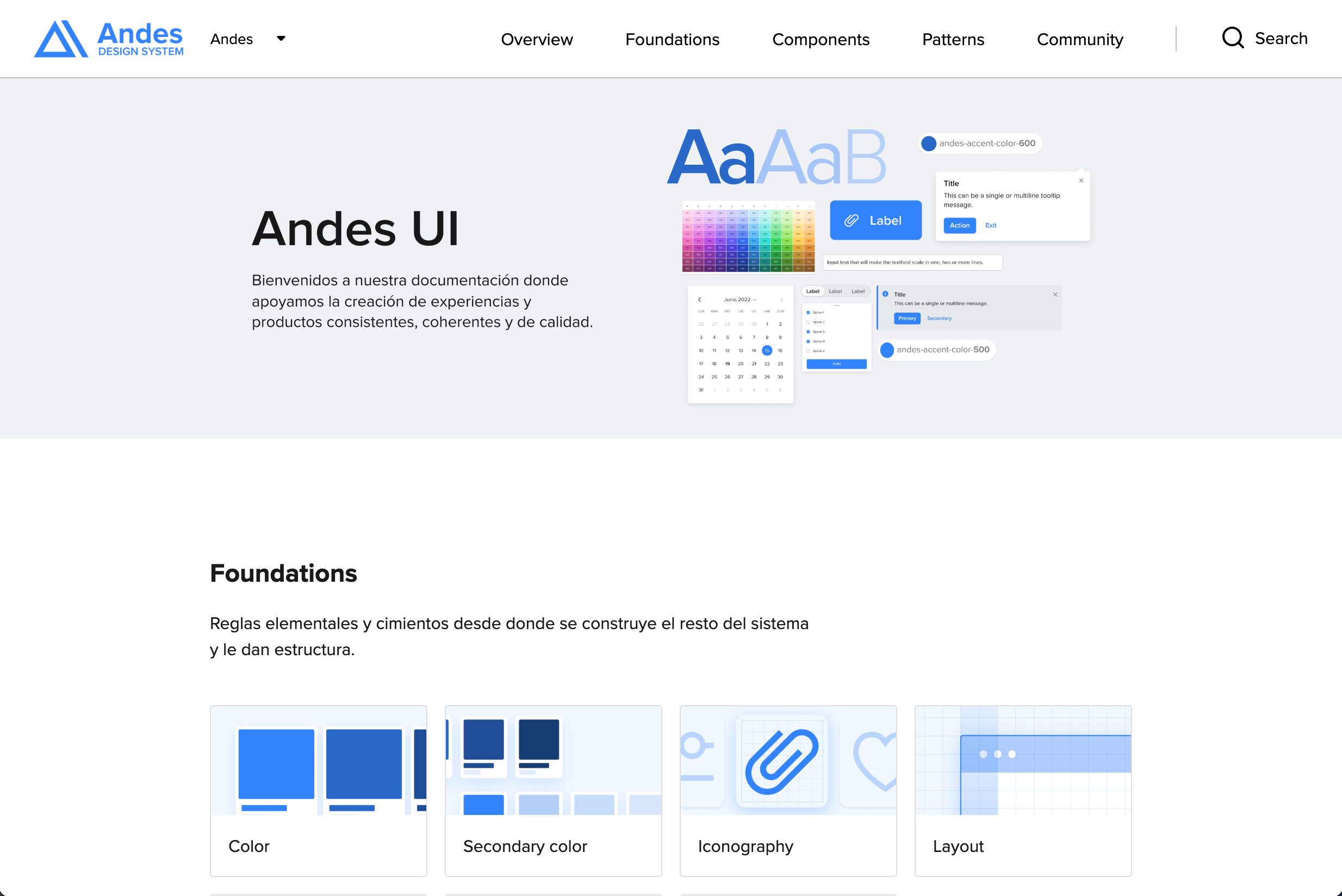
“It’s called Andes because, like the mountain range that connects several countries across Latin America, that’s what we want the design system to do—connect us, without making everything the same. It brings us together, but we still have our local voice,” explains Facu.
Figma enabled Andes to become a multi-tiered system—one that could scale across diverse teams while still honoring particular needs. By supporting flexibility and shared ownership, Andes helps maintain cohesion without enforcing uniformity. It also allows contribution at scale, giving designers across the business a clear path to shape the system without bottlenecks or over-centralization.

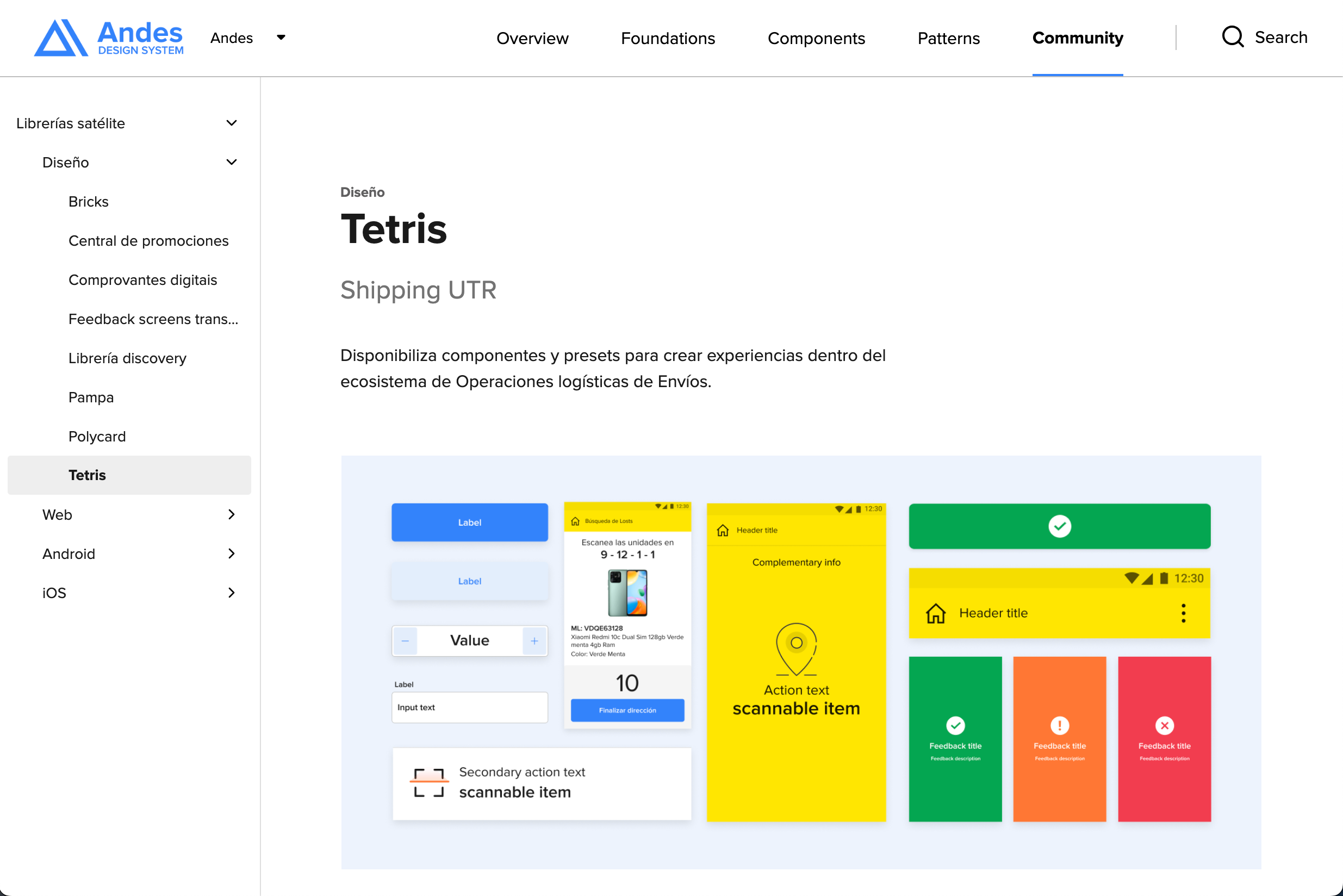
Andes is structured with governance that reflects Mercado Libre’s democratized operating model:
- A core library for shared, company-wide components
- Satellite libraries for domain-specific patterns in areas like logistics or fintech services
Designers across teams can propose changes or additions through a structured, collaborative process. The UX Core team evaluates proposals based on their relevance and reusability. If a component applies broadly, it’s added to the core library. If it’s specific to a product group, it lives in a satellite library. And if it’s highly bespoke, teams are free to detach and use it independently, without slowing down the system.
Importantly, Andes is built not just for designers, but also by them, and in close collaboration with frontend engineers. From the earliest stage of component creation, design and engineering work side by side to ensure technical feasibility and streamline delivery. Engineers use Andes as a source of truth for UI patterns, which reduces ambiguity, accelerates development, and supports implementation across Mercado Libre’s platforms.

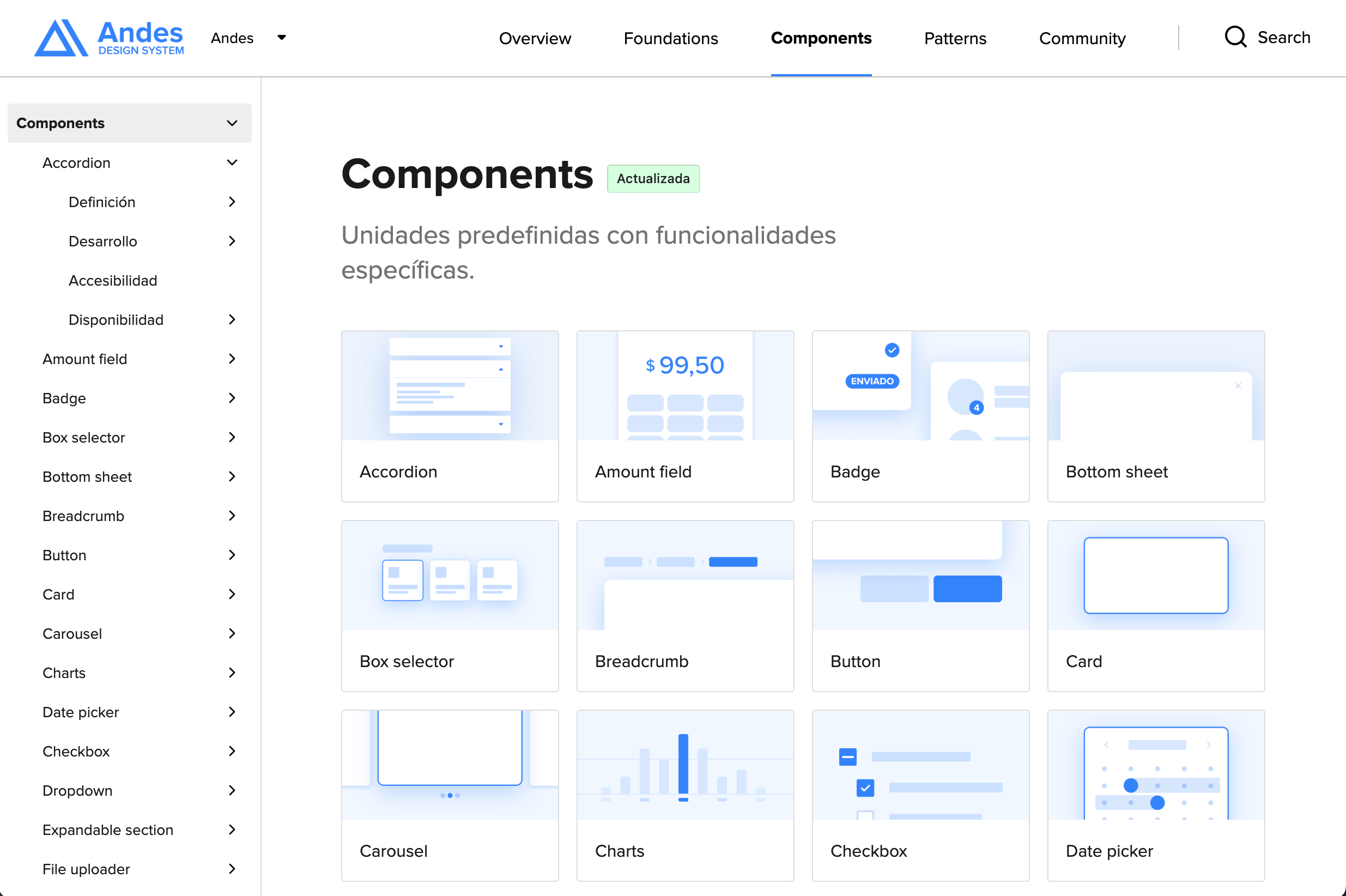
“We work together with the frontend as one team. That way, when we define a component, we can get design and engineering aligned right away. It makes the system stronger and delivery faster,” says Facu.
A shared canvas for interdisciplinary work
FigJam has become an important part of Mercado Libre’s interdisciplinary collaboration model. UX, product, engineering, research, and business work together from the earliest stages of design.
This cross-functional approach enriches ideation but also introduces complexity. “Diversity of perspective is huge for us—people from different countries, roles, and backgrounds all contribute. It can get messy. But we embrace that,” says Facu.
With FigJam, teams map out user journeys, prioritize features, and synthesize insights in shared, persistent spaces. During design and iteration, Figma’s real-time multiplayer features and commenting tools help teams move from ideas to production efficiently.
Mercado Libre created more than 5,306 FigJam files in Q1 2025 alone—a sign of how deeply it’s embedded in their cross-functional rituals. This volume also reflects the scale of the platform’s adoption and the shared ownership it enables.
Rethinking handoff: A new mindset for design-to-code
As Mercado Libre’s UX ecosystem scaled, so did the diversity of design-to-dev workflows. Rather than enforce a single path, the UX Core team is working toward a shared recommendation: a flexible model that encourages consistency while respecting how different teams build.
The team is starting to shift its approach to handoffs—designers are experimenting with ways to signal what’s ready for development earlier rather than waiting for an entire file to be finalized, enabling engineers to begin building while iterations continue elsewhere. It’s not yet widespread practice, but it reflects a growing intention: to treat handoff as a shared flow, not a final step.
We’ve only just started, but I think the benefit of Dev Mode is the mindset. Instead of waiting to deliver everything, we can say: this part is ready—go ahead. Let’s see what happens as we keep designing.
— Facu Ruiz, UX Operations and Research Director, Mercado Libre
That shift is especially important across Mercado Libre’s core platforms—web, iOS, and Android—where the Andes design system already supports consistency. While still in its early stages, tools like Dev Mode and Code Connect reflect Mercado Libre’s drive to experiment, evolve, and build better products.
AI and autonomy
As Mercado Libre looks to the future, AI and internal tooling are at the heart of its innovation strategy. The company has built its own AI platform, Verdi, and is actively integrating AI across its operations—from generating product reviews to powering internal developer tools.
Today, an estimated 17% of new code is written with AI assistance, as teams explore how it can streamline research, uncover insights, and automate repetitive tasks.
But for Mercado Libre, technology is never the goal on its own. Tools are only as powerful as the way of working they support. They’re experimenting quickly, but also deliberately, guided by internal governance and open-source ops teams that ensure responsible, secure implementation.
"A clear mindset is the most important thing. You can have the best tools in the world—but if you don’t know how to use them, they won’t take you anywhere," says Facu.
That philosophy—pragmatic, collaborative, and constantly evolving—is what makes Mercado Libre’s design team work distinct. While Mercado Libre continues to scale, tools like Figma and FigJam help preserve what matters most: a culture that empowers teams to move fast, work together, and design with purpose—always guided by the belief that “lo mejor está por venir” (the best is yet to come).
About Mercado Libre
Industry: Technology
Company size: Enterprise
Location: Americas
Products: Figma Design, FigJam
Roles: Designer, Developer, Product Manager
Business goals: Design systems, Design process, Eliminating silos
See how Figma can help you scale design
Great design has the potential to differentiate your product and brand. But nothing great is made alone. Figma brings product teams together in a fast and more inclusive design workflow.
Get in touch to learn more about how Figma can help companies scale design.
We’ll cover how Figma can help:
- Bring every step of the design process—from ideation, to creation, to building designs—into one place
- Accelerate design workflows with shared company-wide design systems
- Foster inclusivity in the product team process with products that are web-based, accessible, and easy to use