How Itaú Unibanco launched 45 digital products and solutions in a year with Figma
Summary:
At more than a century old, Itaú Unibanco is one of Latin America’s most established financial institutions. But legacy hasn’t slowed it down. In fact, it might be the very reason the bank is so invested in the future.

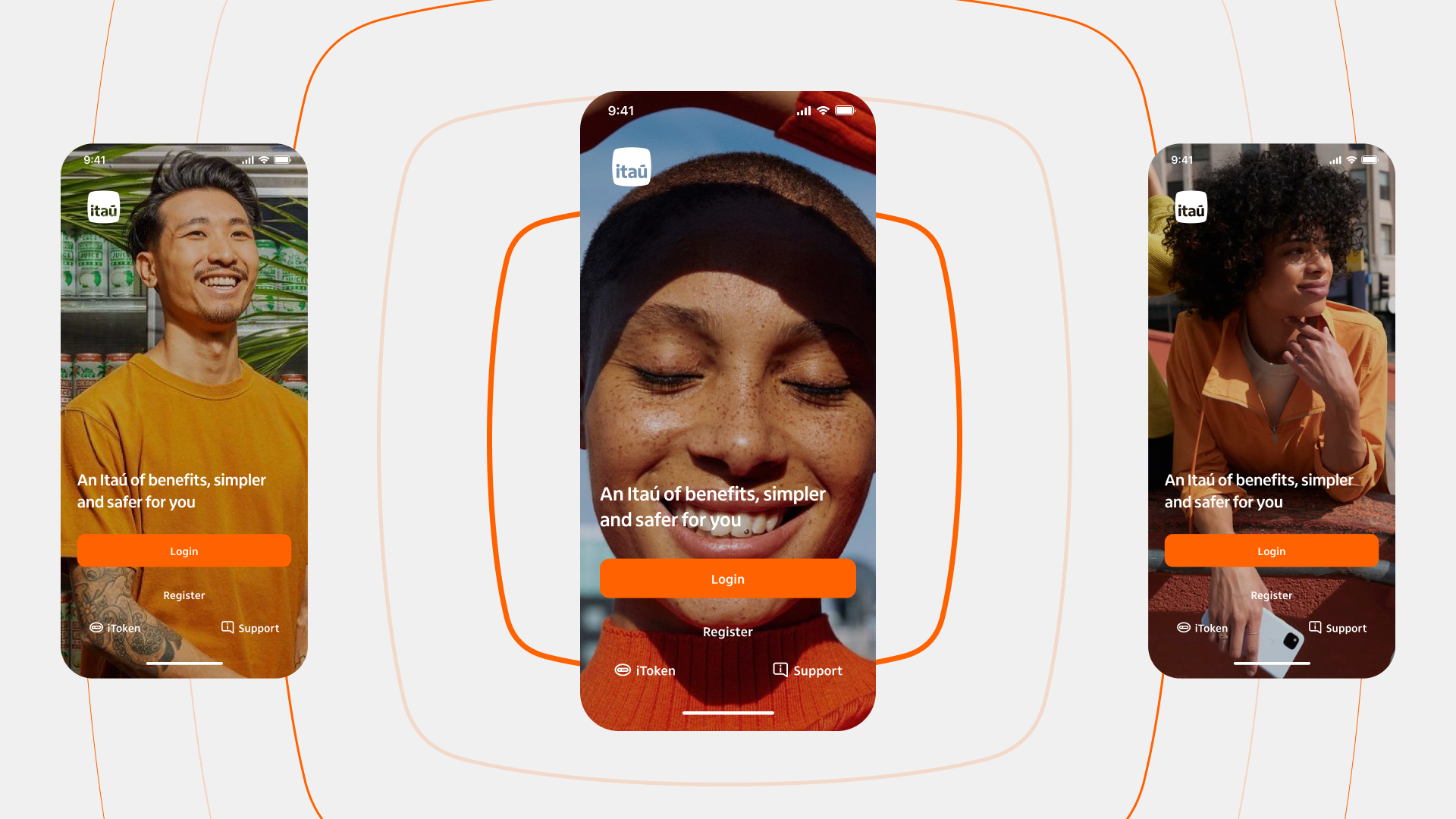
With more than 25,000 people working on digital product development, Itaú is transforming the way it delivers customer experiences. Backed by a visionary leadership team and a clear design strategy, the bank has adopted Figma as its platform of choice for everything from journey mapping in FigJam to high-fidelity prototypes in Figma Design.
What began as a shift in tooling has evolved into a cultural transformation. Today, Figma is the foundation for how teams at Itaú collaborate, helping to drive measurable gains in speed, quality, and consistency across the bank’s digital ecosystem.
We want to be the world’s most customer-centric financial institution. And Figma provides an ecosystem for collaboration that’s a critical part in making that happen.
— Fabricio Dore, Chief Design Officer, Itaú Unibanco
Challenge: Redesigning complexity across a 100-year-old organization
Itaú’s ambition is sweeping: to become the most customer-centric financial institution in the world. The bank has restructured its design operations to make that mission real, investing in “experience teams” that work deeply across all business lines, backed by research, metrics, and a unified way of working.
But executing that vision across 96,300 employees—25,000 of whom are directly involved in product development—was no small feat. In the past, Itaú’s teams used 12 different tools, many of them offline, to manage collaboration. Design processes were fragmented. Version control was messy. And the bank’s ambitious push for modernization often outpaced its ability to stay aligned.
“We’re a hundred years old, and we’re proud of that legacy. But speed matters now more than ever,” says Fabricio Dore, Chief Design Officer at Itaú Unibanco.
“To move at the pace of our customers’ expectations, we had to rethink how we work. And we knew collaboration in the product development process was non-negotiable,” he adds.
Solution: Unifying people, processes, and platforms around Figma
To create a consistent, customer-focused experience across a sprawling enterprise, Itaú introduced a unified framework that brought structure to how teams design and deliver digital products. With more than 900 people in experience design and 25,000 contributors across product development, a shared way of working was essential to scaling both quality and efficiency.
The result was the Journey Modernization Program, an end-to-end methodology that combines shared metrics, including a Net Promoter Score (NPS), Employee Net Promoter Score (eNPS), and usability scores, with clearly defined standards for how teams evaluate and improve experiences.
Every journey, whether it’s onboarding, transactions, or issue resolution, is assessed against four core principles: simple, trustworthy, relevant, and memorable. To support this work, teams use standardized templates, checklists, and documentation designed to align outputs across business units. Most of these tools and systems are embedded directly within FigJam and Figma, becoming central to how teams collaborate and build.
It’s no surprise that most of our work is built around FigJam and Figma. They’ve become the backbone of how we drive consistency and scale collaboration across the organization.
— Fabricio Dore, Chief Design Officer, Itaú Unibanco
Designers, product managers, and operational teams use FigJam to map journeys, run workshops, and align on priorities, while Figma serves as the space to quickly iterate on solutions and bring ideas to life.
Cutting delivery time in half through journey-led collaboration

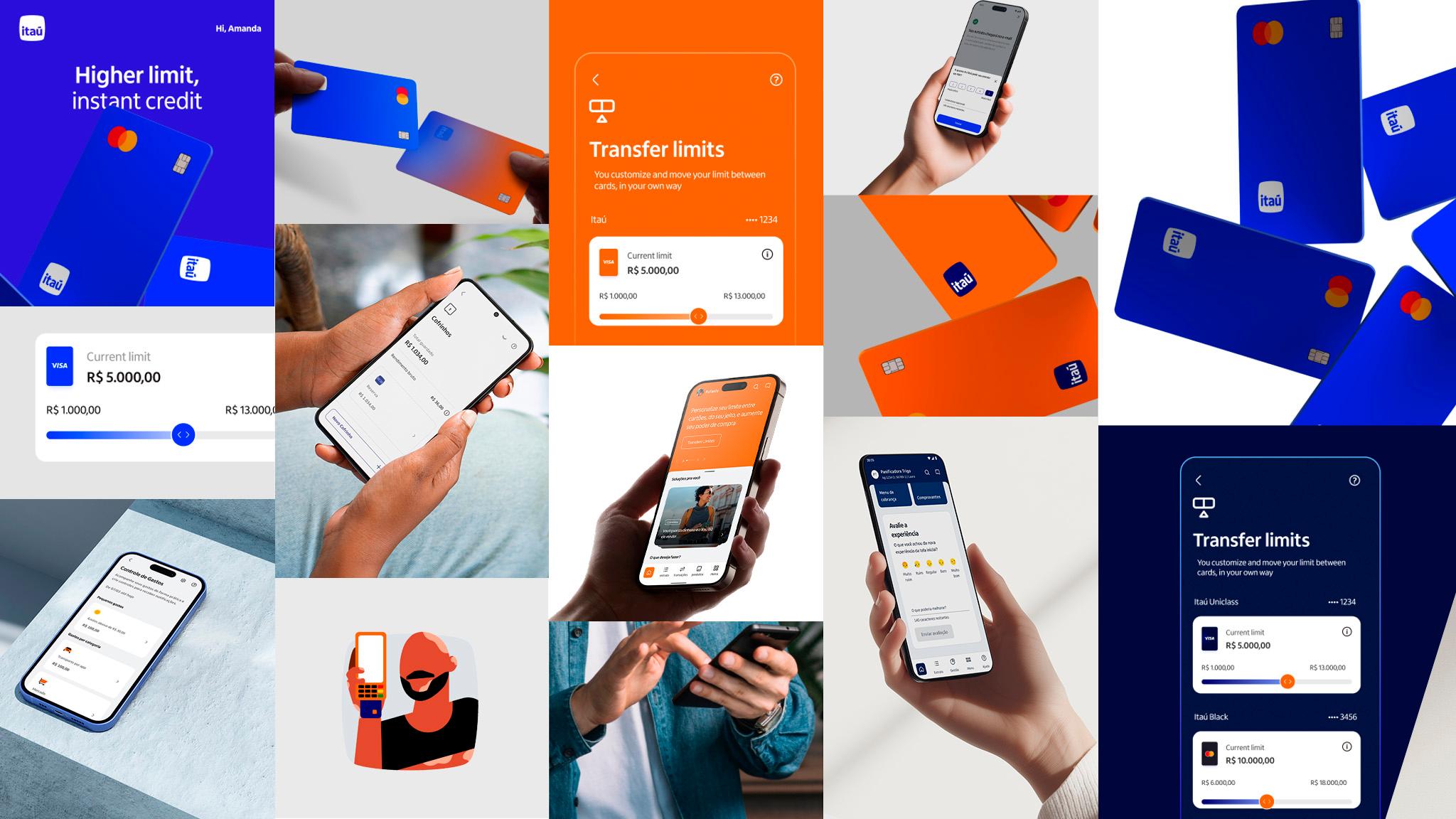
One of Itaú’s most impactful transformations has come from how it reimagines customer journeys, particularly those that span multiple departments, systems, and customer touchpoints. A powerful example: the redesign of the credit card claims process.
Previously, customers who disputed an unrecognized charge would often begin the process online, only to be left waiting, sometimes for weeks, without an update.
That digital entry point masked a much more complex, analog workflow behind the scenes. The resolution process involved numerous teams, including back-office operations, customer service, technology, and business leads, and could stretch out over three months in extreme cases.
To tackle this, Itaú brought together every stakeholder group involved in the process and centralized the work inside FigJam and Figma. Teams used FigJam to map the existing journey, identify gaps, and run co-creation workshops. From there, they iterated on solutions directly in Figma, building prototypes that reflected not just customer needs, but also operational realities.
What emerged was an improved service model, grounded in shared understanding and visible to all. For the credit card claims journey alone, more than 100 people participated in collaborative sessions using FigJam.
The platform gives every team, regardless of role or technical background, a space to contribute, align, and move forward together. This level of collaboration established the redesigned claims journey as an internal benchmark for experience improvement.
The results speak for themselves. In pilot programs across similar service flows, Itaú teams saw work move up to twice as fast when powered by Figma.
In every pilot we ran, we saw work move at least twice as fast when teams used Figma and the frameworks we’ve built around it. The combination of the right tools and a strong design system has made us significantly more productive.
— Fabricio Dore, Chief Design Officer, Itaú Unibanco
These gains in speed, alignment, and cross-functional clarity are reflected not only in delivery metrics but in employee engagement as well.
80% design system adherence improves speed, consistency, and quality
Itaú’s design system serves as the backbone for every customer experience across the bank. The Itaú Design Language is a set of design principles and standards that ensure consistency and efficiency across all experiences delivered to customers—both online and offline. But true scalability didn’t happen until the team moved to Figma.
Previously, components and documentation lived across multiple tools, and often offline. Now, all documentation, components, and patterns live in Figma, updated in real time and accessible to thousands of contributors.

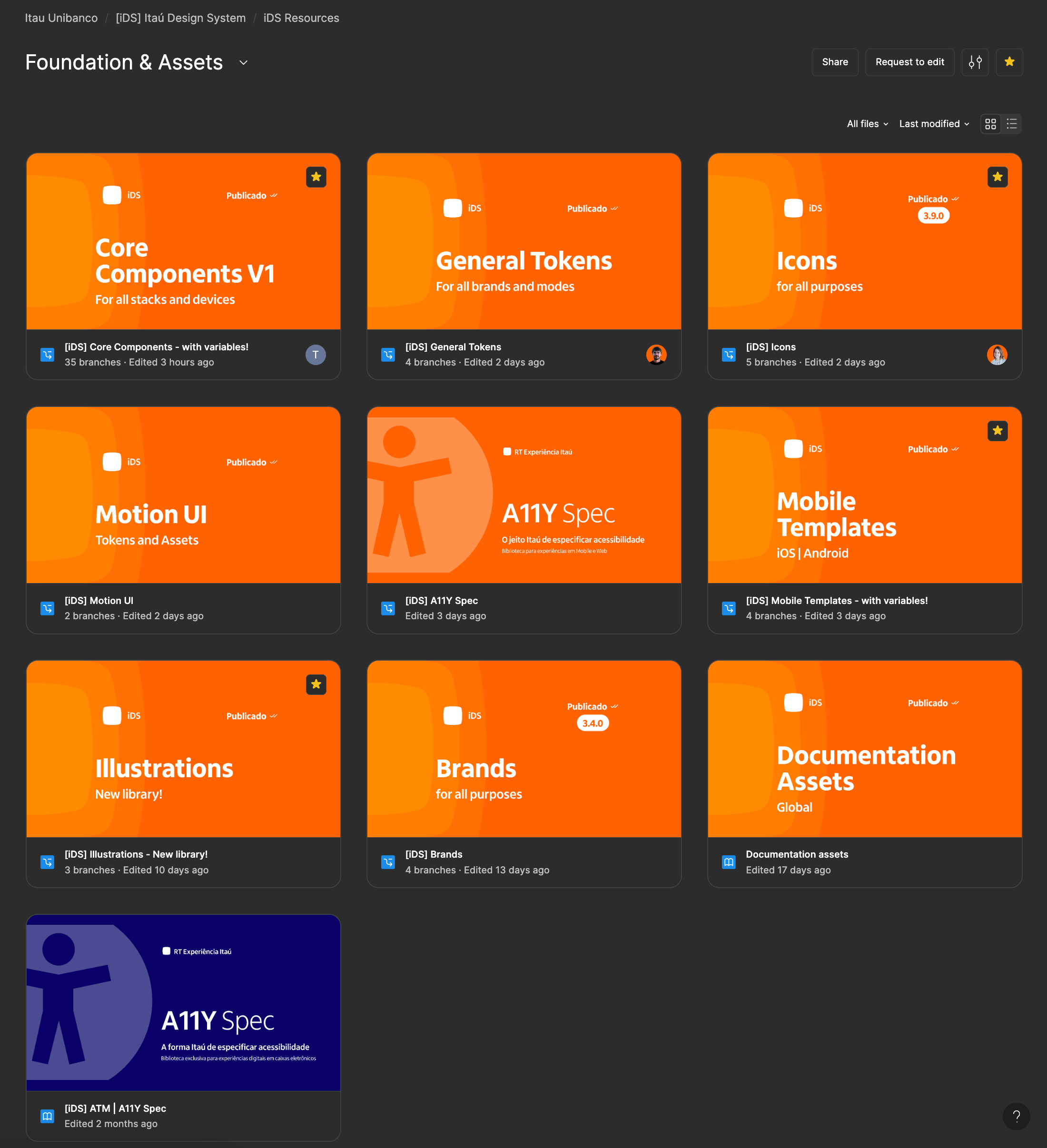
The shift has paid off. “Our design system now sees up to 80% adherence across key repositories—which is a huge leap. It’s helped us reduce fragmentation, maintain quality, and free up teams to focus on solving the right problems instead of reinventing components,” says Fabricio.
The centralized system supports 63 components, spans four major tech stacks, and powers experiences across 29 distinct products and segments.
Driving trust, speed, and scale for One Itaú
In a highly regulated industry like banking, consistency reflects trust, compliance, and operational excellence. At Itaú, that consistency is built into every layer of the experience.

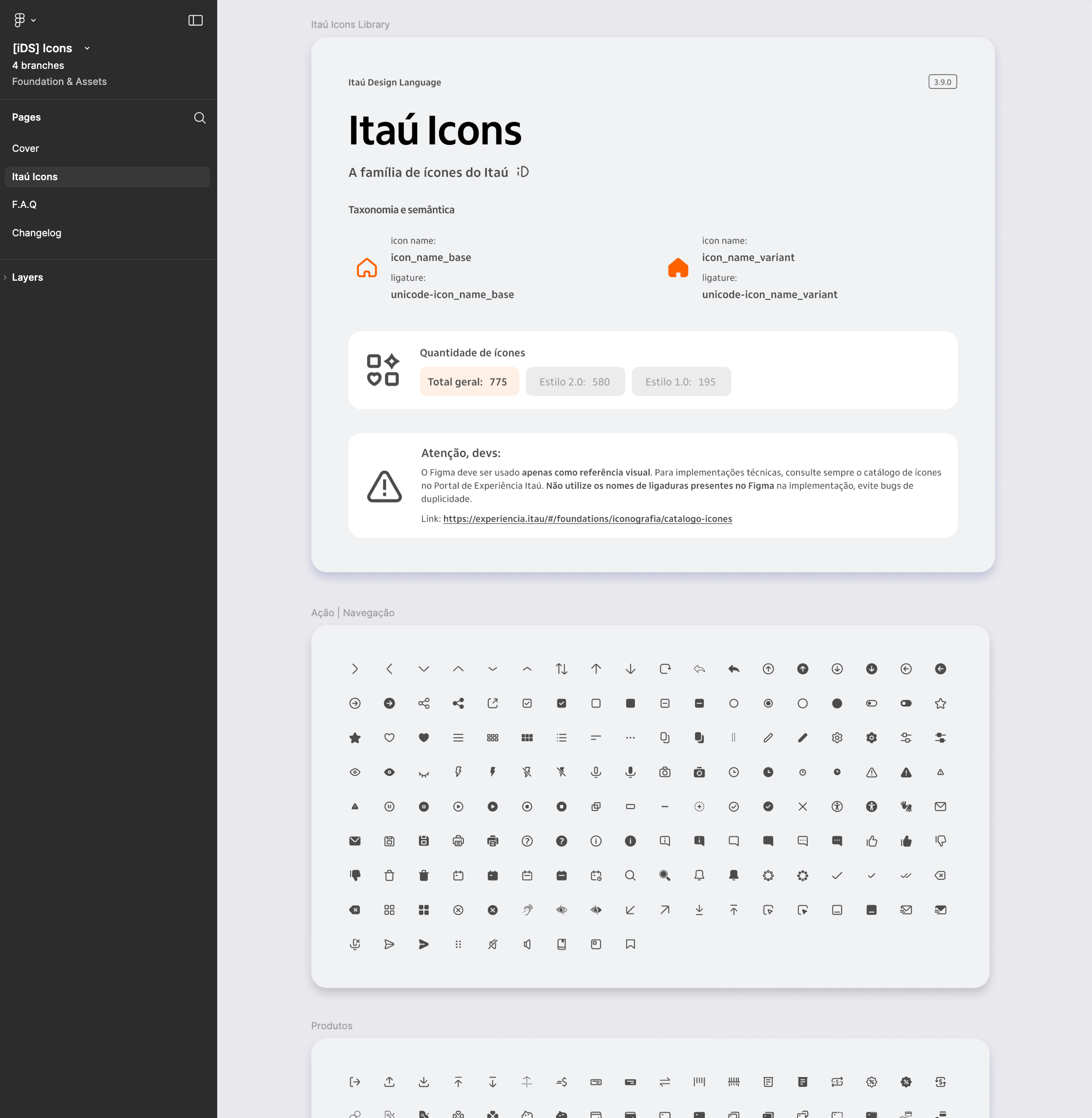
Itaú takes a rigorous approach to security and accessibility, embedding checks throughout its component libraries. Each component is tested for vulnerabilities and performance. “When a branding update introduced an issue in the login flow, our team identified and fixed it overnight—and rolled out the update across all apps the next day,” says Fabricio.

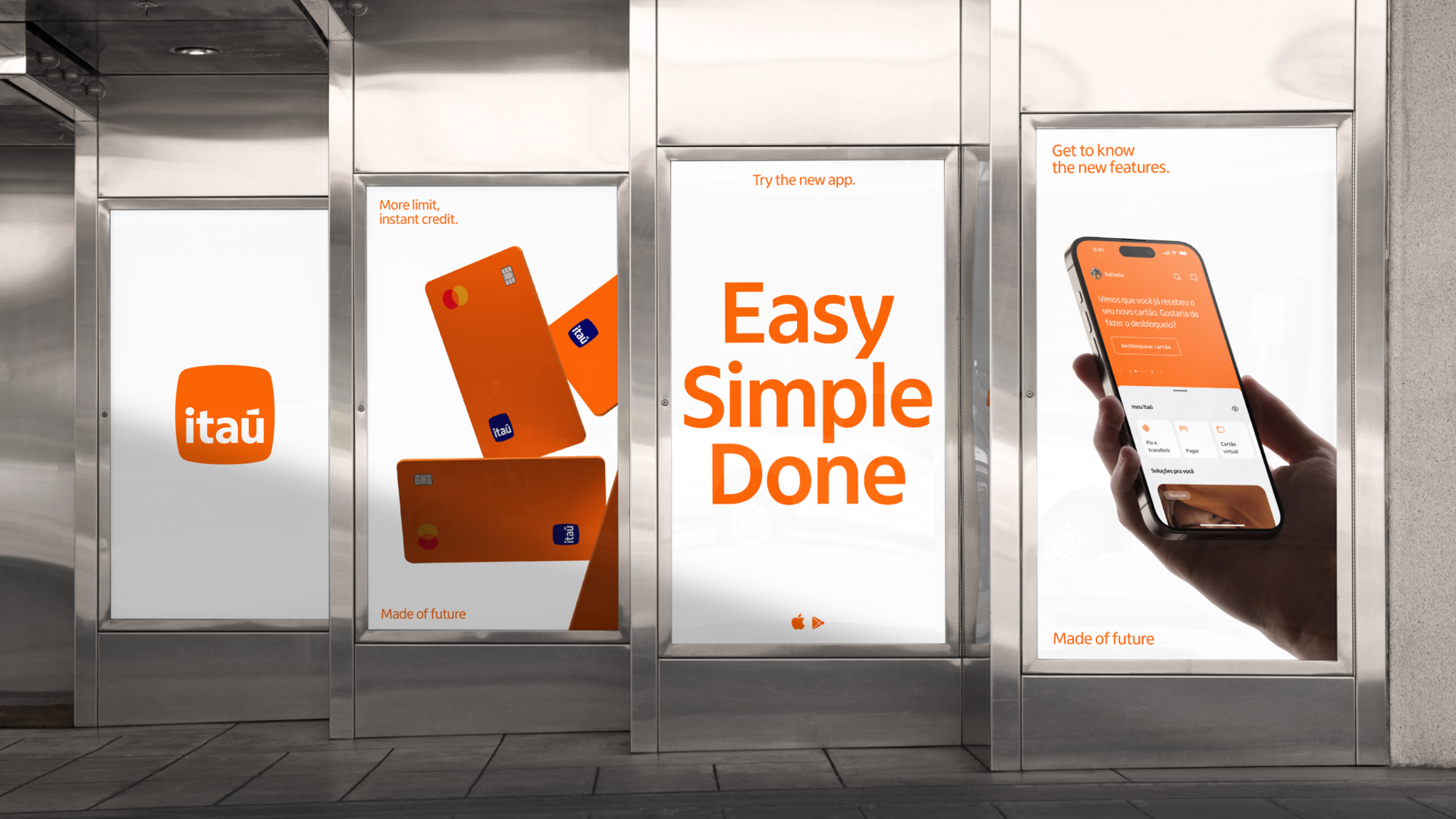
These rapid response capabilities are made possible by the Itaú Design Language. As part of the broader Um só Itaú (One Itaú) initiative—unifying digital banking under a single login and experience standard—the design language plays a critical role in delivering modern, consistent, and secure interfaces across the bank’s super app. It ensures that every experience, whether for personal banking or investments, feels seamless, intentional, and fully integrated.
After migrating high-frequency journeys like login and onboarding to the new system, Itaú saw a significant rise in NPS across the bank. In 2024, 45% of business units moved into the quality zone (with a score of 50 points or higher), 55% reached the excellence zone (with a score of 75 points or higher), and 75% achieved their all-time highest scores.
Itaú’s design system also helped teams move faster by reducing variability and ensuring alignment across departments—accelerating the delivery of more than 45 new digital solutions in 2024 alone, including PIX Credit, Goal Tracking, Save Money, and Password Consultation tools.
A future-proof foundation for AI-powered products
Looking ahead, Itaú is preparing its design system for a future shaped by generative AI. The bank is already rethinking how interfaces work—moving from screen-based journeys toward conversational, contextual experiences.
That evolution requires not only new design approaches but also new tooling. With Figma’s AI-assisted features like Figma Make on the horizon, Itaú sees opportunities to further reduce friction, streamline collaboration, and design experiences that adapt in real time.
“We’re entering a new phase where design won’t be about manually building screens—it will be about shaping intelligent systems grounded in data and knowledge. Figma is a key partner as we evolve how experiences are created at scale,” says Fabricio.
About Itaú Unibanco
Industry: Financial Services
Company Size: Enterprise
Region: Americas
Product: Figma Design, FigJam
Roles: Designer
Business Goals: Design systems, Eliminate silos, Time to market
See how Figma can help you scale design
Great design has the potential to differentiate your product and brand. But nothing great is made alone. Figma brings product teams together in a fast and more inclusive design workflow.
Get in touch to learn more about how Figma can help companies scale design.
We’ll cover how Figma can help:
- Bring every step of the design process—from ideation, to creation, to building designs—into one place
- Accelerate design workflows with shared company-wide design systems
- Foster inclusivity in the product team process with products that are web-based, accessible, and easy to use