How Knowit connects strategy, design and development with Figma
How Knowit connects strategy, design and development with Figma
Summary
Knowit is a Nordic consultancy combining strategy, design and technology to deliver meaningful digital experiences. With more than 3,900 specialists across Sweden, Norway, Denmark, Finland, Germany and Poland, the company has become a trusted long-term partner for organizations navigating digital transformation.
Knowit consists of four divisions, and one of them is Knowit Experience. The agency delivers end-to-end digital services across strategy, UX, design, content, development and continuous product evolution.
To strengthen collaboration across these disciplines, Knowit Experience chose Figma as its strategic design and product platform. The partnership enables clearer alignment, faster decision-making and a unified workflow from early strategy to long-term optimization.
The challenge: Growth, complexity and scattered tools
As Knowit Experience grew through new offices, new disciplines and mergers, projects became increasingly cross-functional. Strategists, designers, content specialists, developers, and delivery teams were all contributing from the start—but their tooling wasn’t aligned.
Teams used different design tools across clients and projects. Some lacked collaborative capabilities. Others couldn’t be used in secure NDA-protected environments. Long-term engagements struggled with fragmented design systems and inconsistent workflows. Rather than accept this as a side effect of growth, Knowit Experience chose to address it head-on.
When the design team tested Figma, they immediately recognised that the platform matched how the agency already worked: openly, collaboratively and with transparency at the core.

The solution: A platform built for connected disciplines
Knowit’s leadership decided to adopt Figma as the unified platform for the entire organization. CEO Martin Brogaard saw early that this shift would have significant impact.
“We needed alignment across the various disciplines–strategy, UX, design, content, development–and so decided to look for a more strategic way to manage our digital product tooling," says Martin. "For Knowit, alignment isn’t just about speed, it’s about creating shared ownership across teams and clients.”
Knowit partnered with Figma through an Enterprise License Agreement (ELA), giving teams across the group universal access to Figma, FigJam, Dev Mode and, more recently, Figma Make.
“There are no questions about ‘where do we store the truth, how do we build or maintain design systems, where are the discussions?’ It’s all in Figma. And that keeps us consistent and helps us build fast for our clients,” says Martin. “Figma isn’t only a tool. It’s an enabler of how we want to work: open, transparent and cross-disciplinary.”
How Knowit Experience uses Figma across the full digital lifecycle
Large digital projects at Knowit Experience often involve 40+ people and more than 15 skillsets. Figma keeps every discipline aligned, from early strategy to continuous delivery.
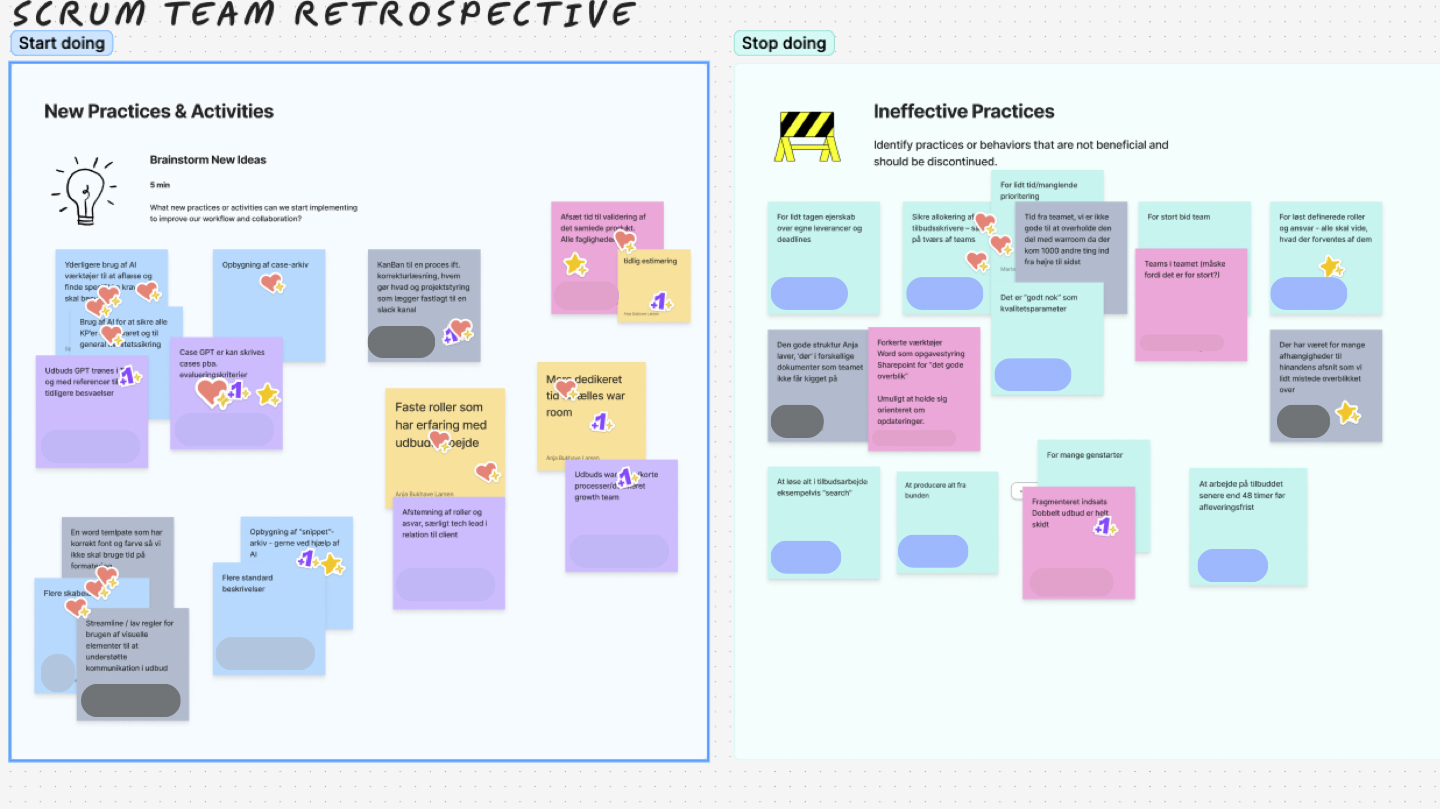
1. Strategic alignment and ideation in FigJam
Projects begin in FigJam, where strategists, UX designers, content consultants, developers and client stakeholders work together to define insights, map journeys, set direction and explore initial ideas.
This creates a shared understanding and a stronger foundation before design work begins.

2. Design systems and product design in Figma
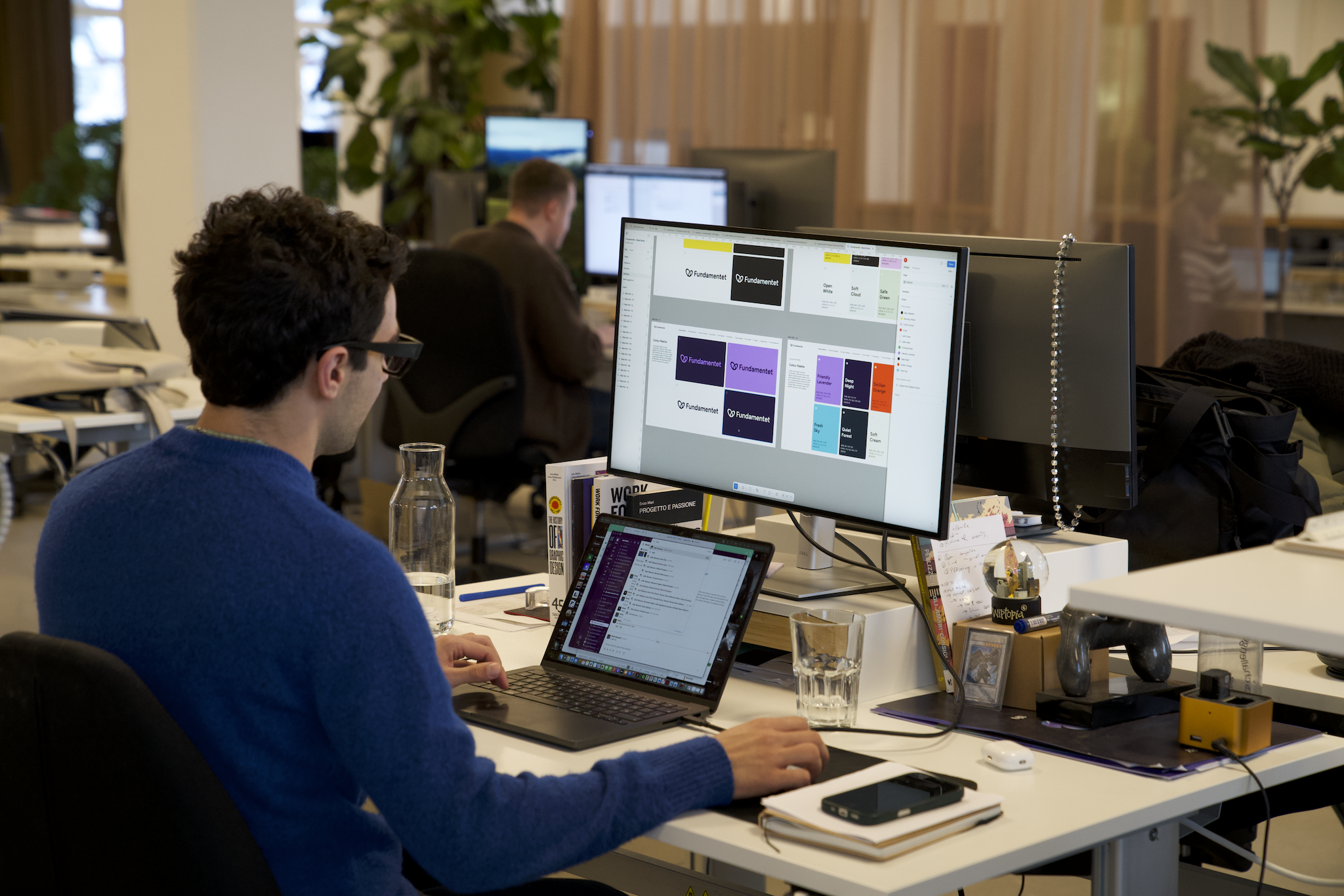
Teams move into Figma for structured UX and UI design. Shared libraries and design systems ensure consistency across large multi-team engagements.
A single adjustment, like a color or spacing change, updates across product areas instantly–critical for long-term partnerships where scalability and maintainability matter.
3. Faster development with Dev Mode
Dev Mode streamlines the transition from design to development, allowing developers to inspect components, review tokens, understand interaction logic and export assets without ambiguity. This reduces rework, accelerates build cycles and keeps the implementation aligned with design intent.
Developers can now use design-code and MCP servers as input to create new production-ready code that aligns with design conventions, faster than ever before. The result is not just faster delivery but stronger alignment with client goals.
4. Continuous optimization and long-term evolution
Many Knowit Experience client relationships run for years. With Figma as the single source of truth, ongoing improvements happen in the same workspace where strategy, design and development already live.
No knowledge loss. No outdated documentation. No tool switching.
This unified workflow strengthens collaboration and ensures every iteration builds on shared foundations.
Accelerating collaboration with Figma Make
Knowit Experience is now exploring how Figma Make can speed up prototyping and concept development. Designers use natural language prompts to create interactive prototypes instantly, helping teams and clients visualise ideas earlier.
Figma Make enables “vibe coding” as a way to express motion, interaction, and behaviour without writing code. This empowers designers to explore concepts rapidly and helps clients experience ideas rather than imagine them.
It also aligns with Knowit Experience’s ambition to shorten the distance between strategy, design, and working software. For Knowit Experience, AI is not about replacing expertise but about removing friction so people can focus on creating value.
A partnership built on transparency, speed and shared ownership
Knowit Experience delivers digital solutions by uniting strategy, design and technology. Figma has become a foundational part of that approach, supporting transparency, shared ownership and fast learning loops across teams and regions.
The partnership reflects a shared belief: great digital products emerge when everyone works from the same truth, in the same space, moving toward the same goal.
See how Figma can help you scale design
Great design has the potential to differentiate your product and brand. But nothing great is made alone. Figma brings product teams together in a fast and more inclusive design workflow.
Get in touch to learn more about how Figma can help companies scale design.
We’ll cover how Figma can help:
- Bring every step of the design process—from ideation, to creation, to building designs—into one place
- Accelerate design workflows with shared company-wide design systems
- Foster inclusivity in the product team process with products that are web-based, accessible, and easy to use