How Accor uses Figma’s AI tools to drive efficiency, strategy and emotion
How Accor uses Figma’s AI tools to drive efficiency, strategy and emotion
As fast execution and digital excellence are more and more critical, the Accor group, head of a wide range of hotel brands, took a new approach to design. By embracing AI-powered tools, the organization increased productivity and gave their design teams a more strategic role.
This transformation is guided by clear objectives: to offer high-quality, personalised experiences to customers, and to reduce the administrative burden on hotel staff, allowing them to focus on their core business. AI is the catalyst that enables design teams to zero in on emotion and creativity—crucial elements for standing out from the competition.
Bringing data into decision-making
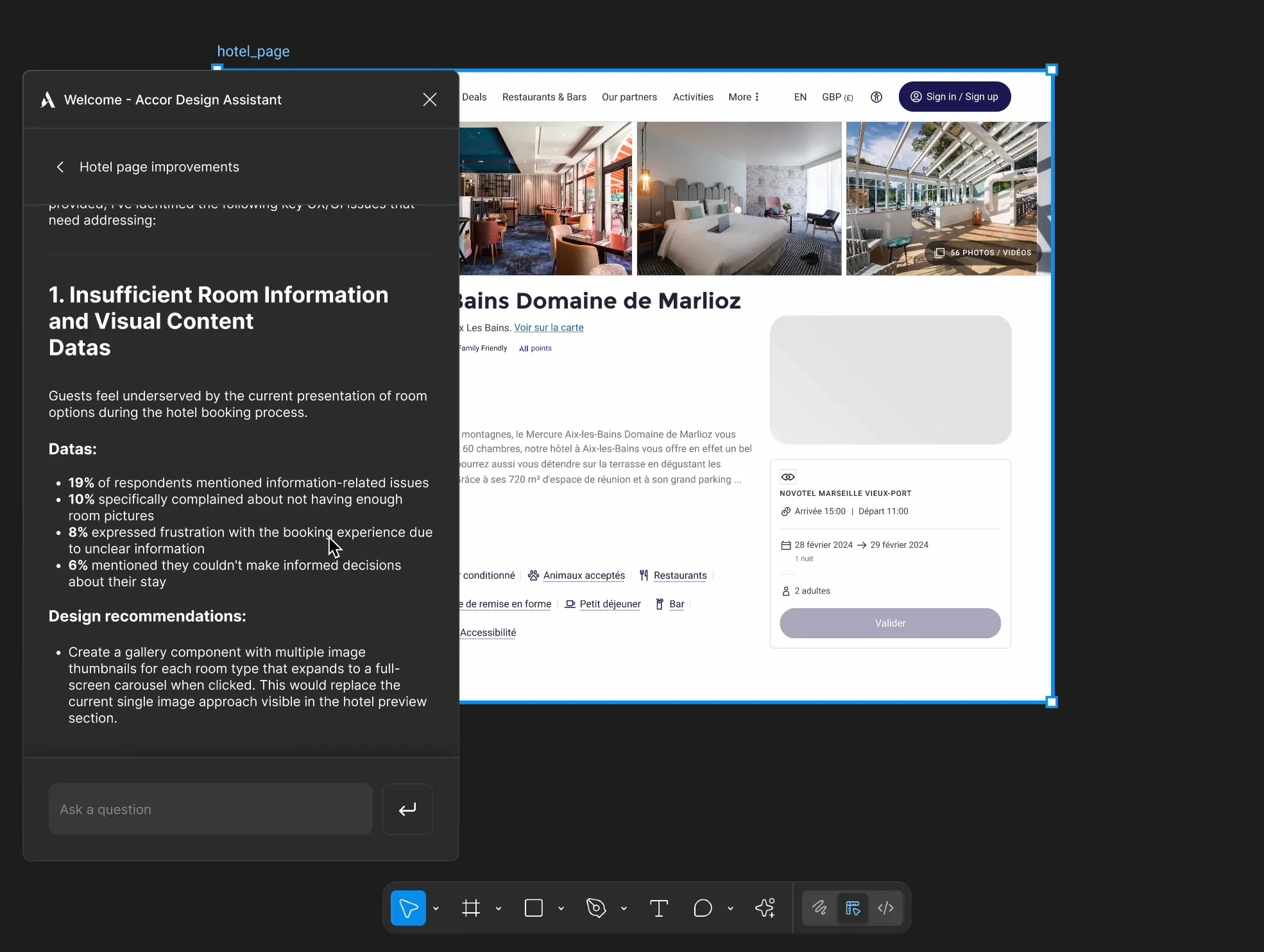
Despite all the data available, accessing this info and aligning Business, Product, Design and Tech teams was still a challenge at Accor, slowing down decision-making. To fix this, Accor's VP of Product Design Thomas Vidal developed Welcome, an internal plugin that integrates directly into Figma's workflow. This tool uses AI to provide designers with user feedback and generate proposals based on the design system.

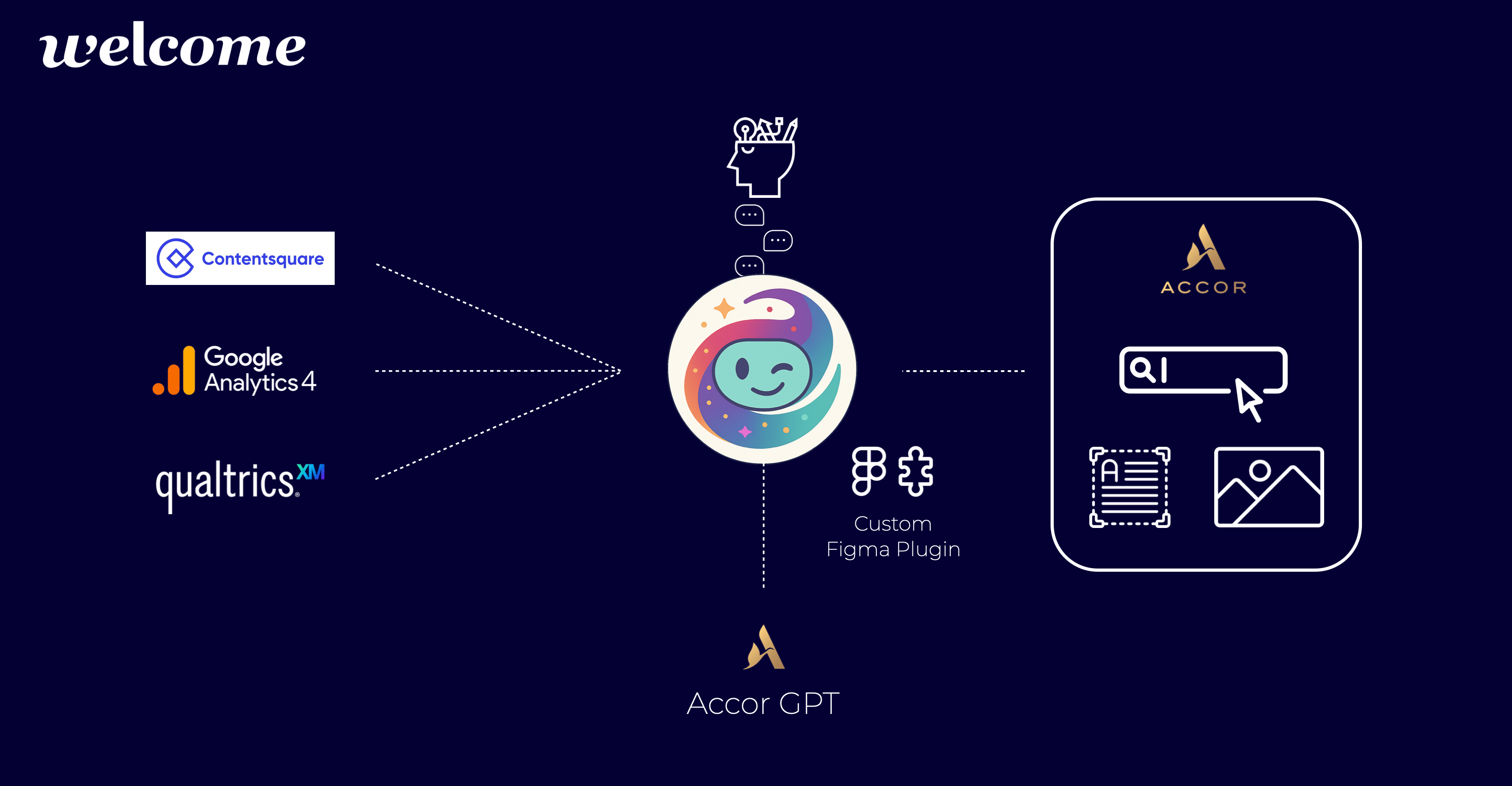
Integrating data via this tool enables designers to make informed decisions and generate mock-up variations based on concrete feedback related to brand identity. This means that brands will eventually be able to offer highly personalised experiences at a faster pace. Eventually, AI could automatically suggest a room type suited to a specific customer, saving time and providing immediate value.

Fast-tracking concept ideation and validation
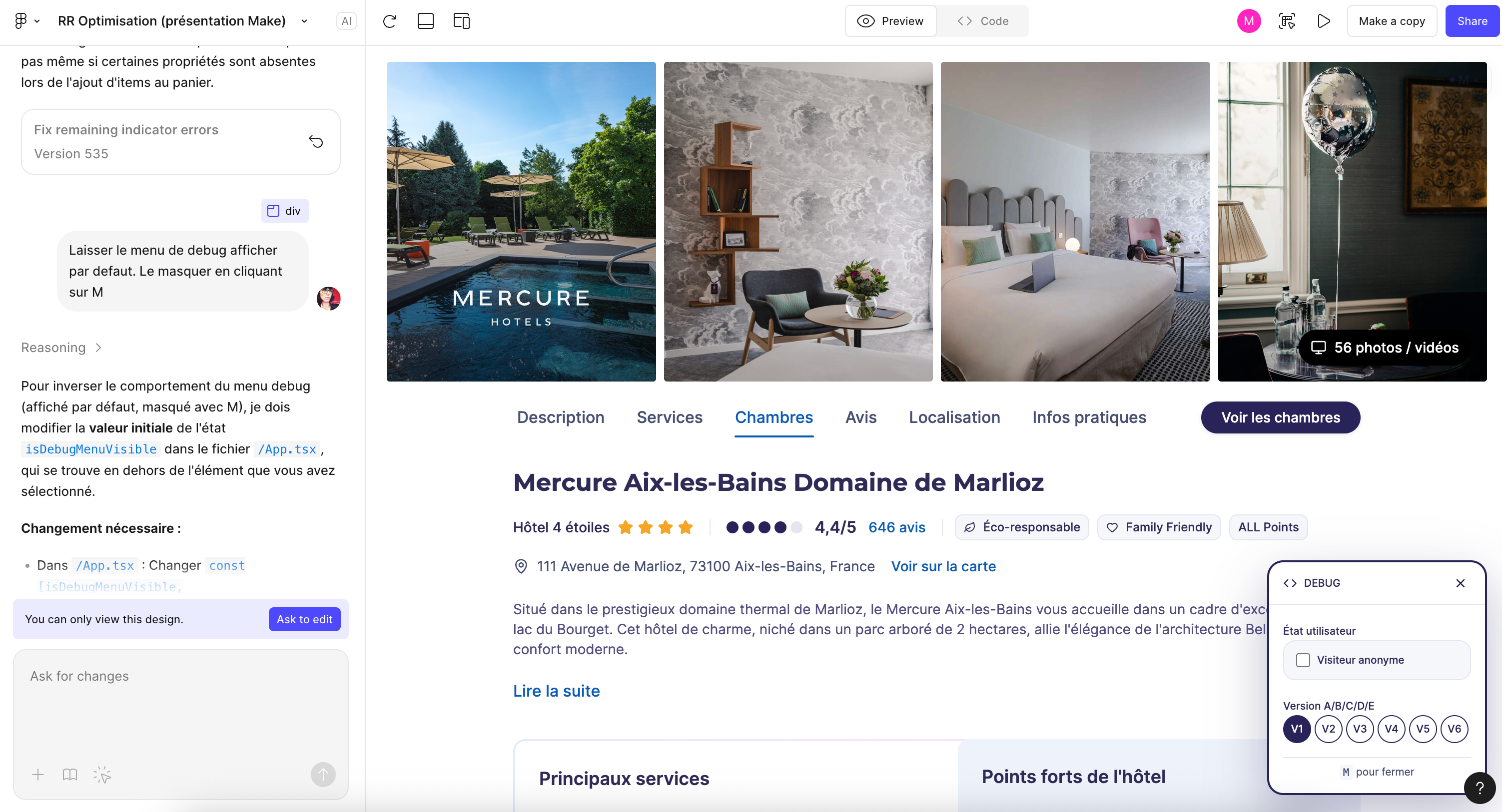
By accelerating iteration and concept execution, AI helps designers spend less time on delivery and more time on strategy. Generative AI tools are game changers: during workshops, Figma Make enabled a team of five designers to generate five viable ideation tracks in a single real-time ideation workshop, which would have taken two to three weeks using conventional iteration methods.
The fast prototyping supported by these tools is also becoming a strategic lever. For a chatbot project, an interactive prototype was created in two days, down from two to three weeks. Presenting this high-quality material to decision-makers helped highlight the design vision and enabled them to visualise the project in order to move forward. A real paradigm shift.
If we spot a new need, we can quickly come up with a vision that everyone can get behind so we can all move forward.
— Thomas Vidal, VP of Product Design at Accor
AI also helps Accor test its prototypes on a large scale, increasing the number of test sessions. The team has already experimented with speed testing by modifying a prototype live in Figma Make after getting feedback from two or three users and testing it again right away.

Ensuring consistency across multi-brand experiences
Managing the identity of most of the group’s brands on over 100 digital products is a major challenge, and AI must be integrated seamlessly to ensure consistency across each entity. With around fifteen brands managed, Accor's design system is the cornerstone of this process. It feeds the LLMs (Large Language Model) while remaining flexible enough to avoid stifling creativity. As a result, generating certain recurring templates now takes just a few minutes, compared to a day or more previously. This significant time saving allows the team to focus on what matters most: strategy and value creation.
Reducing friction and optimising handoffs
Another major pain point is the handoff between design and development. To streamline this step, designers at Accor rely on Dev Mode, Code Connect and Dev Mode's MCP server, a set of Figma tools enabling them to be involved in the development phase. This beta-phase integration automates code generation for design system components, achieving 90% to 95% quality. This reduces the time needed to create a component, in some cases from several days to a few dozen minutes. Today, QA accounts for more than 20% of a designer's working time. Ultimately, this effort should fall below 10%, freeing up time to refine interface details, enhance the emotional impact of experiences and maximise user interactions, significantly improving the overall quality of products.
Giving design a strategic role
The integration of AI at Accor may mark a shift in the operating model towards smaller, more agile teams with increased efficiency. The time freed up by AI is reinvested by designers in their role as value drivers:
- Attention to detail: AI delivers good results, but attention to detail and the emotional component of experiences are handled by designers. As Thomas Vidal explains, it is crucial to devote time to these aspects, which differentiate Accor from its competitors in a world where LLMs are ubiquitous.
The designer's ‘touch’ provides that extra emotion that will lead you to book with us rather than with a competitor. Combined with optimal use of data, it becomes a real differentiator.
— Thomas Vidal, VP of Product Design at Accor
- Strategic approach: designers must use AI not only to deliver, but also to influence their choices through data and exercise strong leadership to convince decision-makers and move projects forward.
For Accor, AI is an efficiency tool, eliminating friction in routine tasks and positioning the company as a market leader by focusing on quality in every detail of the guest experience. Using its design system as the foundation for LLMs and integrating powerful tools such as Welcome and Figma Make, Accor empowers designers to focus on their core business: creating exceptional customer journeys and setting the standards for tomorrow's digital experience.
See how Figma can help you scale design
Great design has the potential to differentiate your product and brand. But nothing great is made alone. Figma brings product teams together in a fast and more inclusive design workflow.
Get in touch to learn more about how Figma can help companies scale design.
We’ll cover how Figma can help:
- Bring every step of the design process—from ideation, to creation, to building designs—into one place
- Accelerate design workflows with shared company-wide design systems
- Foster inclusivity in the product team process with products that are web-based, accessible, and easy to use